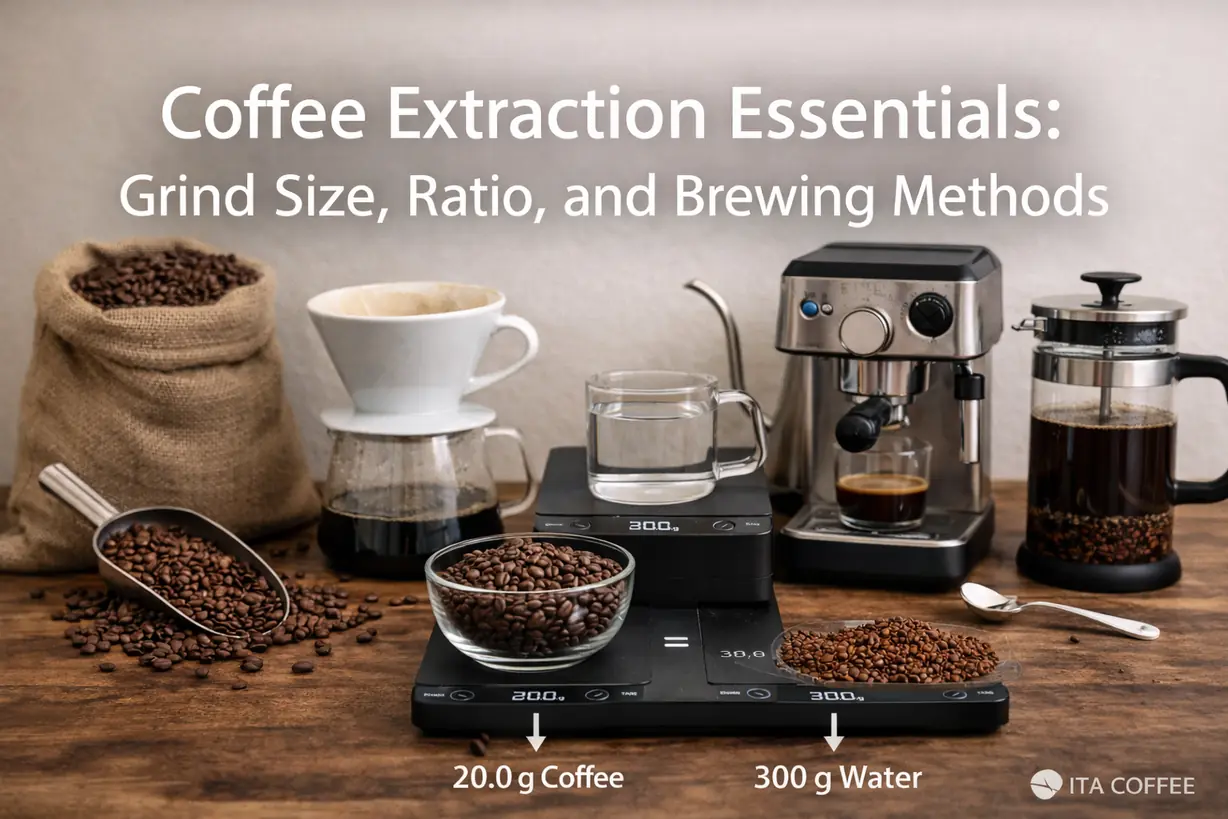
Under vs Over Extraction describes the two structural failure points in coffee brewing — extracting too little or extracting too much from the coffee grounds.
Every brewed cup is a controlled chemical dissolution. Water acts as a solvent, pulling soluble compounds from roasted coffee. What determines whether a cup tastes bright and sweet or harsh and hollow is not roast level alone — it is how much of the coffee’s soluble material is removed.
Extraction is not random. It follows a predictable timeline. Different compounds dissolve at different speeds. Understanding this sequence is the foundation of controlled brewing and explains why small adjustments in grind size, brew ratio, or time radically change flavor.
In This Guide
Extraction Is a Timeline, Not a Switch
Coffee extraction progresses in stages. Highly soluble organic acids dissolve first. Then sugars and Maillard reaction compounds follow. If brewing continues too long, heavy bitter compounds and plant-derived polyphenols begin to dominate.
This chronological chemistry is what separates under-extracted coffee from over-extracted coffee.
Under-Extraction (Incomplete Soluble Yield)
Under-extraction occurs when the brewing process stops before sufficient soluble material has dissolved.
- Primary Causes: Grind too coarse, low water temperature, insufficient contact time.
- Dominant Chemistry: Early-extracting organic acids.
- Sensory Outcome: Sour, sharp, thin, salty, lacking sweetness.
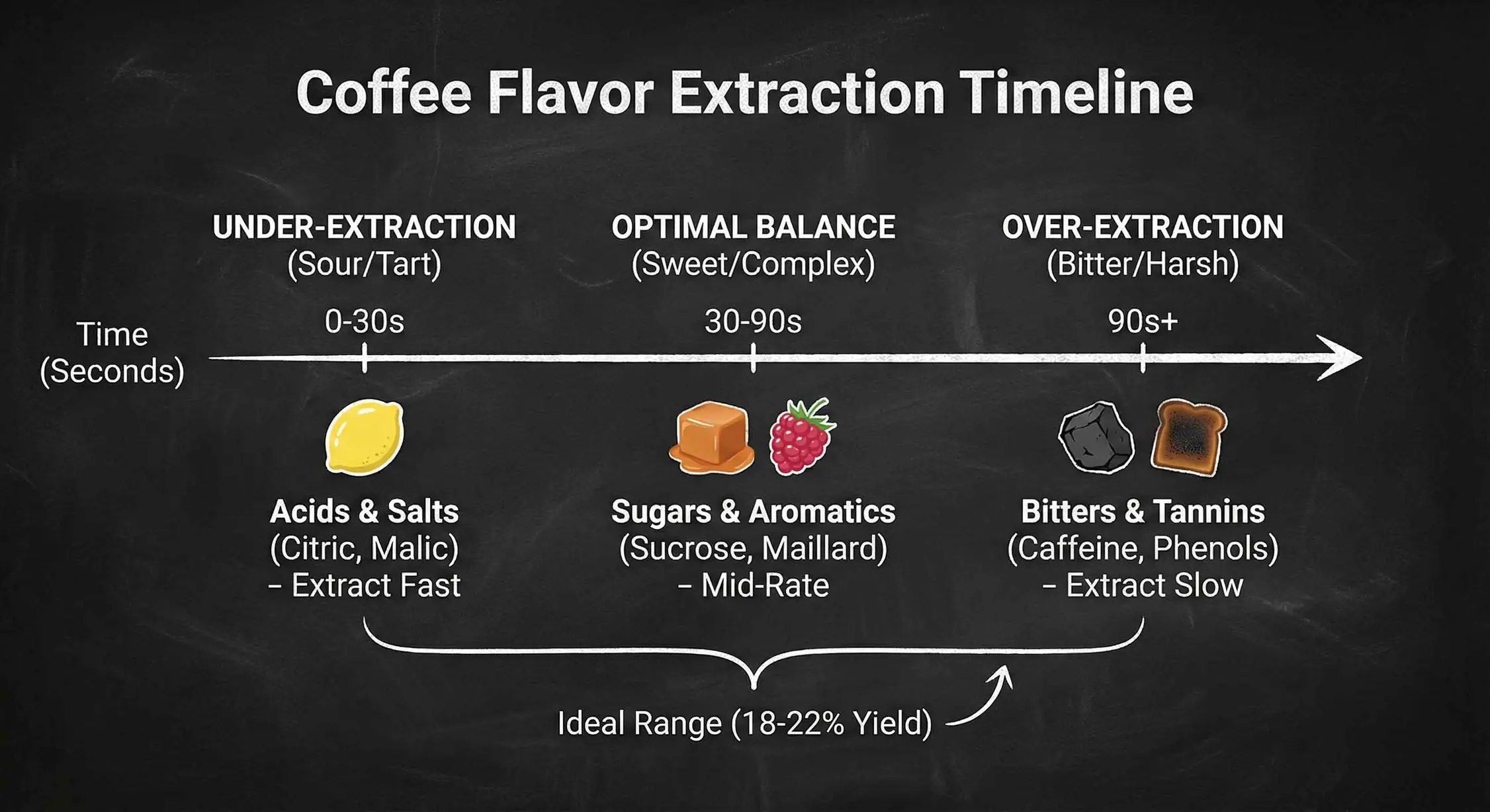
Because sugars and heavier balancing compounds have not yet dissolved, the cup lacks structural sweetness. The acidity feels aggressive rather than vibrant.
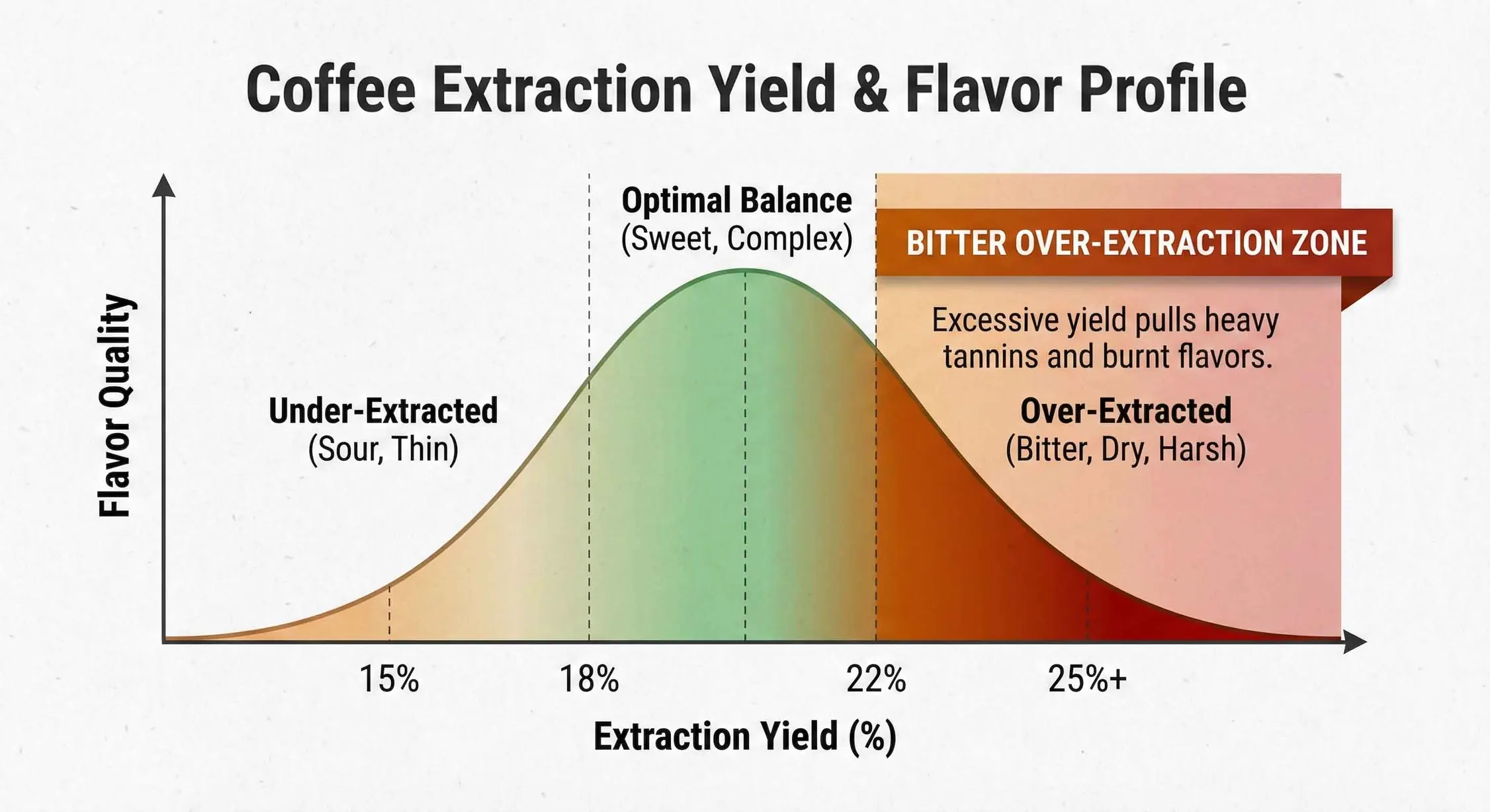
Typical extraction yield: Below 18%.
Under-extracted coffee often feels physically light and finishes quickly on the palate. Mouthfeel is reduced because dissolved solids remain low.
Over-Extraction (Excessive Soluble Yield)
Over-extraction happens when water continues dissolving material beyond the optimal flavor window.
- Primary Causes: Grind too fine, excessive brew time, overly high temperature.
- Dominant Chemistry: Late-stage polyphenols, degraded chlorogenic acids, bitter plant compounds.
- Sensory Outcome: Bitter, drying, astringent, hollow.
Late-stage compounds bind to proteins in saliva, creating a dry, sandpaper-like sensation. This is classic astringency. It is not simply “strong coffee” — it is structural imbalance.
Typical extraction yield: Above 22%.
Over-extracted coffee often feels heavy yet paradoxically empty, because sweetness becomes masked by bitterness.
The Balanced Zone: 18–22% Extraction Yield
Between these extremes lies the balanced extraction window.
According to the Specialty Coffee Association, ideal extraction yield typically falls between 18% and 22%. Within this range, acids, sugars, and bitters exist in structural balance.
This range is not a rigid rule but a statistically validated guideline derived from sensory testing and refractometer measurements (TDS — Total Dissolved Solids).
When extraction falls inside this zone, sweetness supports acidity, bitterness adds depth rather than dryness, and body feels integrated rather than thin or rough.
Flavor Profile Comparison
| Feature | Under-Extraction | Over-Extraction |
|---|---|---|
| Primary Taste | Sour, sharp | Bitter, harsh |
| Mouthfeel | Thin, quick finish | Dry, astringent |
| Sweetness | Underdeveloped | Masked |
| Extraction Yield | Below 18% | Above 22% |
Grind Size: The Primary Control Lever
Extraction is governed by surface area and contact time. Grind size directly controls both.
Finer particles increase surface area and accelerate dissolution. Coarser particles slow extraction by reducing exposed surface.
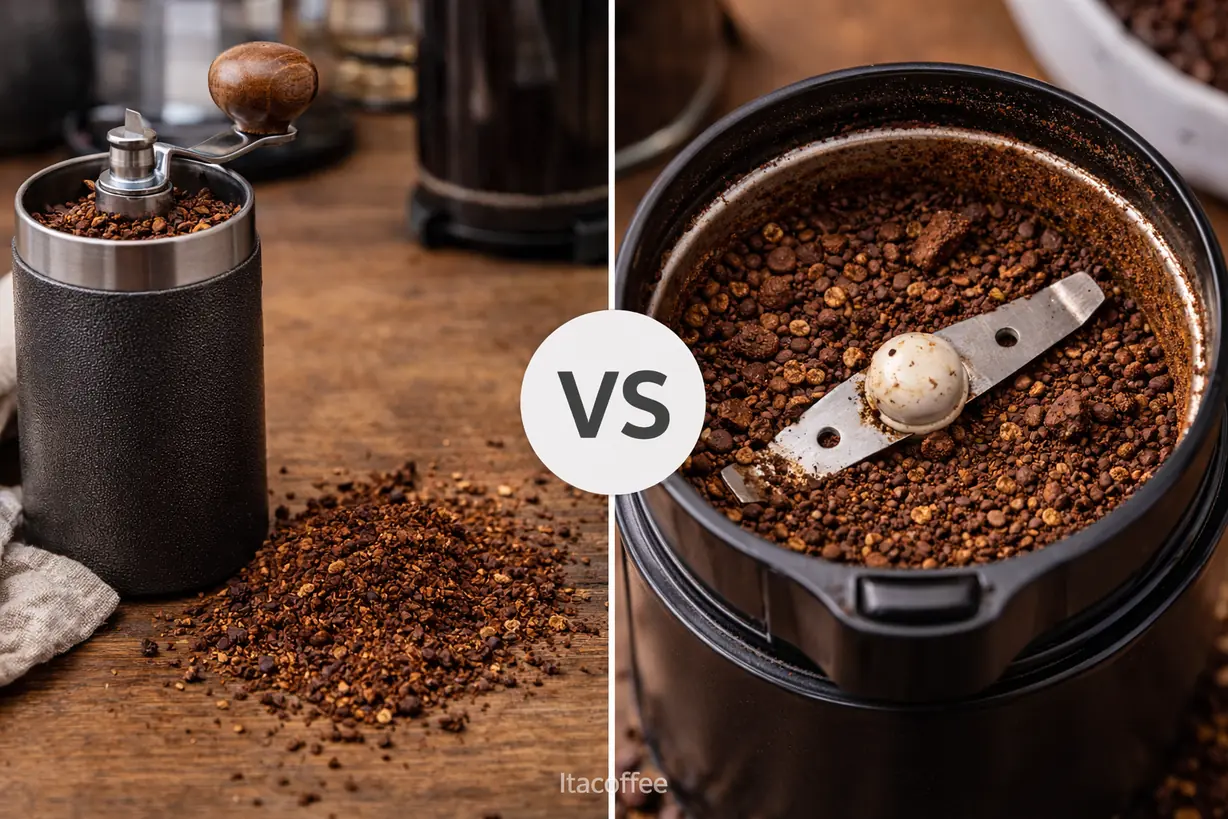
Inconsistent particle size creates a dangerous combination — fines over-extract while boulders under-extract, producing a cup that tastes simultaneously sour and bitter.
For a deeper equipment breakdown, see Burr vs Blade Coffee Grinders.
Mastery comes from adjusting grind size, brew ratio, water temperature, and contact time in coordination — not isolation.
Conclusion
Under vs Over Extraction is not about preference. It is about structural chemical balance.
Under-extraction leaves sweetness trapped inside the grounds. Over-extraction overwhelms sweetness with bitterness and astringency.
Understanding the extraction timeline — and learning to operate inside the 18–22% yield window — transforms brewing from guesswork into repeatable physics.
Editorial note: This article was developed with AI-assisted drafting and human review to ensure clarity, accuracy, and a non-commercial educational tone.