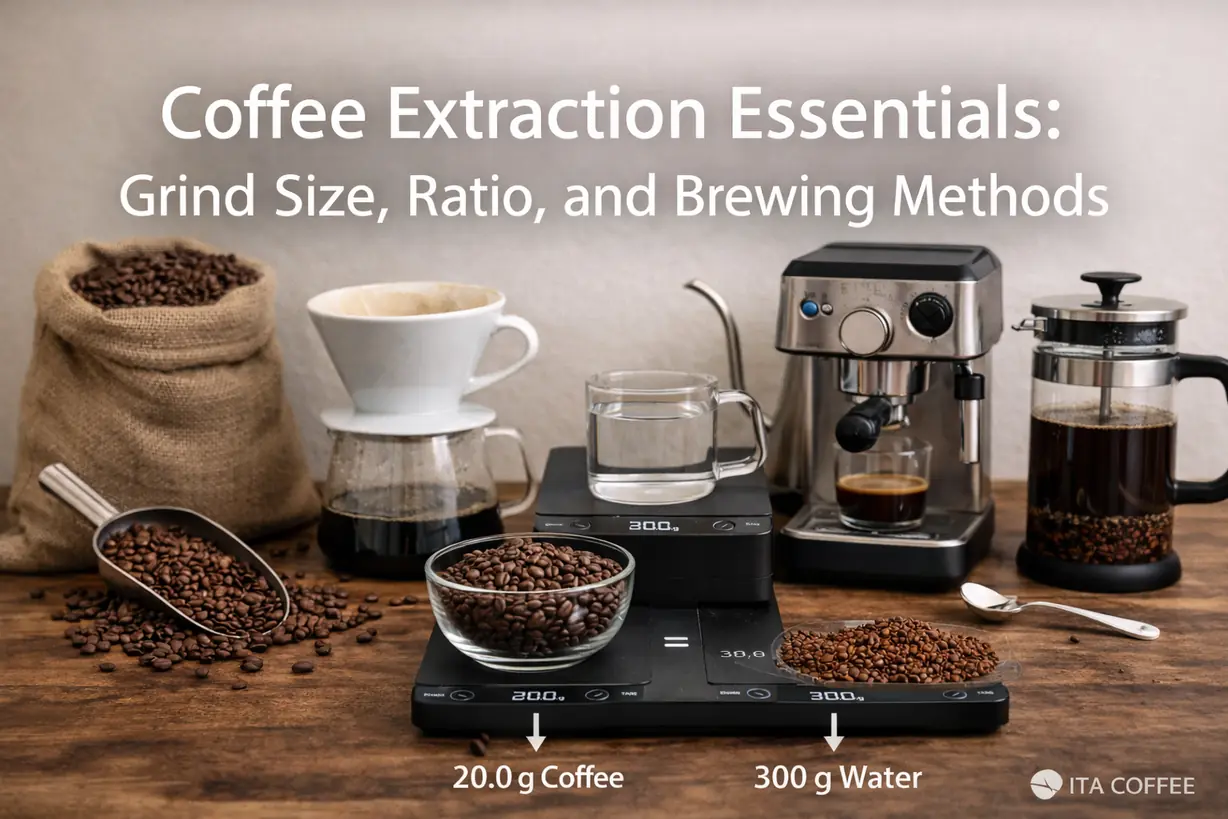
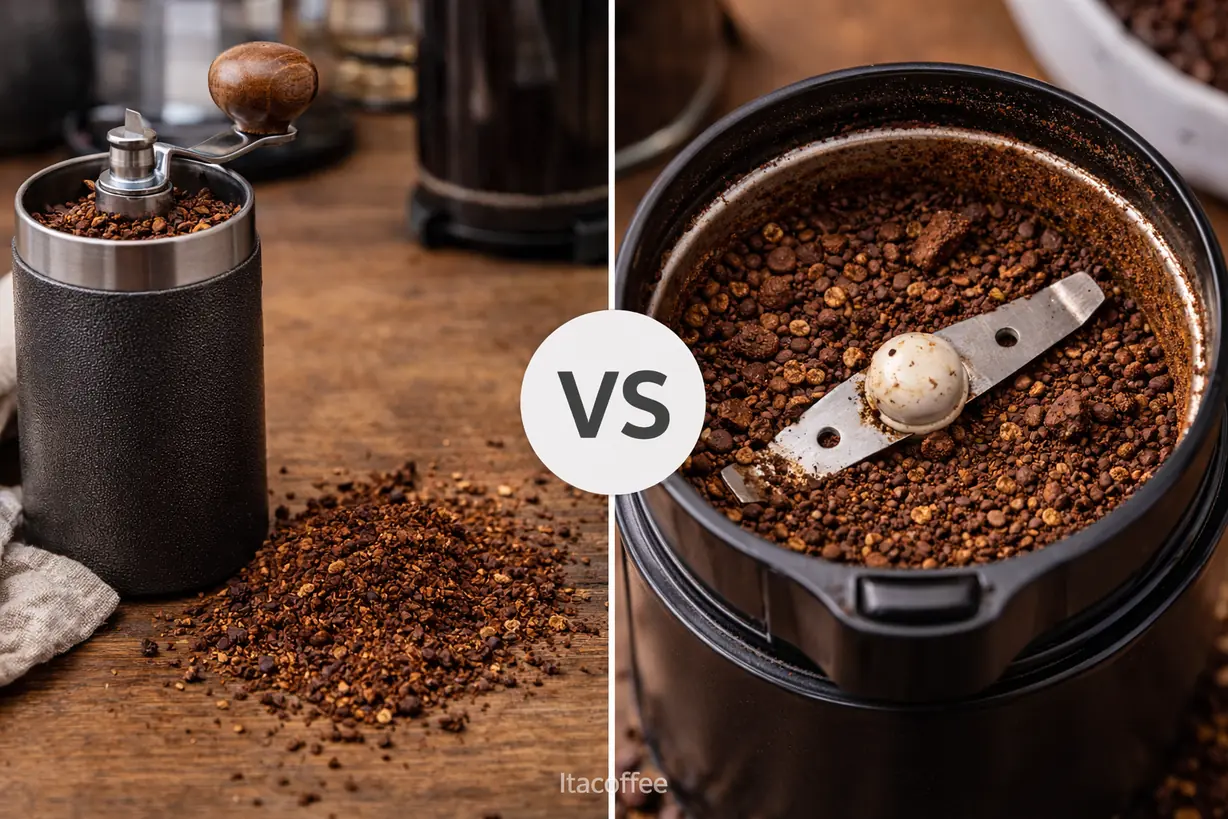
At ITA Coffee, reviews are built on clarity, independence, and real-world use.
The Reviews section exists to help readers choose coffee gear with confidence — not to promote products blindly. Every recommendation is guided by practical evaluation, honest assessment, and a clear understanding of how a tool influences brewing outcomes.
This guide explains the best coffee scales, not by listing features alone, but by analyzing how scales affect extraction, consistency, and repeatability in daily brewing.
In This Guide
Why Coffee Scales Matter (Beyond “Measuring Coffee”)
A coffee scale is not just a measuring tool. It is a control instrument for managing brew ratio, extraction yield, and repeatability.
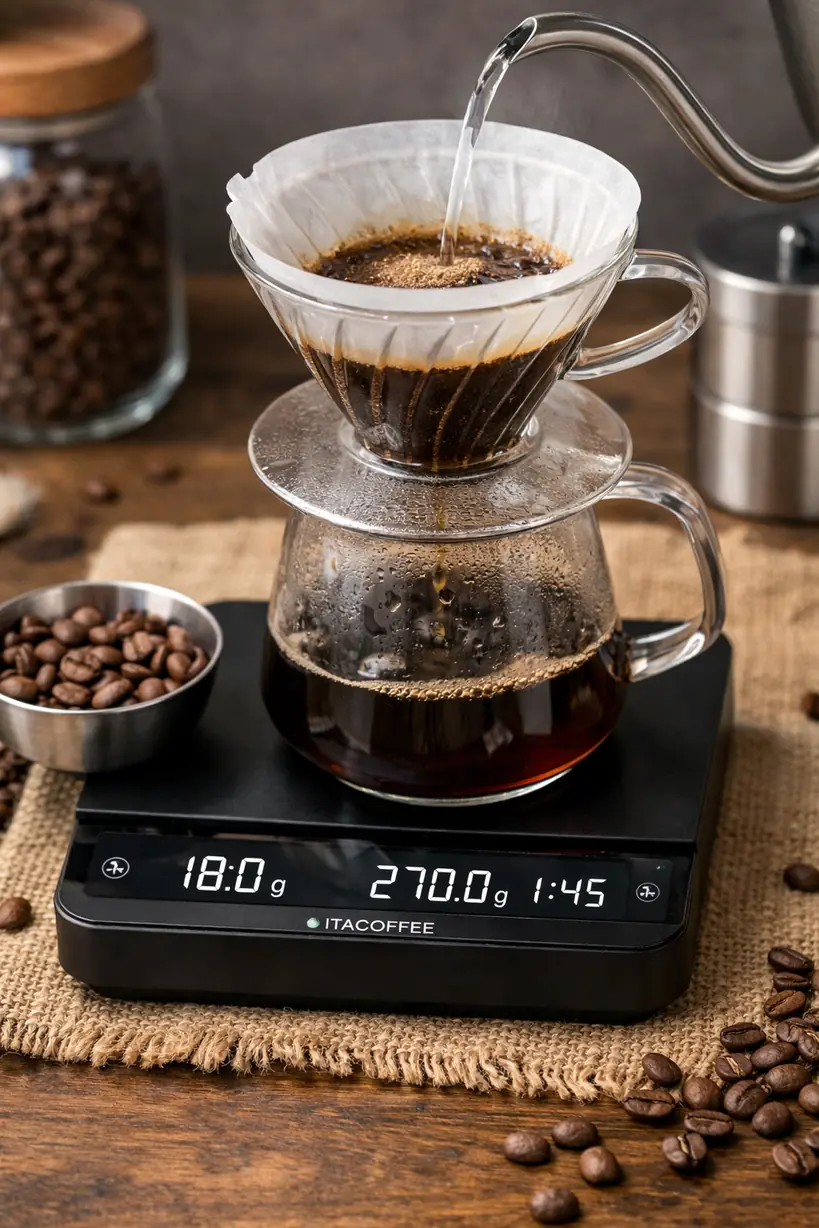
In coffee brewing, small deviations in dose or water can significantly affect flavor. This is because extraction depends on the relationship between:
- Coffee mass (grams)
- Water mass (grams)
- Time (seconds)
These variables are tightly connected, as explained in Coffee Brew Ratios Explained. Without a scale, you lose control over one of the most critical variables.
For a deeper explanation of why precision matters, see Do You Really Need a Coffee Scale?.
Core Criteria: What Makes a Good Coffee Scale
1. Accuracy (Measurement Resolution)
Accuracy refers to how precisely a scale measures weight, typically in increments of 0.1g.
- 0.1g resolution: Required for espresso and precision brewing
- 1g resolution: Acceptable for French press or batch brewing
Why it matters: extraction is sensitive to dose. A 1–2g error can shift flavor balance, contributing to under or over extraction.
2. Response Time (Speed of Measurement)
Response time measures how quickly the scale updates weight changes.
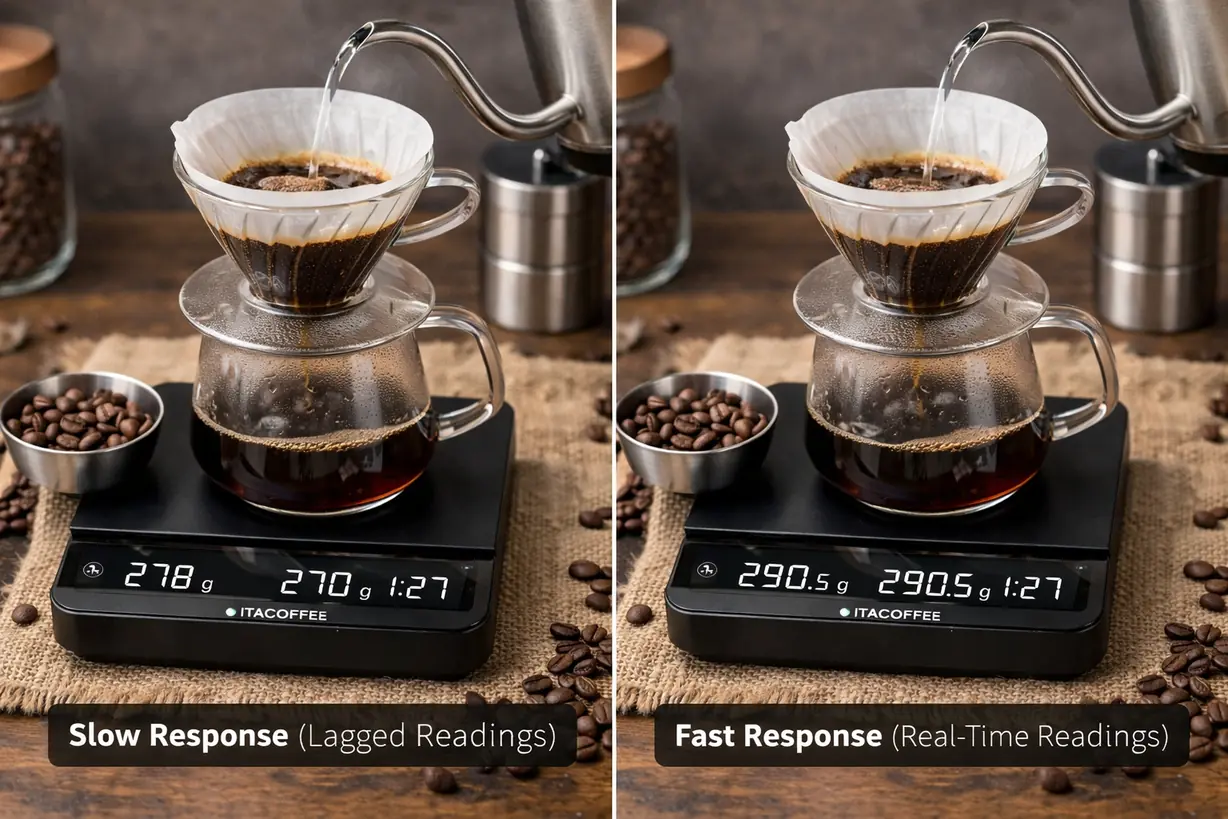
A slow scale introduces delay between pouring and feedback. This leads to:
- Over-pouring during bloom
- Inconsistent pulse pouring
- Poor flow rate control
In percolation brewing methods (like pour over), flow control directly impacts extraction — see Percolation Brewing Explained.
3. Stability and Drift Control
A stable scale maintains consistent readings under continuous load.
- Low-quality scales may “drift” during brewing
- This introduces hidden errors in total water weight
Drift becomes especially problematic in longer brews like French press or cold brew.
4. Timer Integration
Time is a core extraction variable. A built-in timer simplifies workflow by synchronizing:
- Bloom phase
- Pour intervals
- Total brew time
This aligns with the principles outlined in Coffee Extraction Explained.
5. Maximum Capacity
Capacity determines whether a scale supports different brewing setups:
- 1–2 kg: Suitable for espresso and pour over
- 3 kg+: Needed for large brewers or batch brewing
Types of Coffee Scales (Use-Case Based)
1. Basic Digital Scales
Characteristics:
- No timer
- Slower response
- Lower cost
Best for:
- Beginners
- Immersion methods (e.g., French press)
Limitation: lacks real-time control for dynamic brewing.
2. Coffee-Specific Scales
Designed specifically for brewing workflows:
- Fast response time
- Integrated timer
- Flow rate awareness
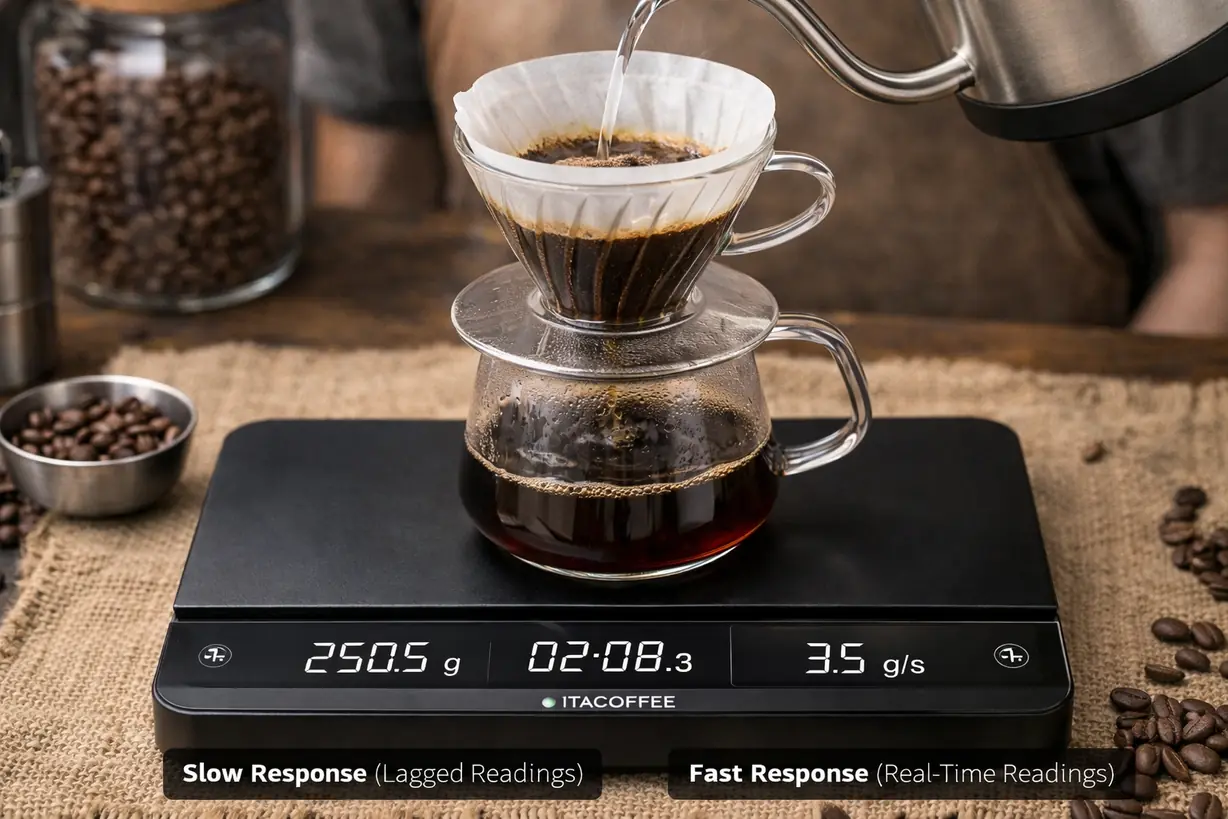
Best for:
- Pour over
- AeroPress
- Precision brewing
These scales help maintain consistency across brews, especially when dialing in recipes from guides like Pour Over (V60) Brewing Guide.
3. Espresso Scales
Optimized for espresso workflows:
- Compact size (fits under portafilter)
- High sensitivity (0.1g or better)
- Fast refresh rate
Why this matters:
Espresso extraction is extremely sensitive to yield and timing. A 1g variation can alter shot balance significantly — as discussed in Espresso vs Lungo vs Ristretto.
Best Coffee Scales: Practical Recommendations
Rather than ranking by brand, we categorize scales based on performance and use case.
Best for Beginners
- Resolution: 0.1g–1g
- Basic timer (optional)
- Moderate response speed
Focus: learning consistency, not perfection.
Best for Pour Over Enthusiasts
- Fast response time
- Integrated timer
- Stable readings
Focus: controlling flow rate and brew ratio.
Best for Espresso Precision
- High-speed response
- Compact footprint
- High sensitivity (0.1g or better)
Focus: shot consistency and yield control.
Common Mistakes When Choosing a Coffee Scale
1. Overvaluing Price
More expensive does not always mean better performance. As explained in Why Expensive Coffee Gear Doesn’t Fix Bad Coffee, technique matters more than equipment cost.
2. Ignoring Response Speed
Many users focus on accuracy but overlook speed. In dynamic brewing, speed is equally important.
3. Using Kitchen Scales for Precision Brewing
Kitchen scales often lack:
- Speed
- Stability
- Fine resolution
This limits your ability to control extraction variables effectively.
Conclusion: Choosing the Right Coffee Scale
The best coffee scale is not defined by brand or price, but by how well it supports repeatable, controlled extraction.
In practical terms:
- If you want consistency → prioritize accuracy and stability
- If you brew pour over → prioritize response time and timer
- If you make espresso → prioritize speed and sensitivity
A scale is one of the few tools that directly improves brewing precision without changing your beans or equipment.
At ITA Coffee, we encourage you to treat brewing as a controlled process. Start by measuring your coffee and water precisely, observe how small changes affect flavor, and refine your method over time. For a deeper understanding, explore our Coffee Knowledge and Brewing Guides sections.