The terms “espresso,” “ristretto,” and “lungo” are frequently misunderstood as referring to different types of coffee beans or roasting methods. In reality, they are strictly defined by extraction parameters—specifically, the ratio of dry ground coffee to the final liquid yield. Manipulating this ratio fundamentally alters the chemical composition of the beverage in your cup. Understanding these differences is a core component of Coffee Knowledge, as it allows you to intentionally extract specific flavor compounds based on your sensory goals.
Rather than viewing these drinks as entirely separate entities, they should be understood as different stopping points along the exact same timeline of how to make espresso. Each variant presents a unique balance of acidity, sweetness, bitterness, and tactile texture.
In This Guide
The Physics of Extraction: Solubility and Time
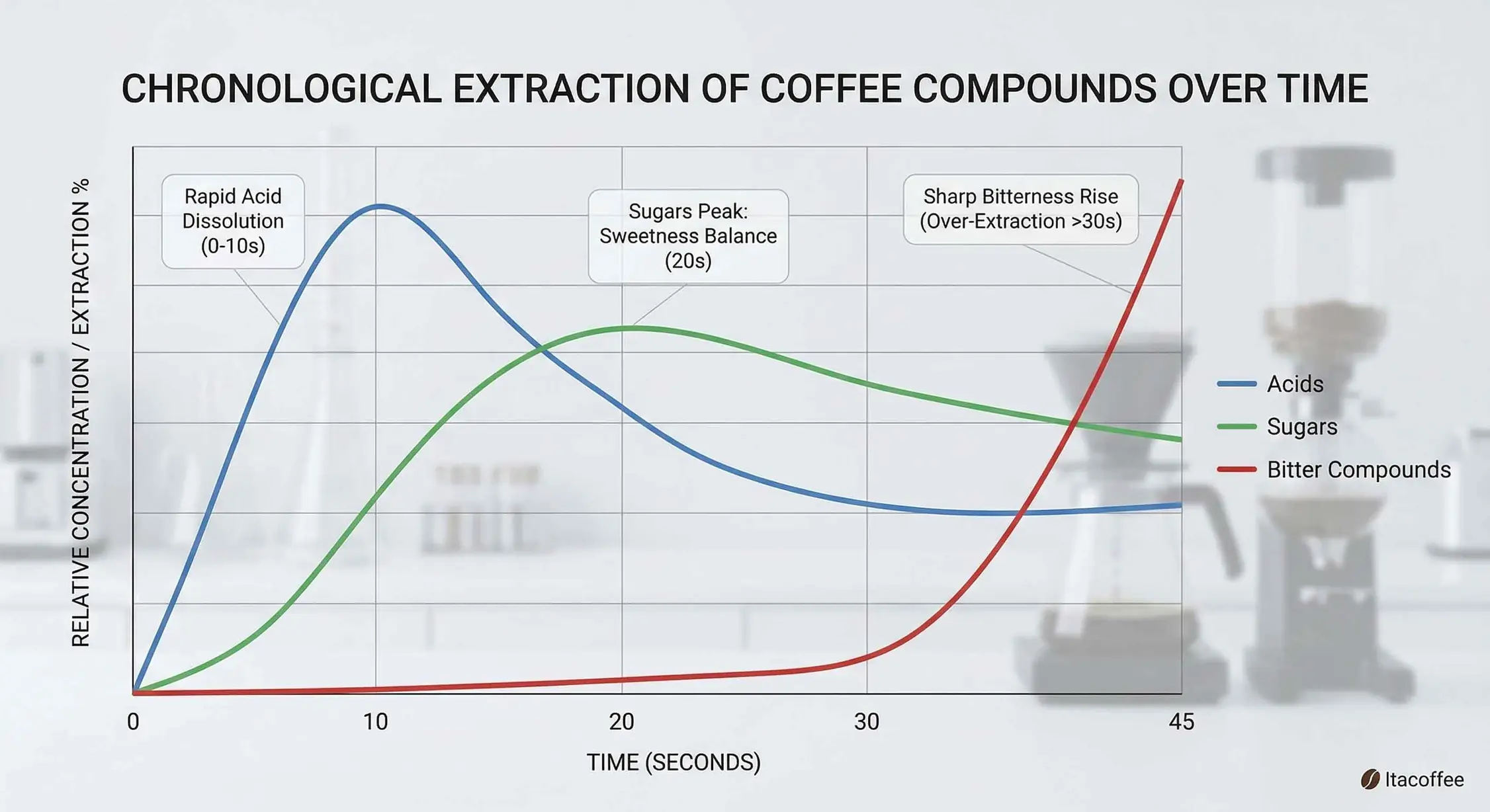
Before analyzing the specific beverages, it is critical to understand the chronological order in which water dissolves coffee compounds under high pressure (typically 9 bars):
- Phase 1 (Acids and Fats): The highly soluble organic acids (fruit notes) and lipid oils dissolve almost immediately upon contact with pressurized water. These compounds create the dense, viscous texture of the crema.
- Phase 2 (Sugars): As the extraction progresses, water begins to dissolve complex carbohydrates and sugars, which provide sweetness and balance out the sharp initial acidity.
- Phase 3 (Plant Fibers and Tannins): In the final stages of extraction, the less soluble structural fibers of the bean break down, releasing bitter compounds and heavy tannins into the cup.
Because compounds extract at different rates, changing the total volume of water pushed through the coffee puck dictates exactly which compounds make it into the final beverage. To fully grasp this chronological breakdown, refer to our detailed guide on Coffee Extraction Explained: How Timing Shapes Flavor.
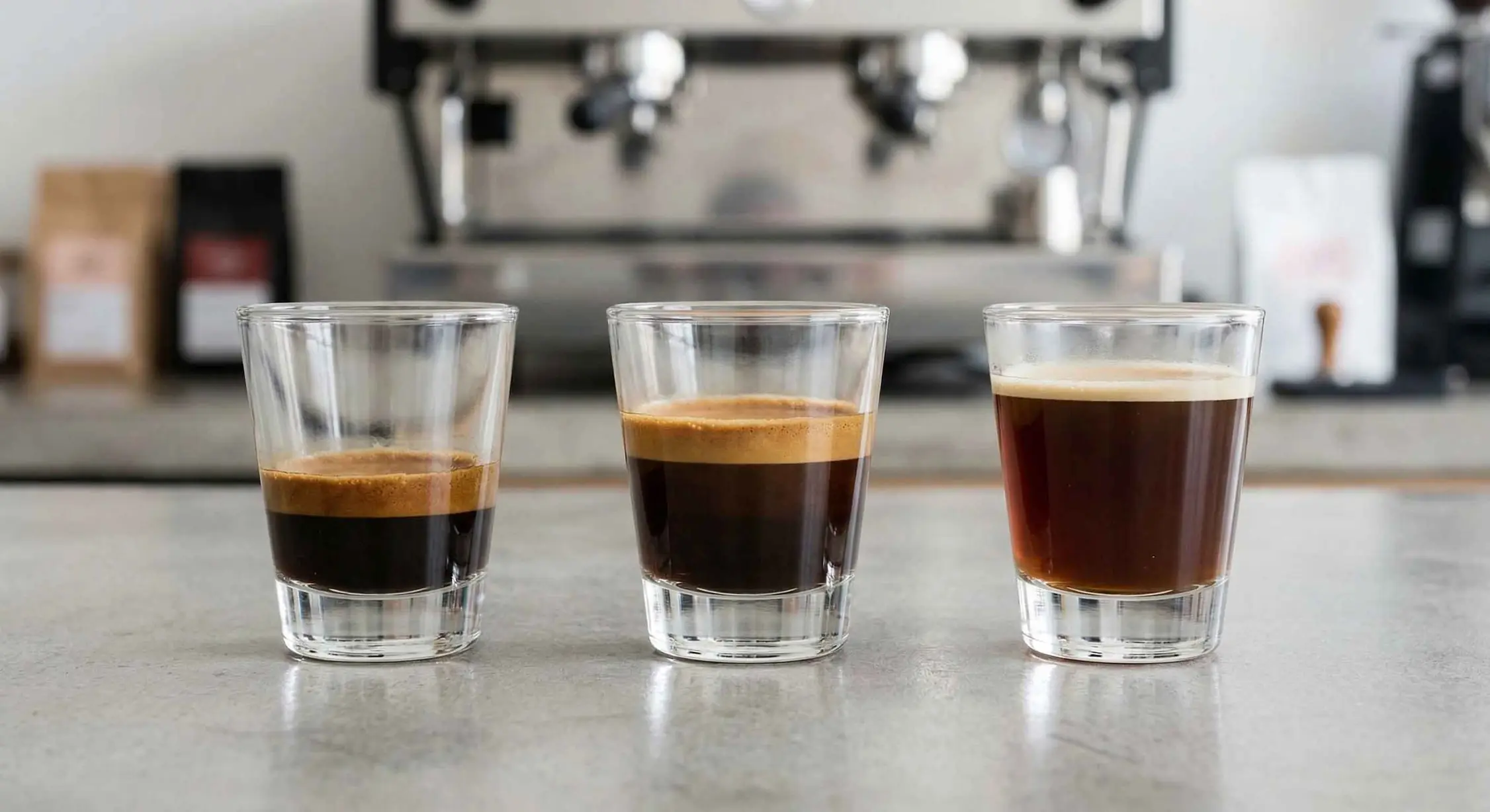
Ristretto: The Restricted Extraction
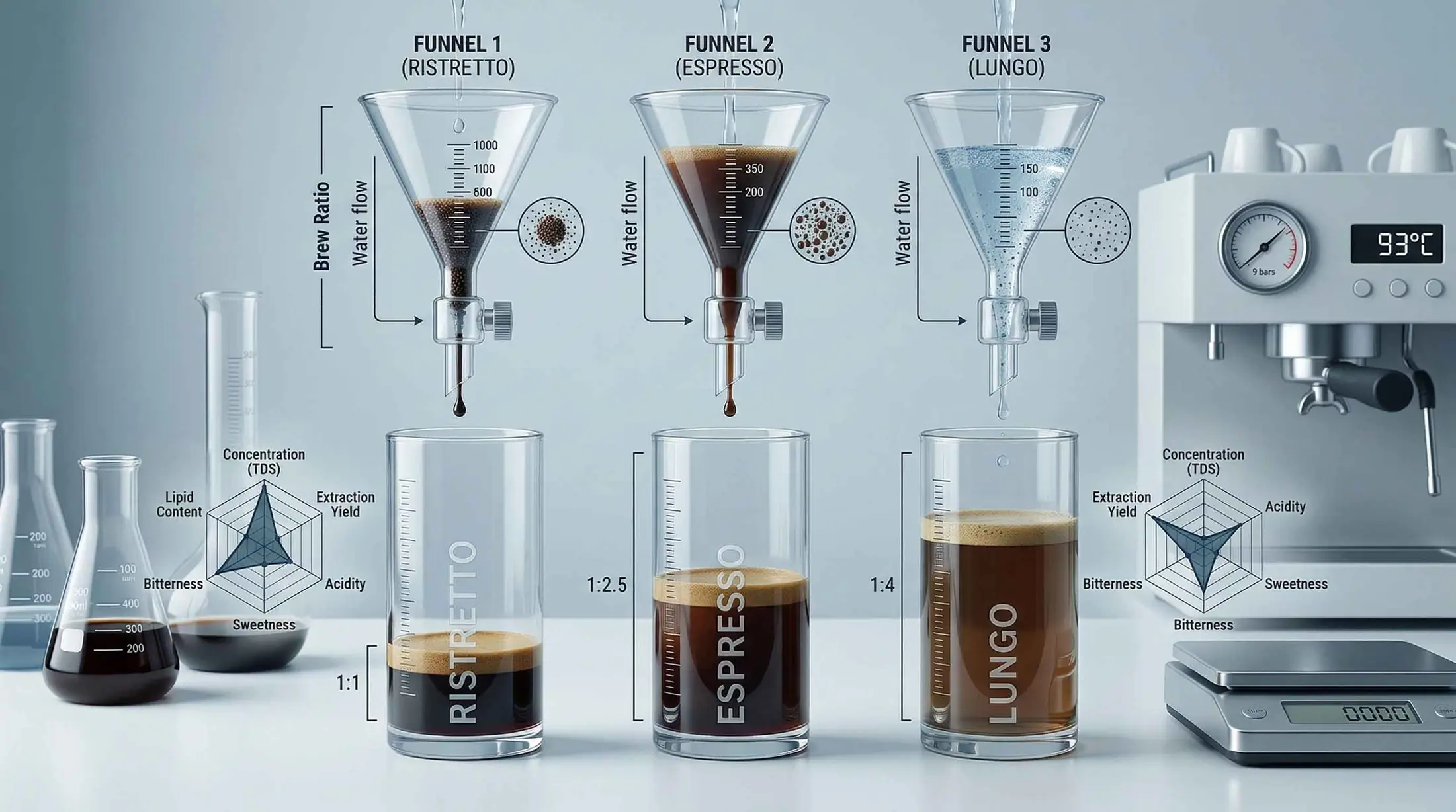
A “ristretto” (Italian for restricted) is a highly concentrated, short shot of espresso. The barista uses the exact same dose of ground coffee but stops the extraction much earlier, restricting the total water volume.
1. Chemical Profile
Because the extraction is cut short, a ristretto primarily consists of the compounds dissolved in Phase 1 and the early stages of Phase 2. It is heavily saturated with lipid oils and organic acids, while almost entirely lacking the bitter compounds extracted later in the process.
2. Extraction Variables
- Brew Ratio: Typically 1:1 to 1:1.5 (e.g., 18g of ground coffee yields 18g to 27g of liquid).
- Sensory Output: Intensely vibrant acidity, rich sweetness, zero astringency, and a highly concentrated flavor profile.
- Physical State: Because of the high concentration of emulsified oils relative to the low water volume, a ristretto possesses a heavy, syrupy texture. This density is a prime example of What Does Body Mean in Coffee? Understanding Texture and Mouthfeel.
- Brewing Challenge: While highly concentrated (high Total Dissolved Solids, or TDS), a ristretto is technically under-extracted (low extraction yield). If pulled with a light roast, the lack of dissolving time can result in an overwhelmingly sour, unbalanced cup.
Espresso (Normale): The Structural Balance
The standard espresso, or “normale,” is the baseline from which the other two drinks deviate. It is engineered to capture a complete, balanced profile of acids, sugars, and a mild, pleasant bitterness.
1. Chemical Profile
An espresso allows enough water through the puck to fully extract the sugars (Phase 2) while stopping just as the harsh, astringent tannins (Phase 3) begin to dissolve. This creates a structural equilibrium between sour and bitter.
2. Extraction Variables
- Brew Ratio: Typically 1:2 to 1:2.5 (e.g., 18g of ground coffee yields 36g to 45g of liquid).
- Sensory Output: Balanced acidity and sweetness, distinct origin characteristics, and a lingering, pleasant finish.
- Physical State: Moderate viscosity and a stable, elastic crema.
- Brewing Challenge: This ratio requires precise dialing-in of the grinder to ensure the shot hits the target yield within the standard 25-30 second timeframe.
Lungo: The Prolonged Extraction
A “lungo” (Italian for long) involves pushing significantly more water through the same dose of coffee. It is not simply an espresso diluted with hot water (which is an Americano); rather, all the water in a lungo actively passes through the coffee bed, continuously extracting compounds.
1. Chemical Profile
By extending the extraction well into Phase 3, a lungo intentionally draws out the less soluble, heavier structural compounds of the coffee bean. The resulting beverage has a higher total extraction yield (more of the physical bean has dissolved) but a lower concentration (TDS) due to the higher volume of water.
2. Extraction Variables
- Brew Ratio: Typically 1:3 to 1:4 (e.g., 18g of ground coffee yields 54g to 72g of liquid).
- Sensory Output: Pronounced bitterness, muted acidity, baked or roasty notes, and a thinner, more tea-like body.
- Physical State: High liquid volume, lower viscosity, and a thinner, paler crema that dissipates quickly.
- Brewing Challenge: A lungo runs a high risk of pulling overly harsh, astringent flavors. To understand the physics behind this structural breakdown, review our analysis of Under vs Over Extraction Explained: The Science of Coffee Flavor.
Technical Comparison of Espresso Ratios
To effectively map your brewing parameters, use this objective comparison of how altering the liquid yield changes the physical state and sensory output of the beverage.
| Attribute | Ristretto | Espresso (Normale) | Lungo |
|---|---|---|---|
| Typical Brew Ratio | 1:1 to 1:1.5 | 1:2 to 1:2.5 | 1:3 to 1:4 |
| Concentration (TDS) | Highest (Very Strong) | Moderate | Lowest (More Dilute) |
| Extraction Yield | Low (Risk of under-extraction) | Balanced (18-22%) | High (Risk of over-extraction) |
| Tactile Body | Heavy, Syrupy | Rounded, Medium | Thin, Watery |
| Dominant Flavor Profile | Sharp Acidity, Intense Sweetness | Harmonious Sweetness and Acidity | Prominent Bitterness, Muted Acidity |
Conclusion: Engineering Your Extraction
The distinction between a ristretto, an espresso, and a lungo is not a matter of subjective terminology; it is a measurable application of extraction physics. By restricting water, you isolate the highly soluble acids and fats. By prolonging water contact, you force the dissolution of heavier, bitter plant fibers.
To gain strict control over your sensory output at home, we recommend keeping your dose and grind size static, and pulling three separate shots at a 1:1, 1:2, and 1:3 ratio to taste the chronological breakdown of compounds for yourself. If you need a more technical foundation on how to execute these specific measurements using a scale, review our fundamental breakdown of Coffee Brew Ratios Explained: A Technical Guide to Precision Extraction.
Editorial note: This article was developed with AI-assisted drafting and human review to ensure clarity, accuracy, and a non-commercial educational tone.