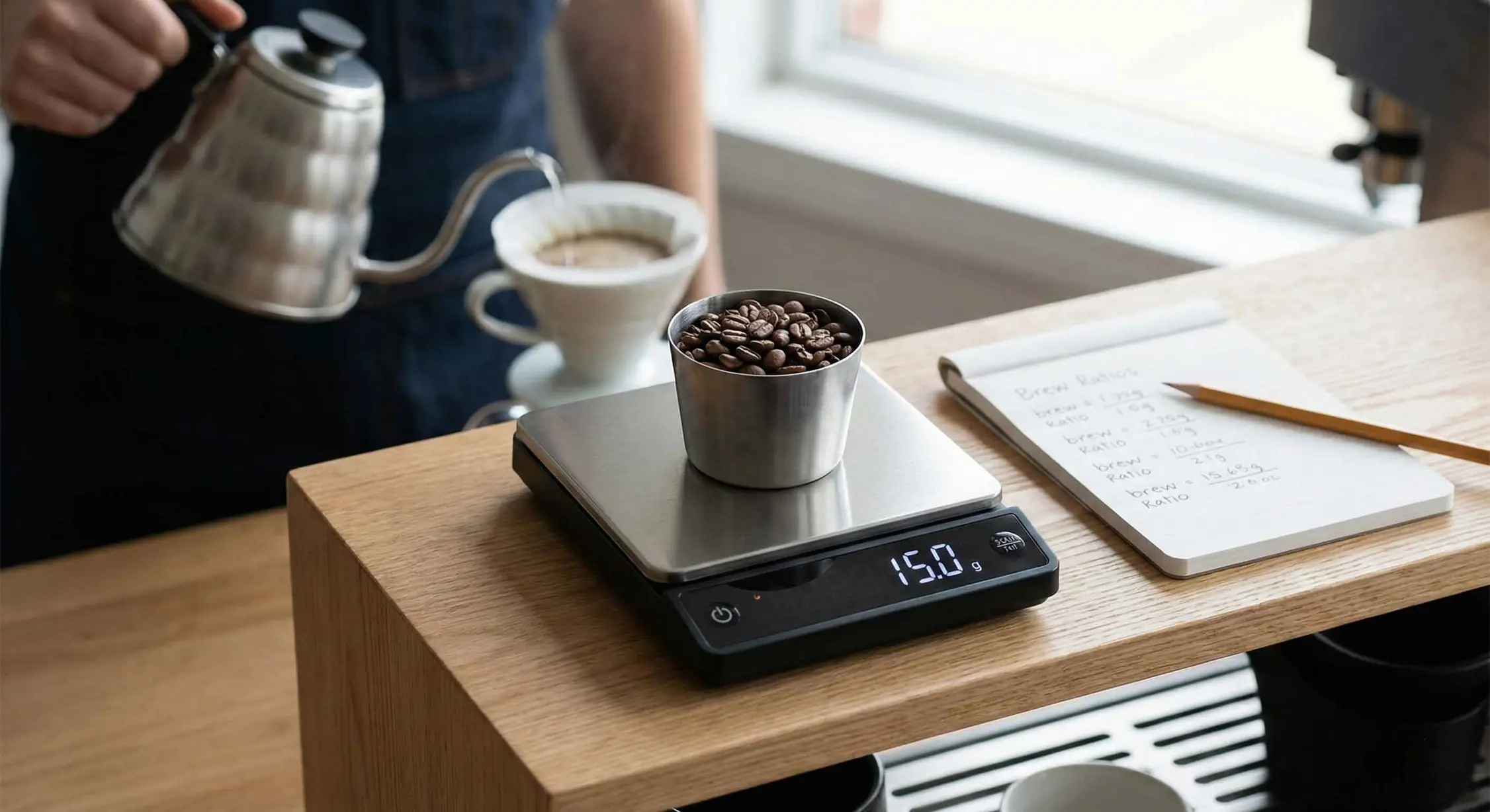
In coffee brewing, consistency is not achieved by chance; it is the result of strictly controlling variables. Relying on volumetric measurements—such as scoops or tablespoons—introduces a critical margin of error. A digital scale is not a mere accessory, but the foundational tool required to establish a precise solvent-to-solute ratio, ensuring repeatable and mathematically sound extractions. While estimating measurements may produce a drinkable beverage, it fundamentally strips the brewer of control over the chemical extraction process.
Understanding why a coffee scale is non-negotiable requires examining the physics of bean density, the concept of brew ratios, and the scientific method of isolating variables during the brewing process.
In This Guide
The Physics of Density: Why Volumetric Measurement Fails
The most common mistake in casual coffee brewing is measuring coffee by volume. Coffee beans are organic materials that undergo drastic physical transformations during the roasting process, causing their density to fluctuate significantly based on multiple factors:
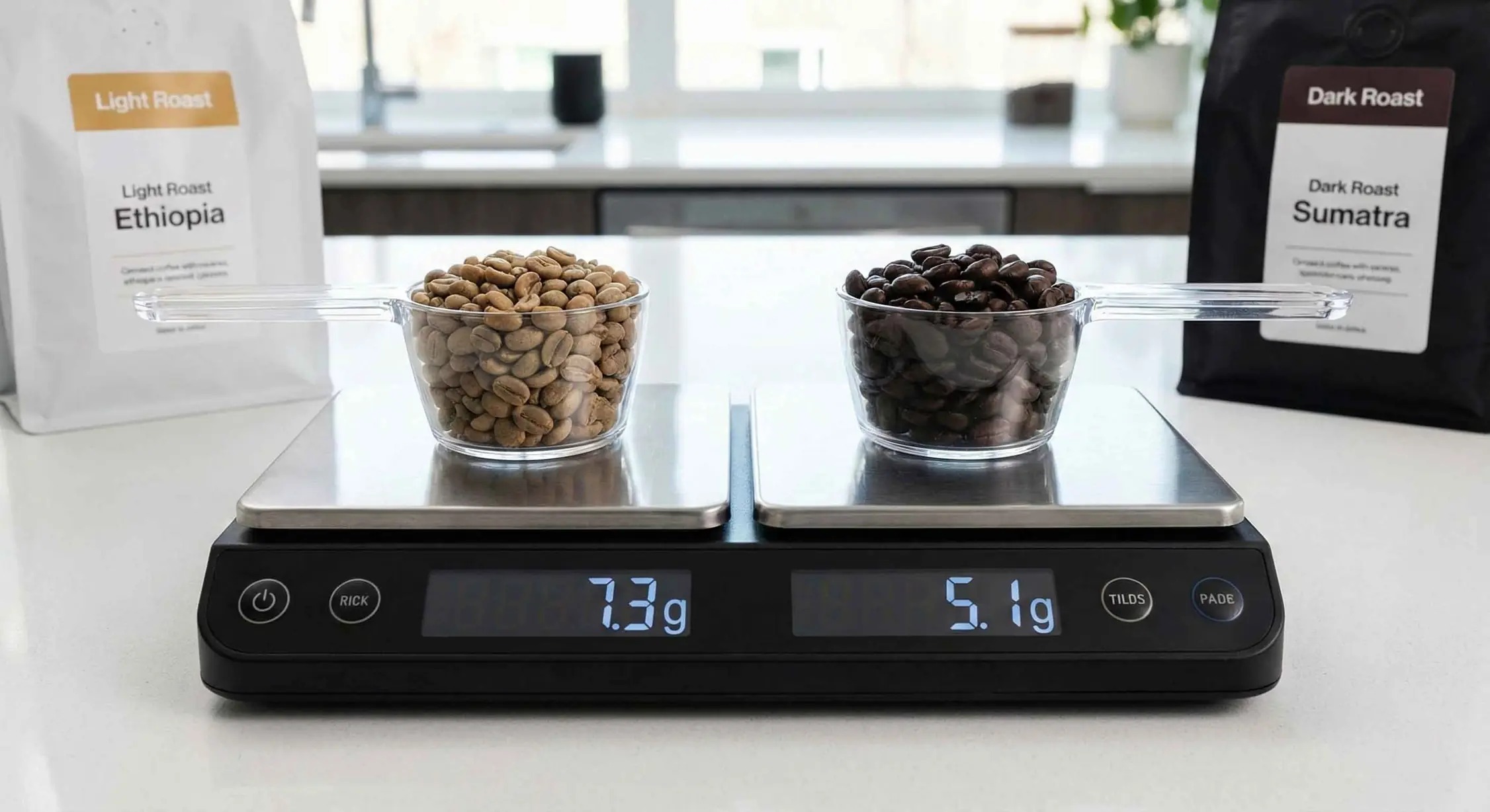
- Roast Level Variation. As coffee is roasted, it loses moisture mass and expands in physical size. A dark roast bean is significantly larger and lighter than a dense, lightly roasted bean. Therefore, one tablespoon of a light roast may weigh 7 grams, while one tablespoon of a dark roast might only weigh 5 grams.
- Varietal and Processing Differences. Different coffee species (Arabica vs. Robusta) and varietals (e.g., Pacamara vs. Ethiopian Heirloom) grow to different sizes. Processing methods also affect cellular density.
If you rely on a scoop, your actual dry coffee dose will fluctuate wildly every time you change your coffee beans. This unmeasured fluctuation in the solute (coffee) directly destabilizes your extraction parameters, making it impossible to accurately diagnose under vs over extraction defects.
The Core Principle: The Brew Ratio
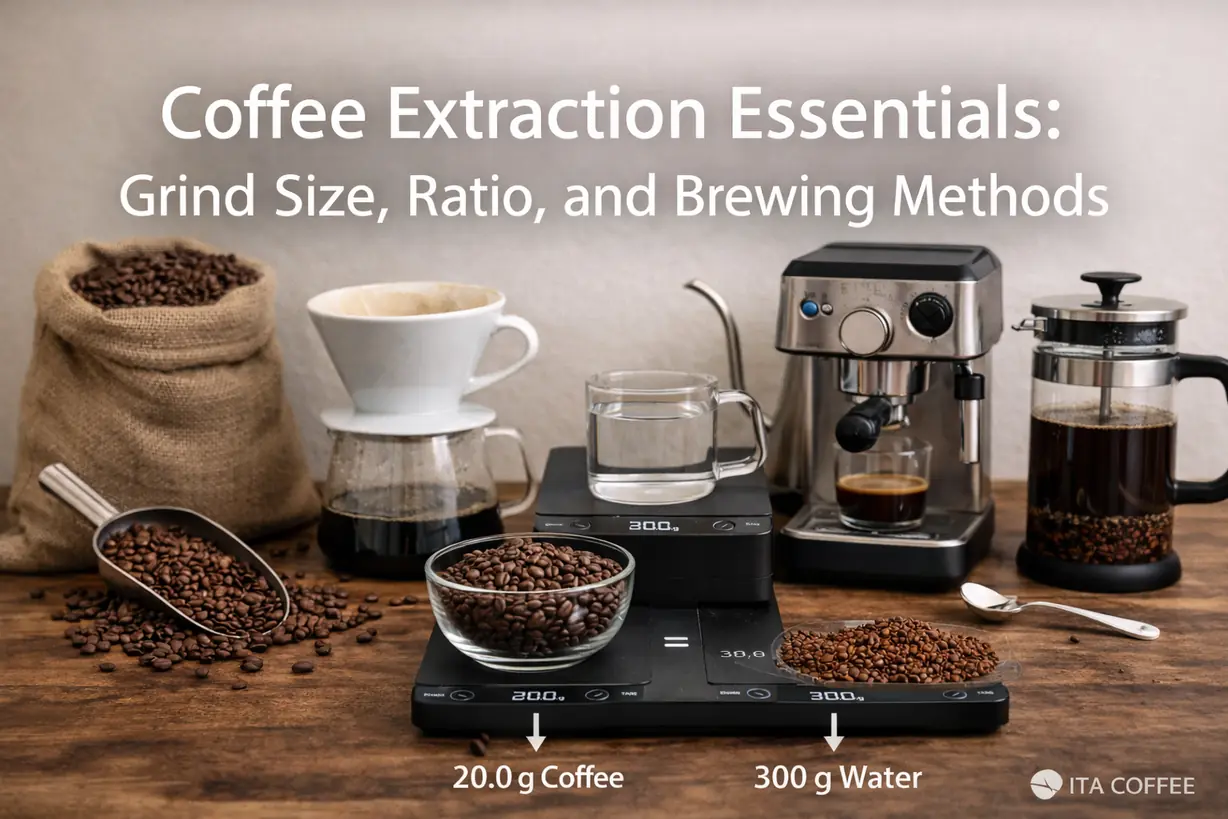
Extraction is the process of water (the solvent) dissolving chemical compounds from the coffee grounds (the solute). The relationship between these two components is called the brew ratio.
A standard filter coffee ratio is often 1:15 (1 gram of coffee to 15 grams of water). This ratio dictates the theoretical concentration (Total Dissolved Solids, or TDS) and the potential extraction yield.
- If you do not weigh your coffee, your dose is unknown.
- If you do not weigh your water, your solvent volume is unknown.
Without a scale, your ratio might be 1:12 one day and 1:18 the next. This drastic shift fundamentally alters the chemical composition of the final cup, changing the balance of organic acids, sugars, and bitter alkaloids. Controlling this ratio with a scale is the only way to dictate the resulting body, texture, and mouthfeel with intentionality.
Isolating Variables for Dialing In
To improve a cup of coffee, a brewer must make calculated adjustments—a process known as “dialing in.” The scientific method dictates that to observe the effect of a single variable, all other variables must remain constant.
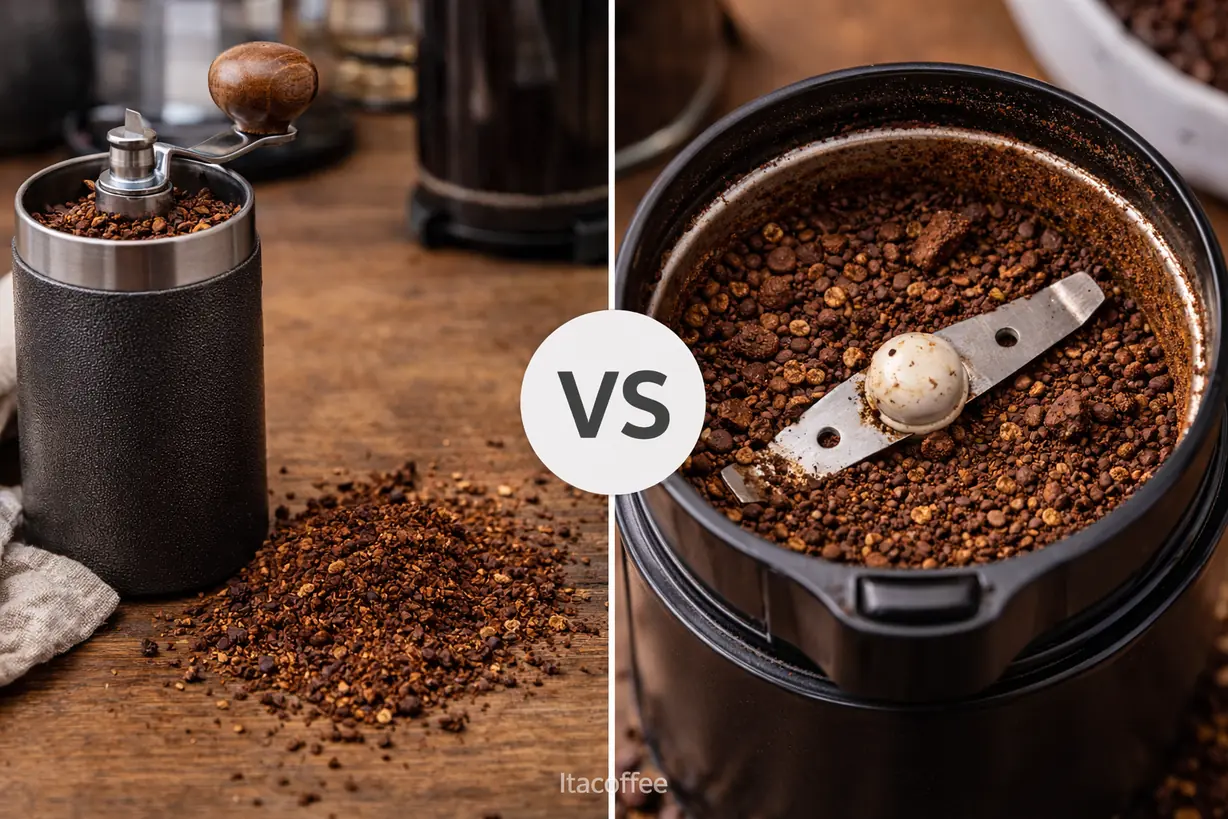
When diagnosing a brew that is too sour or too bitter, the primary tool for correction is adjusting the particle size. However, the relationship between coffee grind size and extraction mechanics only behaves predictably if the dose and water volume are locked.
If your dose fluctuates by even 1.5 grams due to imprecise scooping, the resistance in the coffee bed changes. The water will flow faster or slower regardless of your grind setting. A scale eliminates dose and water weight as moving targets, allowing you to confidently adjust your grinder knowing that any change in flow rate or flavor is solely the result of your particle size adjustment.
Comparing Measurement Methods: Gravimetric vs. Volumetric
| Variable | Gravimetric (Using a Scale) | Volumetric (Using Scoops/Sight) |
|---|---|---|
| Dose Consistency | Absolute. 15g is always exactly 15g. | Highly variable based on roast and bean density. |
| Water Measurement | Precise to the gram; allows for dynamic flow rate tracking (g/s). | Estimated by cup lines; fails to account for water retained in the grounds. |
| Variable Isolation | Allows brewer to isolate grind size and temperature to fix defects. | Impossible. Fluctuating ratios obscure the root cause of poor flavor. |
Conclusion
Brewing coffee without a scale is an exercise in guesswork, inherently limiting your ability to understand or control the extraction process. By transitioning to gravimetric measurement, you stabilize the solvent-to-solute ratio, account for natural variations in bean density, and establish the controlled environment necessary to evaluate your brewing technique objectively.
Incorporate a digital scale capable of measuring in 0.1-gram increments into your workflow. Secure your fundamental variables first, and approach your brewing with analytical precision.
— ITA Coffee | Brewing Guides for Curious, Thoughtful Coffee Makers
Editorial note: This article was developed with AI-assisted drafting and human review to ensure clarity, accuracy, and an educational, non-commercial tone.