In This Guide
Do You Need a Burr Grinder for Espresso: The Core Principle
Do you need a burr grinder for espresso is not a matter of preference—it is a requirement dictated by extraction physics.
Espresso uses high pressure (~9 bars) and fine grind sizes within a narrow tolerance range. Under these conditions, small variations in particle size create large differences in flow resistance.
This is why understanding do you need a burr grinder for espresso requires analyzing grind consistency rather than equipment categories.
Why Do You Need a Burr Grinder for Espresso Extraction?
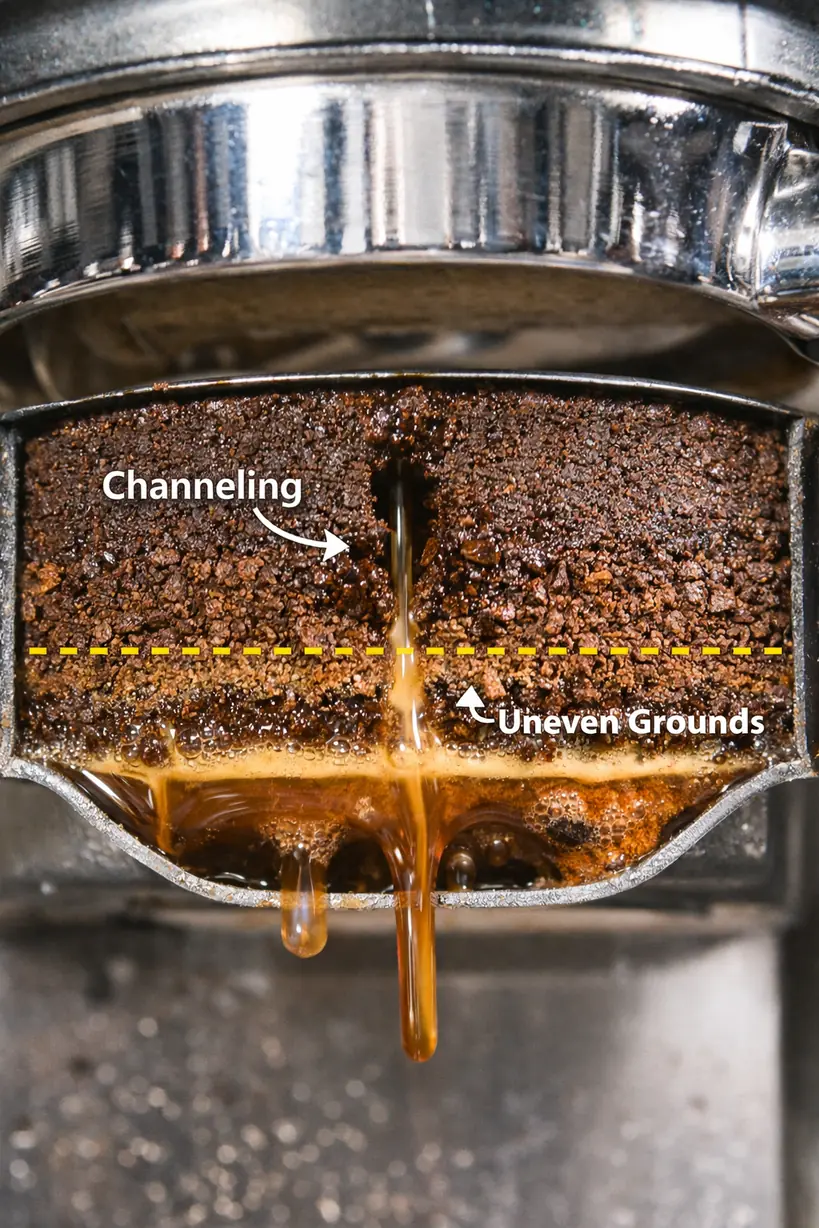
Espresso is a pressure-driven extraction system. Water flows through the coffee bed based on resistance created by particle size.
- Uniform particles → stable resistance → even extraction
- Uneven particles → weak points → channeling
This uneven flow behavior is explained in detail in
Coffee Channeling Explained: Causes, Effects, and How to Fix Uneven Extraction.
Without uniform grind size, espresso becomes physically unstable.
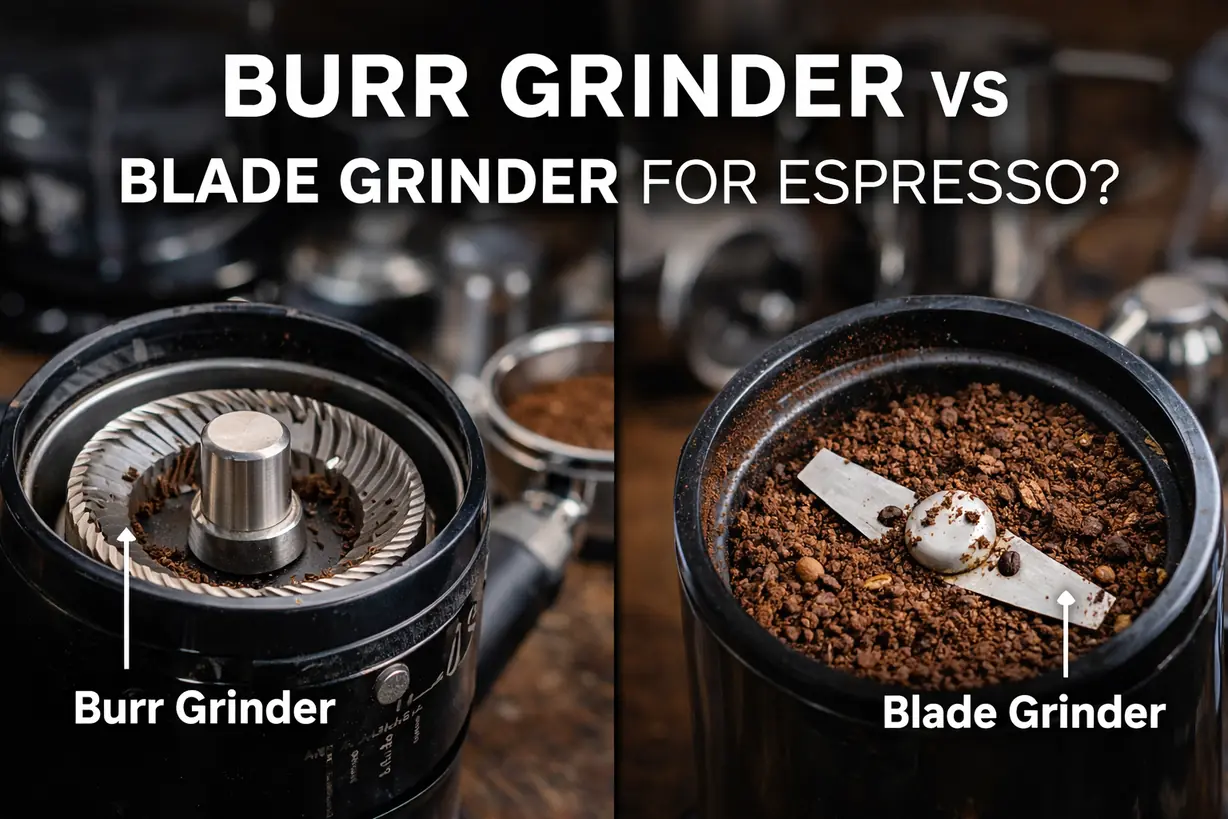
Burr Grinder vs Blade Grinder in Espresso Context
Blade Grinder: Why It Fails for Espresso
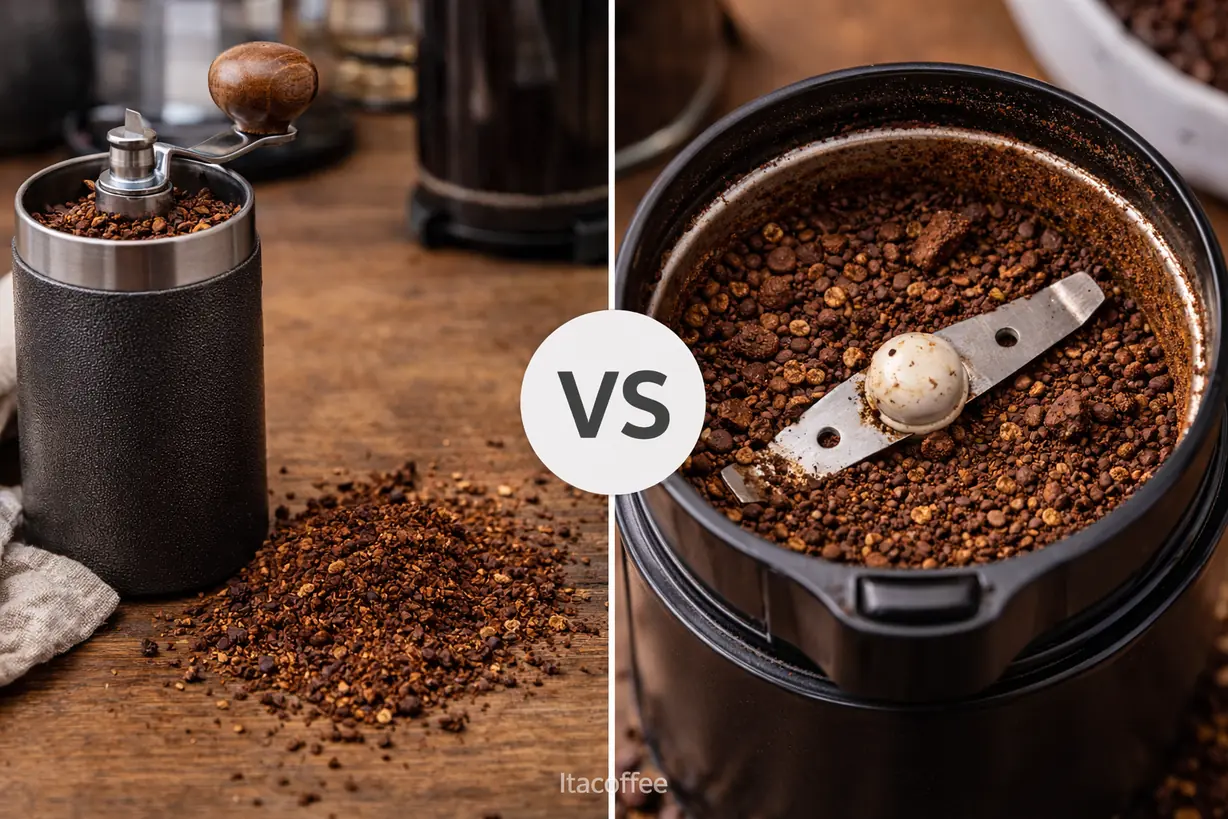
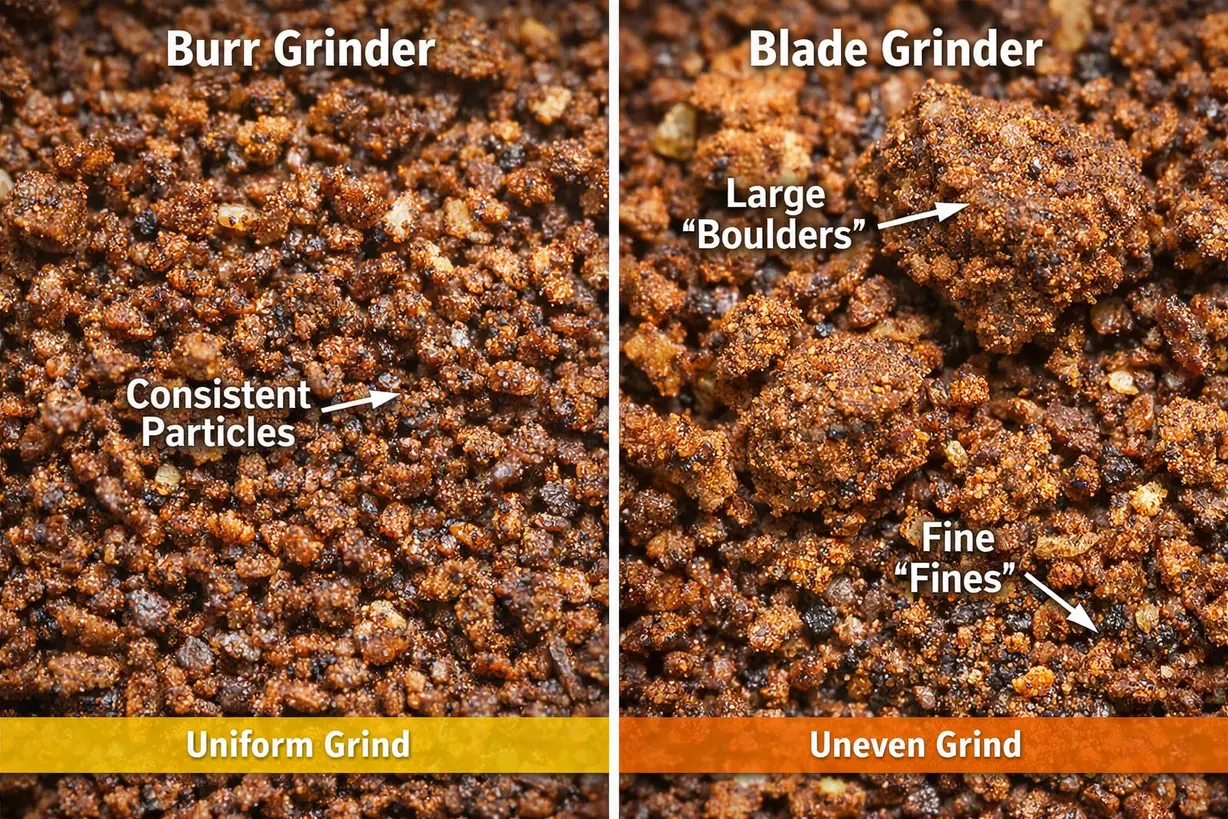
Blade grinders create random fragmentation, producing:
- Fines (over-extract quickly)
- Boulders (under-extract slowly)
This creates conflicting extraction outcomes in the same shot, as explained in
Under vs Over Extraction Explained.
Burr Grinder: Why It Works
A burr grinder produces controlled particle sizes through fixed burr spacing. This enables:
- Predictable resistance
- Repeatable shot timing
- Stable extraction yield
A deeper comparison is available in
Burr vs Blade Grinders: A Technical Comparison.
Grind Size Control: The Real Reason You Need a Burr Grinder for Espresso
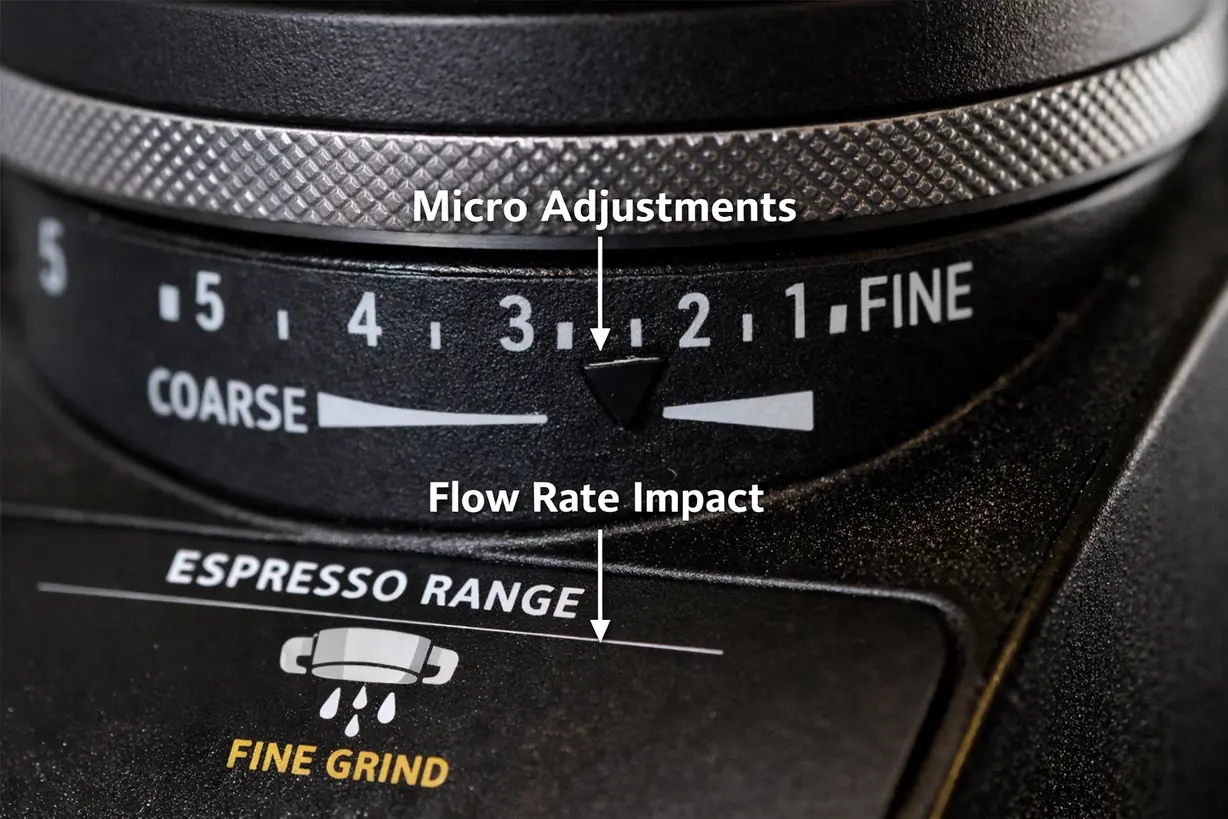
Espresso operates within a very narrow grind window. A small adjustment can change extraction time dramatically.
- Too coarse → fast shot → under-extraction
- Too fine → slow shot → over-extraction
This relationship between grind size and flow is explored in
Espresso Shot Running Too Fast.
Only burr grinders provide the mechanical precision required to make these micro-adjustments.
Mechanical Stability and Why It Matters
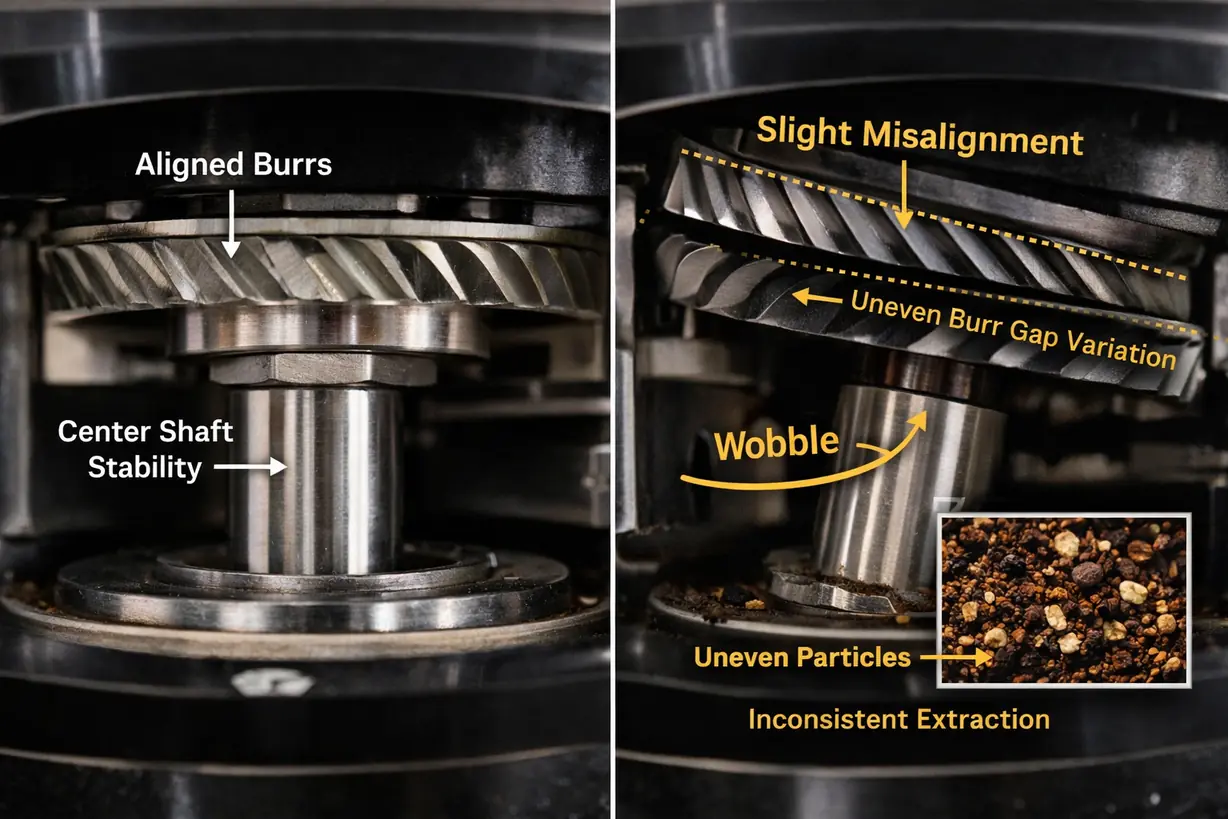
Even among burr grinders, mechanical design determines consistency.
-
- Burr alignment → particle uniformity
- Shaft stability → repeatability
- Motor consistency → thermal stability
According to the
Specialty Coffee Association research, grind uniformity is one of the dominant variables affecting extraction consistency.
Can You Make Espresso Without a Burr Grinder?
Technically yes—but practically, no control is possible.
Without a burr grinder:
- No consistent flow rate
- No repeatable shot time
- No stable flavor profile
This makes optimization impossible, as variables cannot be isolated.
Conclusion: Do You Need a Burr Grinder for Espresso?
The answer is structural, not subjective.
- Espresso requires controlled resistance
- Resistance depends on particle size
- Particle size depends on grinder design
Therefore, you need a burr grinder for espresso to achieve any level of consistency or control.
Category Context
This article is part of the
Coffee Tools & Gear, where tools are evaluated based on extraction impact rather than convenience.
Itacoffee CTA
Espresso is not improved by equipment—it is improved by control.
A burr grinder gives you control over particle size, which directly defines extraction behavior. Continue studying grind size, flow rate, and resistance, and apply controlled adjustments in your daily brewing to build repeatable results.