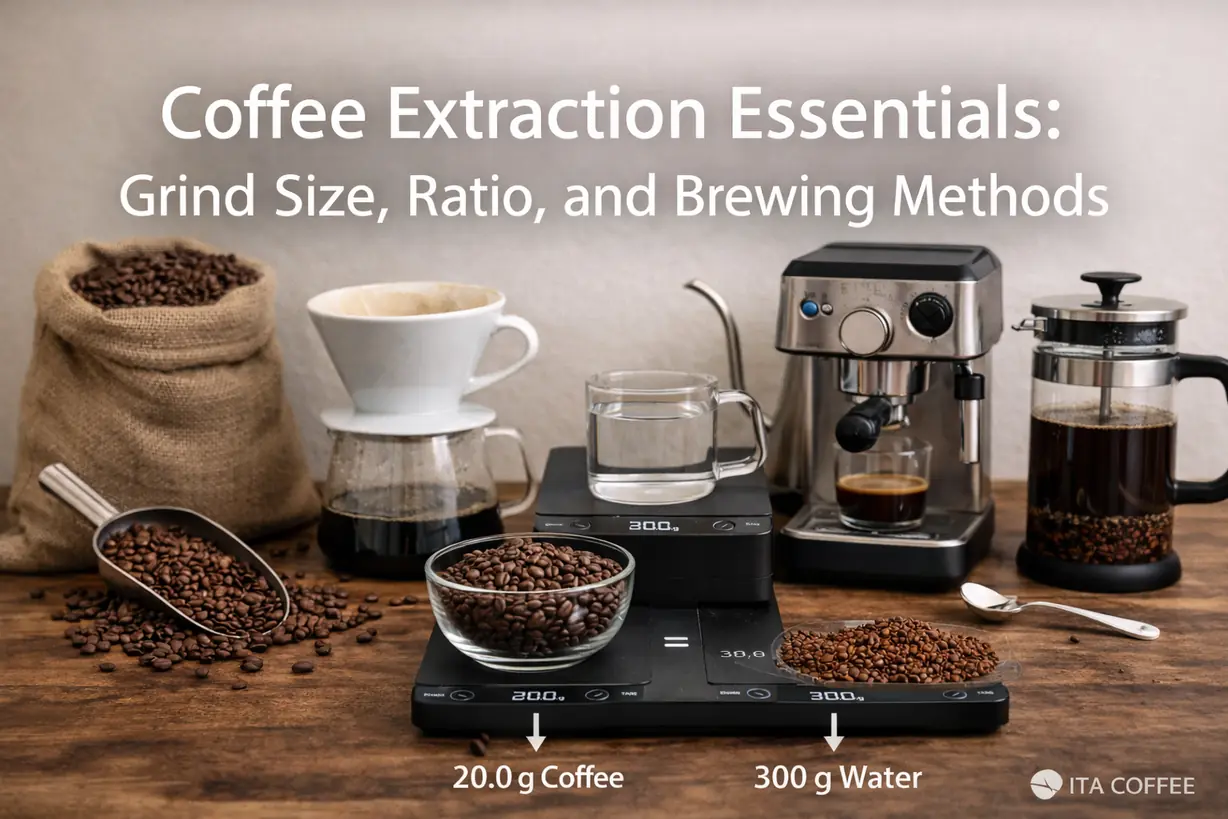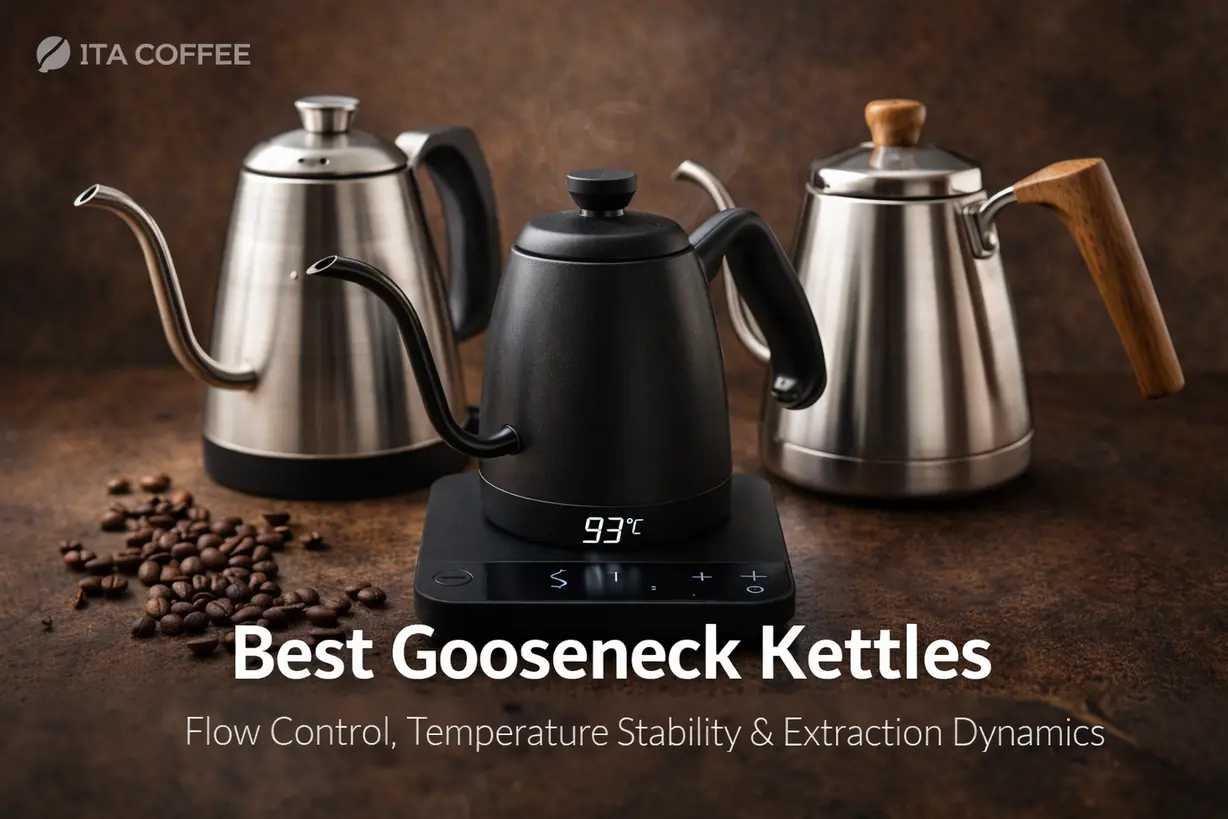
In coffee brewing science, methods are generally divided into two mechanical categories: percolation and immersion. Immersion (such as French Press) involves steeping coffee grounds in a fixed volume of water. Percolation, by contrast, is a flow-through system where water continuously moves through a bed of coffee.
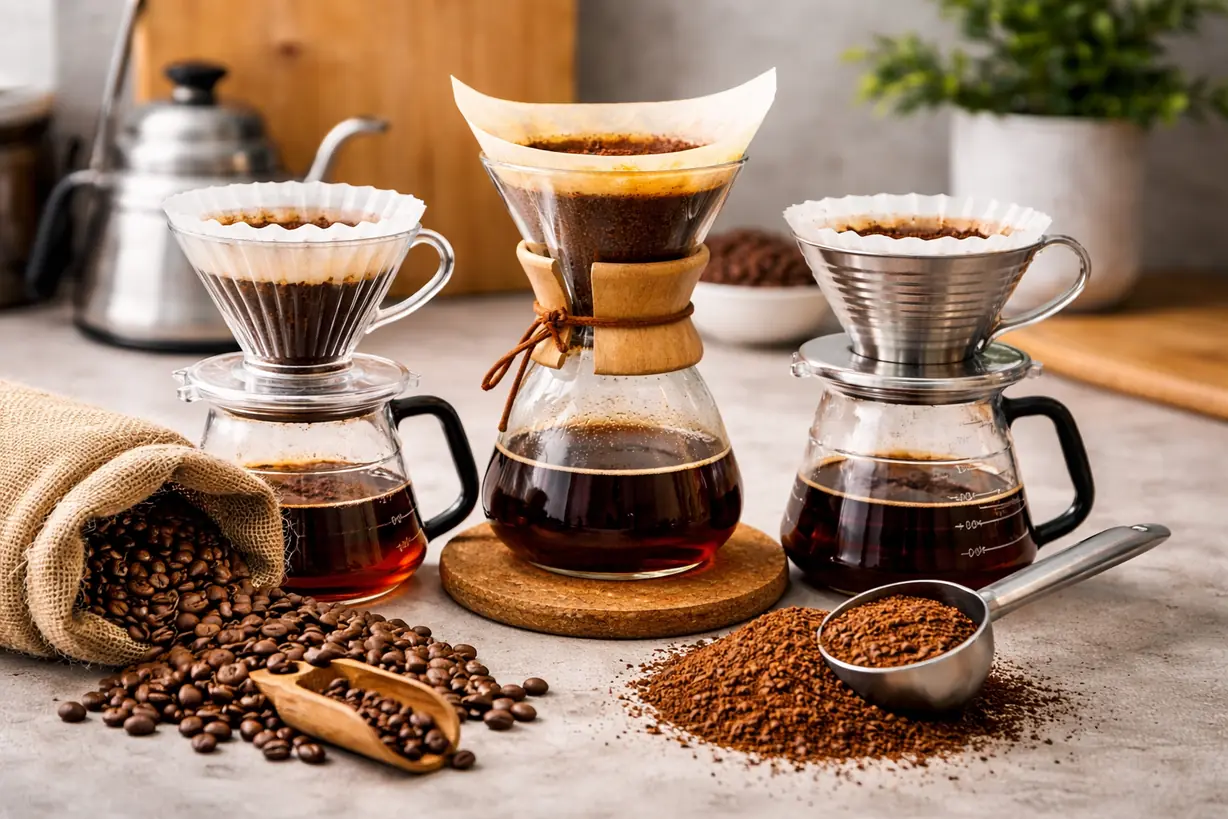
Percolation brewing is a method in which water passes through coffee grounds, dissolves soluble compounds, and exits through a filter. This continuous flow process—common in V60, Chemex, Kalita Wave, auto-drip machines, and espresso—relies on gravity or applied pressure to move water through the coffee bed.
In This Guide
What Defines Percolation Brewing?
Percolation is defined by movement. Fresh water enters the coffee bed from above, extracts soluble material as it travels downward, and leaves the system. Unlike immersion brewing, water in percolation does not sit still—it is always being replaced.
The Core Principle: Flow and Concentration Gradient
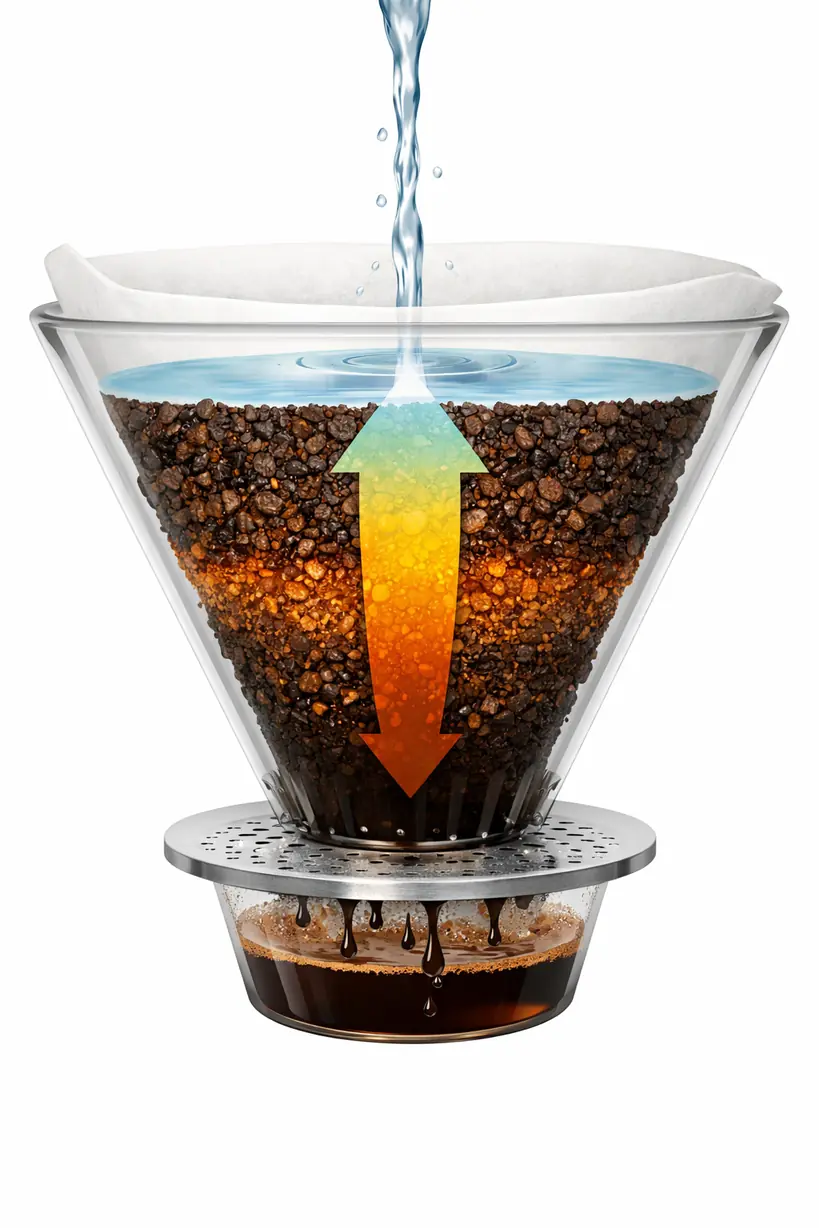
Percolation brewing is governed by two primary physical forces: flow rate and the concentration gradient.
- Fresh Solvent: Water entering the top of the coffee bed contains no dissolved coffee solids. This creates a strong concentration gradient—the difference between dissolved compounds inside the coffee particles and the surrounding water. That gradient drives extraction.
- Gradient Decline: As water travels downward, it becomes increasingly saturated. Its ability to extract additional solubles gradually decreases. This means the top of the bed extracts differently than the bottom.
This dynamic system allows percolation to achieve high extraction yields (the percentage of soluble material removed from the coffee grounds). However, it also makes the method sensitive. Small variations in grind, pouring, or bed preparation can significantly alter the final cup.
Why Percolation Brewing Matters
Understanding percolation is essential for achieving clarity, brightness, and structural definition in coffee.
Because fresh water is constantly washing through the grounds, percolation tends to highlight acidity, floral aromatics, and high-frequency flavor notes. Paper filtration further enhances this clarity by trapping oils and fine particles that would otherwise increase body and mute articulation.
However, this efficiency introduces instability. If water moves unevenly or too quickly, extraction becomes inconsistent. Mastering percolation means controlling resistance (how much the coffee bed slows water) and dwell time (how long water remains in contact with grounds).
Key Variables in Percolation Brewing
1. Grind Size: Managing Hydraulic Resistance
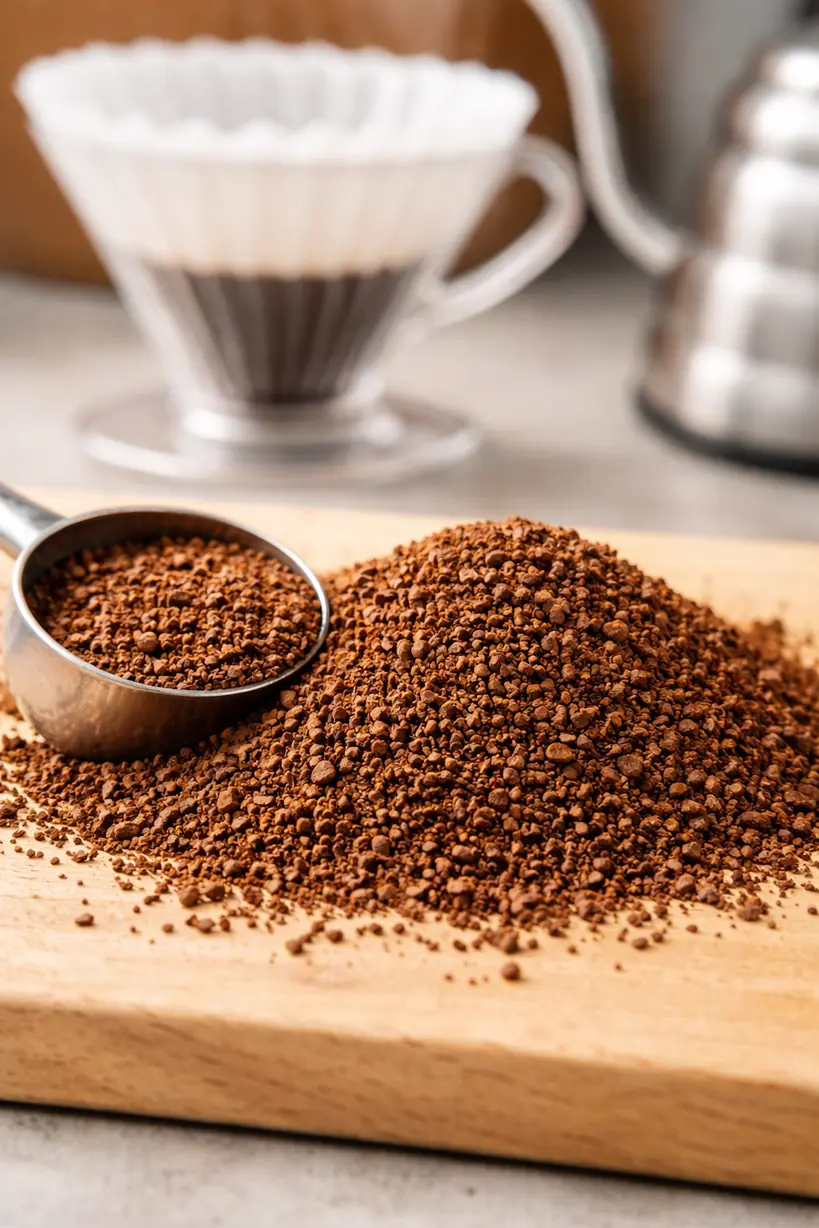
In percolation, the coffee bed acts as a porous filter. Grind size determines how tightly that filter is packed.
A grind that is too fine increases resistance, slowing flow and risking over-extraction (bitterness, dryness). A grind that is too coarse decreases resistance, allowing water to pass too quickly, resulting in under-extraction (sourness, thinness).
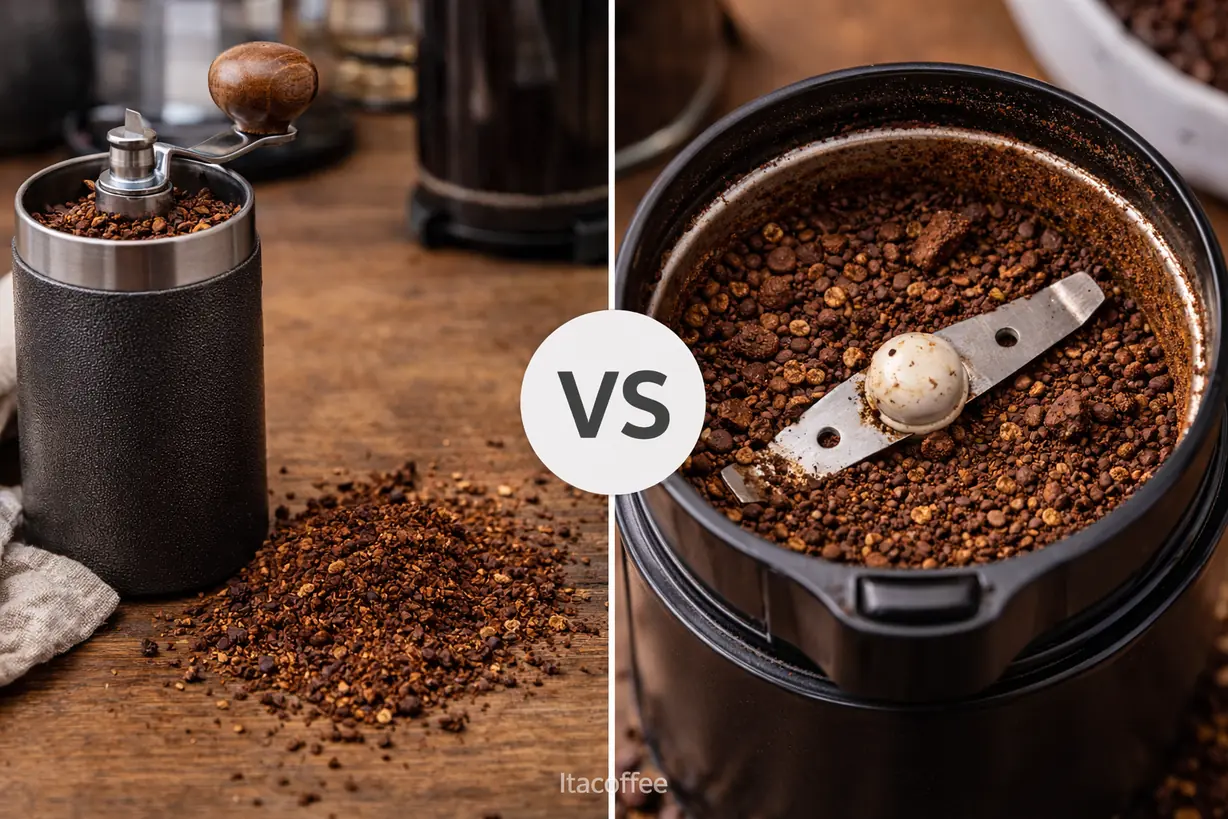
Uniform particle size is critical. For a technical explanation of why burr grinders outperform blade grinders in this context, see Burr vs Blade Coffee Grinders: What’s the Real Difference?.
2. Channeling and Bed Geometry
Water follows the path of least resistance. If the coffee bed is uneven, water will carve channels—localized pathways where extraction accelerates.
Channeling causes uneven extraction: over-extracted zones (bitter) coexist with under-extracted zones (sour). This is one reason a brew can taste both harsh and hollow at the same time.
The shape of the brewer influences pressure distribution. Conical drippers focus flow toward a central point, while flat-bottom brewers spread flow more evenly. For a technical comparison, see Flat-Bottom vs Conical Drippers.
Percolation vs. Immersion: A Technical Comparison
| Feature | Percolation (e.g., V60) | Immersion (e.g., French Press) |
|---|---|---|
| Water Movement | Dynamic (Flow-Through) | Static (Full Submersion) |
| Primary Mechanism | Convective Flow & Gravity or Pressure | Diffusion & Saturation Equilibrium |
| Flavor Profile | High Clarity, Bright Acidity | Higher Body, Rounded Texture |
These mechanical differences directly shape flavor perception. To explore how brewing mechanics influence taste from bean to cup, see How Brewing Methods Affect Coffee Flavor.
Popular Percolation Brewing Methods
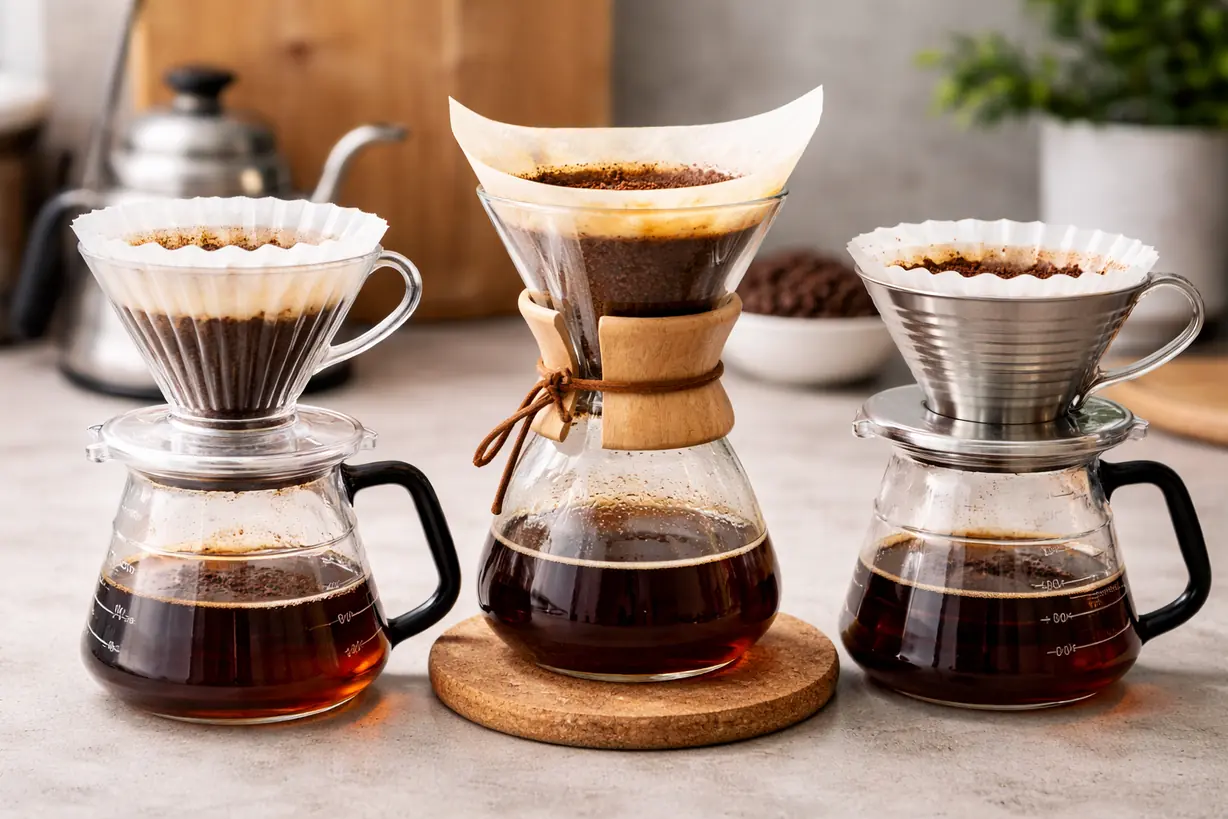
- Hario V60: A conical dripper requiring active pour control to regulate flow rate.
- Chemex: Uses thick paper filters for maximum clarity and minimal sediment.
- Kalita Wave: Flat-bottom design promoting more even flow distribution.
- Espresso: A pressurized form of percolation in which water is forced through a compacted puck at high pressure.
All percolation methods benefit from proper blooming—the initial wetting phase that releases trapped carbon dioxide and improves extraction consistency. Learn the science behind this step in What Is Coffee Blooming?.
Frequently Asked Questions
Why does my percolation brew taste bitter and sour at the same time?
This usually indicates channeling. Certain areas of the bed were over-extracted (bitter), while others were under-extracted (sour). Improve bed leveling, pouring consistency, and grind uniformity.
Does using more water increase extraction?
Generally, yes. Passing more water through the bed increases the total dissolved solids removed. However, excessive water can over-extract woody and astringent compounds. For a deeper exploration of strength vs extraction, see Is More Coffee Always Stronger?.
Is espresso technically percolation?
Yes. Espresso is forced percolation. Instead of gravity, pump pressure drives water through a densely packed puck at high velocity, allowing fine grind sizes and short extraction times.
Final Thought from ITA Coffee
Percolation brewing is applied fluid dynamics in everyday form. It rewards attention and punishes randomness. Once you understand how water moves through resistance, brewing becomes repeatable rather than accidental.
When the cup is too bright or thin, evaluate grind size and flow rate. When it is harsh or uneven, suspect channeling. In percolation, control of movement is control of flavor.
— ITA Coffee | Brewing Guides for Curious, Thoughtful Coffee Makers
Editorial note: This article was developed with AI-assisted drafting and human review to ensure clarity, accuracy, and a non-commercial educational tone.