How to choose a coffee grinder is not a question about convenience or price—it is fundamentally a question about extraction control.
In coffee brewing, the grinder determines particle size distribution, which directly controls how water extracts soluble compounds from coffee grounds. An unstable grinder produces uneven extraction, leading to conflicting flavors such as sourness and bitterness in the same cup.
Understanding how to choose a coffee grinder therefore requires a clear grasp of grind consistency, mechanical design, and how these factors influence extraction dynamics.
In This Guide
How to Choose a Coffee Grinder: The Core Principle
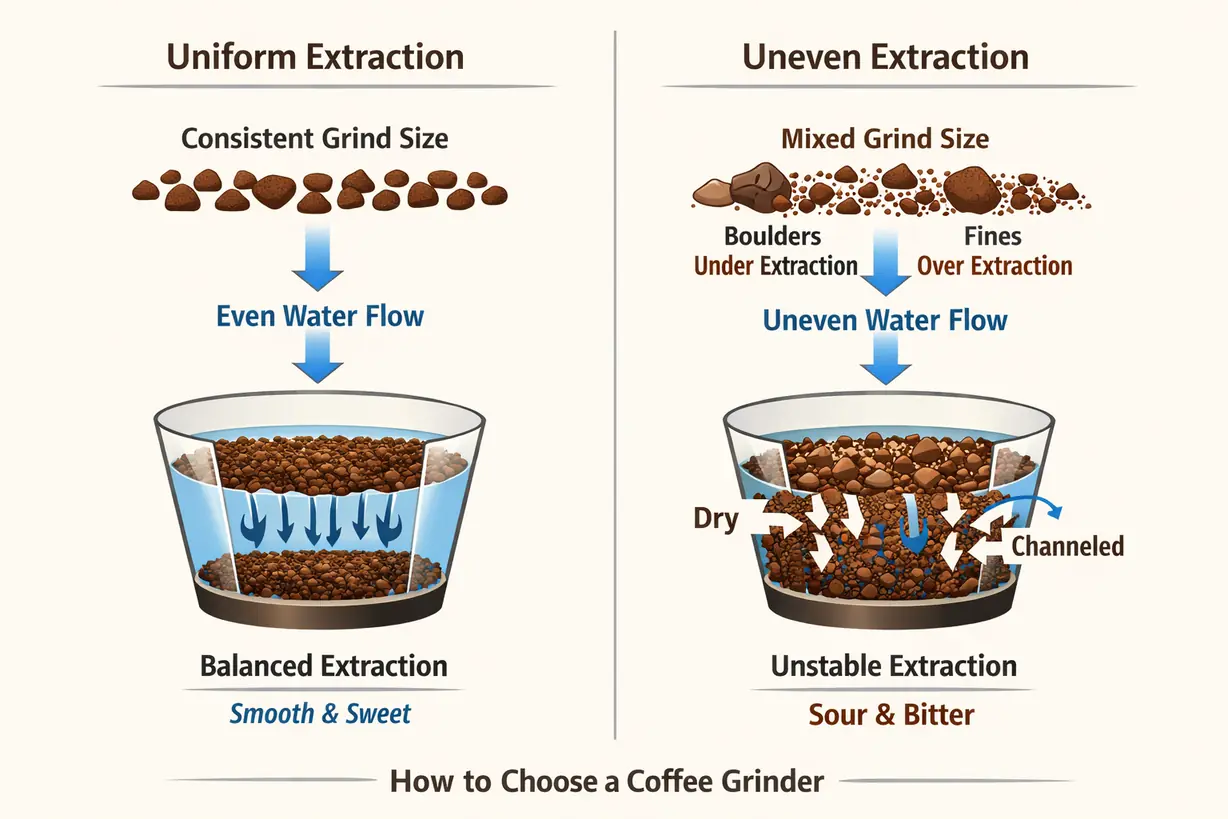
The primary function of a coffee grinder is to produce particles of consistent size.
When particles are uniform, water extracts solubles at a predictable rate. When particle sizes vary widely, extraction becomes unstable:
- Large particles (boulders) under-extract → sour flavors
- Small particles (fines) over-extract → bitter flavors
This interaction between particle size and extraction is explained in detail in
Coffee Grind Size Extraction Explained: The Physics of Surface Area.
Burr Grinders vs Blade Grinders
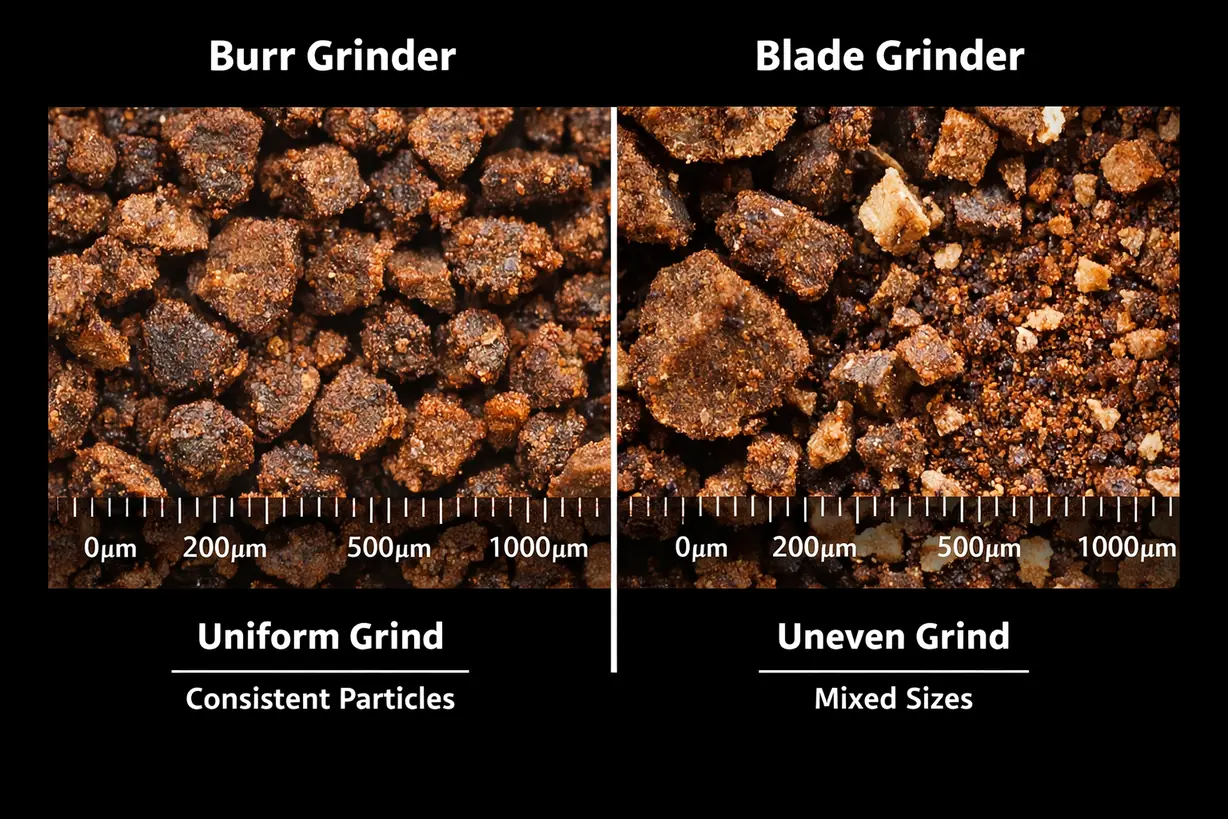
The first technical decision when evaluating how to choose a coffee grinder is the grinding mechanism.
Blade Grinders (Impact Grinding)
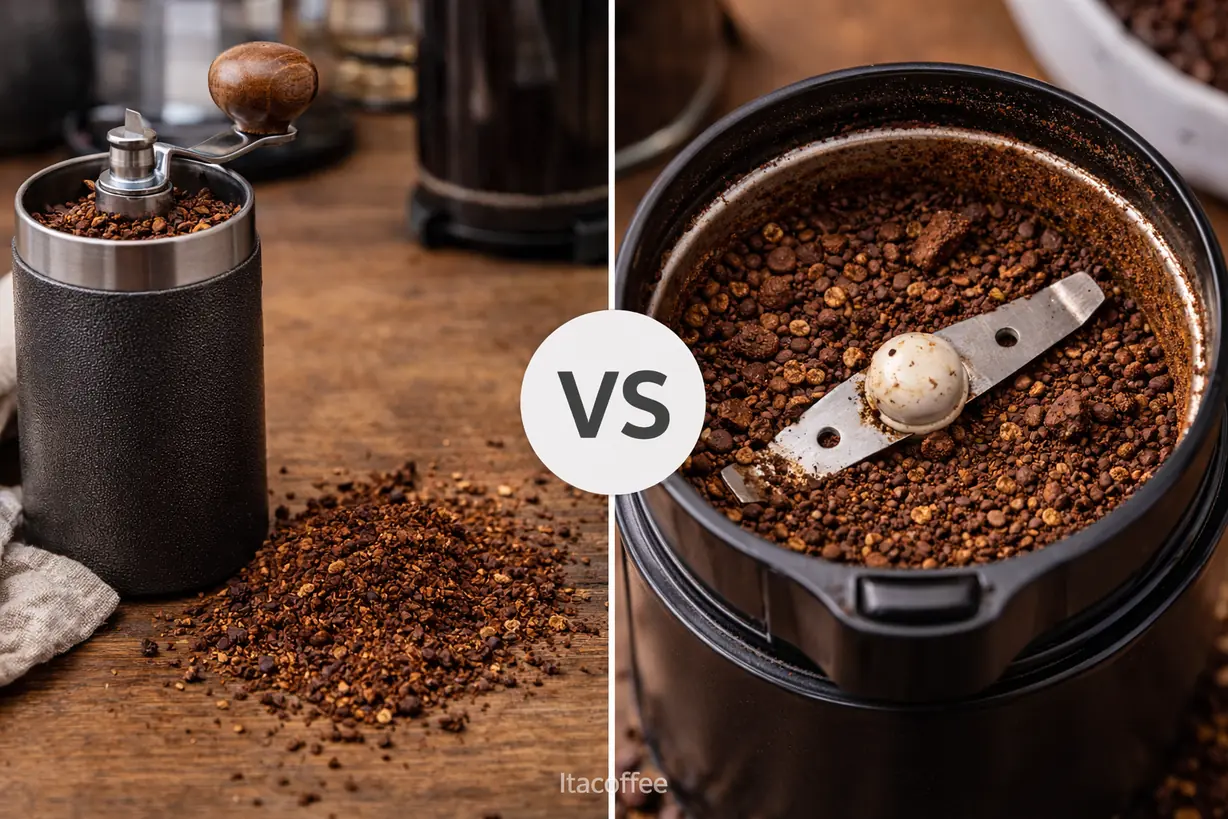
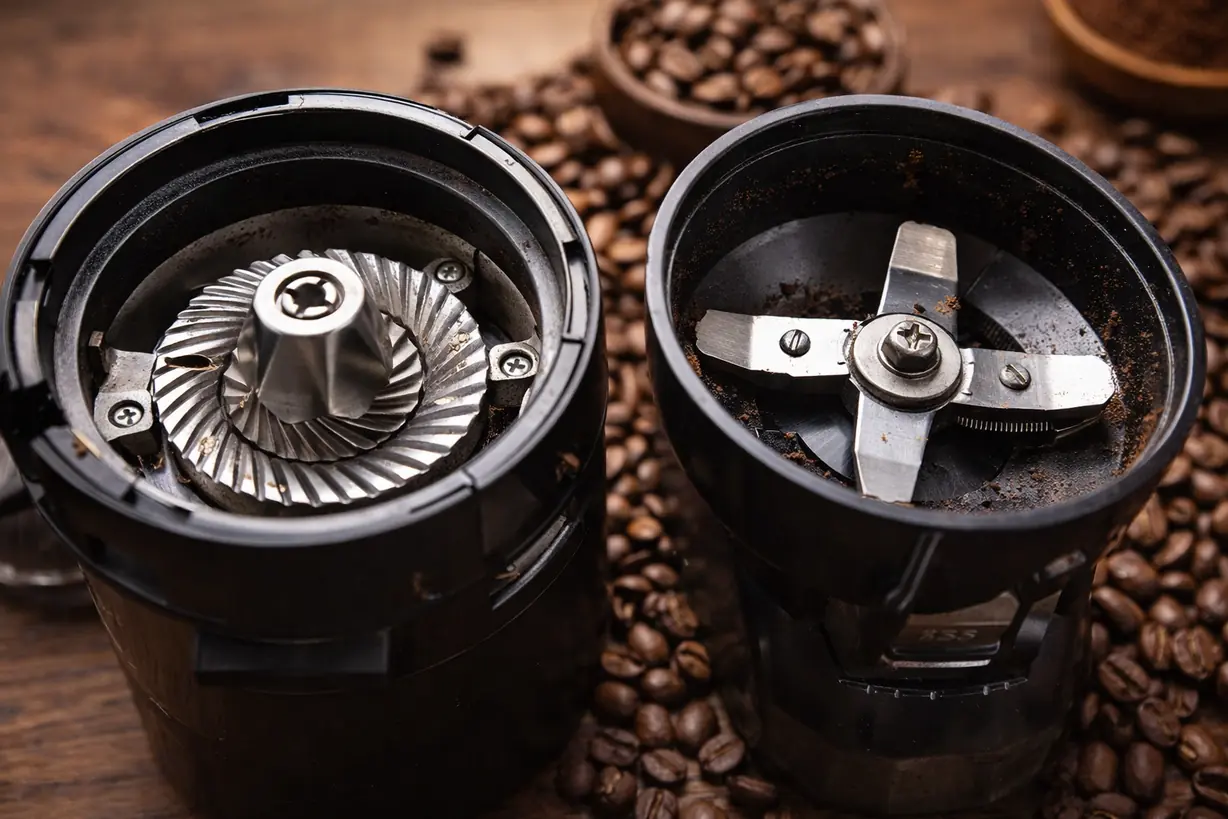
Blade grinders use a rotating blade to randomly break coffee beans. This is not true grinding—it is uncontrolled fragmentation.
- Produces extremely wide particle size distribution
- No control over grind uniformity
- Leads to inconsistent extraction
Burr Grinders (Controlled Crushing)
Burr grinders use two precisely aligned burrs to crush beans at a fixed distance. This creates controlled and repeatable particle sizes.
- Narrower particle distribution
- Higher extraction stability
- Better flavor clarity
A deeper technical comparison is available in
Burr vs Blade Grinders: A Technical Comparison of Grind Consistency and Flavor.
Grind Consistency and Particle Distribution
One of the most critical factors in how to choose a coffee grinder is particle distribution.
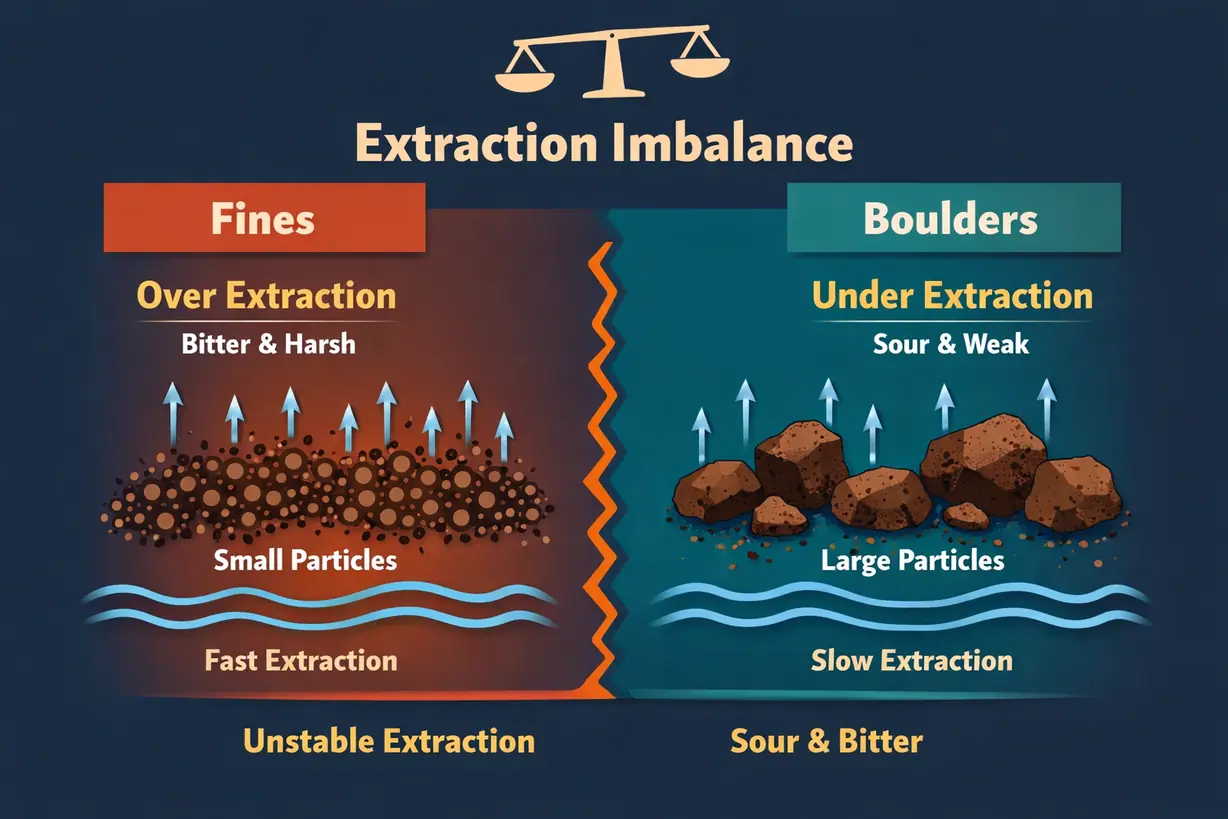
All grinders produce a range of particle sizes, but the goal is to minimize extremes:
- Boulders — slow extraction, weak flavor
- Fines — fast extraction, bitter compounds
When both exist in large quantities, water extracts them unevenly, creating a cup that can taste both sour and bitter simultaneously.
This phenomenon is analyzed in
Under vs Over Extraction Explained: The Science of Coffee Flavor.
Grind Size Adjustment: Precision vs Control
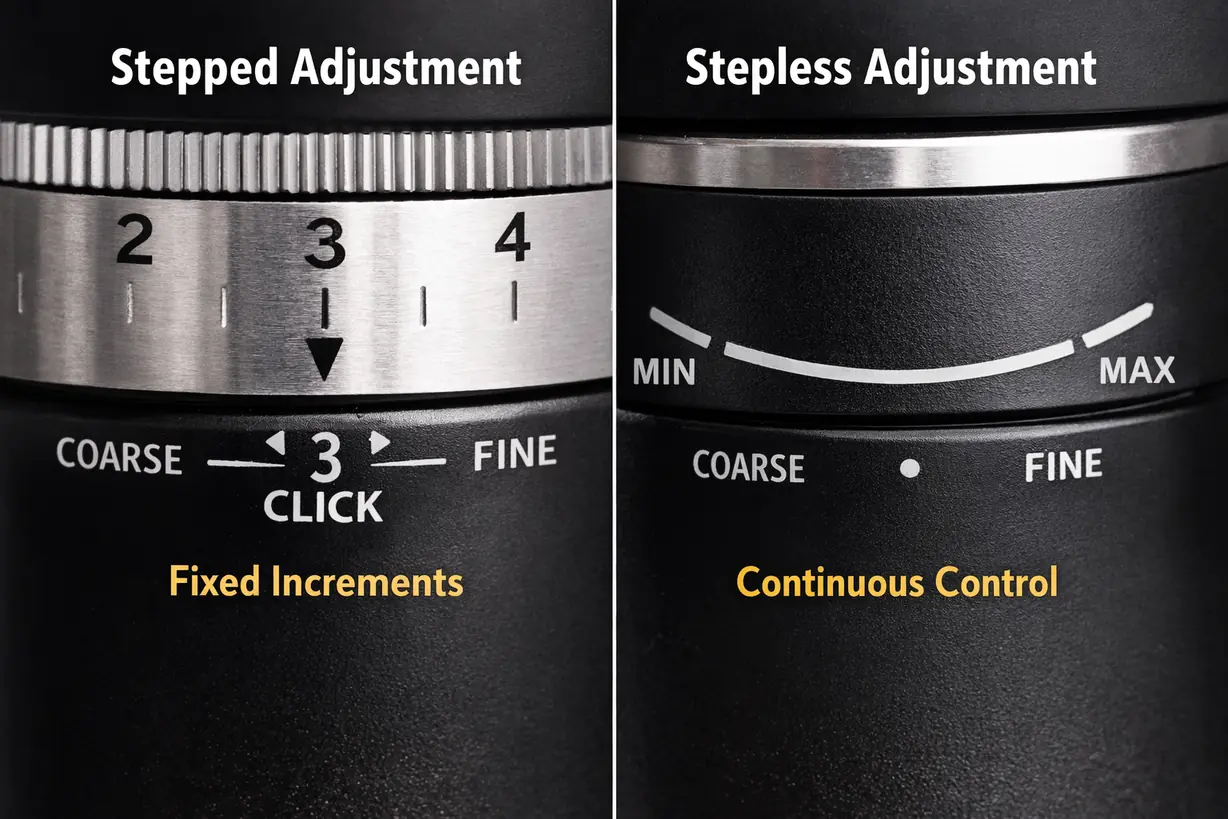
Another key factor in how to choose a coffee grinder is how precisely it allows you to control grind size.
- Espresso → fine grind
- Pour over → medium grind
- French press → coarse grind
Grinders typically use two adjustment systems:
- Stepped adjustment
- Stepless adjustment
For espresso, small changes in grind size directly affect flow rate and extraction:
Espresso Shot Running Too Fast.
Mechanical Stability and Build Quality
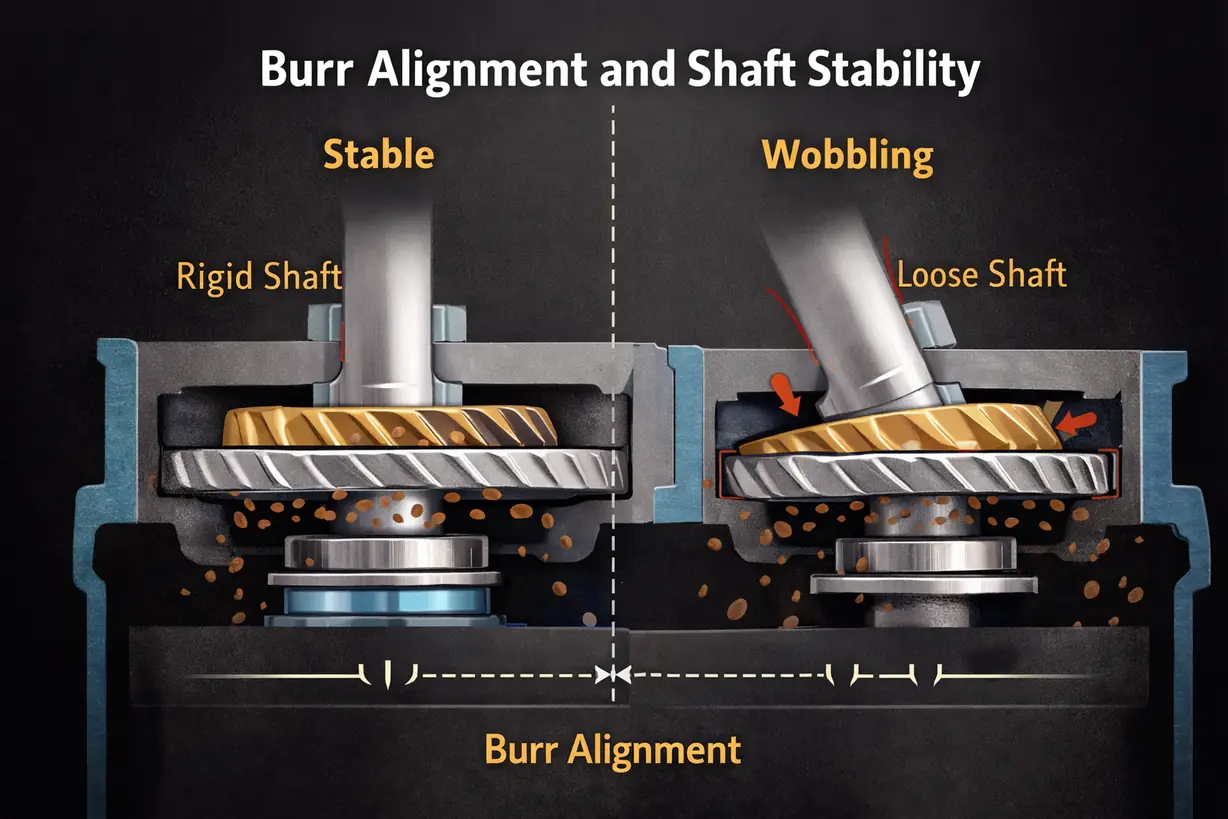
Mechanical stability determines whether grind settings translate into consistent particle output.
- Burr alignment precision
- Shaft stability
- Motor consistency
Industry research from the
Specialty Coffee Association
shows that grind uniformity is one of the dominant variables affecting extraction consistency.
Conclusion
Choosing a coffee grinder is about controlling extraction variables, not purchasing equipment.
Once grind consistency is stable, variables such as brew ratio, time, and temperature become predictable and easier to optimize.
At ITA Coffee, coffee is treated as a system of variables. Continue exploring our technical guides and apply these principles in practice to build repeatable brewing results.