Immersion vs Percolation might dictate how we extract coffee, but Arabica vs Robusta dictates what compounds are available to extract in the first place.
At its core, the distinction between Arabica and Robusta is not a marketing concept—it is a botanical and chemical reality. These two primary species of the Coffea genus possess different genetic structures, thrive in different environments, and yield vastly different ratios of soluble compounds.
Understanding the difference between Arabica vs Robusta is a fundamental pillar of Coffee Knowledge. It explains why certain coffees naturally express high acidity, while others present heavy body and dominant bitterness, regardless of the brewing method used.
In This Guide
Botanical Origins and Growing Conditions
The physical environment required to grow each species directly influences the density of the bean and the development of organic acids.
1. Coffea Arabica (Arabica)
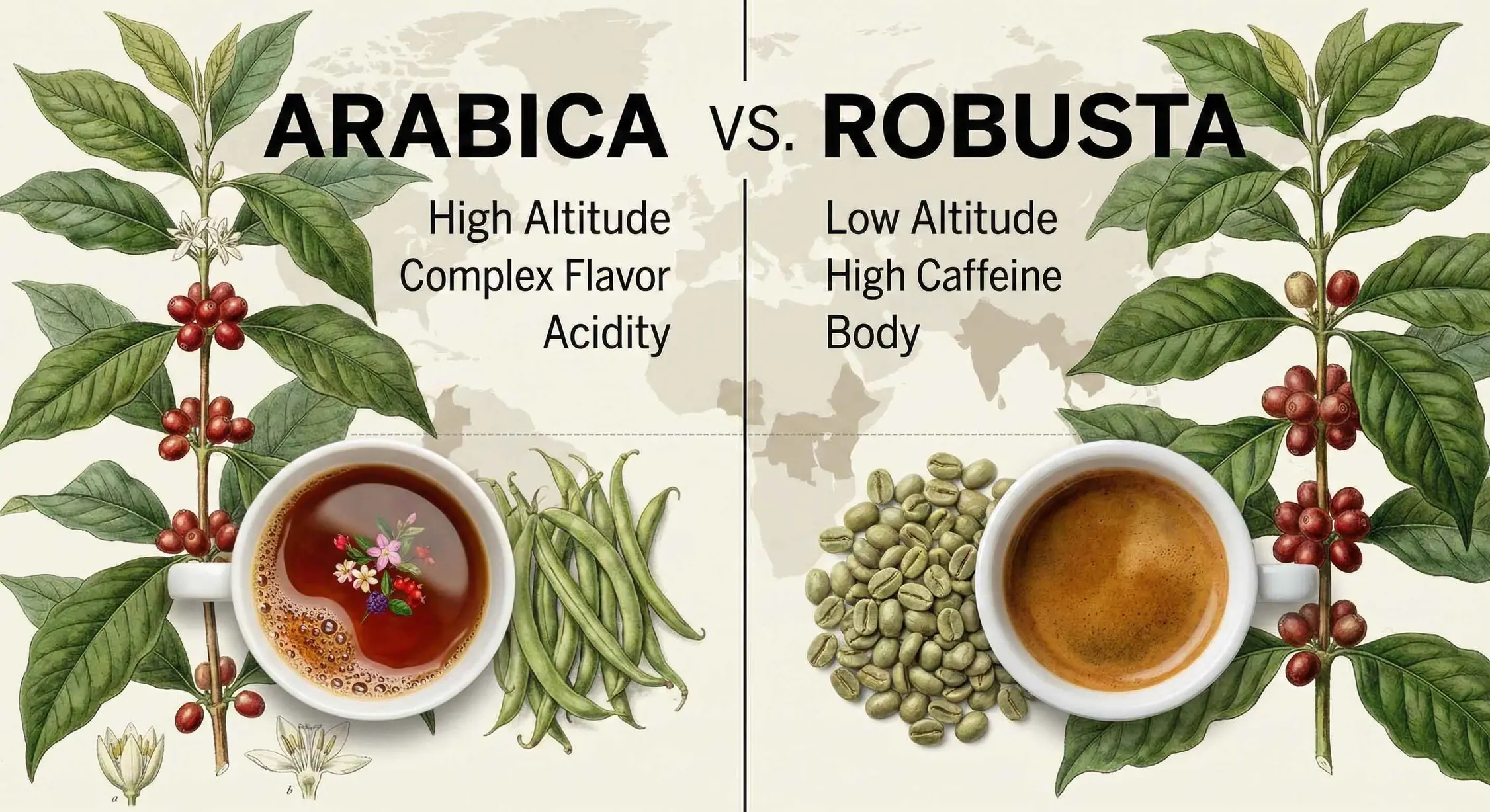
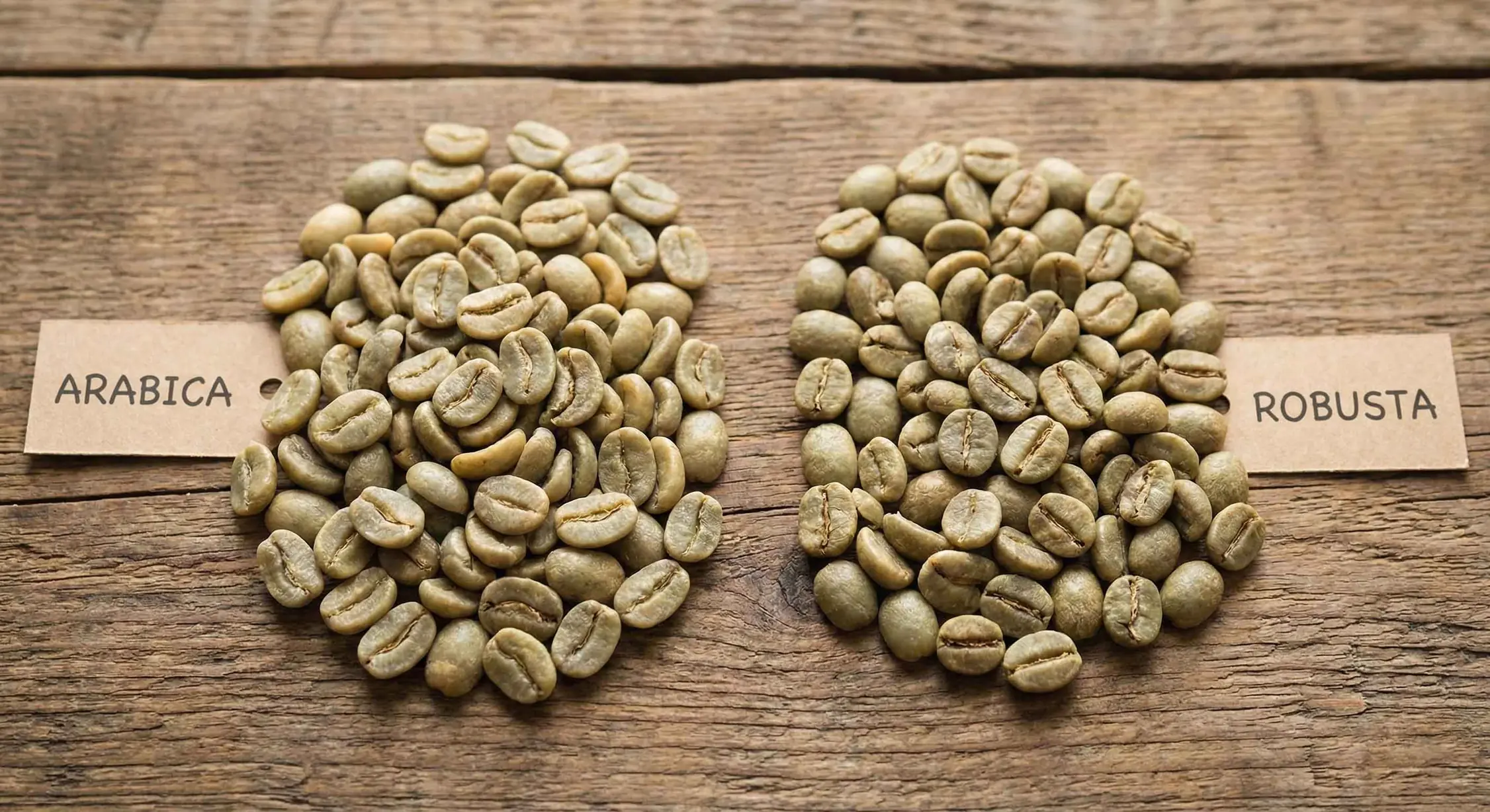
Arabica is a delicate, genetically complex species with 44 chromosomes. Because it is highly susceptible to disease and pests (such as coffee leaf rust), it requires specific, high-altitude environments to thrive.
- Growing Altitude: Typically 900 to 2,000+ meters above sea level.
- Climate: Cooler, stable temperatures (15°C to 24°C).
- Growth Rate: Slower maturation allows for a denser cellular structure and higher concentration of complex sugars.
2. Coffea Canephora (Robusta)
Robusta has 22 chromosomes and is biologically wired for survival. As the name implies, it is robust—highly resistant to pests and capable of thriving in harsher, lower-altitude environments.
- Growing Altitude: Sea level up to 900 meters.
- Climate: Warmer temperatures (24°C to 30°C) and higher humidity.
- Defense Mechanism: Robusta produces significantly more caffeine and chlorogenic acid, which act as natural pesticides to protect the plant.
Chemical Composition: The Blueprint of Flavor
The flavor differences in the cup are entirely dictated by the chemical makeup of the raw seed. When heat is applied during roasting, these precursor compounds dictate the final sensory profile.
Lipids and Sugars
Arabica beans contain almost 60% more lipids (fats and oils) and nearly twice the concentration of sugars compared to Robusta.
During the Maillard reaction in roasting, these sugars break down into complex aromatic compounds and organic acids. The higher lipid content also contributes to a smoother tactile experience.
Caffeine and Chlorogenic Acid (CGA)
Robusta contains roughly double the caffeine of Arabica (2.2–2.7% vs. 1.2–1.5%). Furthermore, Robusta has a significantly higher concentration of Chlorogenic Acid (CGA).
While CGA is an antioxidant, it degrades during roasting into quinic and caffeic acids. These compounds are the primary drivers of astringency and perceived bitterness in coffee.
If you frequently encounter sharp, structural bitterness in a brew, it is heavily influenced by the bean’s inherent CGA levels, an extraction variable further detailed in Why Coffee Tastes Bitter: Over-Extraction Explained and How to Fix It.
Flavor Profile Comparison
Because of their distinct chemical compositions, Arabica and Robusta behave predictably when extracted.
| Chemical Attribute | Arabica | Robusta |
|---|---|---|
| Sugar Content | Higher (6-9%) — Yields higher perceived acidity and sweetness | Lower (3-7%) — Results in a flatter, less vibrant profile |
| Lipid Content | Higher (15-17%) — Enhances aromatic complexity | Lower (10-11%) — Produces less aromatic volatility |
| CGA (Bitterness) | Lower (5.5-8%) | Higher (7-10%) — Creates a woody, rubbery, or harsh finish |
While Arabica dominates the specialty coffee market due to its acidity and aromatic clarity, Robusta is frequently utilized for its physical properties—specifically its ability to alter body and mouthfeel.
The Role of Robusta in Espresso Blends
While 100% Arabica coffees are prized in percolation methods like the V60, Robusta has historical and technical importance in making traditional espresso.
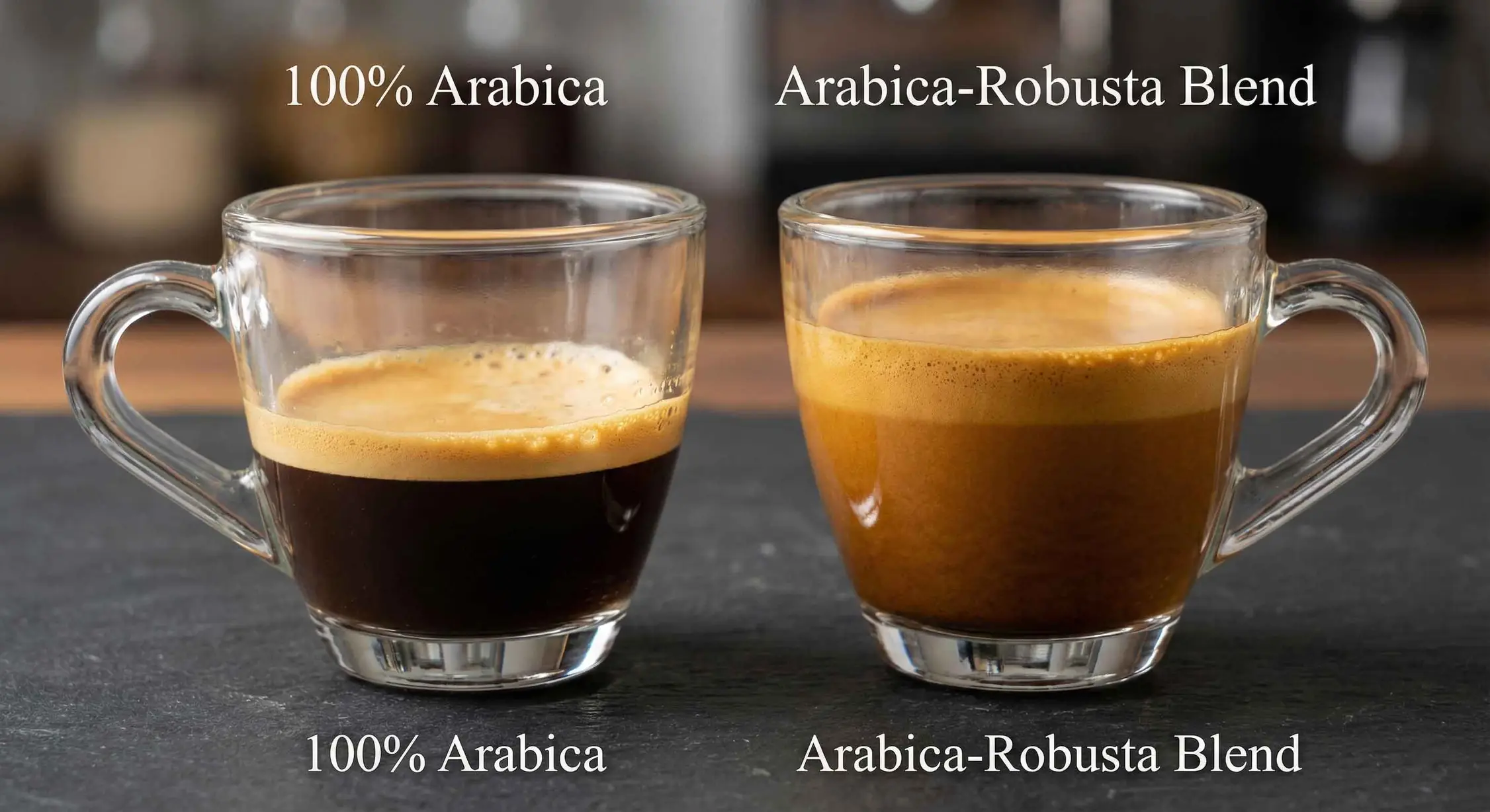
Robusta beans produce a significantly thicker, more stable crema. This occurs because Robusta holds less oil (which can destabilize crema bubbles) but generates a strong emulsion of CO2 and melanoidins under the 9 bars of pressure in an espresso machine. For this reason, many classic Italian espresso blends incorporate 10–20% Robusta to increase body, enhance crema retention, and punch through the dilution of milk in milk-based beverages.
Conclusion
The difference between Arabica vs Robusta comes down to genetic hardware. Arabica’s complex chemistry yields sweetness and acidity at the cost of agricultural fragility. Robusta’s defensive chemistry guarantees survival and high yield, but results in a naturally bitter, heavy-bodied cup.
Neither bean is inherently “wrong,” but they serve fundamentally different purposes based on the desired chemical output of your extraction.
Editorial note: This article was developed with AI-assisted drafting and human review to ensure clarity, accuracy, and a non-commercial educational tone.