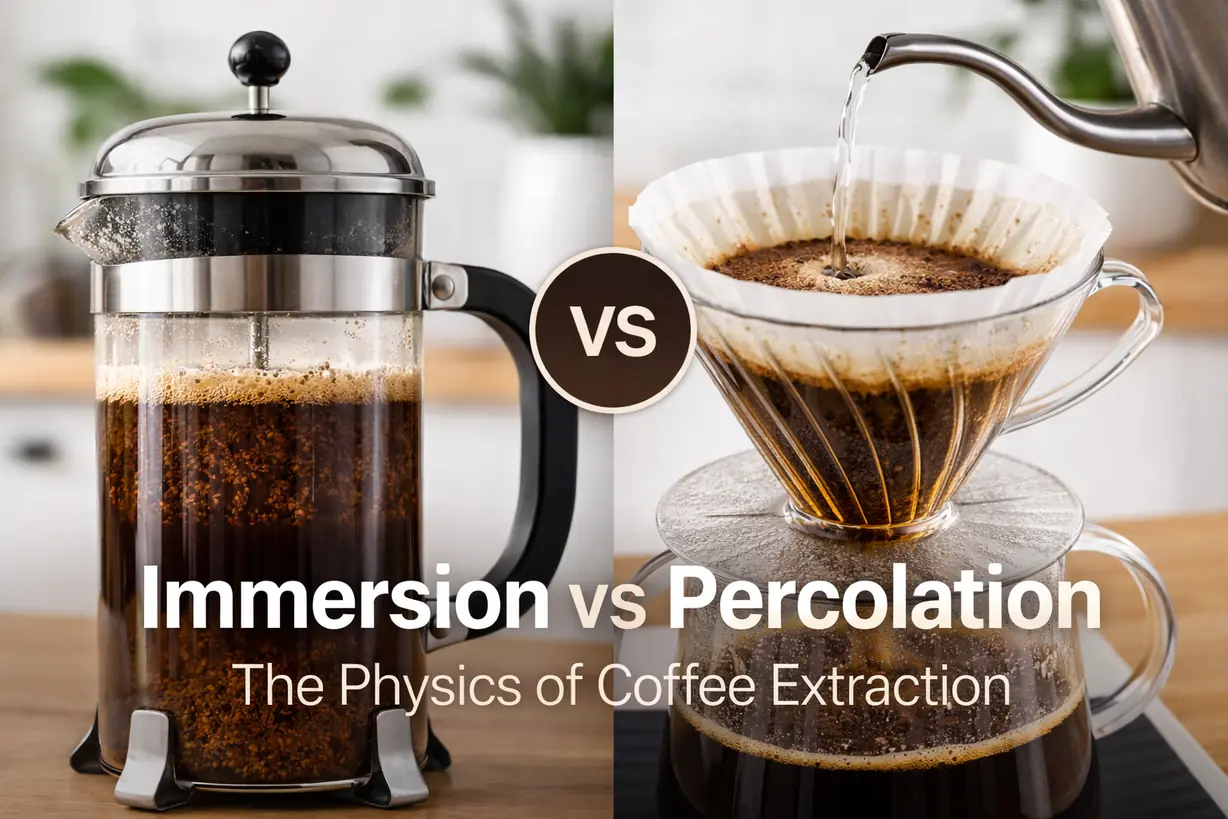
Immersion vs Percolation are the two primary extraction models in coffee brewing, each defined by how water moves through coffee grounds.
At its most fundamental level, every cup of coffee is the result of a solvent (water) dissolving soluble compounds from a solid substrate (coffee grounds). What determines flavor is not just what is extracted, but how water moves through the grounds during the process.
When comparing Immersion vs Percolation, the distinction is less about equipment and more about fluid dynamics, diffusion, and concentration gradients — core principles behind consistent brewing.
Understanding this distinction is foundational to Coffee Knowledge and explains why different brewing systems produce distinct sensory outcomes.
In This Guide
Immersion vs Percolation: Key Structural Differences
To understand why immersion and percolation taste different, we must first define how each system moves water relative to coffee grounds.
1. Immersion (Static Extraction System)
In immersion brewing, coffee grounds remain fully submerged in a fixed volume of water for the entire brew time. The liquid and grounds coexist in a shared chamber, forming a gradually saturating system.
- Examples: French Press, Clever Dripper (valve closed), Cold Brew
- Core Mechanism: No directional flow until separation
- Extraction Behavior: Approaches equilibrium over time
2. Percolation (Flow-Through Extraction System)
In percolation brewing, water flows through a bed of coffee grounds and exits via gravity or pressure. Fresh solvent continuously replaces extracted liquid.
- Examples: V60, Kalita Wave, Chemex, Espresso, Automatic Drip
- Core Mechanism: Continuous directional flow
- Extraction Behavior: Maintains high concentration gradient
This structural contrast defines the technical difference in Immersion vs Percolation.
The Physics Behind Immersion vs Percolation
The primary reason immersion and percolation differ in flavor lies in the concentration gradient — the tendency of dissolved substances to move from areas of high concentration to low concentration.
In coffee brewing, soluble compounds migrate from the grounds (high concentration) into water (initially zero concentration). The larger the gradient, the faster extraction occurs.
For industry reference standards on extraction ranges and brewing balance, see the
Specialty Coffee Association Brewing Control Chart.
Immersion: The Equilibrium Effect
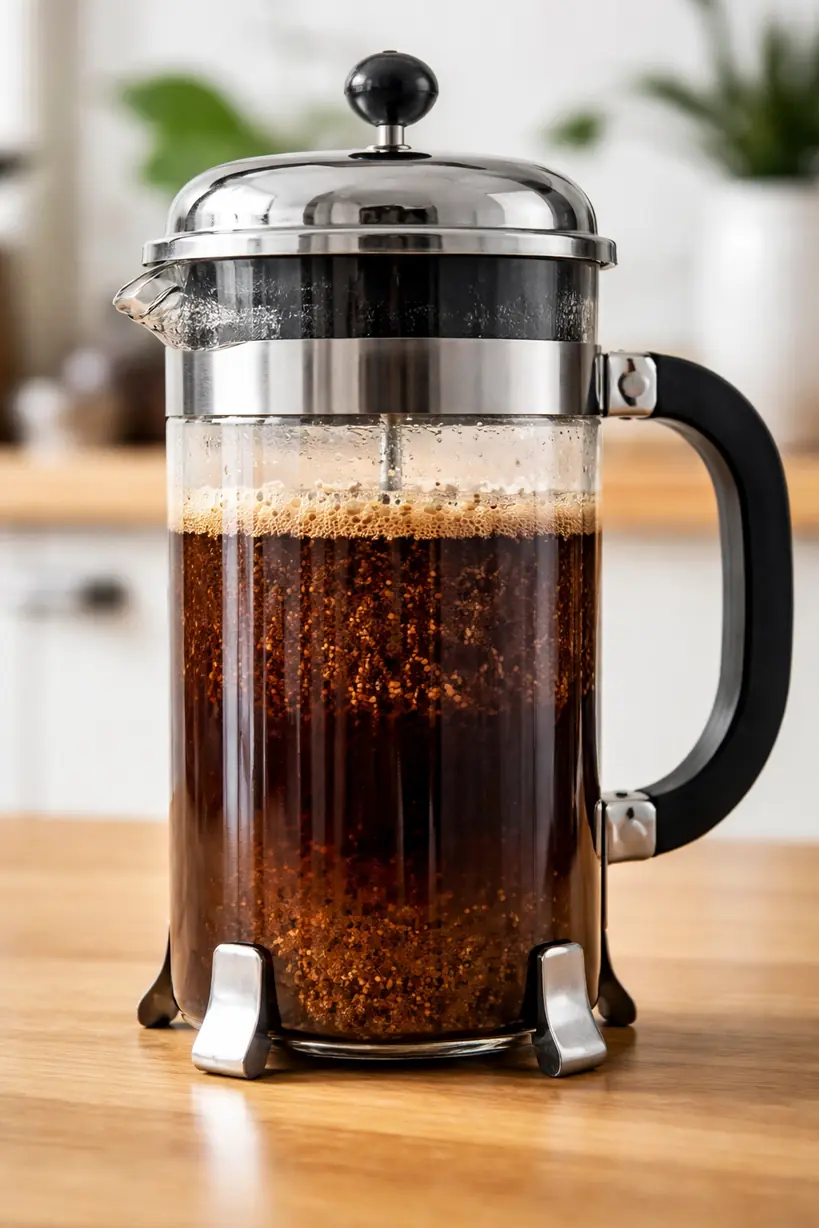
In immersion brewing, water gradually becomes saturated with dissolved coffee compounds. As saturation increases, the concentration gradient decreases.
Extraction slows as the system approaches equilibrium — the point where water can no longer efficiently dissolve additional solubles. This self-limiting behavior explains why immersion methods are relatively forgiving.
Typical immersion extraction yield: 18–21%.
This saturation behavior also connects to strength perception, explored in Is More Coffee Always Stronger?.
For practical application, see How to Brew Coffee with a French Press.
Percolation: The Constant Solvent Effect
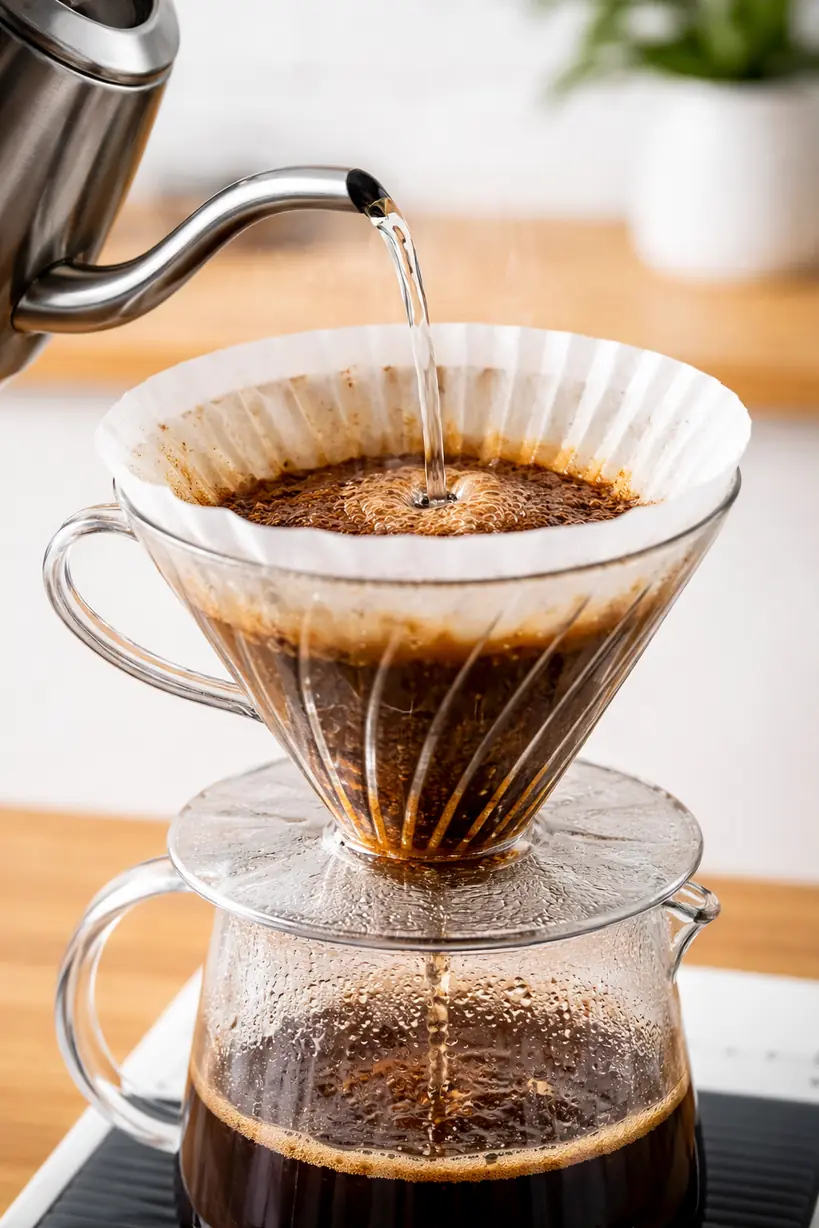
Percolation maintains a high concentration gradient throughout brewing. Fresh water continually enters the system, remaining low in dissolved solids and highly effective at extraction.
This makes percolation more extraction-efficient — but also more sensitive. Flow rate, grind size, and bed geometry dramatically affect outcomes.
Typical percolation extraction yield: 20–23%.
This sensitivity is why pour-over requires controlled pouring technique and grind calibration, as described in the V60 Brewing Guide.
Flavor Profile Comparison
The structural differences in Immersion vs Percolation directly shape body, clarity, and acidity.
| Feature | Immersion | Percolation |
|---|---|---|
| Body | Heavier, fuller, oil-rich | Cleaner, lighter |
| Clarity | Lower | Higher |
| Acidity | Rounded | Brighter |
Immersion vs Percolation: Quick Comparison
- Immersion → Equilibrium-driven extraction
- Percolation → Gradient-driven extraction
- Immersion → More forgiving
- Percolation → Higher extraction efficiency
- Immersion → Fuller body
- Percolation → Greater clarity
Grind Size and Flow Resistance
Because percolation relies on controlled flow, grind size directly influences resistance and contact time. Finer grinds increase resistance and extraction efficiency.
Immersion methods typically use coarser grinds to moderate extraction during longer contact periods.
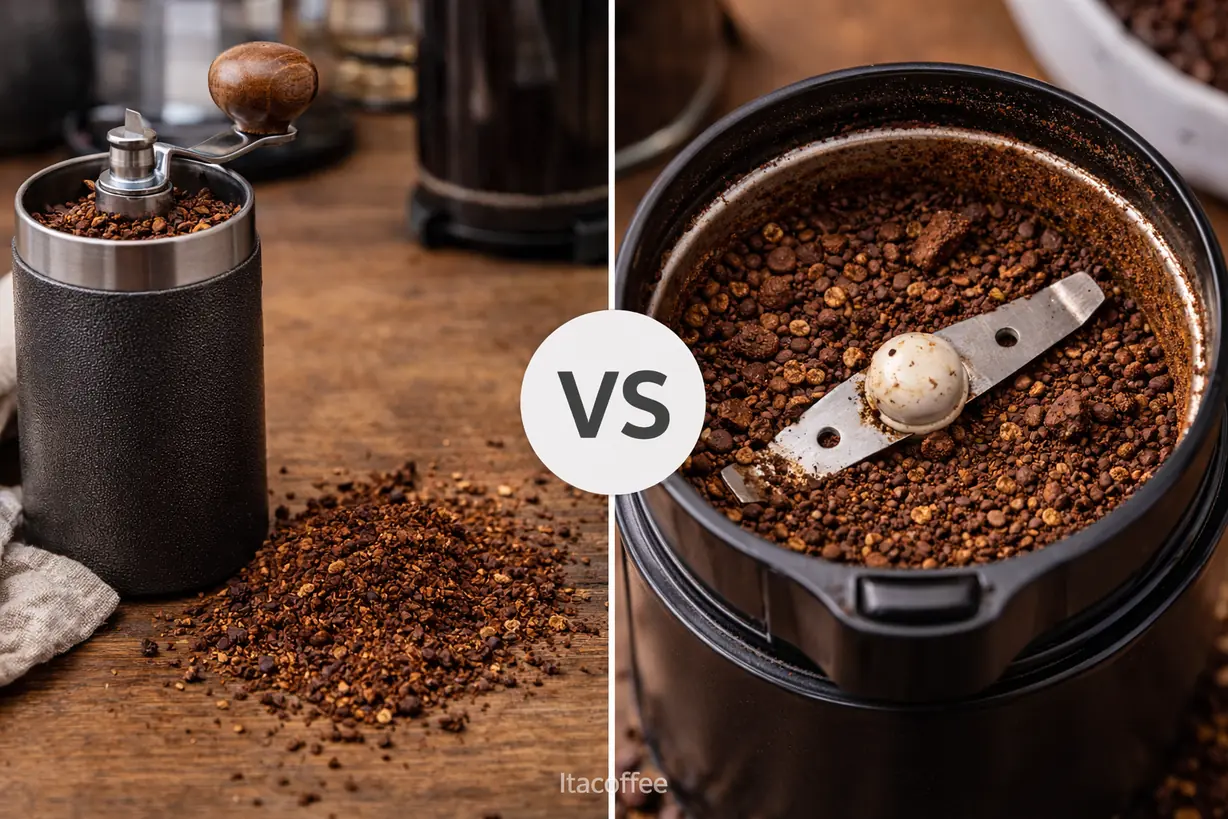
Grind precision becomes especially important for percolation systems. See Burr vs Blade Coffee Grinders for technical comparison.
Conclusion
Immersion vs Percolation is not a debate about devices — it is a contrast between two fluid systems.
Immersion trends toward equilibrium and stability. Percolation maintains continuous extraction pressure through solvent renewal.
Understanding how water moves — and how gradients evolve — turns brewing from a recipe into applied physics.
Editorial note: This article was developed with AI-assisted drafting and human review to ensure clarity, accuracy, and a non-commercial educational tone.