What to look for in a coffee grinder is one of the most important questions in home coffee brewing. While many people focus on beans or brewing devices, the grinder directly controls grind size, particle distribution, and extraction stability.
In practical brewing, the grinder determines how evenly water extracts flavor compounds from coffee grounds. An inconsistent grinder creates uneven extraction, which often leads to cups that taste both sour and bitter.
Understanding what to look for in a coffee grinder therefore begins with understanding the physics of coffee extraction and particle size distribution.
In This Guide
What to Look for in a Coffee Grinder: The Core Principle
The primary job of a coffee grinder is not simply to crush beans. Its real function is to produce coffee particles of consistent size.
When particle sizes are consistent, water extracts flavor compounds evenly. When particles vary widely, extraction becomes unstable.
If you want a deeper technical explanation, our article
Coffee Grind Size Extraction Explained: The Physics of Surface Area explains how grind size controls extraction chemistry.
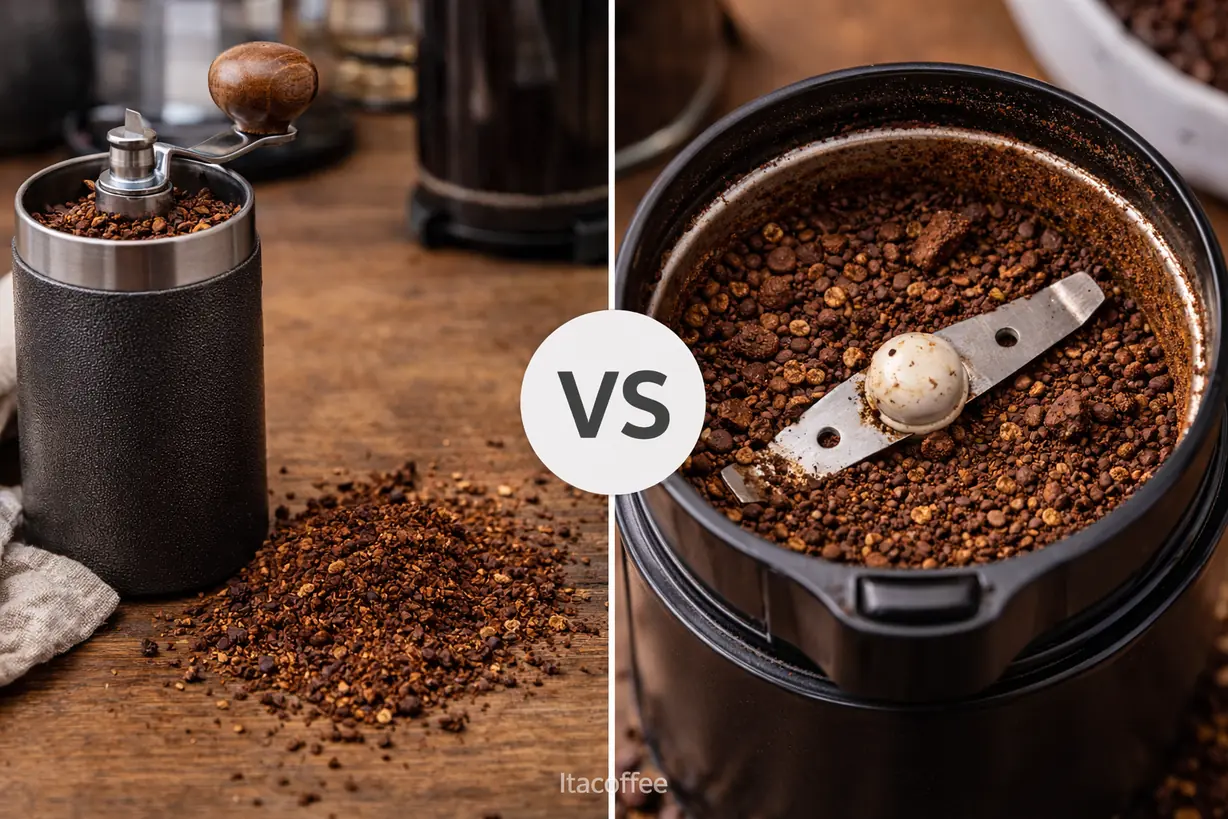
Burr Grinders vs Blade Grinders
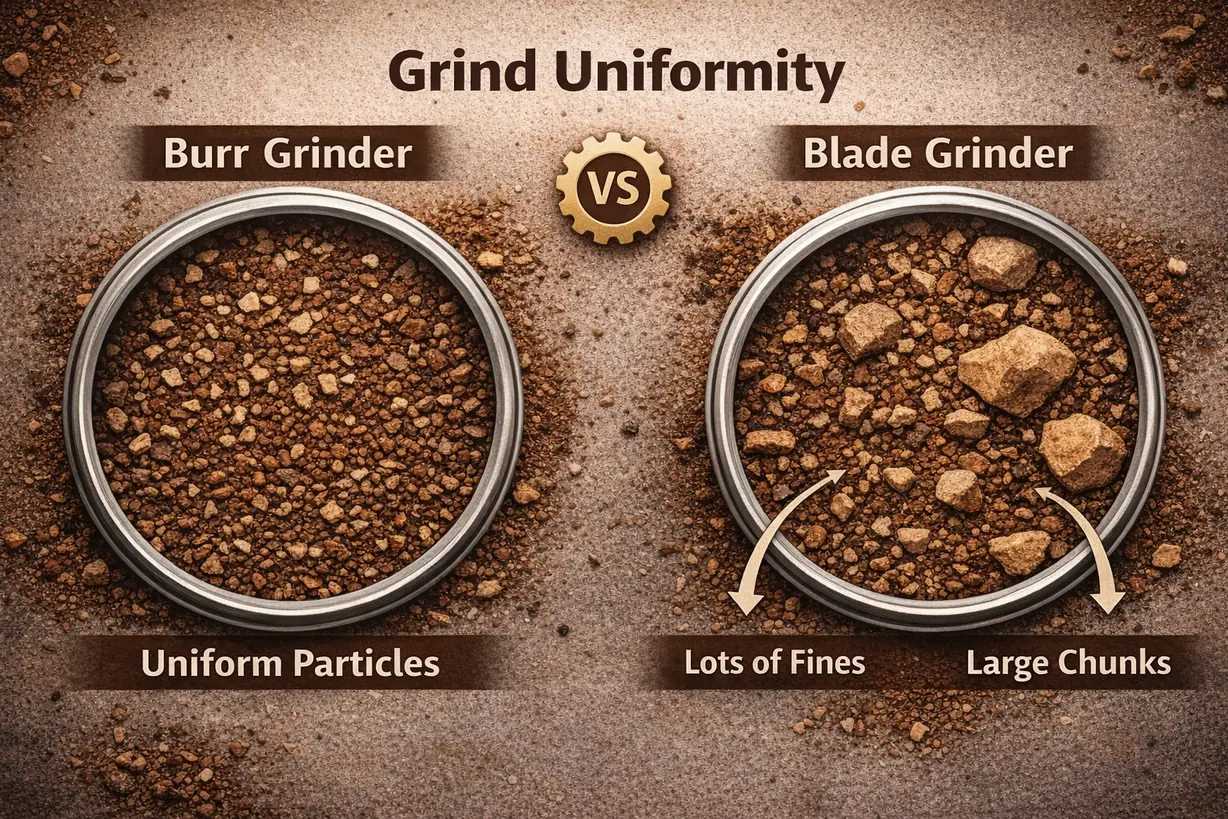
One of the first things to consider when evaluating what to look for in a coffee grinder is the grinding mechanism.
Blade Grinders
Blade grinders use spinning blades to chop beans randomly. This creates an extremely wide particle distribution.
- Large particles extract too slowly
- Fine particles extract too quickly
- Flavor becomes unstable
Burr Grinders
Burr grinders use two precisely machined burrs to crush beans at a controlled distance. This produces much more consistent particles.
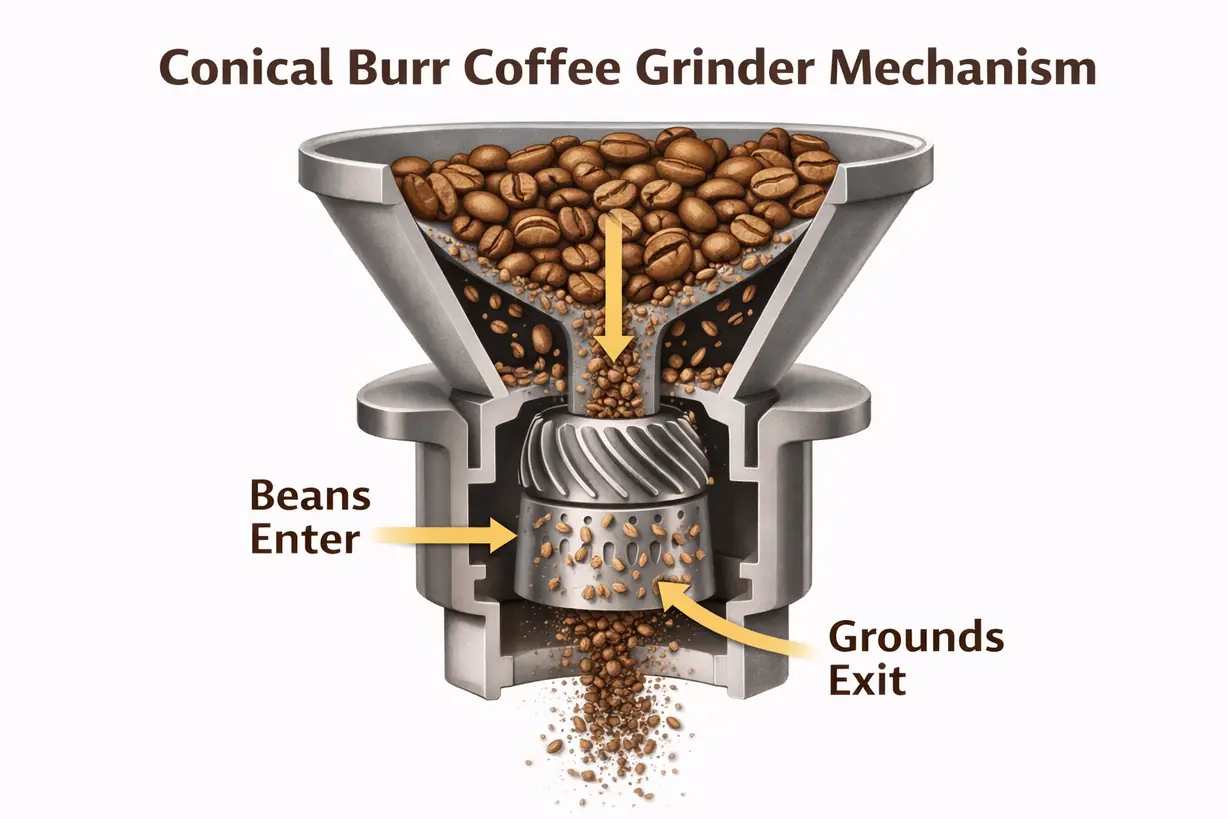
A full technical comparison is explained in
Burr vs Blade Grinders: A Technical Comparison of Grind Consistency and Flavor.
Grind Consistency and Particle Distribution
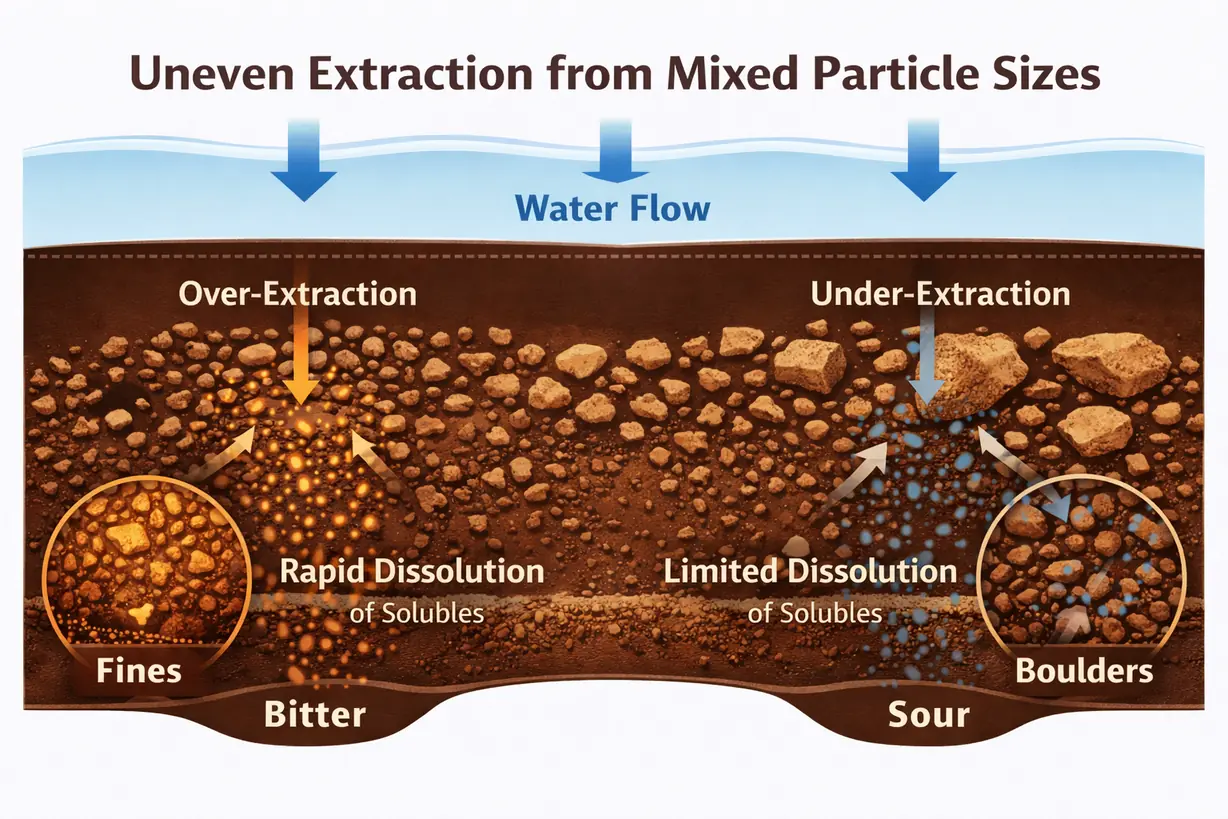
A key factor in what to look for in a coffee grinder is particle consistency.
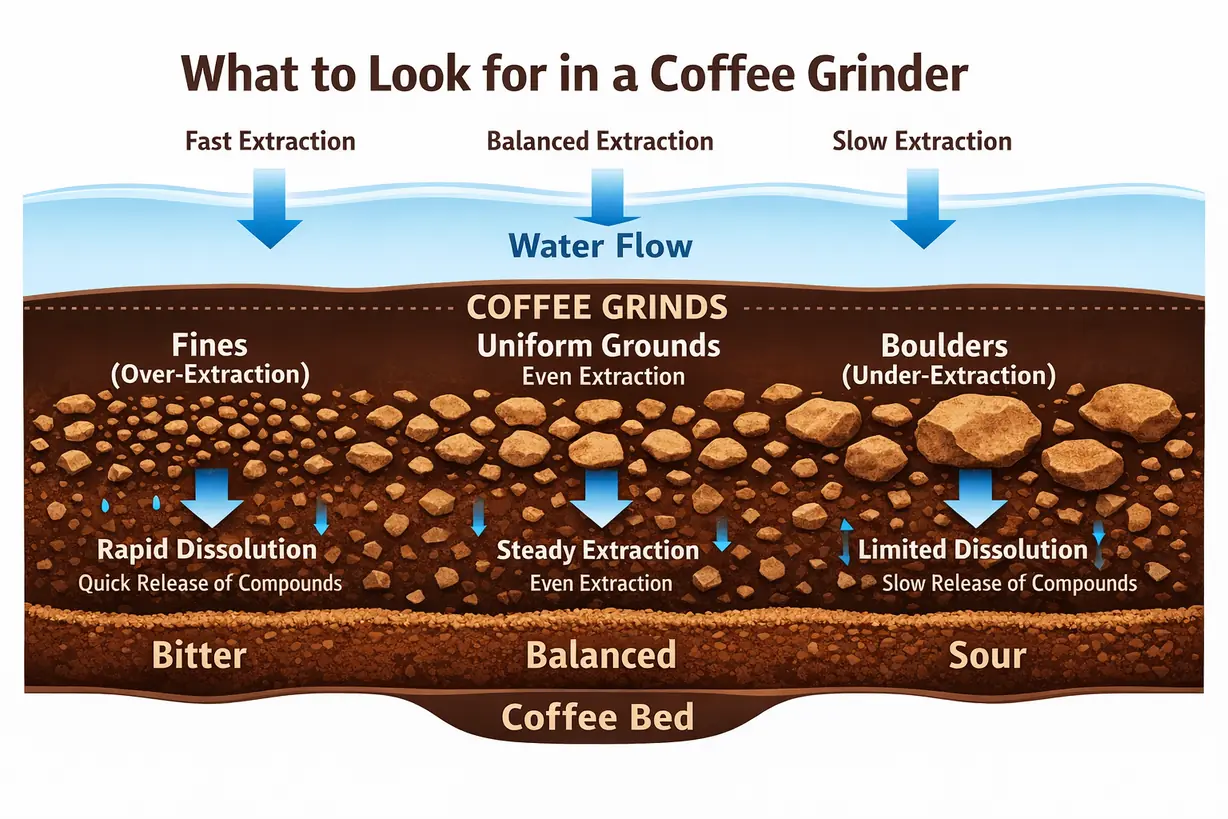
Coffee grounds contain two important particle categories:
- Boulders — large particles that extract slowly
- Fines — very small particles that extract quickly
A high-quality grinder minimizes the difference between these particles.
When particle distribution becomes too wide, extraction becomes uneven. This can create cups that taste sour and bitter at the same time.
This phenomenon is explained in detail in
Under vs Over Extraction Explained: The Science of Coffee Flavor.
Grind Adjustment Precision
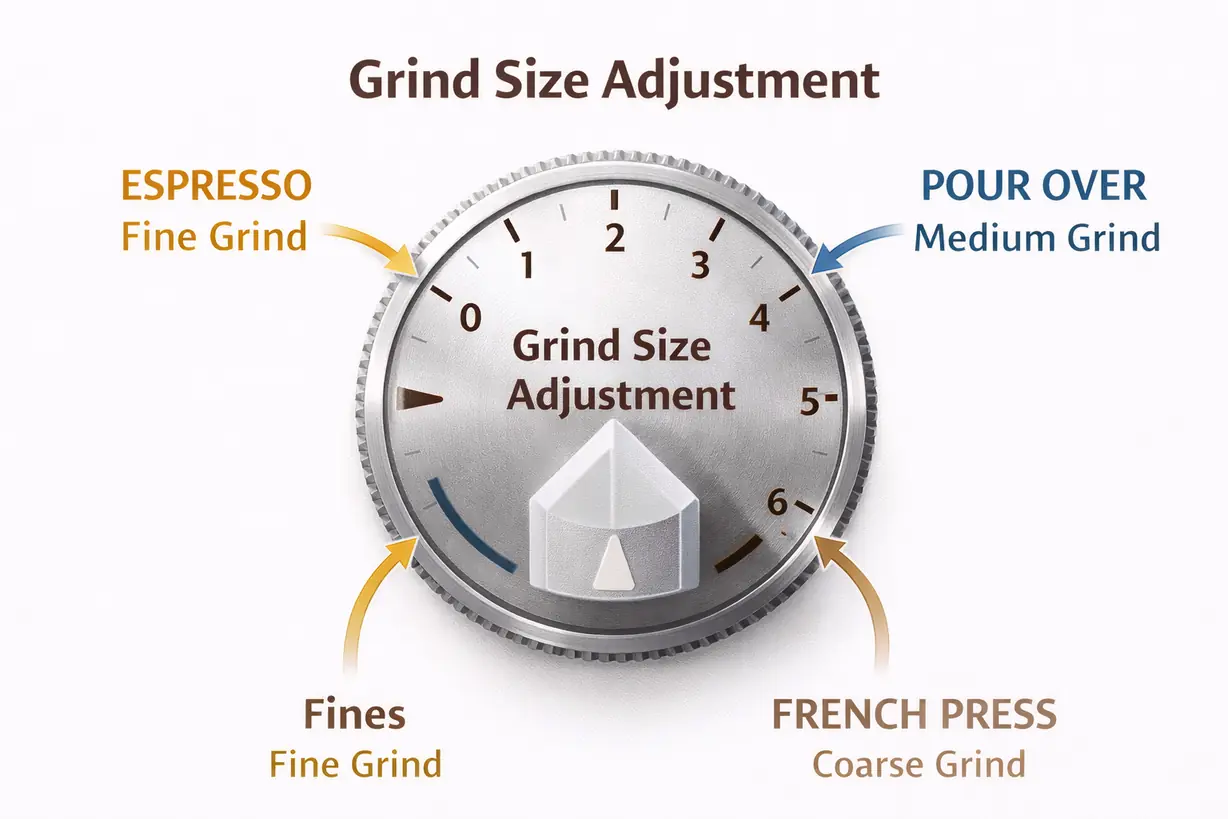
Another important factor in what to look for in a coffee grinder is adjustment precision.
Different brewing methods require different grind sizes:
- Espresso → very fine grind
- Pour over → medium grind
- French press → coarse grind
Grinders therefore include adjustment systems that control burr spacing.
- Stepped adjustment – fixed increments
- Stepless adjustment – continuous control
Small grind changes can dramatically affect espresso extraction. Our guide
Espresso Shot Running Too Fast explains how grind size directly affects flow rate.
Manual vs Electric Coffee Grinders
Another practical consideration in what to look for in a coffee grinder is the grinder’s workflow.
Manual grinders
- Portable
- Lower cost for high-quality burrs
- Slower grinding process
Electric grinders
- Fast grinding
- Convenient for daily brewing
- Higher mechanical complexity
Our technical comparison explains this difference in more detail:
Manual vs Electric Coffee Grinder: How to Choose Based on How You Brew.
The Four Key Criteria When Evaluating a Coffee Grinder
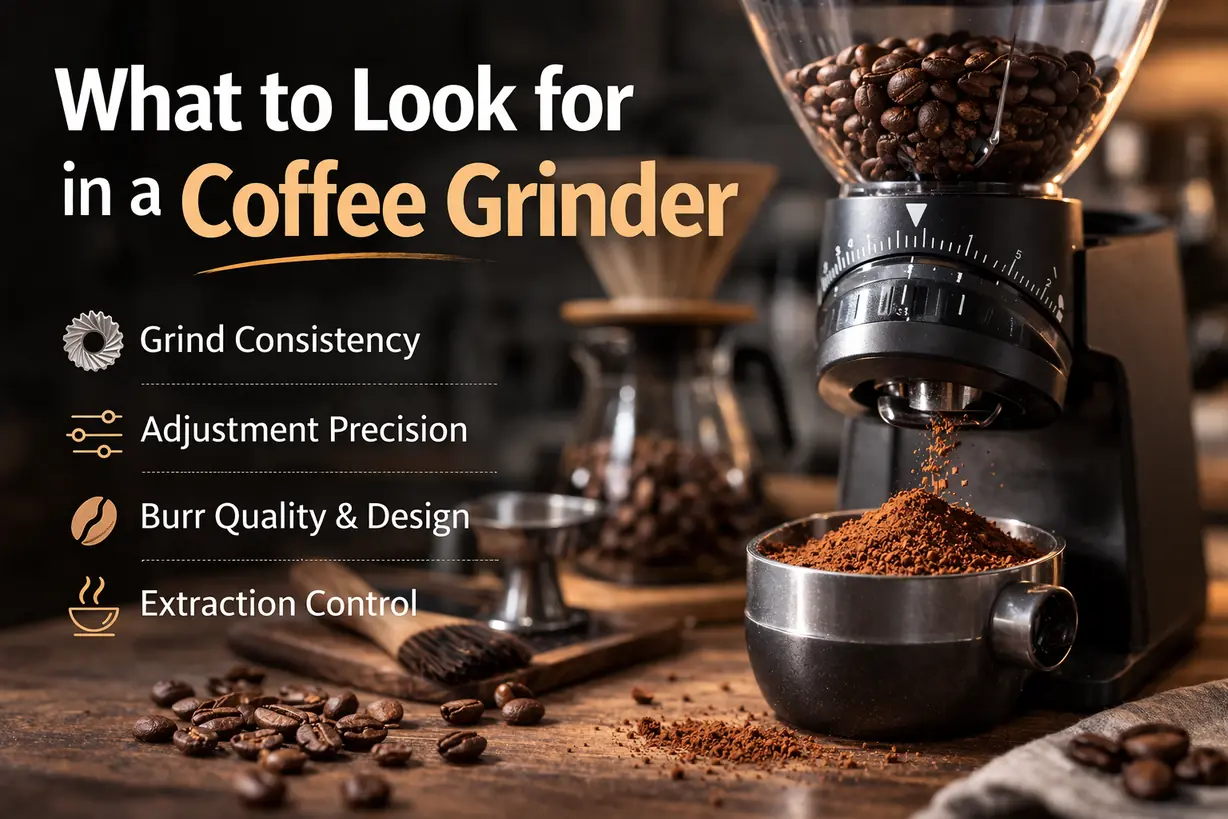
When evaluating what to look for in a coffee grinder, four technical criteria matter most:
- Burr design
- Particle consistency
- Grind adjustment precision
- Mechanical stability
If these variables are controlled, brewing becomes predictable and repeatable.
According to research published by the
Specialty Coffee Association, grind uniformity is one of the most influential factors affecting extraction stability.
Conclusion
Understanding what to look for in a coffee grinder allows home brewers to control one of the most important variables in coffee brewing.
Once grind consistency is stable, other brewing variables—such as brew ratio, temperature, and time—become much easier to manage.
At ITA Coffee, we approach coffee as a system of controllable variables rather than equipment upgrades. Continue exploring our brewing science guides to deepen your understanding of extraction and improve your home coffee practice.