Coffee advice often turns coffee grinders into lifestyle choices:
manual grinders are called “pure,” electric grinders “lazy” or “professional.”
That framing misses the real question.
A grinder doesn’t just change how you grind.
It changes grind consistency, brewing rhythm, and even how forgiving your brew becomes.
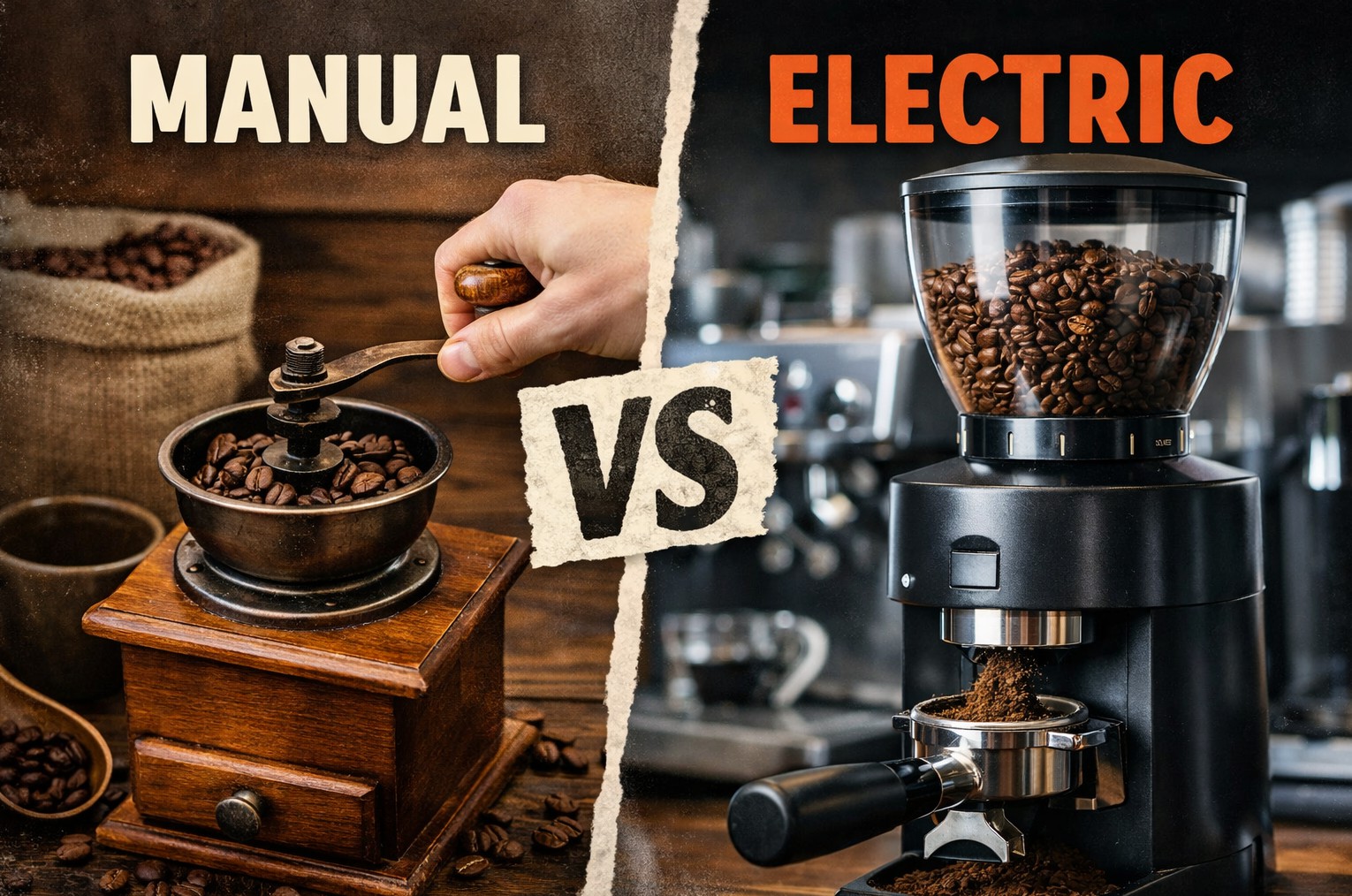
This guide breaks down manual vs electric grinders the way a coffee instructor would—by function, not by fashion.
In This Guide
What a Grinder’s Job Really Is
Before comparing manual and electric grinders, it helps to strip the tool down to its actual job.
A grinder must do three things well:
- Break coffee beans into particles of predictable size
- Do so consistently from dose to dose
- Avoid creating excessive fines (tiny dust-like particles)
Everything else—speed, noise, effort—comes after those fundamentals.
If two grinders produce similar grind quality, they will brew similarly.
If they don’t, the cup will tell you immediately.
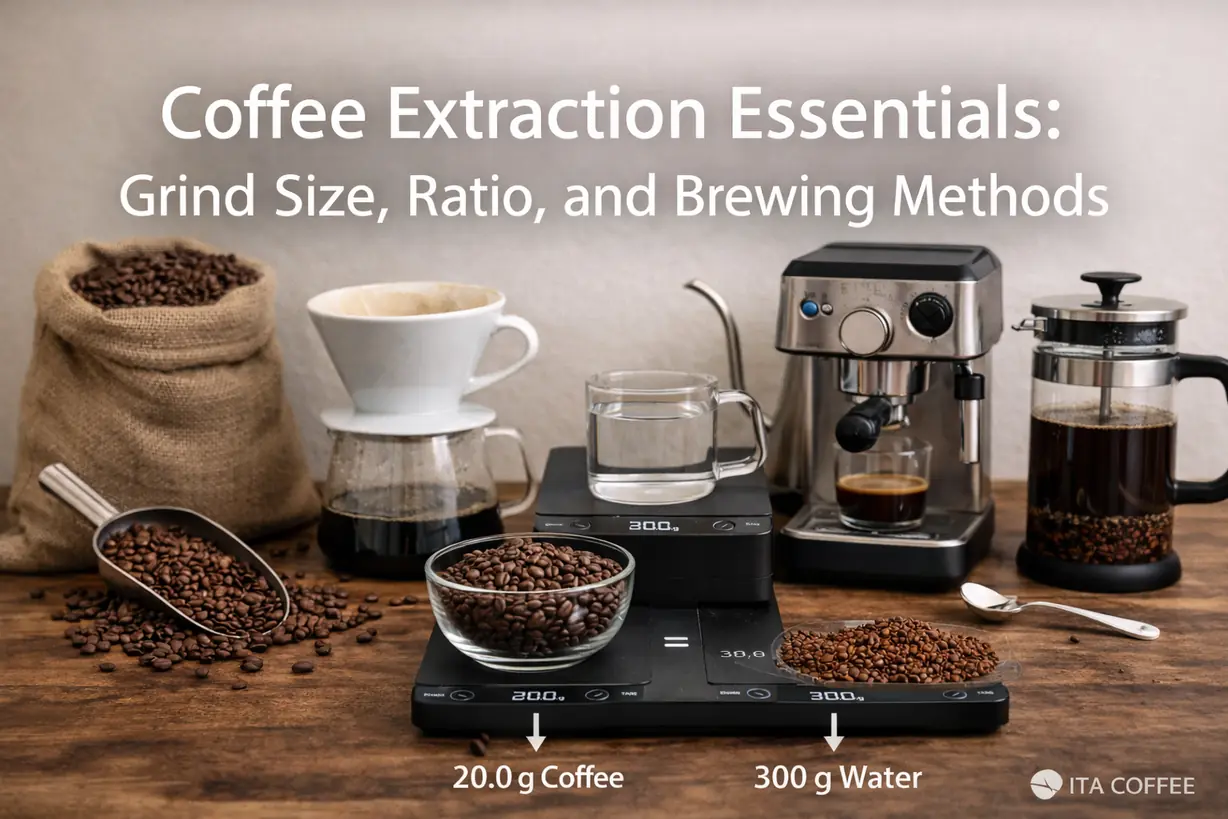
If the relationship between grind size and flavor still feels abstract, this guide on coffee extraction explains why particle consistency matters more than most brewing variables.
To understand how grind interacts with ratio and brew time as a system, see coffee brewing basics, which breaks down how these variables move together.
In other words, a grinder controls how predictable extraction can be—before water ever touches the coffee.
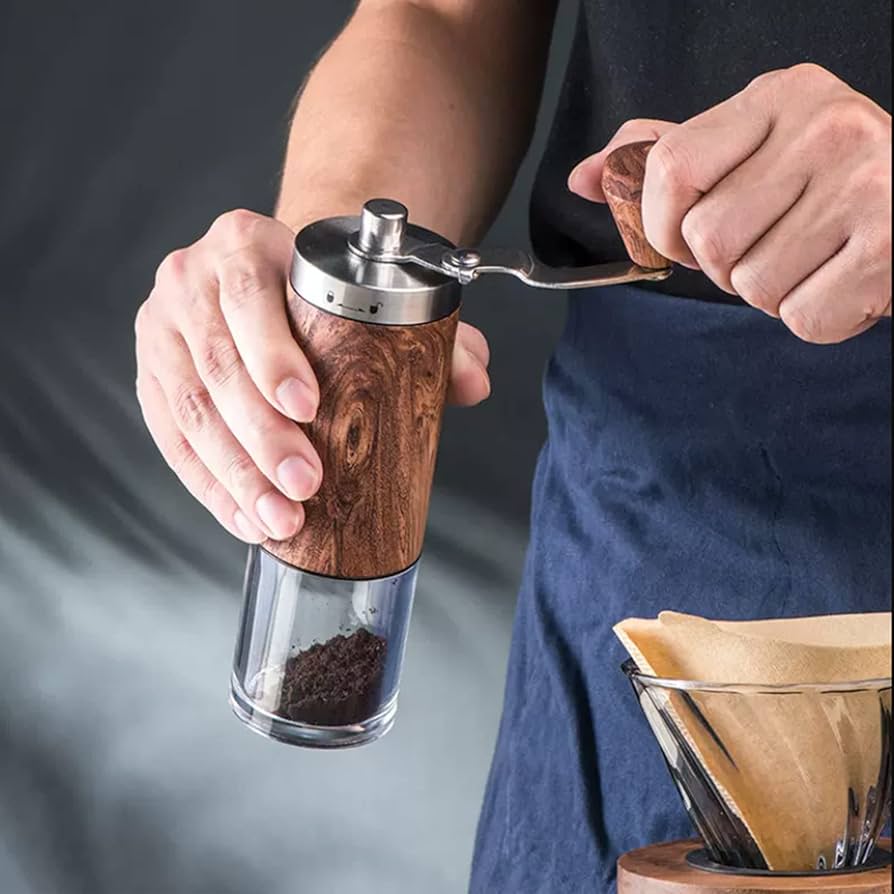
Manual Coffee Grinders: Control Through Simplicity
Manual grinders use human force instead of motors. That sounds primitive, but the design has real consequences.
Because manual grinders spin more slowly, they tend to generate less heat and less static. This can reduce clumping and help preserve aromatic compounds—especially noticeable with light roasts.
However, performance depends heavily on burr quality and alignment.
A well-made manual grinder can outperform a cheap electric one. A poorly built manual grinder will frustrate you daily.
Where manual grinders shine:
- Single-cup brewing
- Travel or small kitchens
- Brewing methods tolerant of slower workflow (pour-over, AeroPress)
Where they struggle:
- Multiple cups back-to-back
- Very fine espresso grinding
- Users who value speed over ritual
Manual grinding is not “better.” It is simply more deliberate.
Electric Coffee Grinders: Consistency at Scale
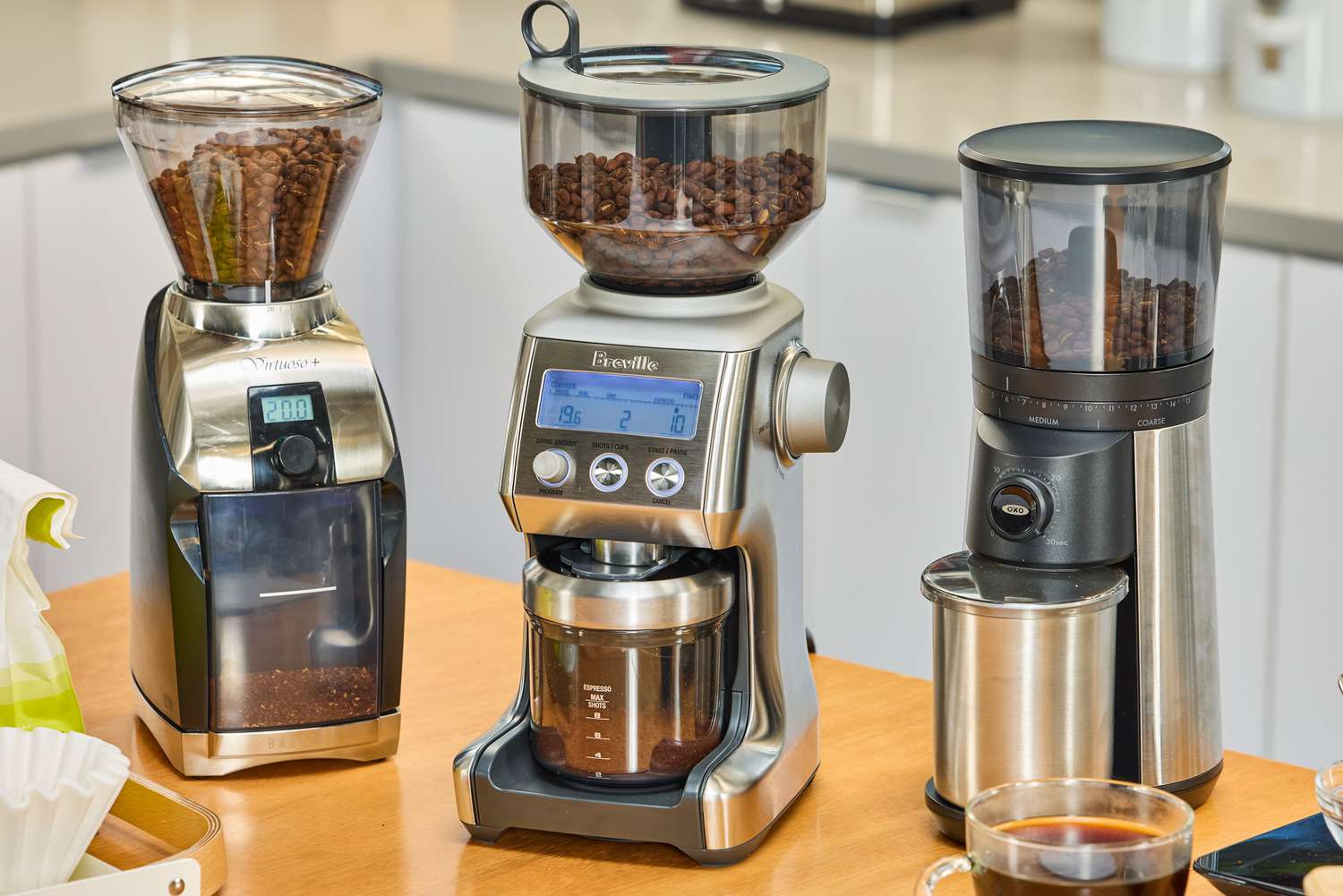
Electric grinders trade muscle for motors, and that changes the workflow immediately.
A motor-driven burr set can grind larger doses quickly and repeatably. This matters more than people realize: consistency over time is often what separates good coffee from great coffee.
The downside is complexity. Motors add:
- Heat buildup
- Vibration
- Greater variation between low-end and high-end models
A good electric grinder is engineered to control these factors. A bad one amplifies them.
Where electric grinders excel:
- Daily brewing routines
- Multiple users or larger batches
- Espresso and grind-sensitive methods
Where they fall short:
- Noise-sensitive environments
- Limited counter space
- Budget constraints (quality ramps up fast)
Electric grinders aren’t shortcuts. They are repeatability machines.
If you’re weighing price against performance, this piece on why expensive coffee gear doesn’t automatically fix bad coffee adds useful context.
Grind Quality Matters More Than the Power Source
This is the mistake most comparisons make:
they focus on manual vs electric instead of burr design and tolerance.
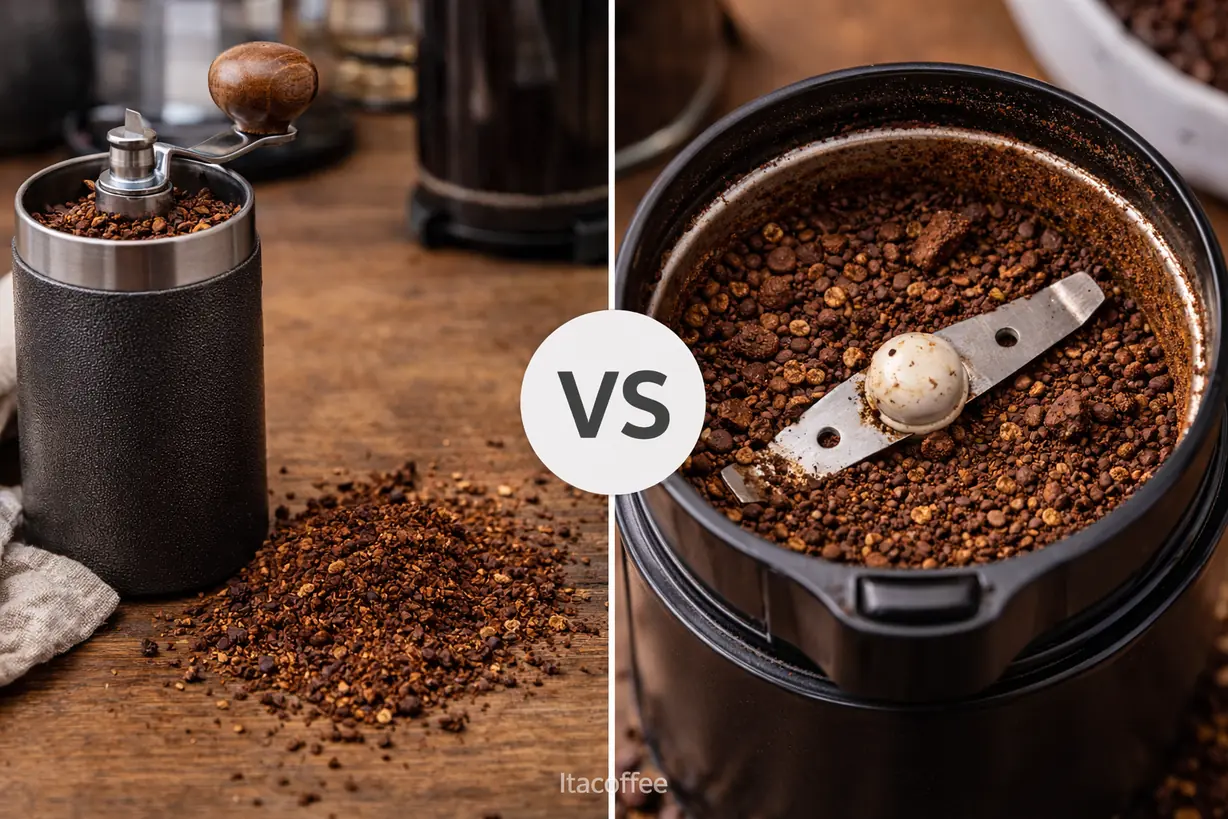
If you want a deeper breakdown of why burr design matters so much, this comparison of burr vs blade coffee grinders explains where most grind inconsistency actually comes from.
A hand grinder with precision-cut steel burrs will beat an electric grinder with poorly aligned burrs every time.
If your coffee tastes:
- Bitter and hollow → likely too many fines
- Sour and weak → inconsistent particle size
- Muddy and flat → uneven extraction
Those problems come from grind quality, not from whether a motor was involved.
If you want to diagnose these taste shifts more precisely, this guide on why coffee tastes bitter or sour connects flavor directly to extraction imbalance.
The grinder’s job is invisible—until it fails.
Which One Is “Better” Depends on How You Brew
There is no universal winner. There is only fit.
- Brewing one cup at a time → manual grinders are often enough
- Brewing espresso daily → electric grinders offer control and sanity
- Brewing on the go → manual grinders are unmatched
- Brewing for others → electric grinders reduce friction
If you’re unsure how brewing style changes grinder requirements, this guide on how brewing methods affect coffee flavor connects grinder choice directly to extraction behavior.
Espresso, for example, requires extremely fine and stable grinding—this espresso guide explains why small grind shifts dramatically change extraction pressure.
The right grinder disappears into your routine.
The wrong one makes you think about it constantly.
The Quiet Truth Most Buying Guides Skip
Grinders shape habits.
Manual grinders encourage slower brewing and attentiveness.
Electric grinders encourage consistency and experimentation.
Neither is morally superior.
Both can produce excellent coffee—or disappointing coffee—depending on design and use.
Choosing a grinder is less about identity and more about how often you want to think about grinding.
Summary
This article is meant to clarify a single idea: grinding is not just a mechanical step, but a control point.
Burr and blade grinders differ not because one is “better,” but because one allows control and repeatability, while the other introduces far more randomness.
Once particle size becomes predictable, extraction becomes understandable.
If you’re trying to improve results without upgrading equipment, this guide on brewing better coffee without buying new gear builds on the same principle of variable control.
In coffee, flavor is rarely random.
When results change, it’s usually because a variable changed—often the grind.
Understanding how grinders work helps turn brewing from trial-and-error into a repeatable process.
— Coffee Knowledge Series, curated by itacoffee
Editorial note: This article was developed with AI-assisted drafting and human review
to ensure clarity, accuracy, and a non-commercial educational tone.