Brewing better coffee doesn’t start with buying new equipment.
It starts with understanding how extraction actually works.
Almost every brewing method—French press, pour over, AeroPress, cold brew—relies on the same three variables:
- Grind size
- Coffee-to-water ratio
- Brew time
Change any one of them, and the taste changes.
Ignore them, and no gear can save the cup.
Before diving into adjustments, it helps to understand the underlying process.
This guide explains coffee extraction clearly—how timing and control shape flavor.
If you’ve ever assumed using more coffee fixes weak flavor,
this breakdown explains why strength and extraction are not the same thing.
Once that model clicks, every variable below starts to make sense.
In This Guide
1. Grind Size: Controlling How Fast Water Extracts Flavor
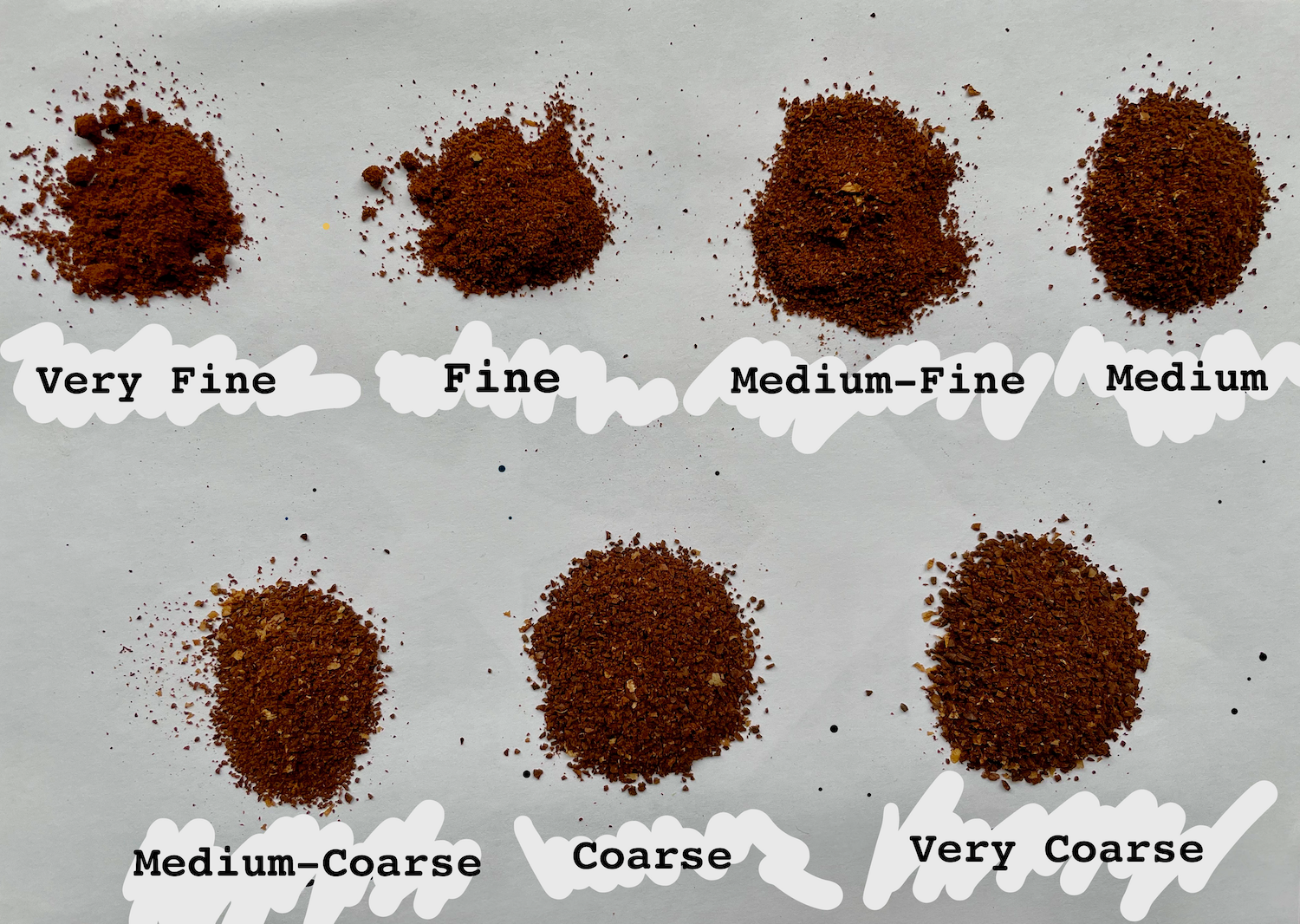
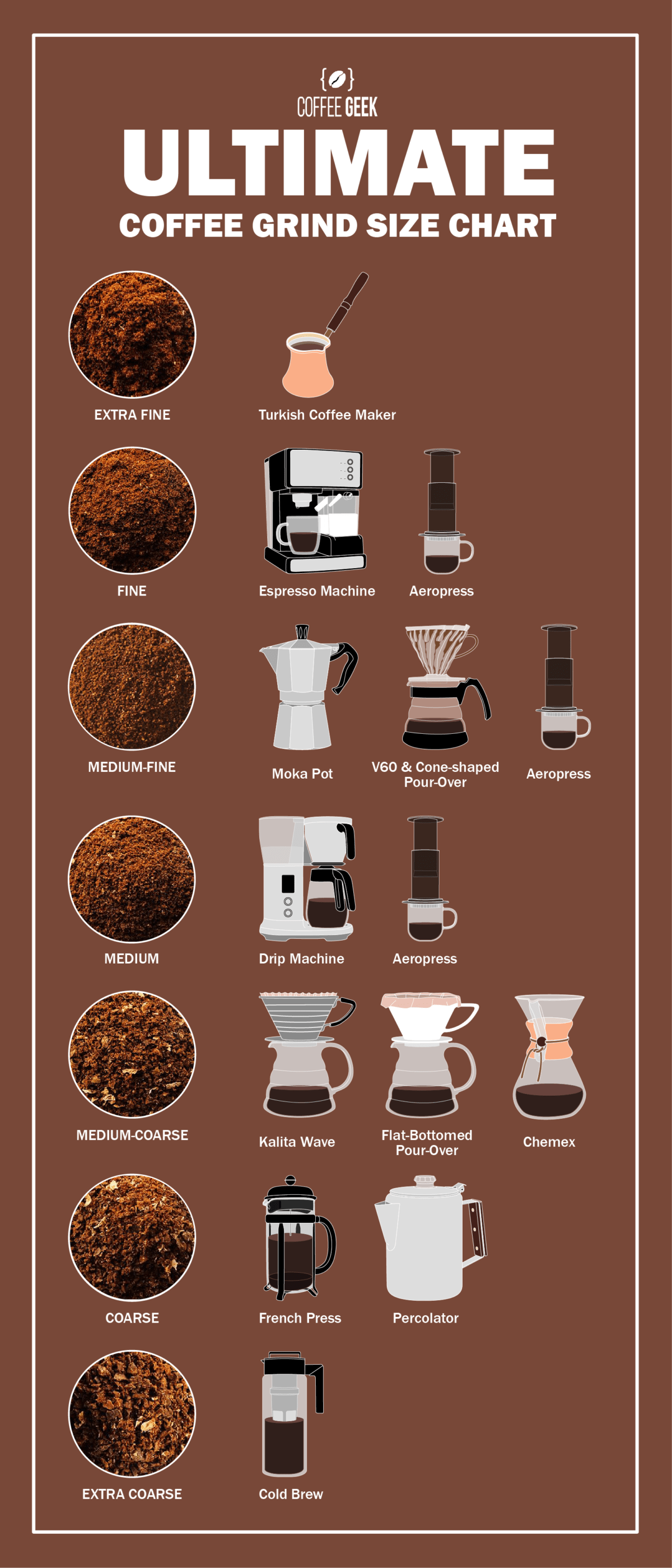
Grind size controls surface area.
More surface area means water extracts flavor faster.
- Coarse grinds extract slowly
- Fine grinds extract quickly
Think of it like snow vs. ice cubes. Snow melts instantly; ice takes time.
Why grind size matters more than people think
If your grind is too fine:
- Water extracts too fast
- Bitterness shows up early
- The cup tastes harsh or dry
If your grind is too coarse:
- Extraction is incomplete
- Coffee tastes thin or sour
- Sweetness never develops
Most “bad coffee” problems start here—not with the beans or the brewer.
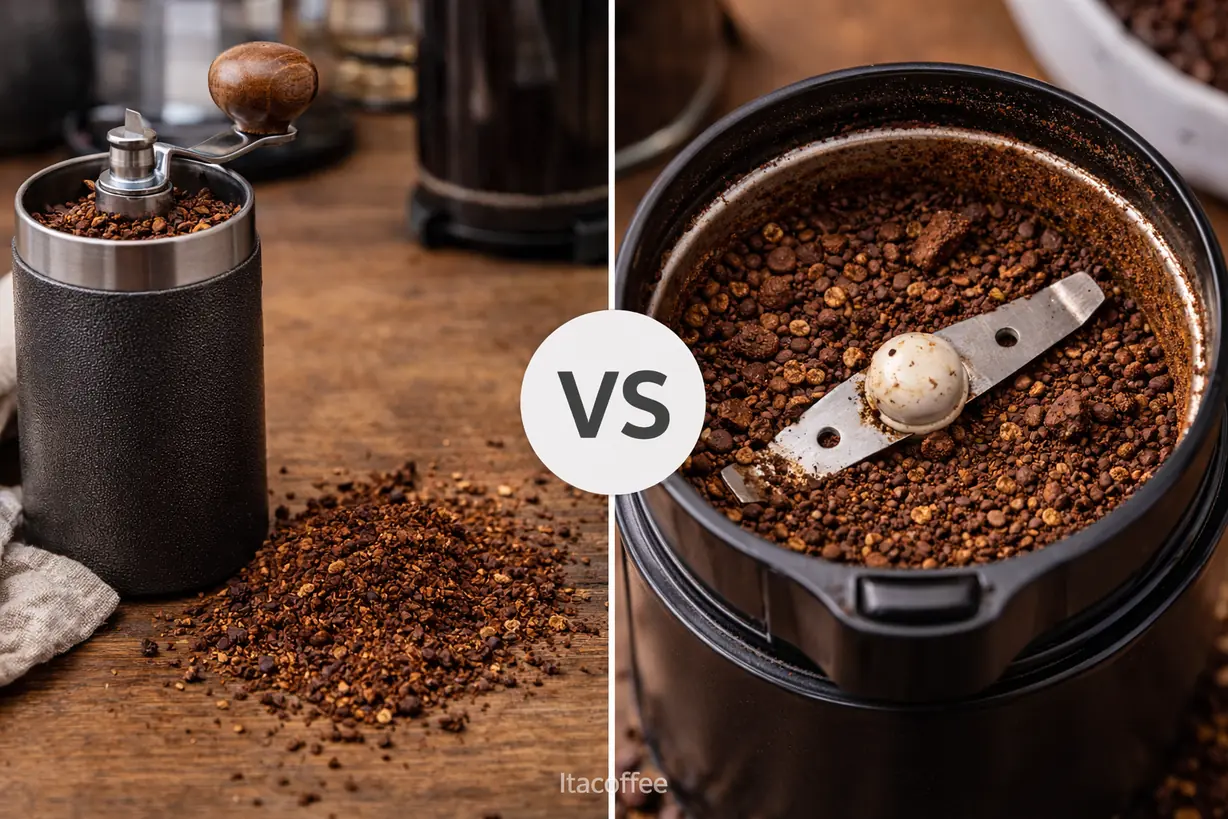
Consistency matters as much as size—uneven particles extract unevenly.
If you’re unsure why burr grinders create more control than blade grinders,
see Burr vs Blade Coffee Grinders: What’s the Real Difference and Why It Matters.
This is also why pre-ground coffee limits your ability to adjust extraction.
This is why French press relies on coarse grinds.
2. Ratio: How Strong Is the Coffee, Really?
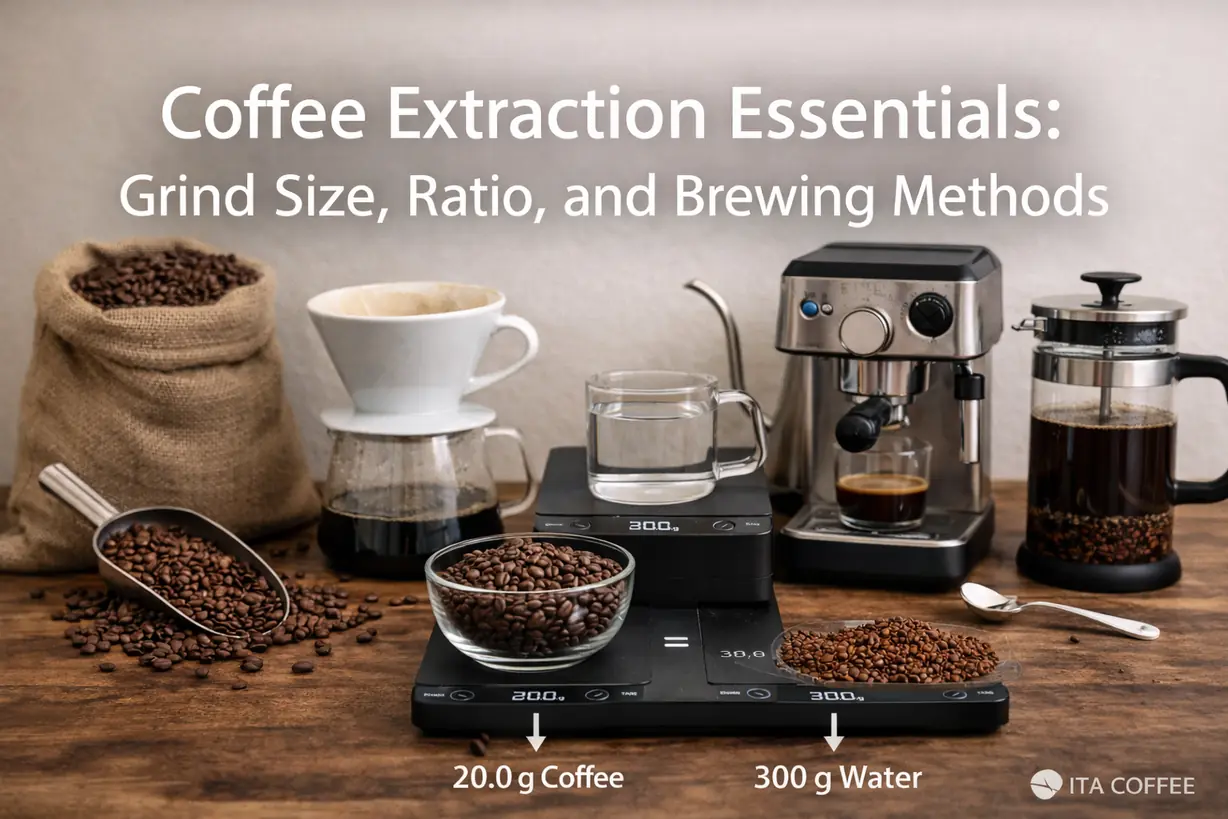
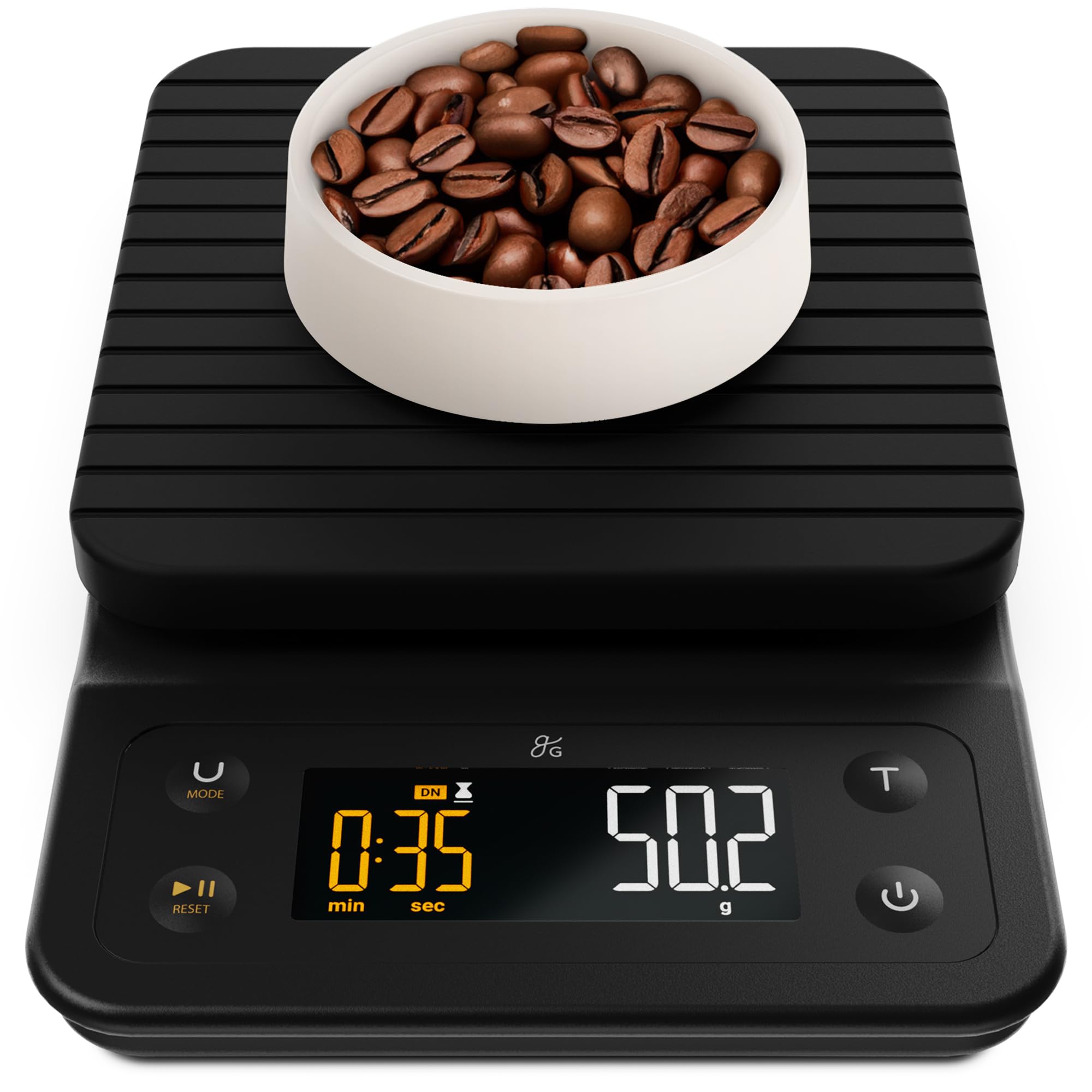
Ratio means how much coffee you use compared to water.
A common starting point:
- 1:15–1:17 (1 gram coffee to 15–17 grams water)
Ratio does not solve extraction problems by itself.
It controls strength, not quality.
A simple way to think about ratio
- Too much coffee → overly strong, muddy flavors
- Too little coffee → weak, hollow taste
If your coffee tastes bitter and strong, don’t immediately reduce coffee.
First ask: Was it over-extracted? (grind or time)
Ratio is a volume knob.
Extraction is the signal itself.
Roast level also affects how easily compounds extract.
If you want to understand how roast changes solubility and flavor balance,
see Dark Roast vs Light Roast: What Roasting Really Changes in Coffee Flavor.
3. Time: How Long Water Is Allowed to Work
Time determines how far extraction progresses.
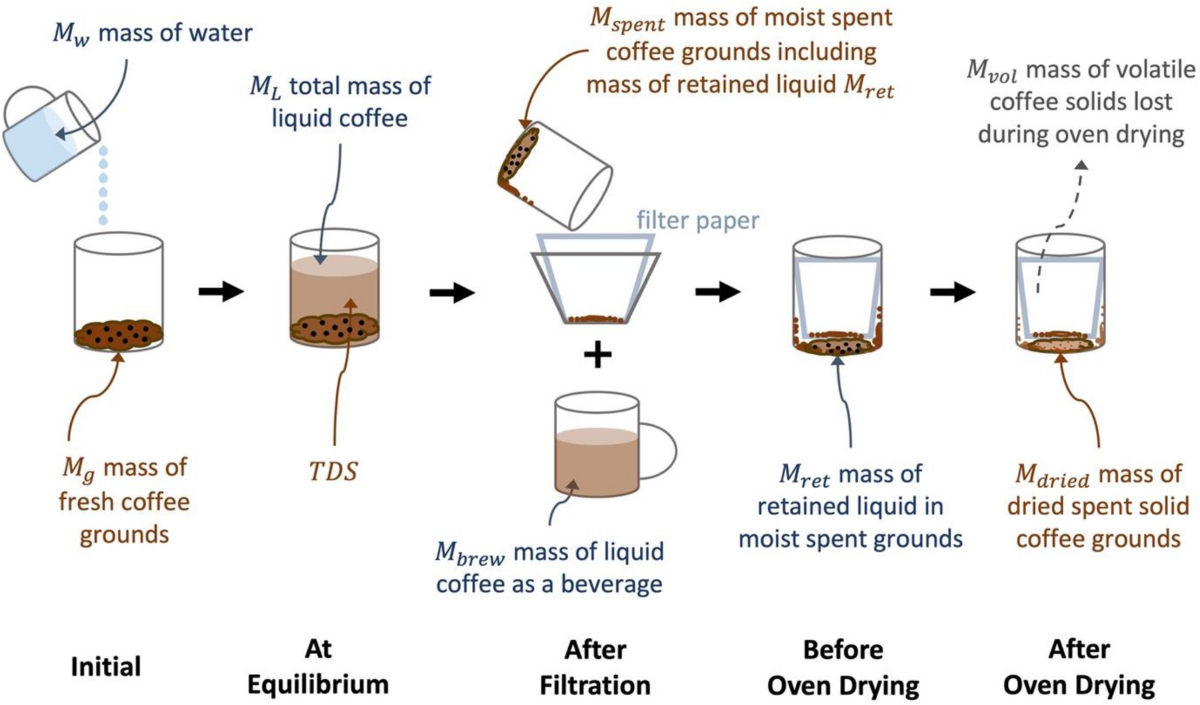
Extraction happens in stages:
- Acids come out first
- Sugars follow
- Bitters arrive last
In reality, these compounds overlap—but thinking in stages helps diagnose flavor problems.
Cut the brew short → sour
Let it run too long → bitter
If you want to understand why sourness and bitterness appear at different stages,
see Why Your Coffee Tastes Bitter or Sour — And What Extraction Has to Do With It.
Different brewing methods stretch or compress time differently.
Cold brew extends extraction over many hours, while pressure-based methods like espresso
compress extraction into seconds.
How These Three Variables Work Together
Variables never operate in isolation.
What changes flavor from one brewer to another is how a brewing method arranges and limits these variables.
If you want a deeper explanation of how methods reshape extraction using the same variables,
see How Brewing Methods Affect Coffee Flavor (From Beans to Cup).
You don’t adjust one variable in isolation.
- Finer grind → shorten time
- Coarser grind → extend time
- Higher ratio → may require finer grind
Pour over and AeroPress apply the same variables in different ways.
If you want a practical mindset shift before changing equipment,
read How to Brew Better Coffee at Home (Without Buying New Gear).
Brewing is not memorization.
It’s cause and effect.
A Practical Starting Framework (No Recipes Required)
- Pick a reasonable ratio (around 1:16)
- Choose a grind appropriate for the method
- Brew once without tweaking
- Taste and diagnose:
- Sour → extract more (finer or longer)
- Bitter → extract less (coarser or shorter)
One change at a time.
That’s how learning happens.
Why This Matters More Than Any Brewer
Different brewers don’t create good coffee.
Understanding variables does.
- Switching methods becomes easy
- Recipes make sense
- Adjustments become intentional
Explore more detailed techniques inside our Brewing Guides collection and build skill that lasts longer than any upgrade cycle.
Final Thoughts from itacoffee
Better coffee doesn’t start with buying new gear.
It starts with understanding extraction, controlling variables, and brewing with intention.
Learn the fundamentals once, and every brewer you already own gets better.
— itacoffee | Brewing Guides for thoughtful coffee makers
This article was written and optimized with the assistance of AI, then reviewed and refined
to maintain a clear, educational, non-commercial tone.