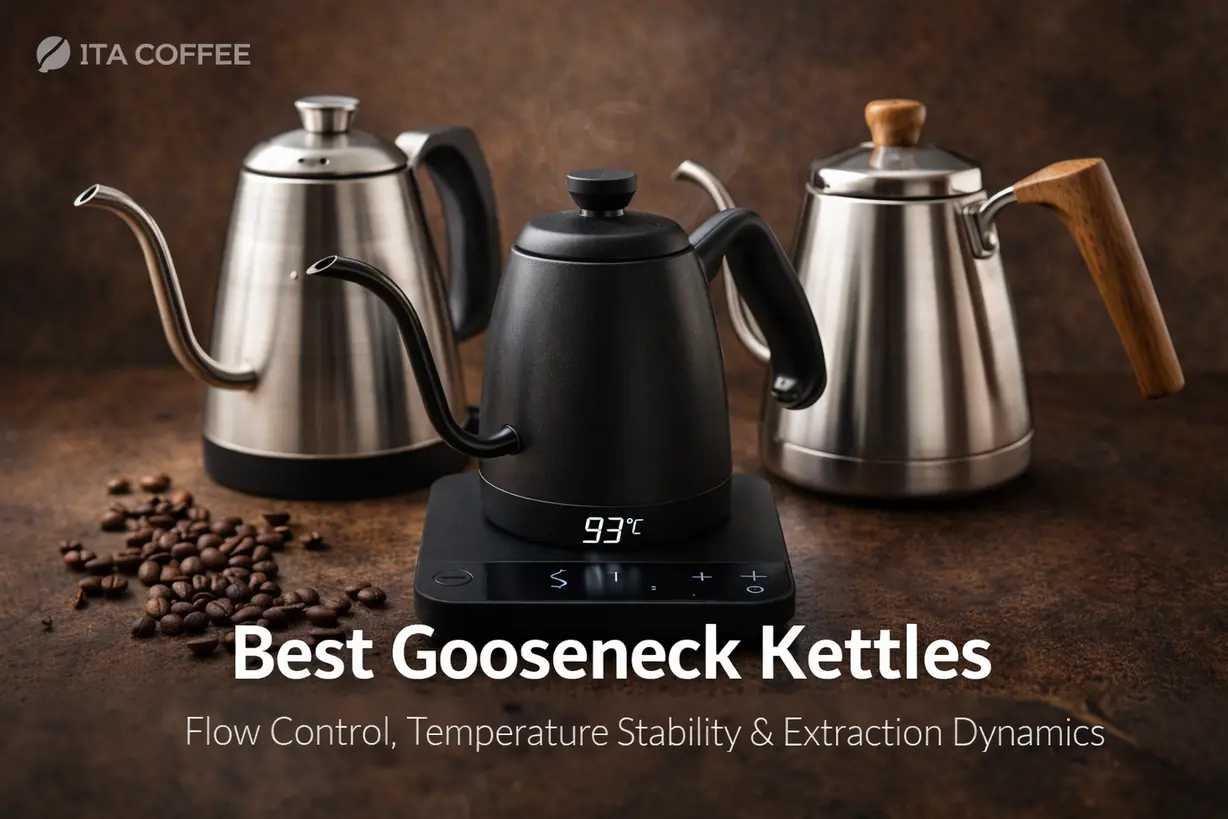
What makes a good pour over kettle is fundamentally a question of flow control, thermal stability, and pouring precision. While many brewers focus on beans or drippers, the kettle directly determines how water interacts with coffee grounds during extraction.
In pour over brewing, water is not simply added—it is applied with controlled velocity, distribution, and timing. These variables influence extraction yield, flavor balance, and consistency.
Understanding what makes a good pour over kettle therefore requires examining the physics of water flow and its interaction with coffee extraction.
In This Guide
What Makes a Good Pour Over Kettle: The Core Principle
The primary function of a pour over kettle is to provide precise control over water flow rate.
Unlike immersion methods, pour over brewing is a form of percolation extraction, where water passes through the coffee bed. This makes flow rate a critical variable.
If you want to understand this mechanism in depth, refer to
What Is Percolation Brewing? The Science of Avoiding Bitter Extraction.
According to research frameworks published by the
Specialty Coffee Association
, controlled water application is a key factor influencing extraction consistency in manual brewing.
Uncontrolled pouring leads to:
- Uneven saturation of coffee grounds
- Channeling (water finding weak paths)
- Inconsistent extraction across the coffee bed
Spout Design: The Physics of Flow Control
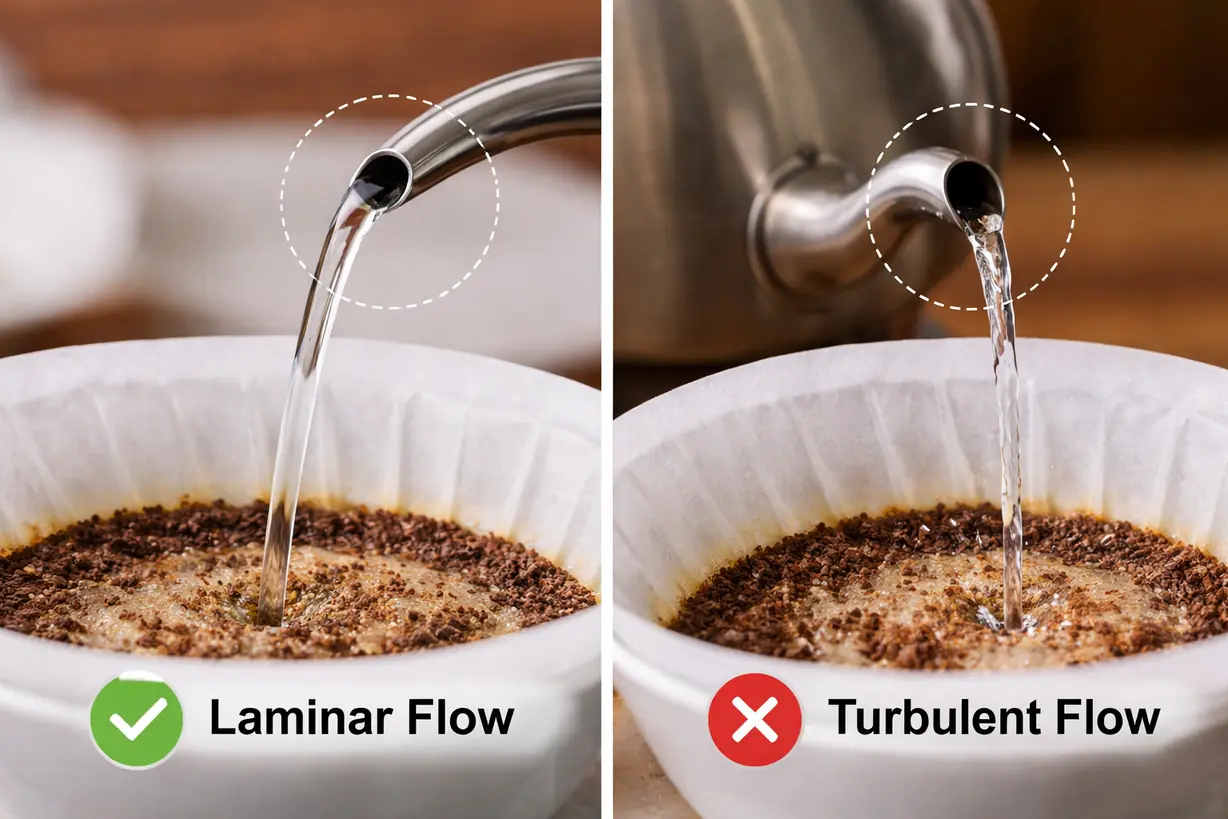
The most defining feature of a good pour over kettle is the gooseneck spout.
Why Spout Shape Matters
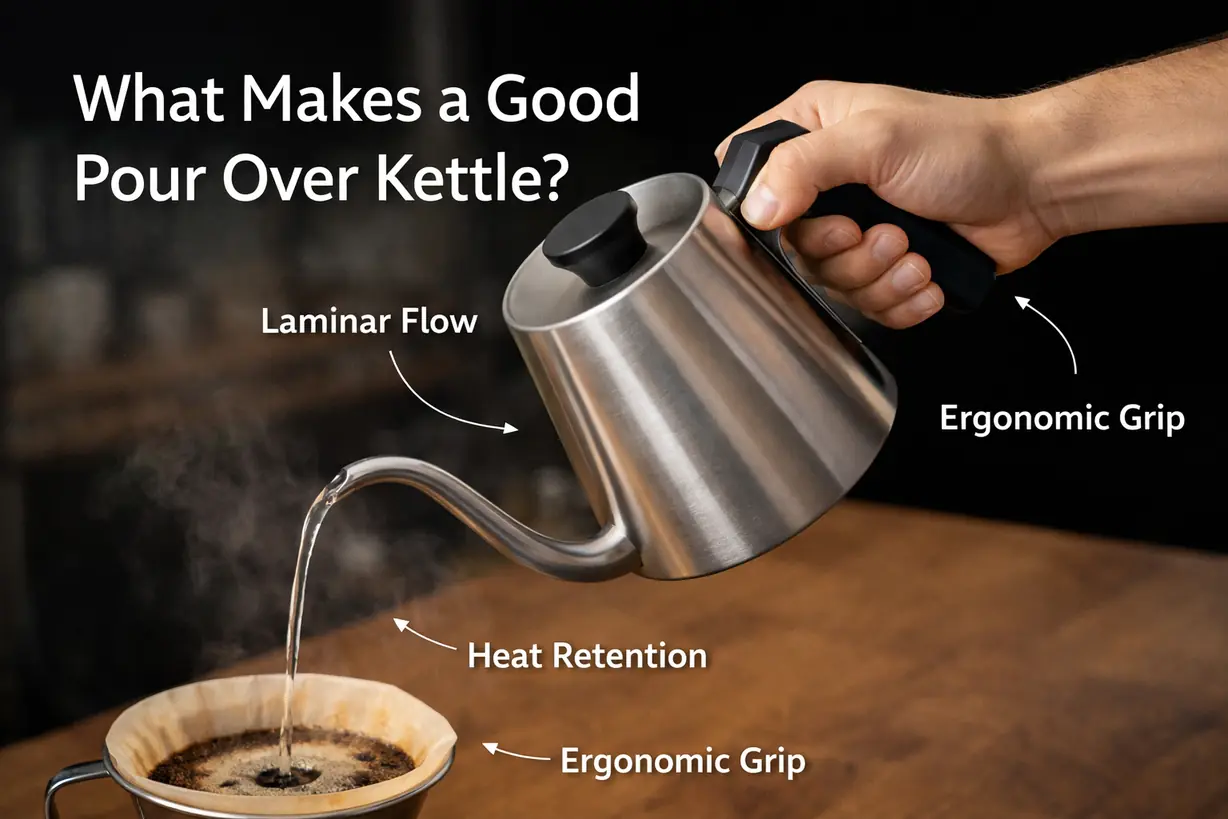
A gooseneck spout creates a laminar flow—a smooth, controlled stream of water. In contrast, standard kettles produce turbulent flow, which is difficult to control.
- Narrow spout → slower, more precise flow
- Curved geometry → stabilizes pouring direction
- Extended length → improves control over distance
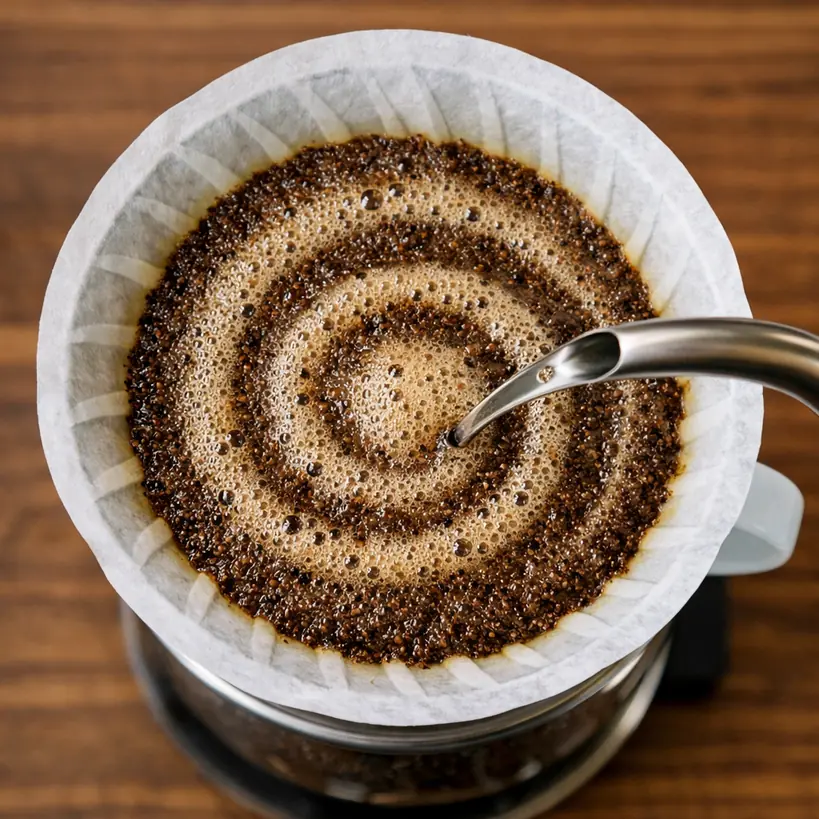
This directly affects how evenly water distributes across the coffee bed, which in turn impacts extraction uniformity.
Uneven water distribution is one of the main causes of channeling, explained in detail here:
Coffee Channeling Explained: Causes, Effects, and How to Fix Uneven Extraction.
Flow Rate Control and Extraction Stability
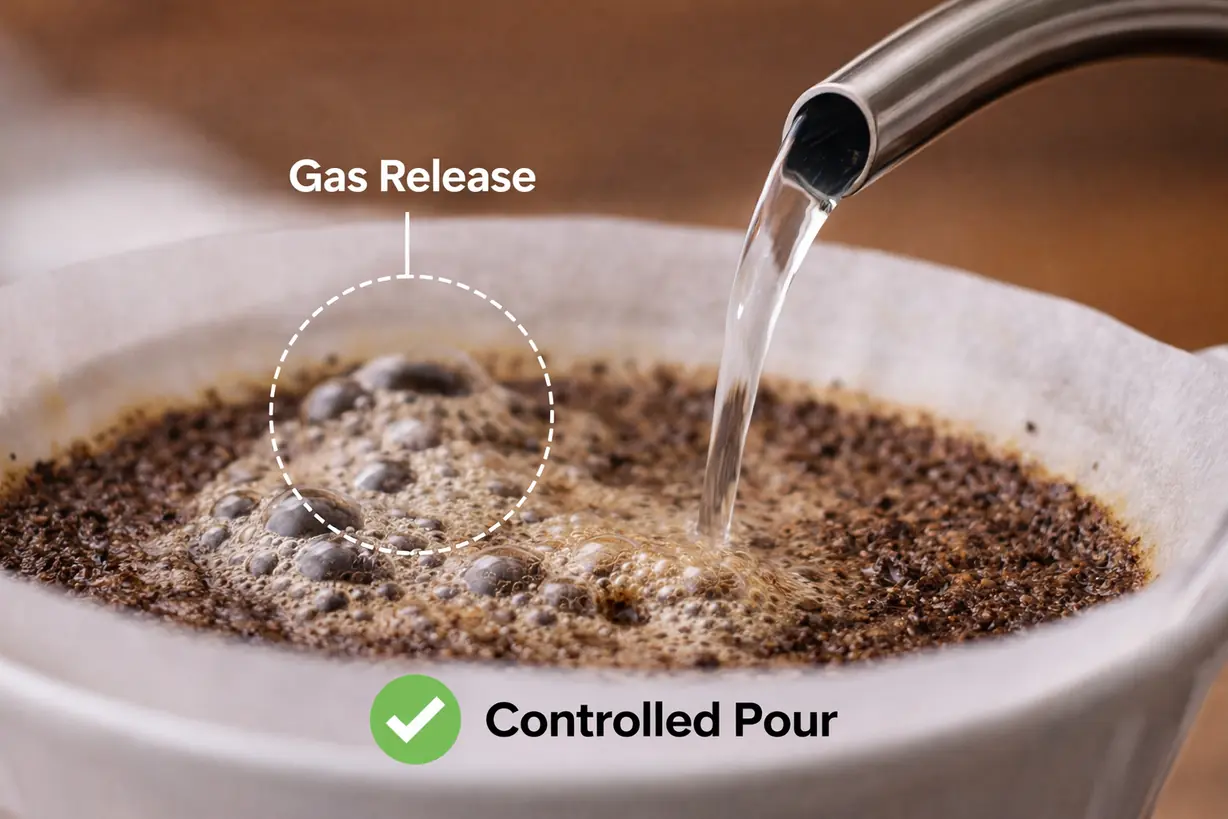
Flow rate refers to how quickly water exits the kettle and enters the coffee bed.
Why Flow Rate Matters
Flow rate affects:
- Contact time between water and coffee
- Agitation (movement of coffee particles)
- Extraction efficiency
For example:
- Too fast → under-extraction (sour, thin flavors)
- Too slow → over-extraction (bitter, heavy flavors)
This relationship is part of a broader system explained in:
Coffee Extraction Explained: How Timing Shapes Flavor.
Thermal Stability: Maintaining Consistent Temperature
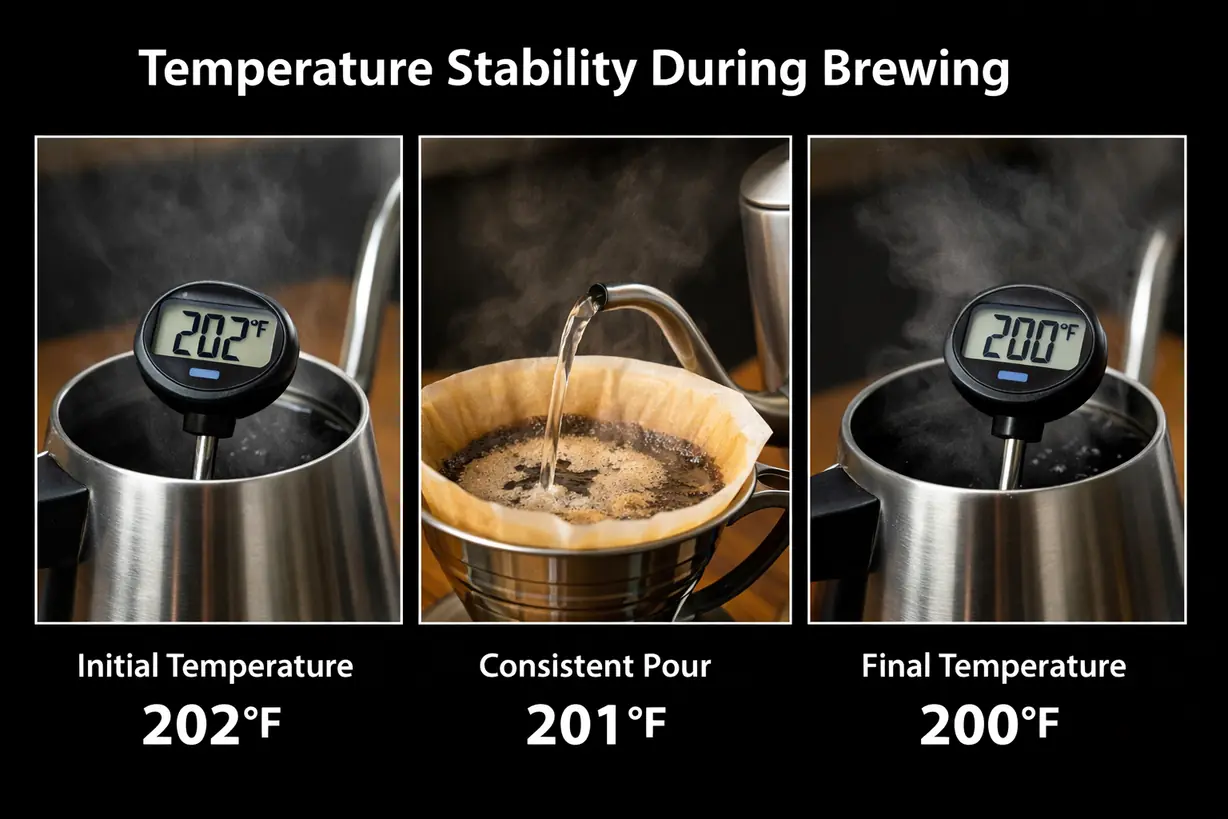
A good pour over kettle must maintain stable water temperature throughout the brewing process.
Why Temperature Stability Matters
Coffee extraction is temperature-dependent:
- Higher temperature → faster extraction
- Lower temperature → slower extraction
If temperature drops significantly during pouring, extraction becomes inconsistent.
This is particularly important because pour over brewing often involves multiple pours over time.
For a deeper understanding, see:
Water Temperature for Coffee: 3 Science-Backed Rules for Better Extraction.
Balance and Ergonomics: Control Through Stability
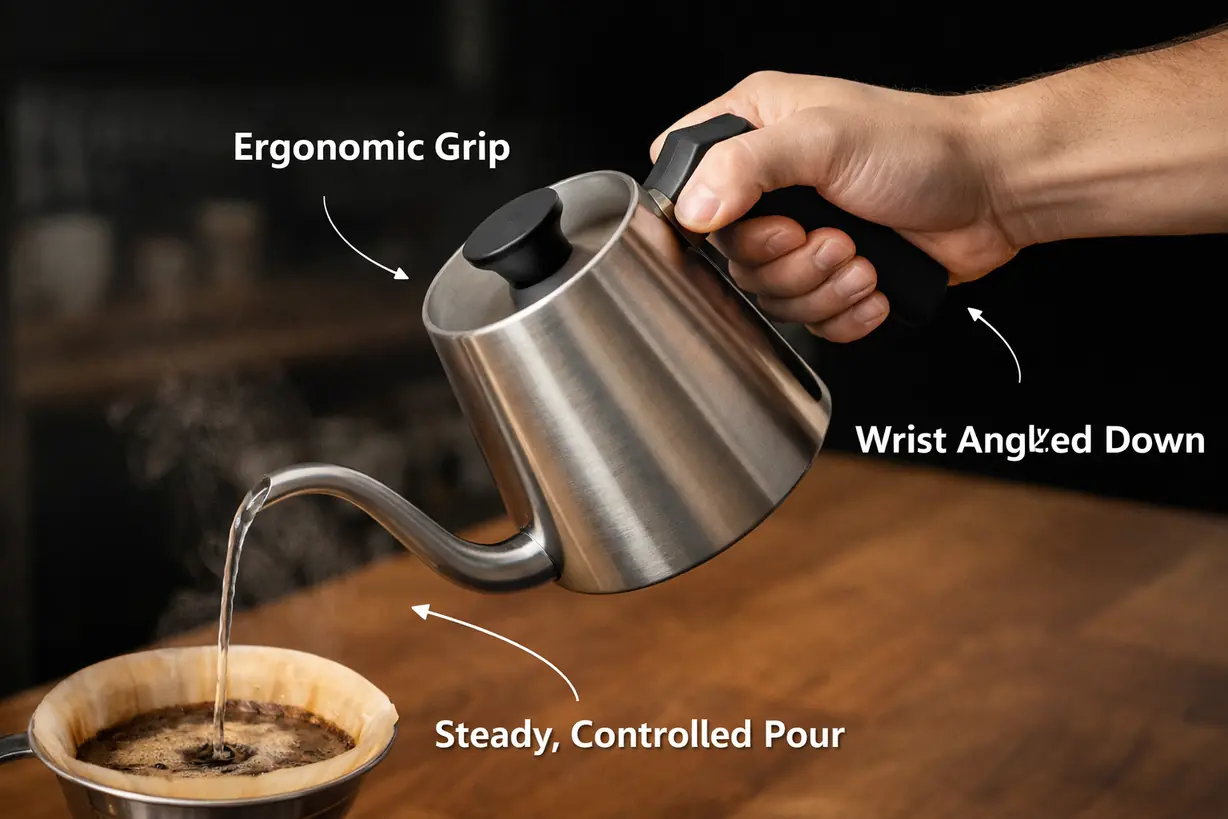
Mechanical control is not only about the spout—it also depends on how the kettle feels during pouring.
Why Balance Matters
A well-balanced kettle allows:
- Smoother pouring motion
- Reduced hand fatigue
- More precise flow adjustments
Key design elements include:
- Handle placement relative to center of mass
- Kettle weight distribution
- Grip stability
Poor ergonomics can lead to inconsistent pouring patterns, even with a well-designed spout.
Capacity and Practical Brewing Workflow
Kettle size influences workflow efficiency but does not directly affect extraction physics.
- Small kettles (600–800ml) → better control, less weight
- Larger kettles (1L+) → fewer refills, but heavier
The choice depends on how you brew. For example, single-cup brewing prioritizes control, while batch brewing prioritizes volume.
Workflow considerations are also discussed in:
How to Brew Better Coffee at Home (Without Buying New Gear).
The Five Key Criteria of a Good Pour Over Kettle
To summarize, what makes a good pour over kettle can be reduced to five technical criteria:
- Gooseneck spout design (flow precision)
- Stable flow rate control
- Thermal stability
- Ergonomic balance
- Appropriate capacity for workflow
If these variables are controlled, water application becomes predictable—leading to consistent extraction and repeatable flavor.
Conclusion
Understanding what makes a good pour over kettle shifts your focus from equipment as an object to equipment as a control system.
A kettle is not just for holding water—it is a tool for managing flow, temperature, and extraction dynamics.
At ITA Coffee, we approach coffee as a system of controllable variables. Instead of changing equipment frequently, refine how you control water flow, pouring patterns, and temperature stability.
For a practical application of these principles, continue with:
Pour Over (V60) Brewing Guide — A Clear, Practical Method.
Practice deliberately: adjust your pouring speed, observe how the coffee bed responds, and correlate those changes with taste. This is how control becomes understanding.