Water Temperature for Coffee is not about making your drink hotter. It is about controlling energy.
In brewing physics, water acts as both solvent and thermal driver. Temperature is simply a measure of kinetic energy — the speed at which water molecules move and interact with coffee solids. The higher the temperature, the faster those molecules collide with and dissolve soluble compounds.
Change the temperature, and you change the chemistry. You alter extraction speed, compound selectivity, and ultimately flavor balance.
In This Guide
What Is the Optimal Water Temperature for Coffee?
The optimal water temperature for coffee depends on solubility and bean structure — not a fixed magic number.
The Specialty Coffee Association (SCA) suggests a general brewing range of
90°C–96°C (195°F–205°F), as referenced in the SCA Brewing Control Chart.
That range works for most medium roasts, but it is a starting point — not a universal law.
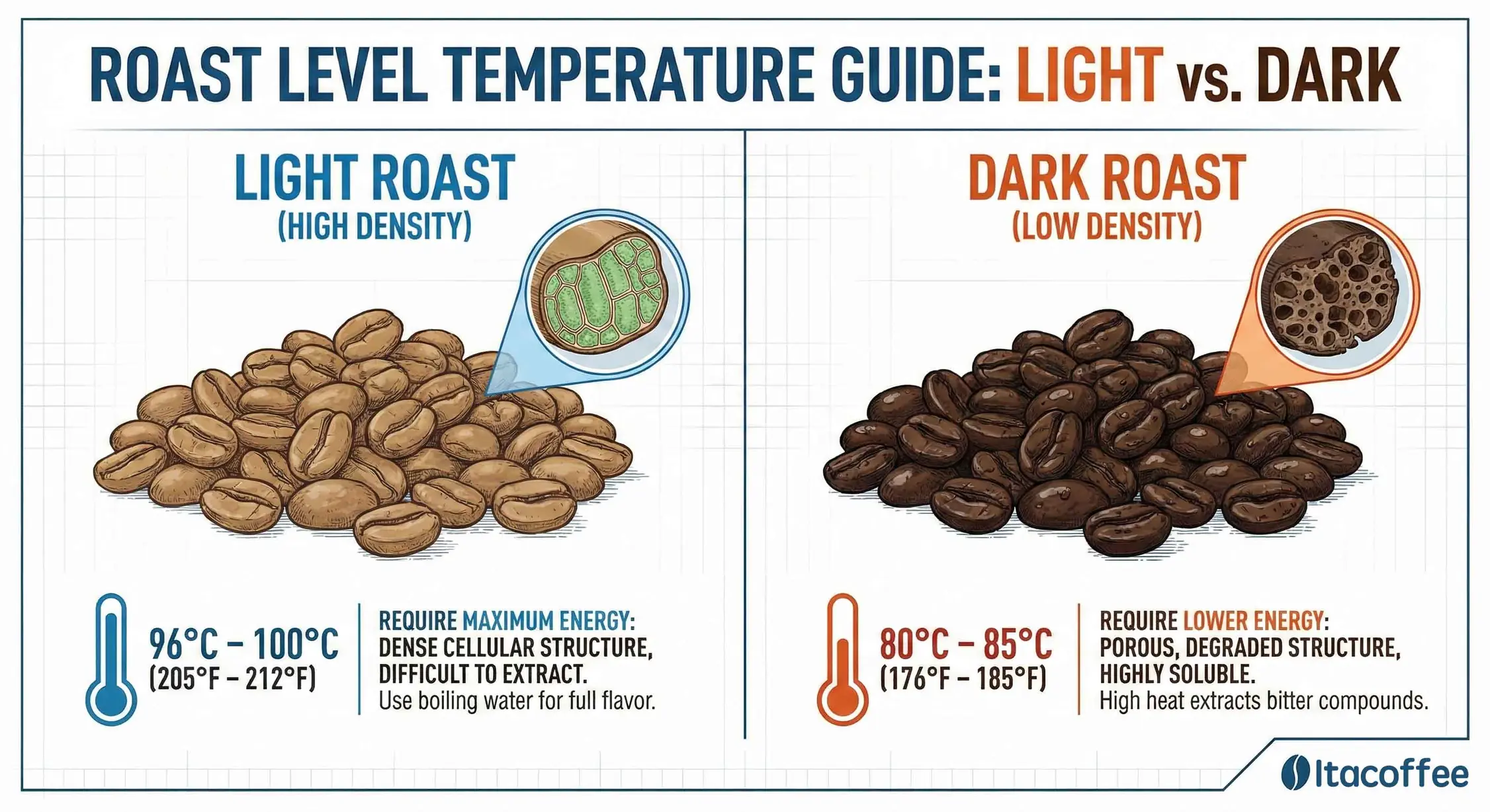
Coffee solubility changes with roast level:
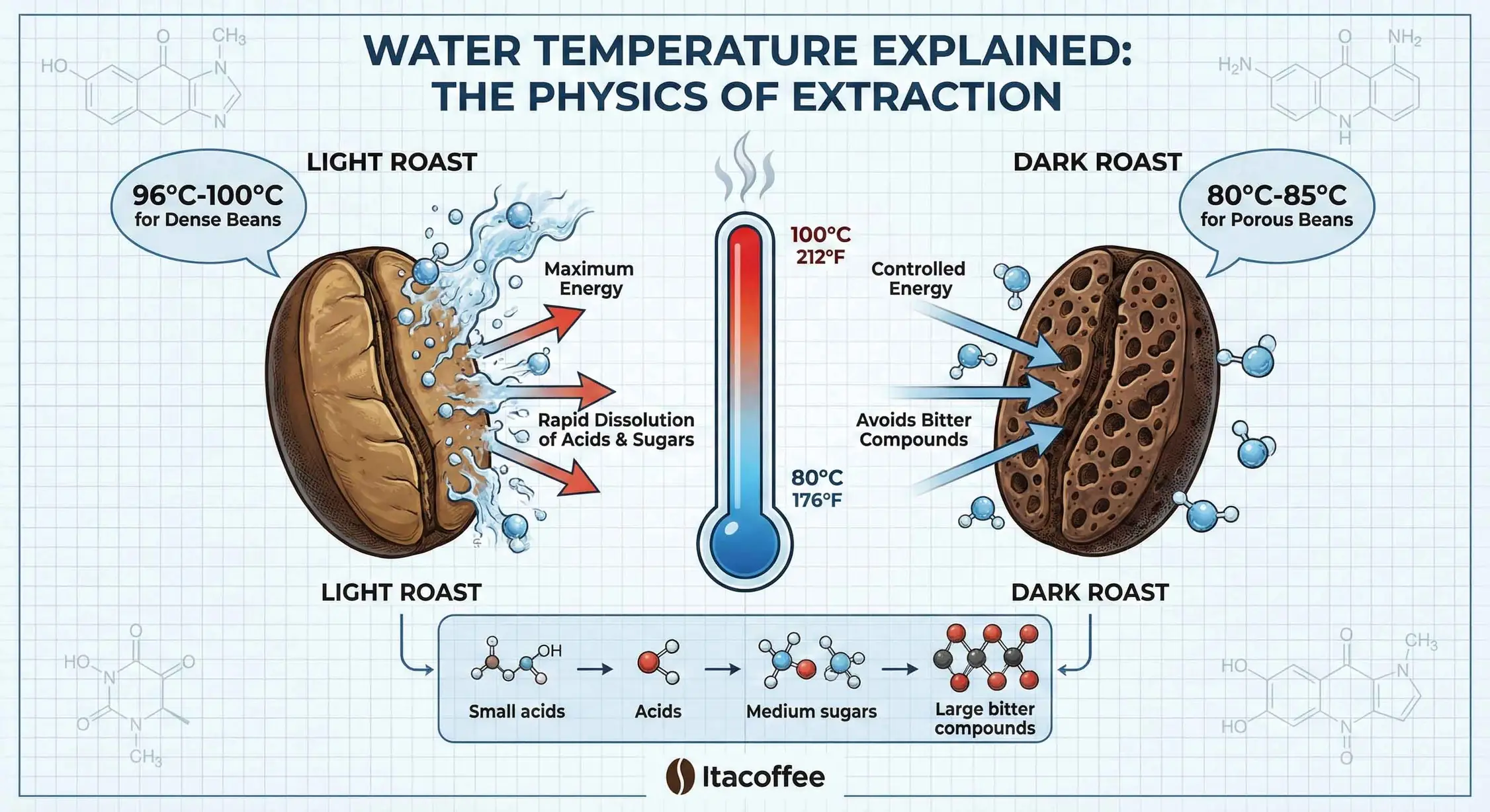
- Light roasts: Dense and structurally intact. They resist water penetration and require more thermal energy.
- Dark roasts: Porous and degraded from extended roasting. They extract easily and can over-extract quickly.
Temperature must match resistance. Think in terms of physics, not tradition.
The Physics Behind Water Temperature for Coffee
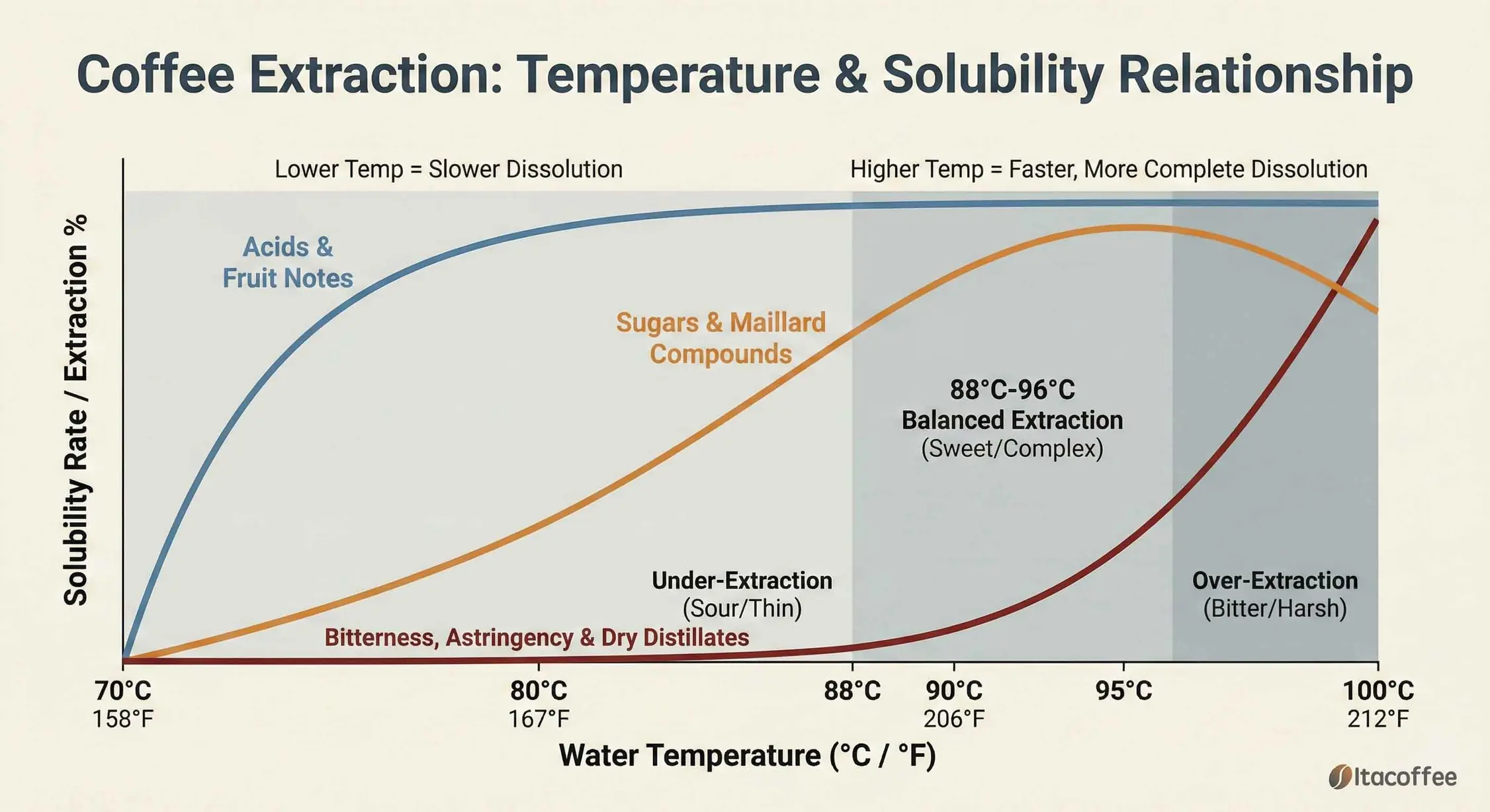
Water temperature influences extraction through two mechanisms:
- Kinetic energy and reaction rate: Hotter water molecules move faster. Faster molecular motion increases dissolution speed.
- Compound selectivity: Acids dissolve easily at lower temperatures. Sugars and larger body-building compounds require moderate to high heat. Bitter roast byproducts extract more aggressively at very high temperatures.
This is why small temperature changes — even 2–3°C — can noticeably alter sweetness, acidity, and bitterness.
For a deeper explanation of extraction mechanics, see Immersion vs Percolation: Coffee Extraction Physics.
Why Water Temperature for Coffee Directly Affects Flavor
If the temperature is too low for the bean’s density, you get under-extraction. The cup tastes sour, thin, and incomplete because sugars and heavier compounds remain trapped.
If the temperature is too high for the bean’s structure, you get over-extraction. Harsh, bitter, or dry compounds dominate.
Temperature is therefore a precision lever for extraction percentage — not just a comfort setting.
To understand how this interacts with brew strength, read Is More Coffee Always Stronger?.
3 Science-Backed Rules for Choosing Water Temperature for Coffee
1. Match Temperature to Roast Level
Light Roast (High Density): 96°C–100°C (205°F–212°F). Boiling water is often appropriate.
Medium Roast: 93°C–96°C (199°F–205°F). Standard extraction range.
Dark Roast (Low Density): 80°C–90°C (176°F–194°F). Lower temperatures reduce harshness.
For structural differences between roasts, see Dark Roast vs Light Roast: What Roasting Really Changes.
2. Adjust for Brewing Method
Different brew methods lose heat differently.
- Percolation (Pour Over, V60, Chemex): Rapid heat loss. Start slightly higher to maintain slurry temperature.
- Immersion (French Press): Greater thermal stability. Starting temperature remains closer to average brew temperature.
Learn more in What Is Immersion Brewing?.
3. Account for Equipment Material
Ceramic and glass absorb heat. Plastic absorbs very little. Preheating ceramic or glass drippers prevents sudden temperature drops that reduce extraction efficiency.
The Myth: Does Boiling Water Burn Coffee?
The claim that boiling water “burns” coffee misunderstands thermodynamics.
Coffee beans are roasted at temperatures above 200°C (392°F). Water at 100°C cannot chemically burn roasted coffee. What people describe as “burned” is usually:
- Over-extraction
- Dark roast bitterness
- Roast defects from production
Boiling water may extract aggressively — but it does not combust anything in a brewing context.
Water Temperature for Coffee by Roast (Quick Reference)
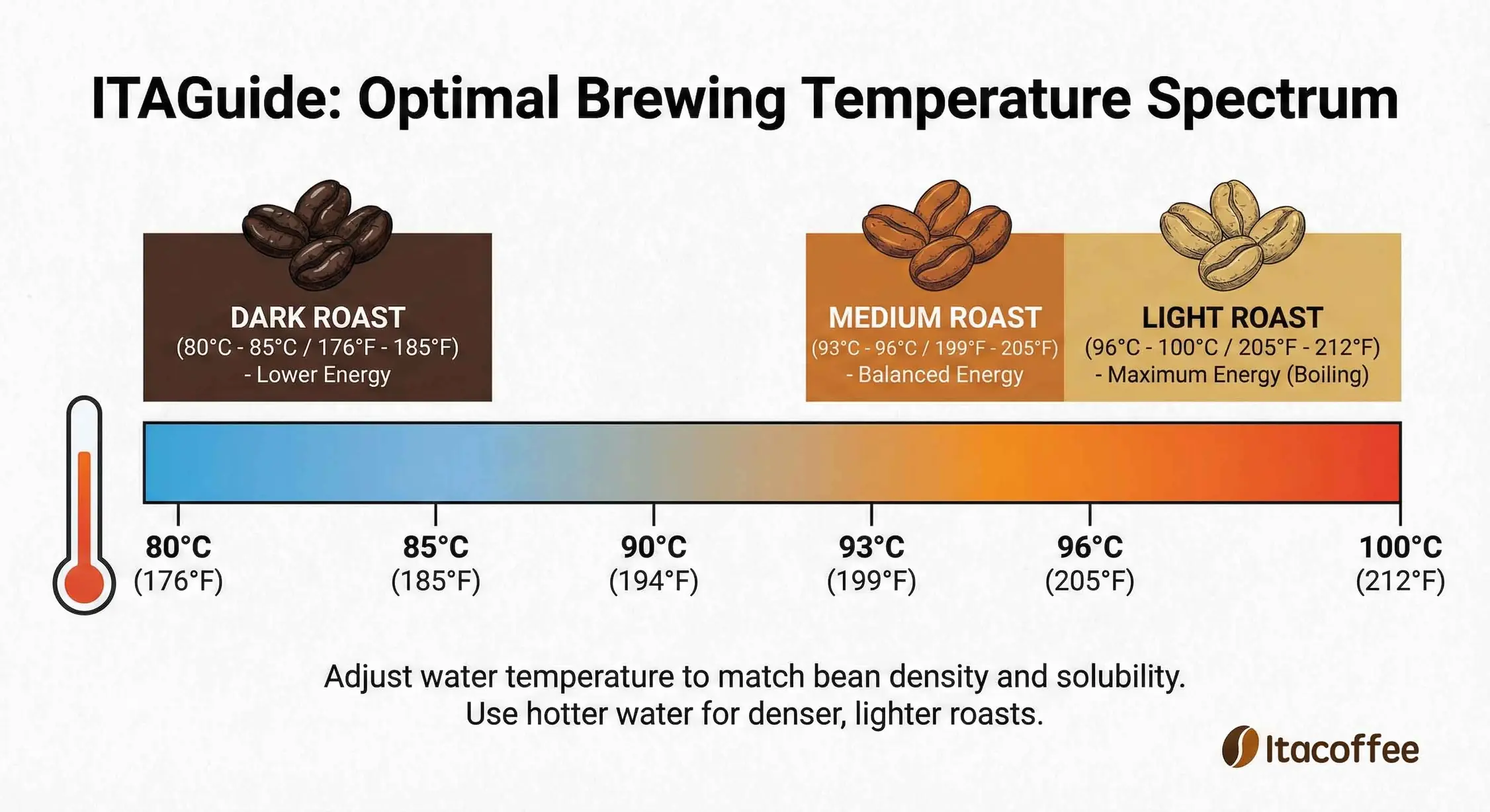
- Light Roast: 96°C–100°C
- Medium Roast: 93°C–96°C
- Dark Roast: 80°C–90°C
For equipment recommendations that improve temperature control, see Coffee Tools: Choosing the Right Gear.
Frequently Asked Questions About Water Temperature for Coffee
Do I need a variable temperature kettle?
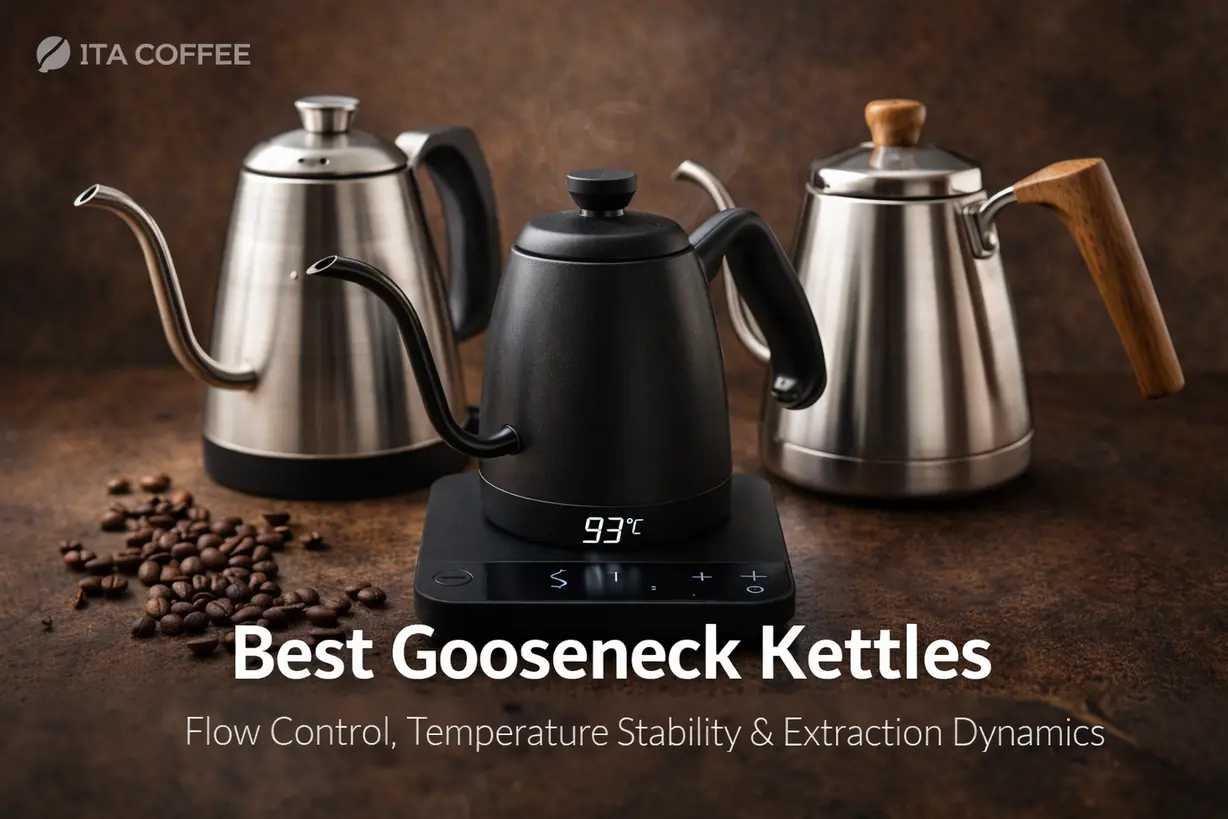
It is not mandatory, but it improves repeatability. Without one, you can boil water and let it rest for controlled intervals to approximate lower temperatures.
My coffee tastes bitter. Should I lower temperature?
Possibly. Reduce temperature by 2–3°C before adjusting grind size. Temperature changes compound solubility immediately.
Why do some AeroPress recipes use lower temperatures?
Lower temperatures (80°C–85°C) can soften acidity and emphasize body. This is a stylistic choice rather than a strict technical requirement.
Final Thought
Water temperature for coffee is a tool — not a rule.
Look at the bean. Dense and light? Increase energy. Brittle and dark? Reduce intensity. Adjust deliberately. Taste critically. Let physics guide you more than folklore.
— ITA Coffee | Brewing Guides for Curious, Thoughtful Coffee Makers
Editorial note: This article was developed with AI-assisted drafting and human review to ensure clarity, accuracy, and a non-commercial educational tone.