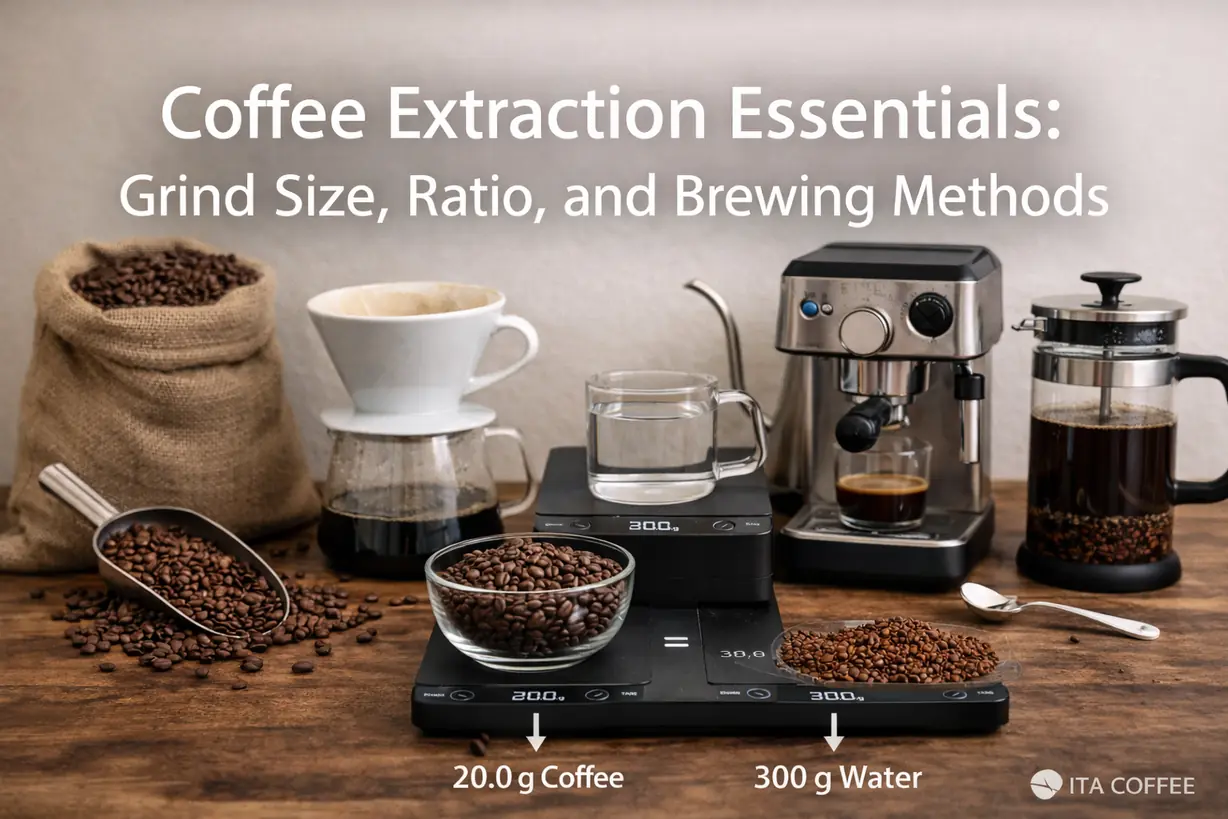
In coffee brewing, methods are generally divided into two mechanical categories: percolation and immersion. While percolation (such as V60 or Chemex) involves water flowing through a bed of coffee, immersion takes a fundamentally different approach.
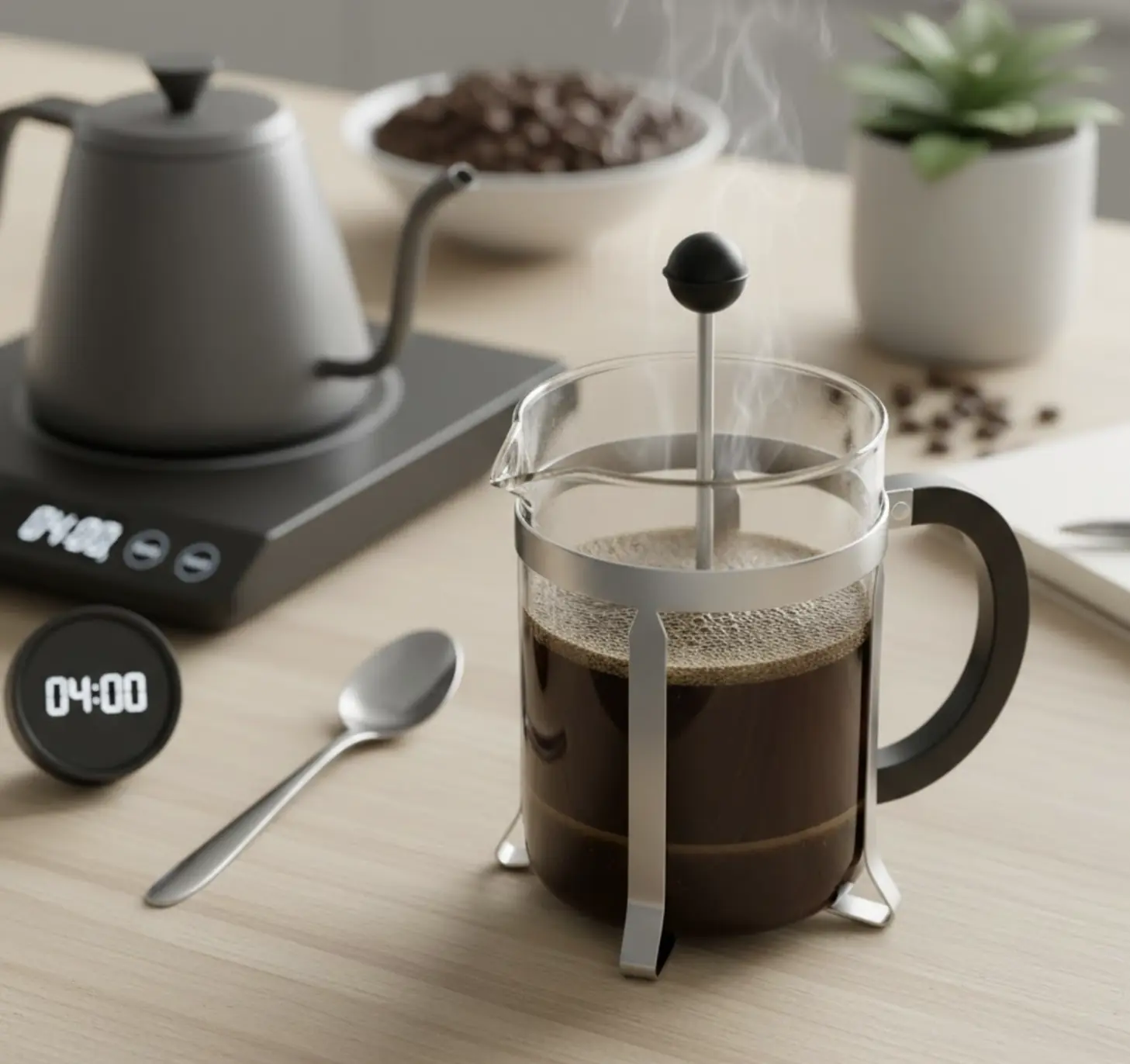
Immersion brewing is a method where coffee grounds are fully submerged in a fixed volume of water for the entire brew time. Instead of a constant stream of fresh solvent extracting as it passes through, immersion relies on time, saturation, and diffusion to dissolve coffee solids.
In This Guide
The Core Principle: Saturation and Diffusion
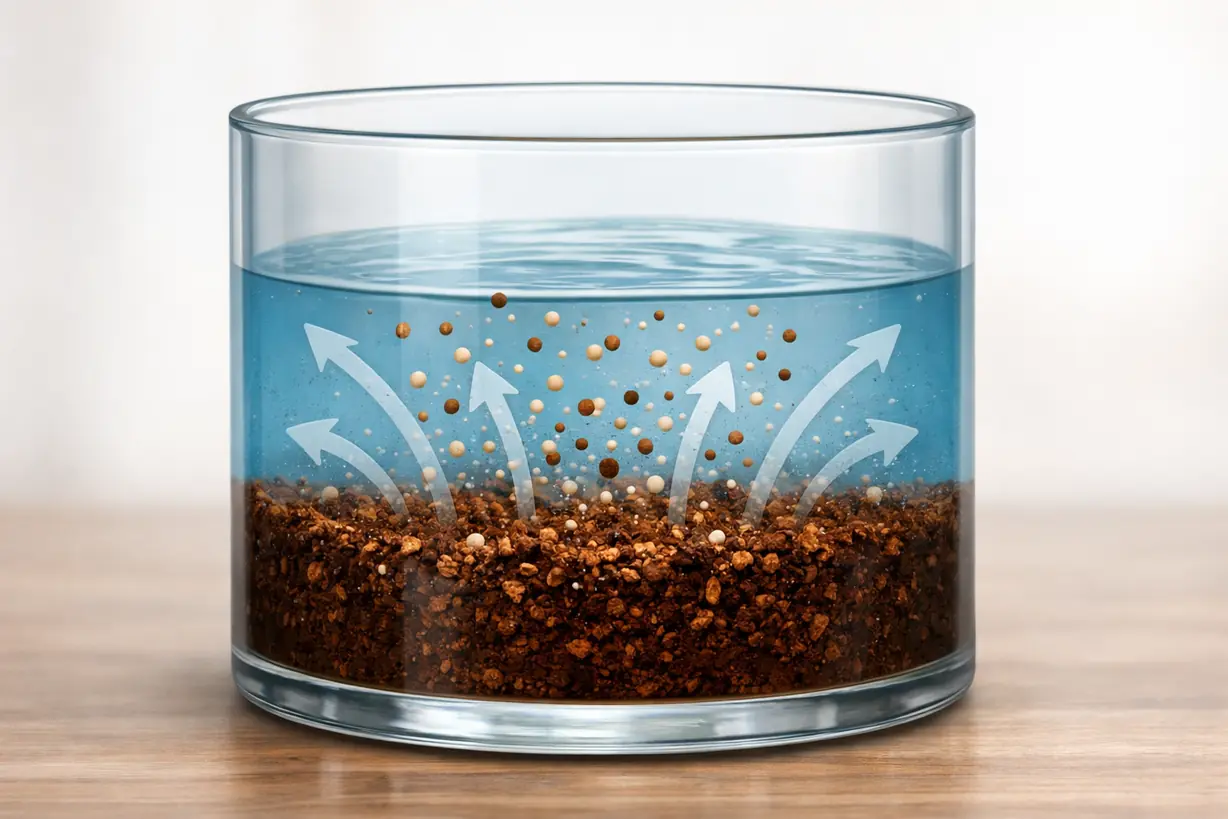
Immersion brewing is governed by two primary physical processes: saturation and diffusion.
- Saturation: Water penetrates the cellular structure of ground coffee. Because every particle is surrounded by water, extraction begins across the entire dose simultaneously.
- Diffusion: Dissolved coffee compounds move from areas of high concentration (inside the grounds) to lower concentration (the surrounding water). This is known as mass transfer driven by a concentration gradient.
Unlike pour-over brewing, where fresh water continually renews the solvent environment (a process driven by convective flow), immersion water becomes progressively saturated with dissolved solids. As concentration increases, the extraction rate naturally slows. This makes immersion more forgiving — though not immune — to over-extraction if brew times become excessive.
Why Immersion Brewing Matters
Understanding immersion is not just theoretical. It changes how you brew.
Because extraction slows as equilibrium approaches, immersion methods are generally more stable and repeatable. They are less sensitive to pouring technique and flow control. For beginners, this makes immersion an effective way to isolate core variables such as grind size, ratio, and time without introducing pouring inconsistency.
In other words, immersion reduces mechanical complexity so you can better understand extraction itself.
Key Variables in Immersion Brewing
1. Grind Size: Uniformity Over Fineness
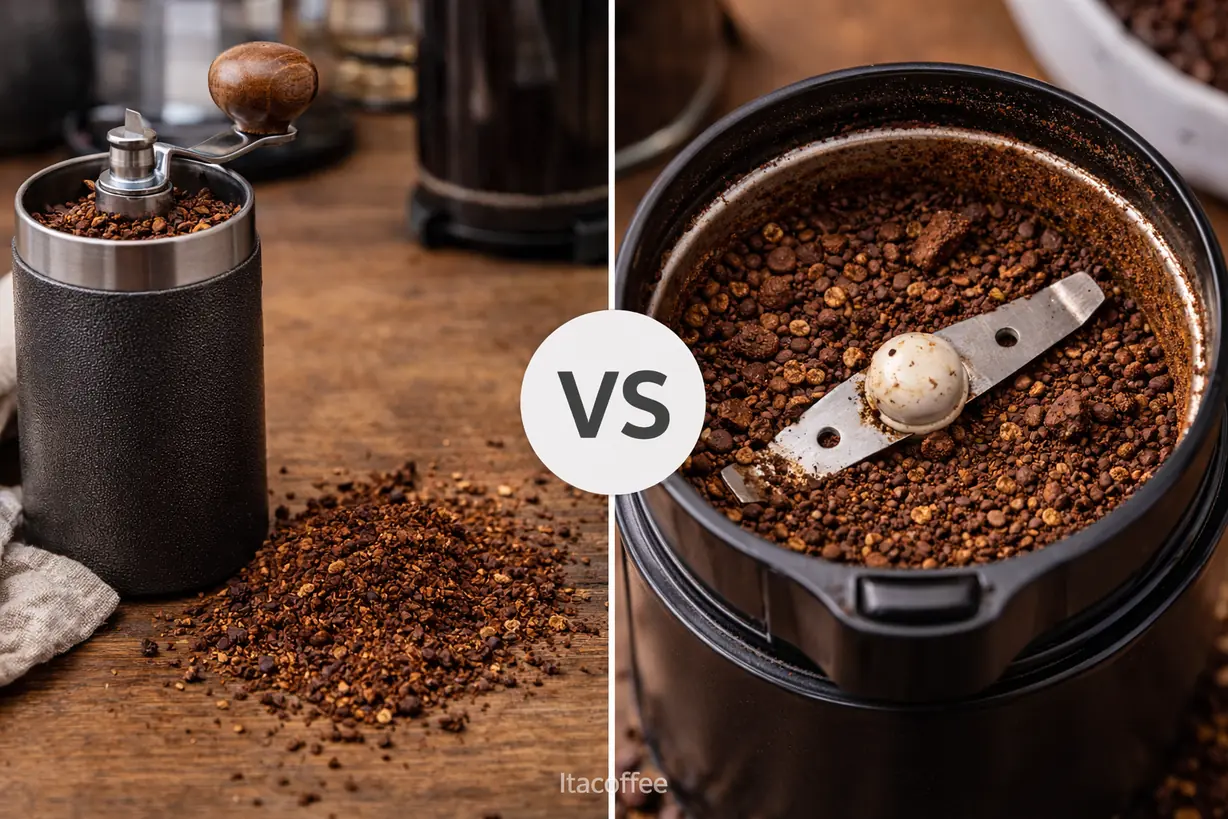
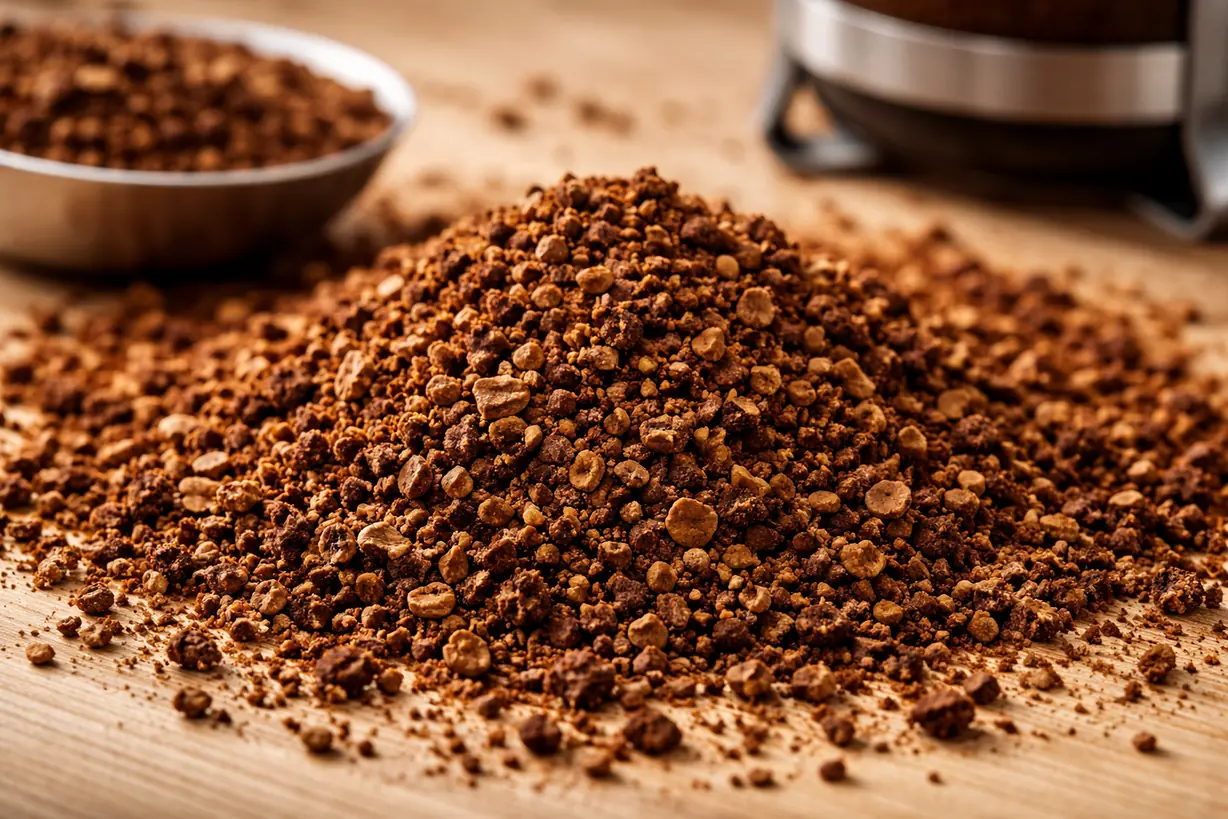
Most immersion methods, such as the French Press, use a coarse grind. This is partly for filtration, but also because extended contact time allows water to fully penetrate larger particles. Uniformity matters more than extreme fineness. For a deeper exploration of particle size and consistency, see Burr vs Blade Coffee Grinders.
2. Contact Time and Thermal Stability
Immersion brew times typically range from 4 to 10 minutes. Because the coffee sits in a single vessel, heat retention becomes important. Glass, ceramic, and steel all lose heat at different rates. If temperature drops significantly during extraction, solubility decreases and the cup may taste underdeveloped or sour.
Most immersion recipes aim for an extraction yield between 18–22%, similar to other brew methods. Understanding how time and temperature influence this yield is part of the broader principles discussed in Coffee Extraction Explained.
Immersion vs. Percolation: A Technical Comparison
| Feature | Immersion (e.g., French Press) | Percolation (e.g., V60) |
|---|---|---|
| Water Movement | Static (Full Submersion) | Dynamic (Flow-Through) |
| Primary Extraction Mechanism | Diffusion & Saturation | Convective Flow & Gravity |
| Mouthfeel | Heavy, Textured | Clean, Tea-like |
The difference in body largely comes from filtration. Immersion brewers often use metal filters that allow fine particles and oils into the cup, increasing perceived body. Percolation methods frequently use paper filters, which remove many oils and suspended solids. For more on how filtration shapes flavor perception, see How Brewing Methods Affect Coffee Flavor.
Popular Immersion Brewing Methods
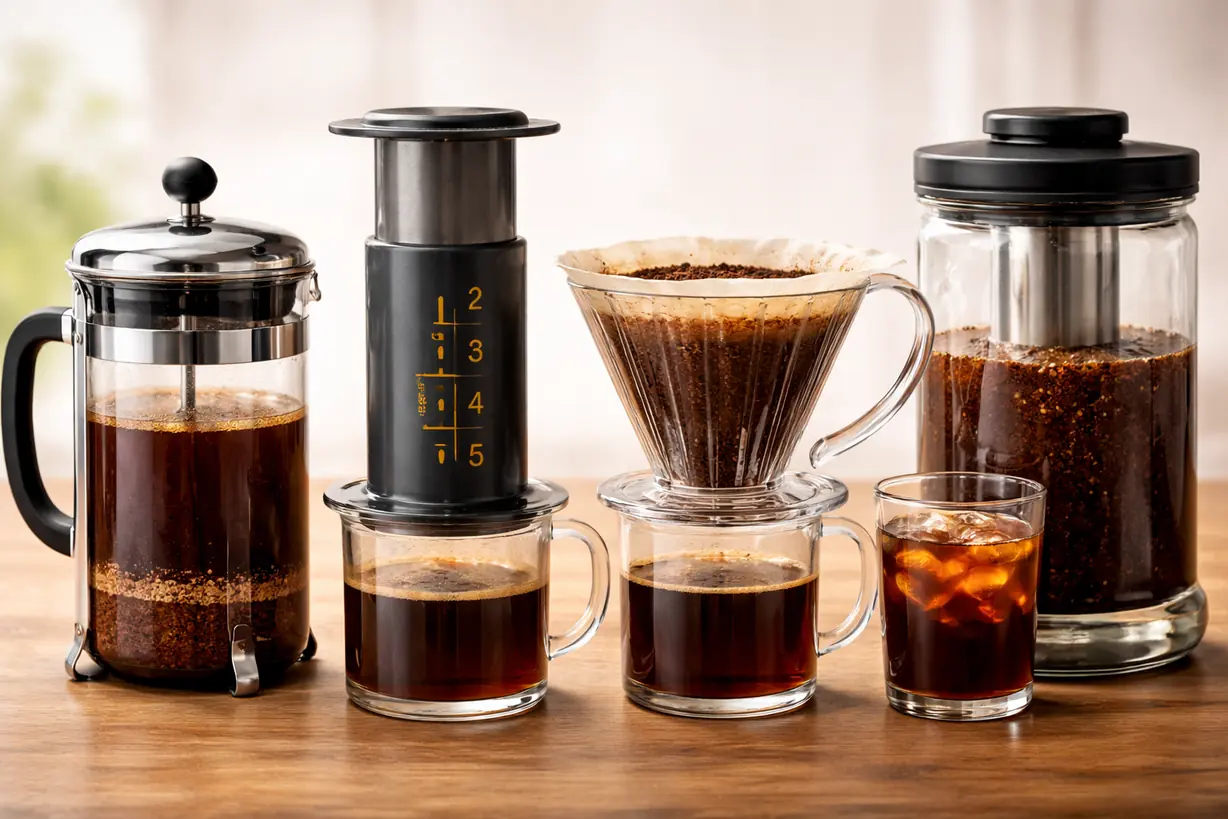
- French Press: A classic full-immersion brewer known for heavy body and simplicity.
- AeroPress (Inverted Method): Functions as total immersion before pressure-assisted filtration.
- Clever Dripper: A hybrid device that combines timed immersion with gravity release.
- Cold Brew: Extended immersion (12–24 hours) using cold water to produce a low-acid concentrate.
Because immersion approaches equilibrium gradually, it is generally less sensitive to pouring technique than pour-over. If your percolation brews are inconsistent, immersion can help you isolate issues related to grind size, ratio, or time.
Frequently Asked Questions
Is immersion brewing stronger than pour-over?
Not necessarily. Strength depends primarily on brew ratio and extraction yield. Immersion often feels stronger due to higher body and suspended particles, but total dissolved solids can be similar to percolation methods.
Does immersion prevent over-extraction?
No method prevents over-extraction entirely. Immersion slows the extraction rate as saturation increases, making it more forgiving — but excessive time or very fine grind sizes can still produce bitterness.
What grind size is best for immersion brewing?
A coarse and uniform grind is typical for French Press and many immersion methods. However, grind size should balance filtration method and brew time rather than follow a fixed rule.
Is cold brew a true immersion method?
Yes. Cold brew is extended immersion at lower temperature. The reduced heat slows solubility, which changes the balance of acids and bitter compounds extracted.
Final Thought from ITA Coffee
Immersion brewing demonstrates how extraction is shaped by time, concentration gradients, and temperature — not just equipment. By understanding diffusion and saturation, you move from following recipes to controlling outcomes.
When the cup tastes muddy, examine filtration. When it tastes thin, examine time and ratio. Mastering immersion is less about waiting and more about understanding what happens while you wait.
— ITA Coffee | Brewing Guides for Curious, Thoughtful Coffee Makers
Editorial note: This article was developed with AI-assisted drafting and human review to ensure clarity, accuracy, and a non-commercial educational tone.