A weak or hollow cup of coffee is not a subjective disappointment. In precision brewing, it is a measurable defect indicating an error in either concentration or extraction. While a light-bodied coffee can be intentional, a watery, thin, or abruptly empty finish typically signals under-extraction or excessive dilution—conditions in which water has failed to dissolve enough of the heavy, structural compounds from the coffee bed, or too much water was used relative to the dose.
Understanding why coffee tastes weak or hollow allows you to isolate the responsible variable and correct it systematically. Coffee compounds dissolve in a strict order dictated by their molecular weight and solubility. When extraction falls short, the beverage lacks the critical middle phase of flavor development, leaving a structural void on the palate.
In This Guide
The Physics Behind Weak and Hollow Coffee
To troubleshoot effectively, we must first separate two related but distinct concepts in brewing chemistry: Strength and Extraction Yield.
- 1. Weakness (Low Strength / Low TDS). Strength refers to the physical concentration of dissolved coffee material in the final beverage, measured as Total Dissolved Solids (TDS). If you use too much water for your coffee dose, the resulting brew will have a low TDS. It will taste weak and diluted, regardless of whether the coffee itself was extracted properly.
- 2. Hollowness (Low Extraction Yield). Extraction yield is the percentage of the coffee ground’s mass that was dissolved into the water. If water does not penetrate the coffee particles deeply enough (due to coarse grinds or low heat), it fails to extract the heavier carbohydrates and Maillard compounds. The resulting cup feels “hollow”—it may have initial acidity, but lacks body, texture, and mouthfeel, vanishing instantly on the finish.
A coffee can be strong but hollow (sour and dense), or weak but fully extracted (watery but sweet). If your cup is both watery and empty-tasting, you are likely dealing with a combination of high dilution and low extraction.
The Chronology of Extraction: Why Hollowness Occurs
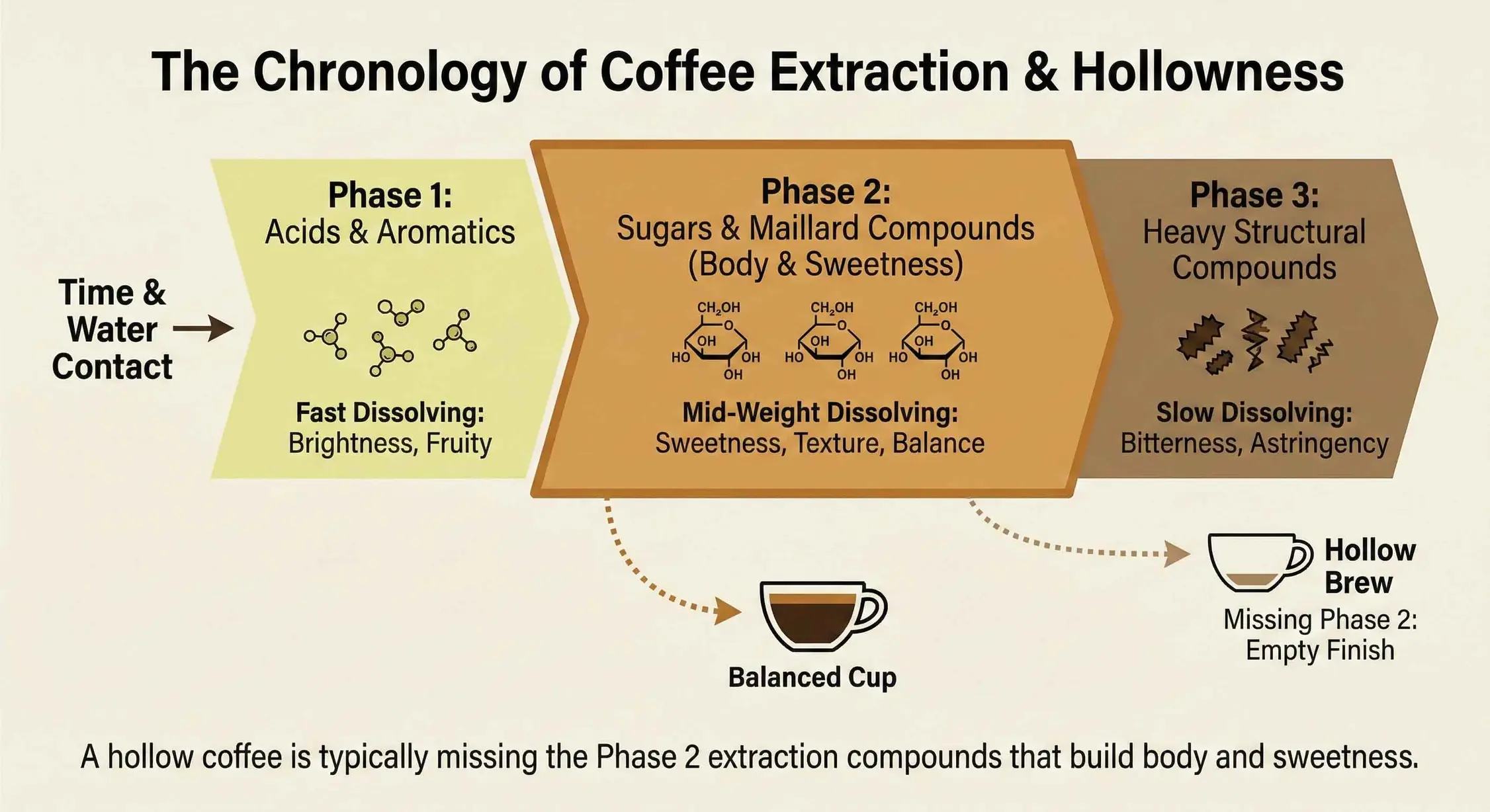
Extraction does not occur all at once. Water dissolves coffee compounds in sequential phases:
- Phase 1 – Acids and Aromatics. Highly soluble fruit acids and volatile aromatics dissolve rapidly upon contact with water.
- Phase 2 – Sugars and Maillard Compounds. Mid-weight compounds require more time and thermal energy to dissolve. These provide sweetness, structural body, and a lingering finish.
- Phase 3 – Heavy Structural Compounds. Larger molecules that extract last, contributing bitterness and astringency.
A “hollow” coffee occurs when the brewing process stops prematurely during Phase 1. The cup contains the initial acids but entirely misses the Phase 2 compounds that provide structural integrity. The practical objective of correcting a hollow brew is to push the extraction further into Phase 2.
Dilution vs. Under-Extraction
Dilution (Weakness): This is purely a ratio issue. If you brew at a 1:18 or 1:20 ratio, the volume of solvent (water) heavily outweighs the solute (coffee). The flavor may be balanced, but the intensity is muted.
Under-Extraction (Hollowness): This occurs when brewing variables—grind size, brew time, or water temperature—are insufficient to dissolve the necessary mass from the coffee bed. It is typically perceived as sour, grassy, or empty.
Further reading: Under vs Over Extraction Explained: The Science of Coffee Flavor
Four Mechanical Adjustments That Fix Weak or Hollow Coffee
Calibration rule: Change only one variable at a time to isolate the root cause.
1. Adjust the Brew Ratio (Increase Concentration)
If your coffee tastes balanced but simply lacks intensity, your ratio is likely too wide. Decreasing the amount of water relative to your coffee dose (e.g., moving from 1:18 to 1:15 or 1:14) physically increases the TDS, yielding a stronger, heavier cup.
Further reading: Coffee Brew Ratios Explained: A Technical Guide to Precision Extraction
2. Grind Finer (Increase Surface Area)
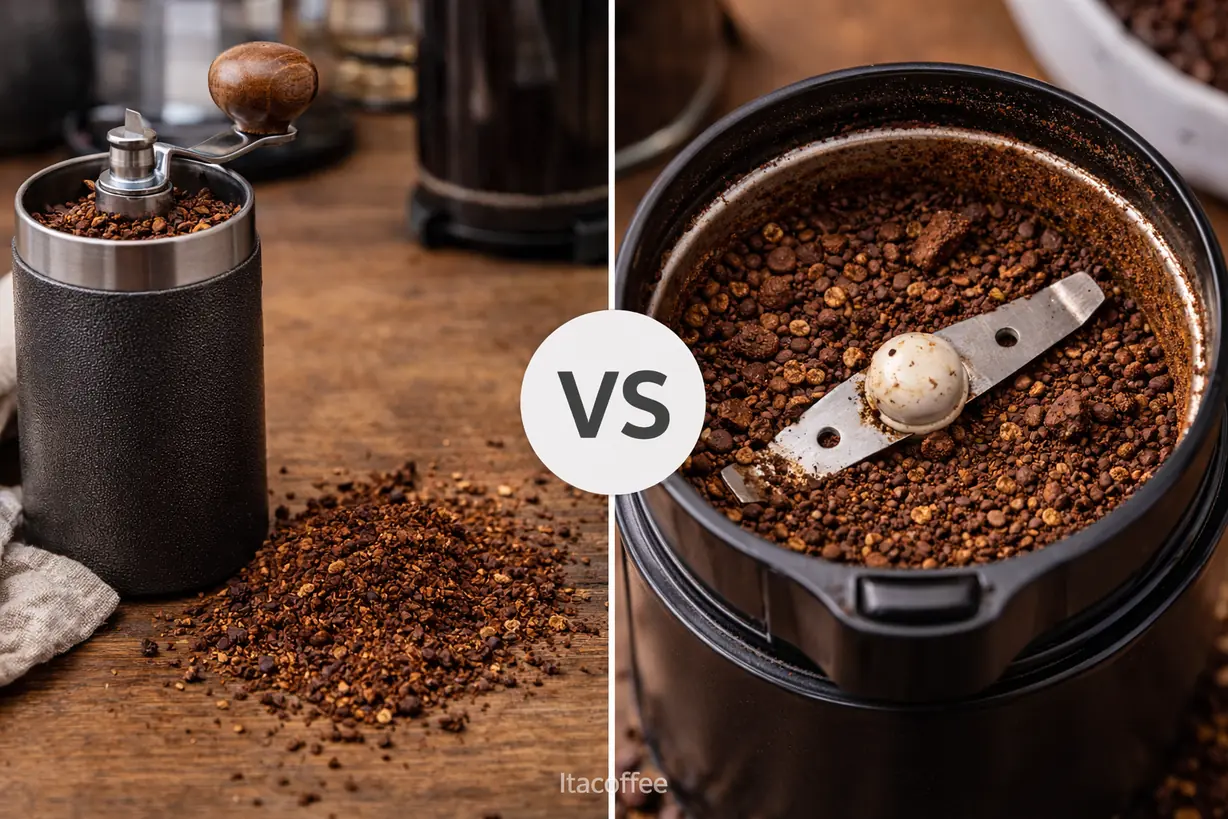
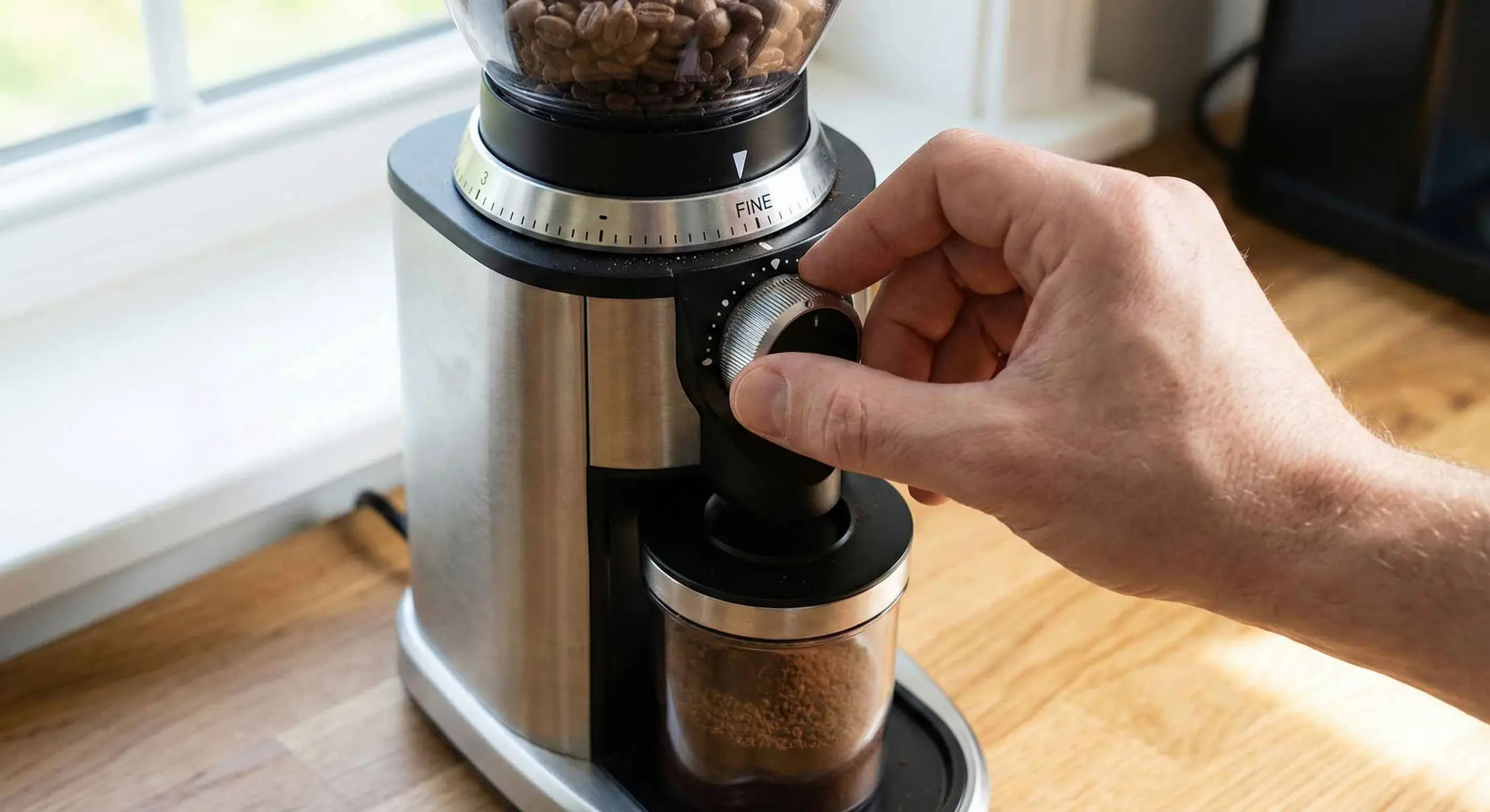
Coarse particles have minimal exposed surface area, restricting water from accessing the inner core of the grounds. Grinding finer exponentially increases the surface area exposed to the solvent, accelerating the extraction rate and allowing water to dissolve the heavier, body-building compounds.
Further reading: Coffee Grind Size Extraction Explained: The Physics of Surface Area
3. Raise Water Temperature (Increase Solvent Energy)
Particularly with light roasts, dense cellular structures require high kinetic energy to penetrate. If your water is too cool (e.g., 85°C/185°F), it cannot efficiently dissolve Phase 2 compounds. Raising the temperature to 93°C–96°C (200°F–205°F) increases the solvent’s power, immediately improving extraction yield and reducing hollowness.
Further reading: Water Temperature for Coffee: 3 Science-Backed Rules for Better Extraction
4. Resolve Channeling (Ensure Even Contact)
If water rushes through a single “channel” in the coffee bed, the majority of the grounds remain dry and under-extracted, while a small portion is over-extracted. This results in a cup that is simultaneously weak, hollow, and bitter. Improving your pouring technique and bed distribution is essential.
Diagnosis Table: Weak vs. Hollow vs. Bitter
| Taste Result | Likely Cause | Primary Adjustment |
|---|---|---|
| Watery, lacks intensity, but flavor is okay | High Dilution (Low TDS) | Tighten brew ratio (use less water) |
| Sour, sharp, thin, disappears quickly | Under-extraction | Grind finer or raise water temperature |
| Weak body but harsh/bitter finish | Channeling | Improve pour technique and bed distribution |
Frequently Asked Questions
Should I just add more coffee to fix a weak cup?
Not necessarily. While adding more coffee (up-dosing) will increase strength (TDS), it often leads to under-extraction if you do not adjust your grind size, because a deeper coffee bed restricts water flow differently. It is usually better to adjust your ratio or grind size first.
Further reading: Is More Coffee Always Stronger? A Brewing Guide to Strength vs Extraction
Why is my dark roast coffee tasting hollow?
Dark roasts are highly soluble, so hollowness is less common than bitterness. If a dark roast tastes hollow, your water temperature might be drastically too low, or your grind size is exceptionally coarse, preventing the water from extracting the coffee’s natural oils and heavy body.
Conclusion
A weak or hollow cup of coffee is a physical signal that your solvent (water) has either been applied in too high a volume, or lacked the necessary energy and surface area to perform its job. By systematically adjusting your ratio, grind size, or temperature, you regain control over the extraction curve, ensuring a beverage that is both concentrated and structurally complete.
Coffee brewing is not guesswork. It is applied chemistry—one variable at a time.
— ITA Coffee | Brewing Guides for Curious, Thoughtful Coffee Makers
Editorial note: This article was developed with AI-assisted drafting and human review to ensure clarity, accuracy, and an educational, non-commercial tone.