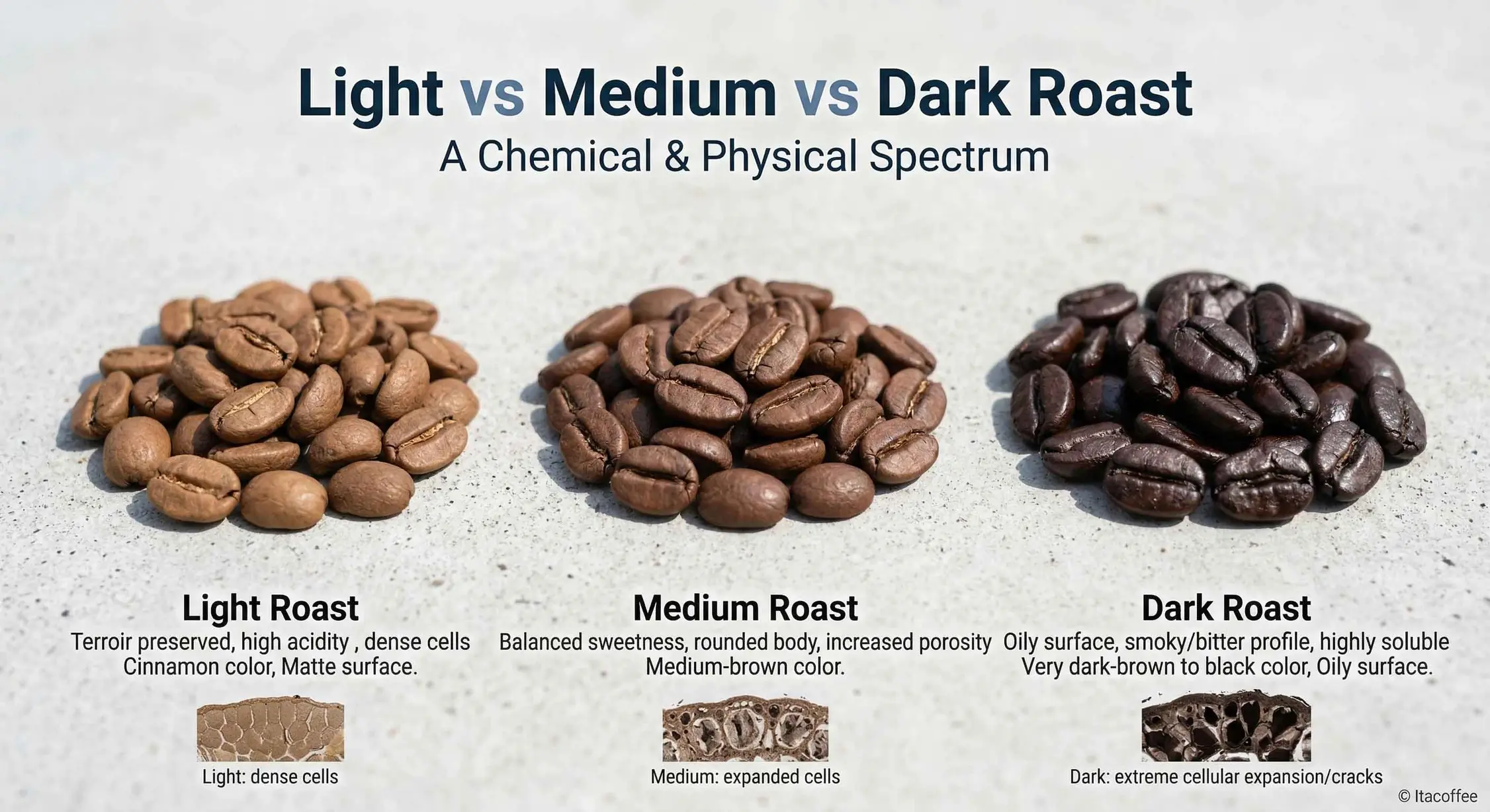
The classification of coffee into “light,” “medium,” and “dark” roasts is frequently reduced to a mere color preference. However, from a physical and chemical standpoint, roasting is a thermal degradation process. The application of heat fundamentally alters the cellular structure, density, and solubility of the coffee seed. Understanding these structural changes is a critical foundation of Coffee Knowledge, as the roast level dictates precisely how you must manipulate your brewing variables to achieve a balanced extraction.
Rather than viewing roast levels as a hierarchy of quality, they should be understood as distinct chemical profiles. Each level presents unique extraction challenges and sensory outputs.
In This Guide
The Physics of Roasting: Density and Solubility
Before dissecting the specific roast levels, it is essential to understand the two primary physical changes that occur inside the roasting drum:
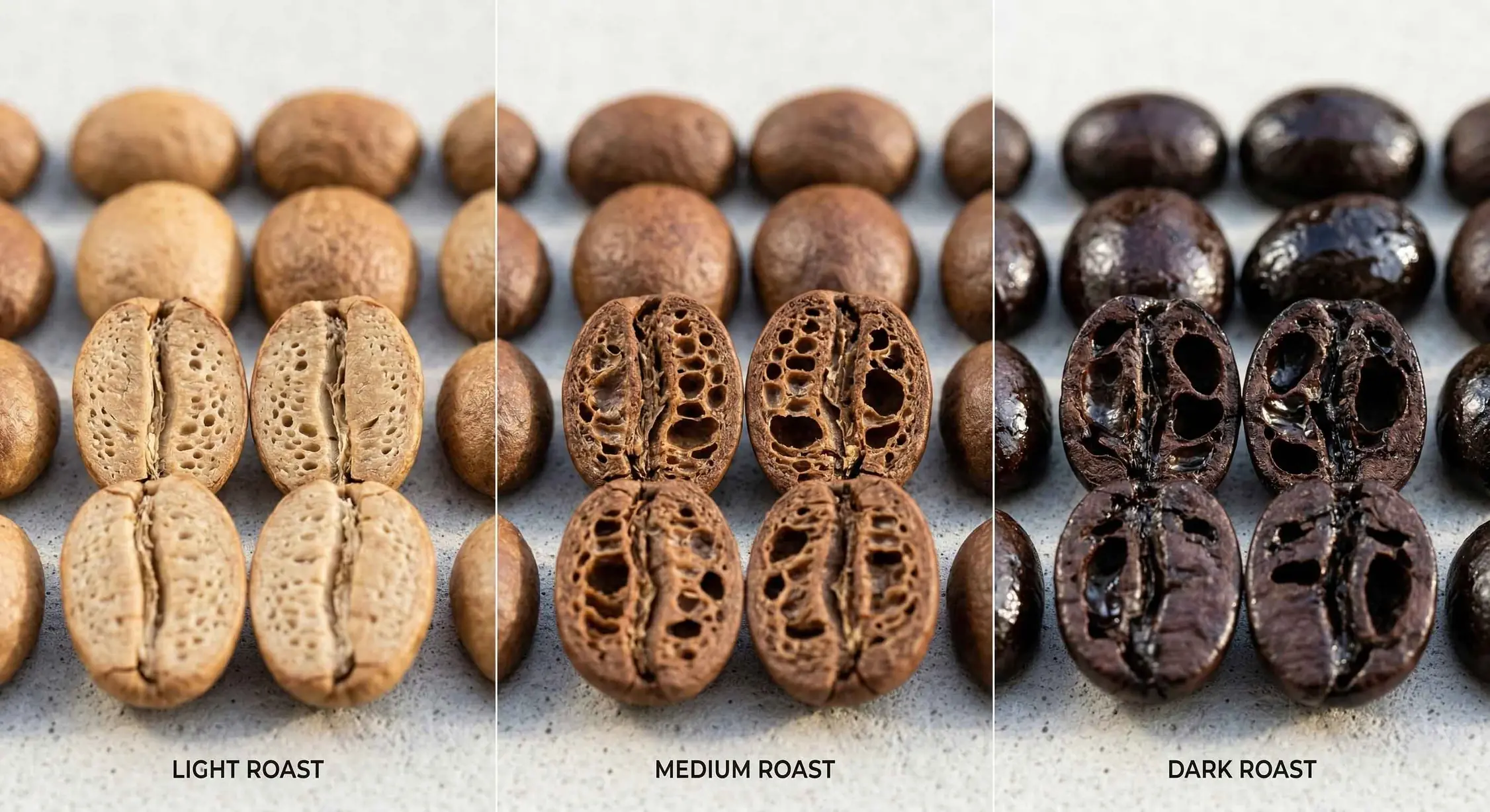
- Density Decrease: As raw green coffee absorbs heat, internal moisture turns to steam, forcing the cellular structure of the bean to expand. The bean physically grows in size while losing mass (water weight). Consequently, darker roasts are significantly less dense than lighter roasts.
- Solubility Increase: Heat breaks down complex, insoluble carbohydrates into simpler, water-soluble compounds. Therefore, a dark-roasted bean will surrender its flavor compounds to water much faster than a light-roasted bean.
Light Roast: Preserving Terroir and Acidity
A light roast is terminated shortly after “first crack” (the point where steam pressure visibly and audibly fractures the bean). The objective is to preserve the intrinsic enzymatic properties of the raw seed, often referred to as “terroir.”
1. Chemical Profile
Because the thermal degradation is minimal, light roasts retain high concentrations of organic acids (such as citric, malic, and phosphoric acids) that were present in the living cherry. The Maillard reaction (the browning process between amino acids and reducing sugars) has only just begun, meaning roast-induced flavors are almost non-existent.
2. Extraction Variables
- Sensory Output: Pronounced acidity, floral aromas, high flavor clarity, and a tea-like mouthfeel.
- Physical State: Extremely dense, tightly bound cellular structure, and highly insoluble.
- Brewing Challenge: Because the compounds are difficult to dissolve, light roasts require aggressive extraction parameters. You must utilize a finer grind to increase surface area, and crucially, apply hotter water. To understand how thermal energy drives this process, refer to our guide on Water Temperature for Coffee: 3 Science-Backed Rules for Better Extraction.
Medium Roast: The Structural Balance
A medium roast continues to absorb heat past first crack, allowing the Maillard reaction and caramelization to reach their peak. This level represents an engineered midpoint between the seed’s original agricultural flavors and the structural flavors introduced by the roaster.
1. Chemical Profile
As sugars continue to caramelize, the sharp, raw acidity of the light roast is rounded out and converted into complex sweetness. The cellular expansion allows oils to begin moving toward the surface, though they do not breach it. This structural change significantly enhances the tactile weight of the beverage, a concept thoroughly explored in our breakdown of What Does Body Mean in Coffee? Understanding Texture and Mouthfeel.
2. Extraction Variables
- Sensory Output: Balanced acidity, high sweetness, pronounced notes of chocolate, nuts, or caramel, and a heavier, rounded body.
- Physical State: Moderate density and medium solubility.
- Brewing Challenge: Medium roasts are generally the most forgiving. They extract relatively evenly at standard brewing parameters (e.g., 93°C water, medium-fine grind), making them highly predictable for home batch brewers and standard espresso extraction.
Dark Roast: Dry Distillation and High Solubility
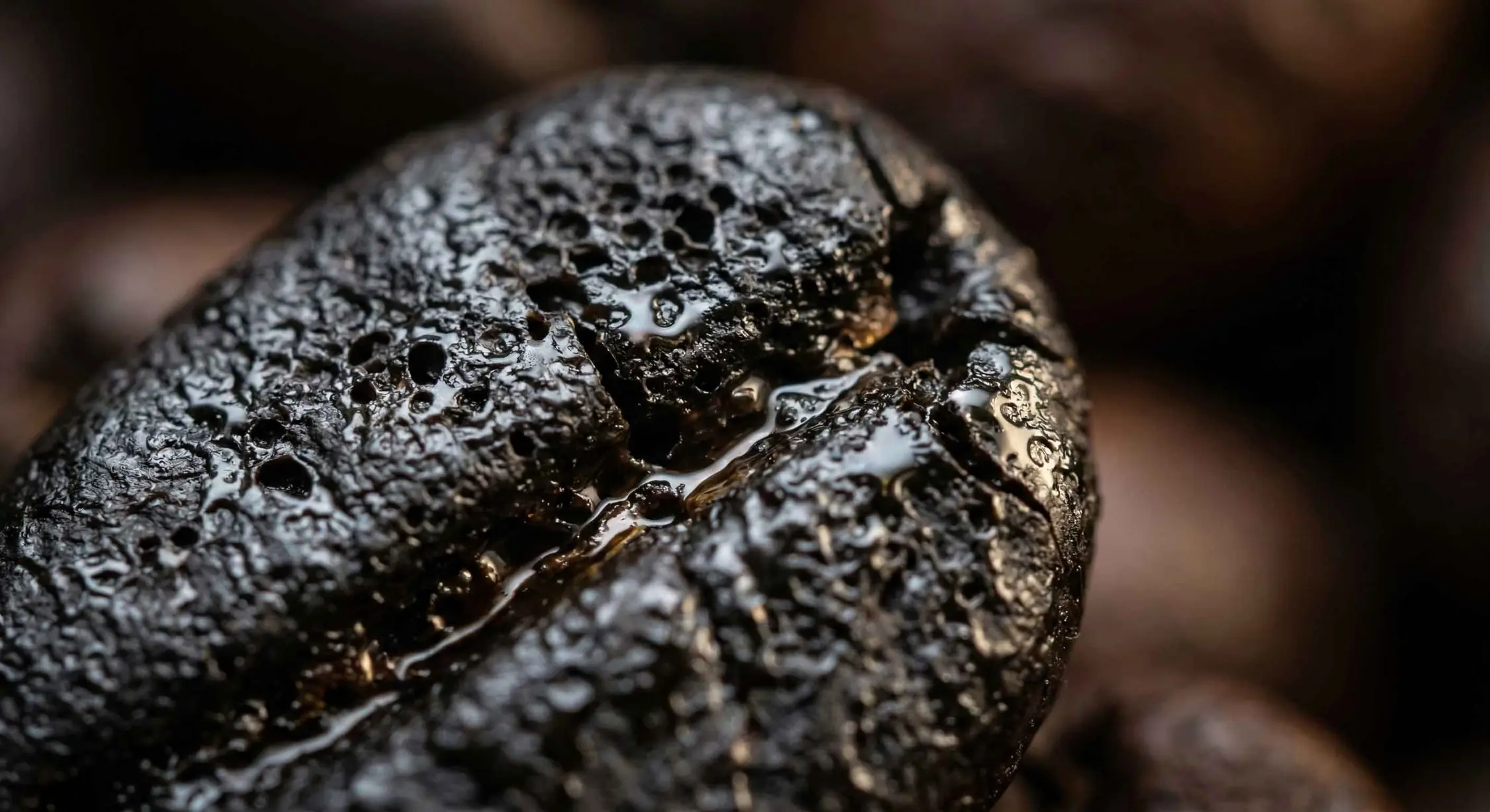
In a dark roast, the beans are pushed into or past “second crack.” At this stage, the agricultural origin of the coffee is almost entirely erased, replaced by flavors generated purely by the roasting process itself (dry distillation).
1. Chemical Profile
The cellular structure of the bean is heavily degraded and highly porous. The internal oils have been pushed to the surface, creating a shiny appearance. Most organic acids and complex sugars have been destroyed or converted into carbon-heavy compounds.
2. Extraction Variables
- Sensory Output: Low acidity, heavy body, smoky, ashy, or dark chocolate notes, with a prominent bitter finish.
- Physical State: Extremely fragile, highly porous, lowest density, and highest solubility.
- Brewing Challenge: Dark roasts extract violently fast. Because the cellular structure is already broken down, hot water dissolves compounds instantly. If extracted with the same fine grind and boiling water used for a light roast, you will extract harsh tannins and excessive bitterness. Understanding this hyper-solubility is key to solving Why Coffee Tastes Bitter: Over-Extraction Explained and How to Fix It.
Technical Comparison of Roast Profiles
To effectively map your brewing parameters, use this objective comparison of how physical state dictates extraction requirements.
| Attribute | Light Roast | Medium Roast | Dark Roast |
|---|---|---|---|
| Density | Highest (Retains moisture and mass) | Moderate | Lowest (High mass loss, extreme expansion) |
| Solubility | Low (Requires aggressive extraction) | Medium | High (Extracts rapidly, prone to over-extraction) |
| Primary Compounds | Organic Acids, Enzymatic Florals | Caramelized Sugars, Maillard Products | Carbon, Dry Distillation Products, Lipids |
| Required Adjustments | Higher Temp (93-96°C), Finer Grind | Baseline Temp (90-93°C), Medium Grind | Lower Temp (85-88°C), Coarser Grind |
Conclusion: Adjusting for the Bean
Roast level is not a subjective flavor label; it is a physical indicator of the bean’s solubility. A light roast demands precise thermal energy to force extraction, while a dark roast requires careful restriction of variables to prevent pulling harsh, bitter compounds into the cup.
To gain strict control over your sensory output, we recommend choosing one brewing device and practicing with different roast profiles. For your next brew, try intentionally adjusting your grinder based on the visual density of the beans. If you need a technical foundation on how to execute this, review our analysis of Coffee Grind Size Extraction Explained: The Physics of Surface Area to understand how mechanical fracturing interacts with roast-level solubility.
Editorial note: This article was developed with AI-assisted drafting and human review to ensure clarity, accuracy, and a non-commercial educational tone.