Best Budget Coffee Grinders: A scientific analysis of affordability, grind consistency, and extraction control
In This Guide
Introduction: What “Best Budget Coffee Grinders” Actually Means
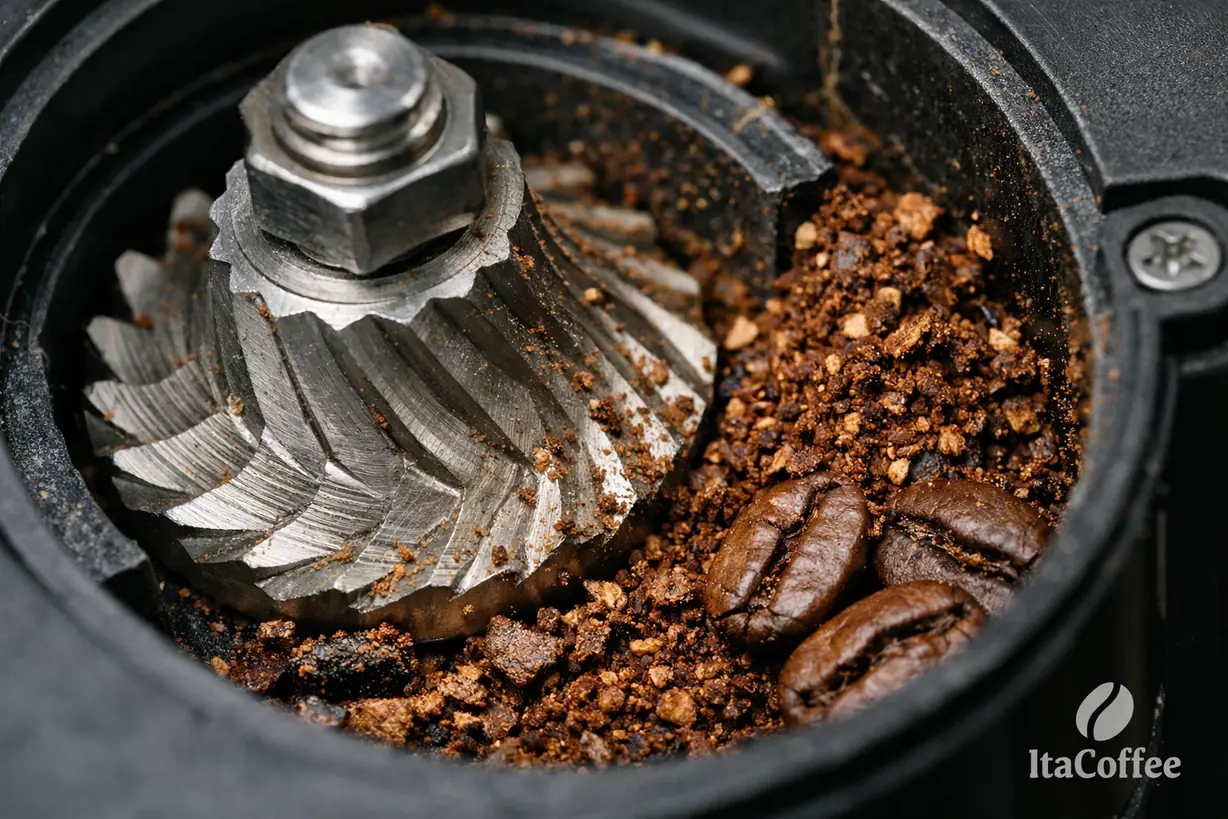
The term best budget coffee grinders is often misunderstood. It does not refer to the cheapest option available, but to grinders that maintain acceptable grind consistency under cost constraints.
Grinding is the most critical mechanical step in coffee preparation. Once coffee is ground, its surface area increases dramatically, accelerating extraction and oxidation (see
Why Freshly Ground Coffee Matters).
The challenge with budget grinders is structural: lower manufacturing cost often leads to compromises in burr precision, alignment stability, and particle size distribution.
This article will examine:
- What defines a “budget” grinder from a technical perspective
- How cost constraints affect extraction quality
- Which design features matter most in low-cost grinders
Core Principle: Grind Consistency vs Cost Constraint
Definition: Grind Consistency
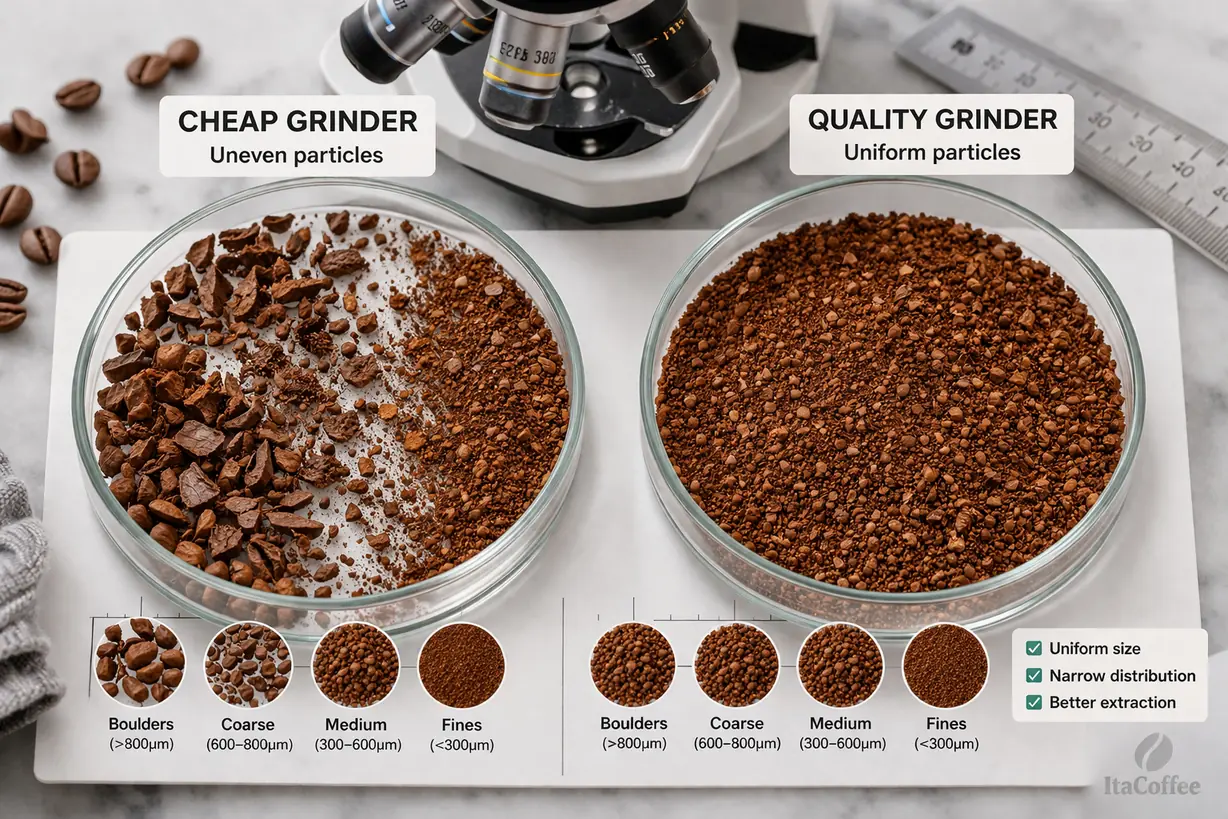
Grind consistency refers to how uniform the particle sizes are after grinding.
- High consistency → even extraction → balanced flavor
- Low consistency → uneven extraction → sour + bitter overlap
This directly affects coffee extraction, where:
- Fine particles over-extract (bitterness)
- Large particles under-extract (sourness)
Budget grinders often produce a wider particle distribution due to lower machining precision.
What Defines the Best Budget Coffee Grinders
1. Burr vs Blade: The Non-Negotiable Factor
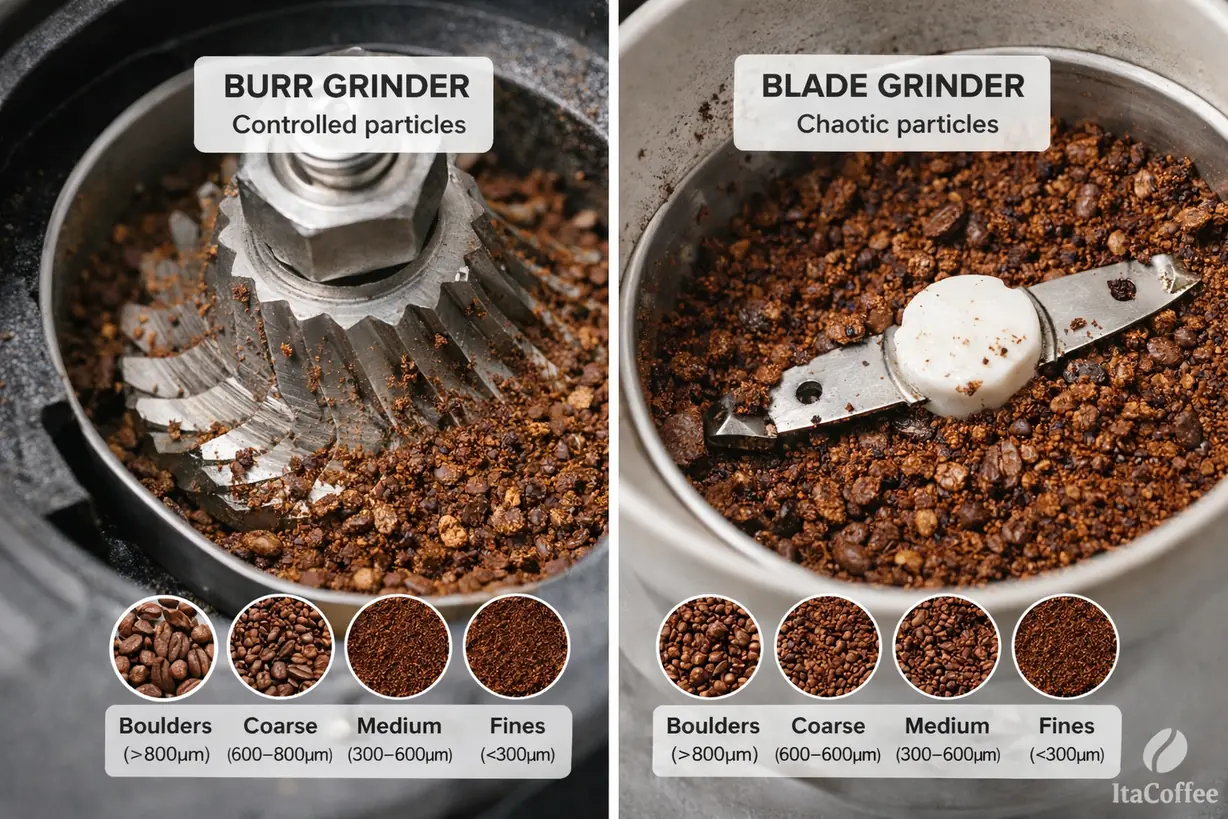
The most critical distinction in budget grinders is burr vs blade.
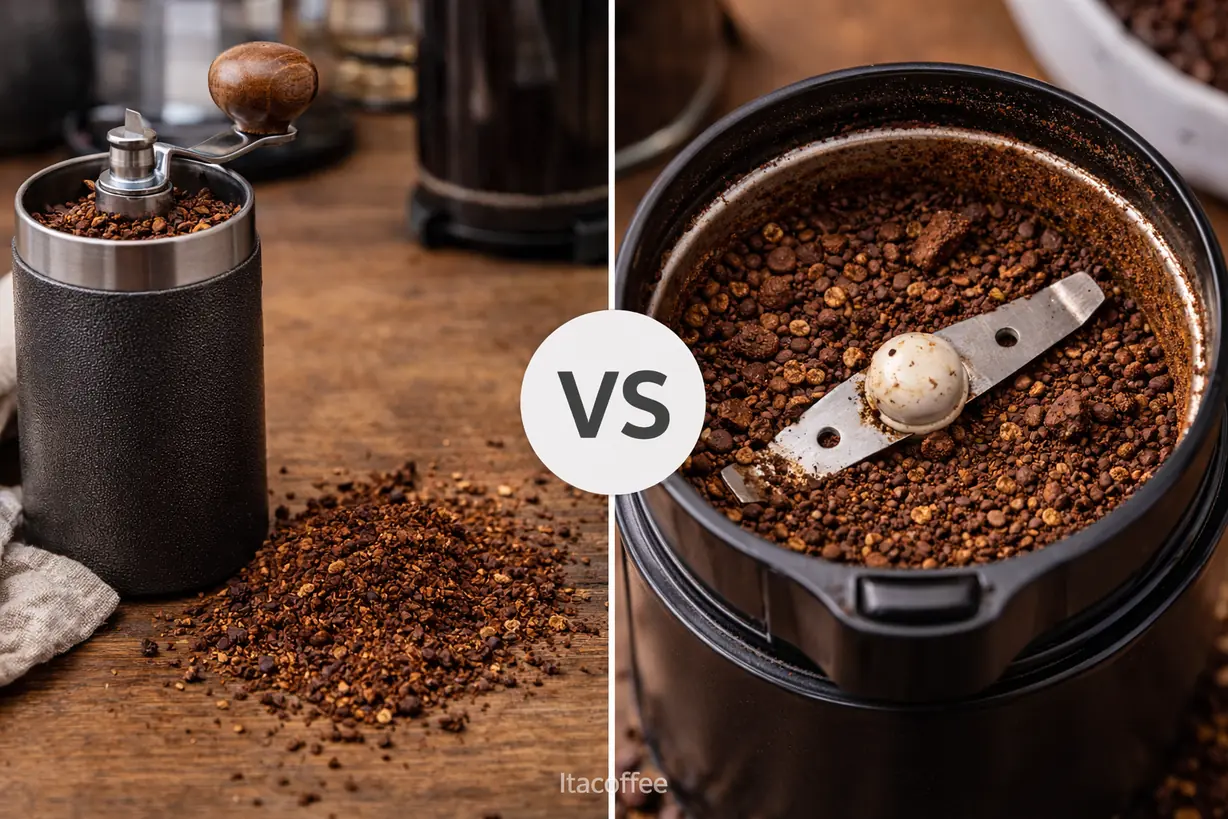
- Burr grinders: crush beans into controlled particle sizes
- Blade grinders: chop beans randomly → inconsistent extraction
A detailed breakdown can be found in
Burr vs Blade Grinders.
Conclusion: Even at low budgets, a burr grinder is essential for predictable extraction.
2. Burr Material and Manufacturing Precision
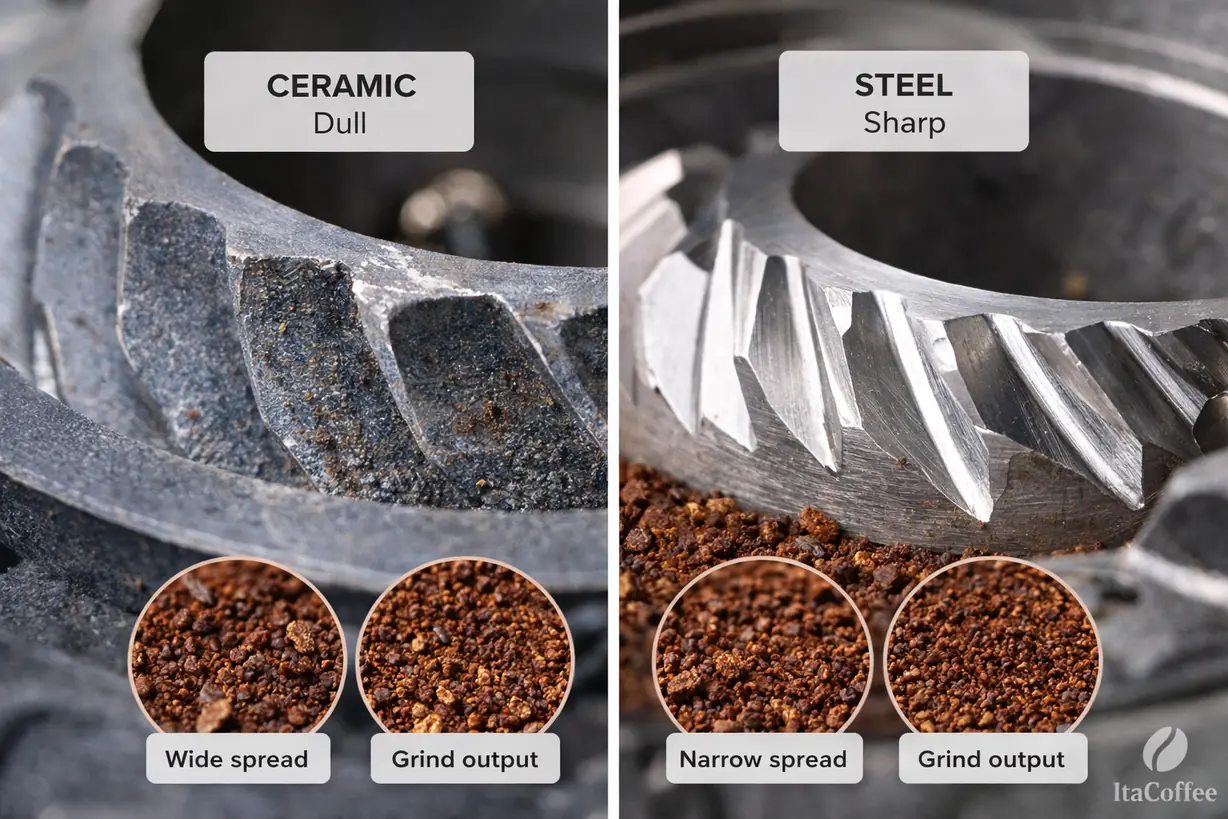
Budget grinders typically use either:
- Ceramic burrs: cheaper, slower wear, but less sharp
- Stainless steel burrs: sharper, more consistent cutting
Lower precision manufacturing leads to:
- Irregular cutting surfaces
- Wider particle size distribution
This directly impacts extraction efficiency.
3. Alignment and Structural Stability
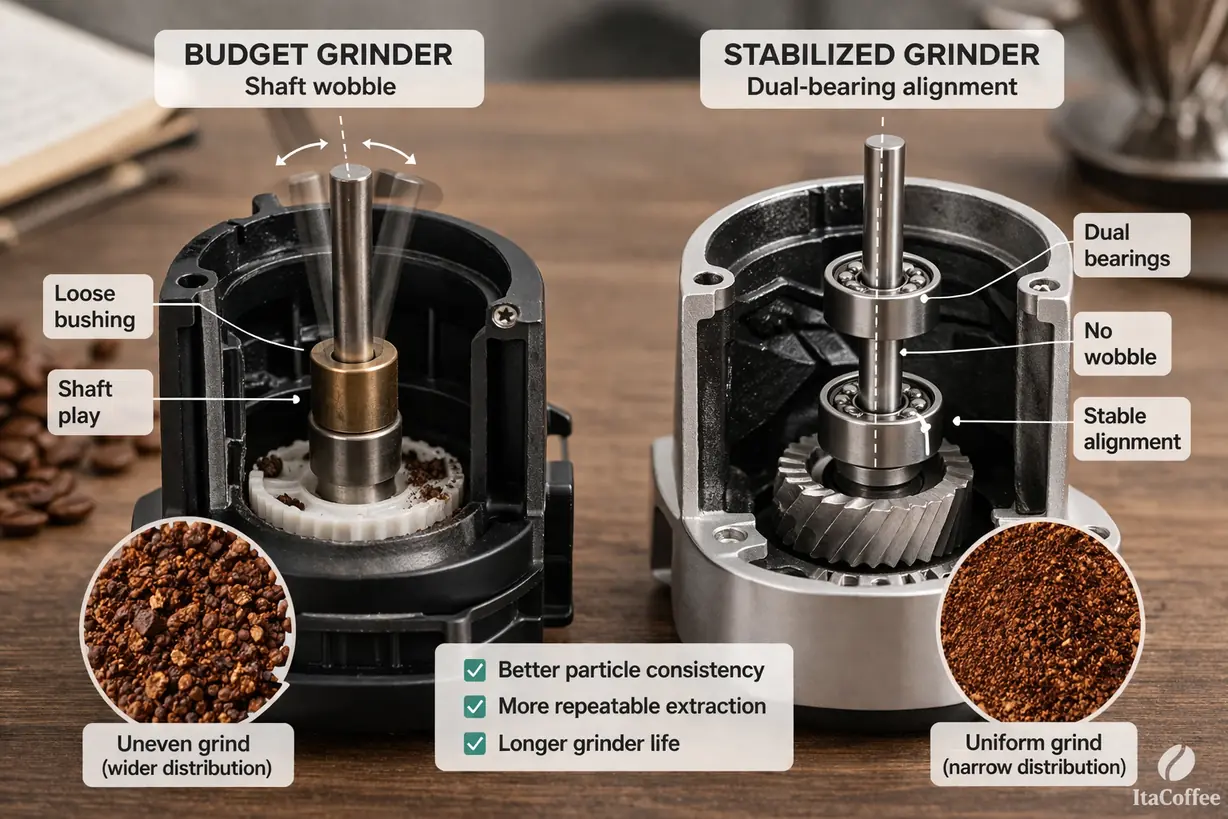
Alignment refers to how stable the burr set remains during grinding.
- Poor alignment → uneven particle sizes
- Stable alignment → repeatable grind quality
Budget grinders often lack:
- Dual bearing systems
- Rigid shaft support
This introduces micro-variations that affect extraction consistency.
4. Grind Adjustment Precision
Most budget grinders use stepped adjustment systems.
- Fewer adjustment steps → limited control
- Larger step intervals → harder to fine-tune extraction
This becomes critical when dialing in espresso or fine-tuning pour-over recipes (see
Coffee Brewing Basics).
Performance Reality: What Budget Grinders Can and Cannot Do
Suitable Use Cases
- Pour-over (medium grind tolerance)
- French press (coarse grind, less sensitive)
- Cold brew (low extraction sensitivity)
For example:
Limitations
- Inconsistent espresso grind
- Difficulty controlling flow rate
- Higher probability of channeling
Espresso requires narrow particle distribution. Budget grinders rarely meet this requirement (see
Espresso fundamentals).
Budget vs Entry-Level Electric Grinders
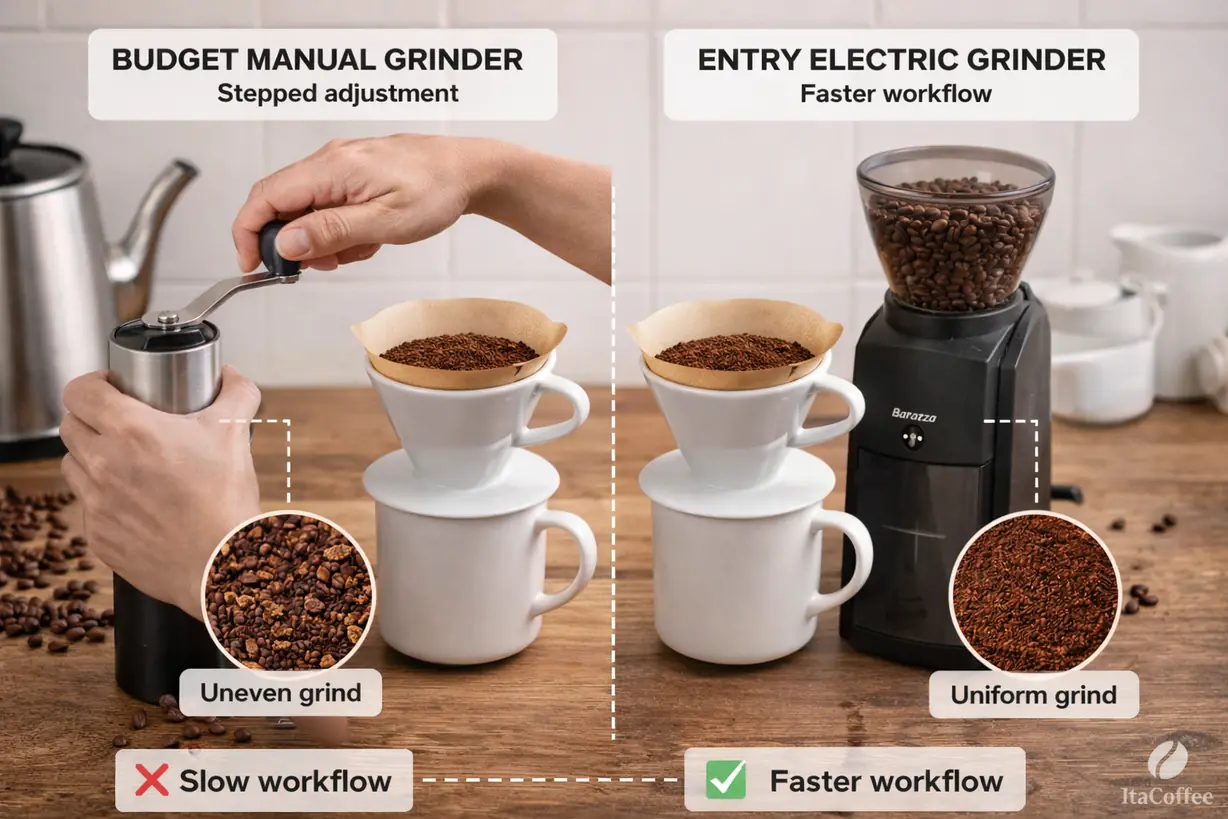
A common comparison is between budget manual grinders and entry-level electric grinders.
- Manual (budget): better burr quality, slower workflow
- Electric (entry-level): faster, often less consistent
Full comparison:
Manual vs Electric Coffee Grinder
Interestingly, some budget manual grinders outperform cheap electric grinders in grind consistency.
How to Evaluate a Budget Grinder Scientifically
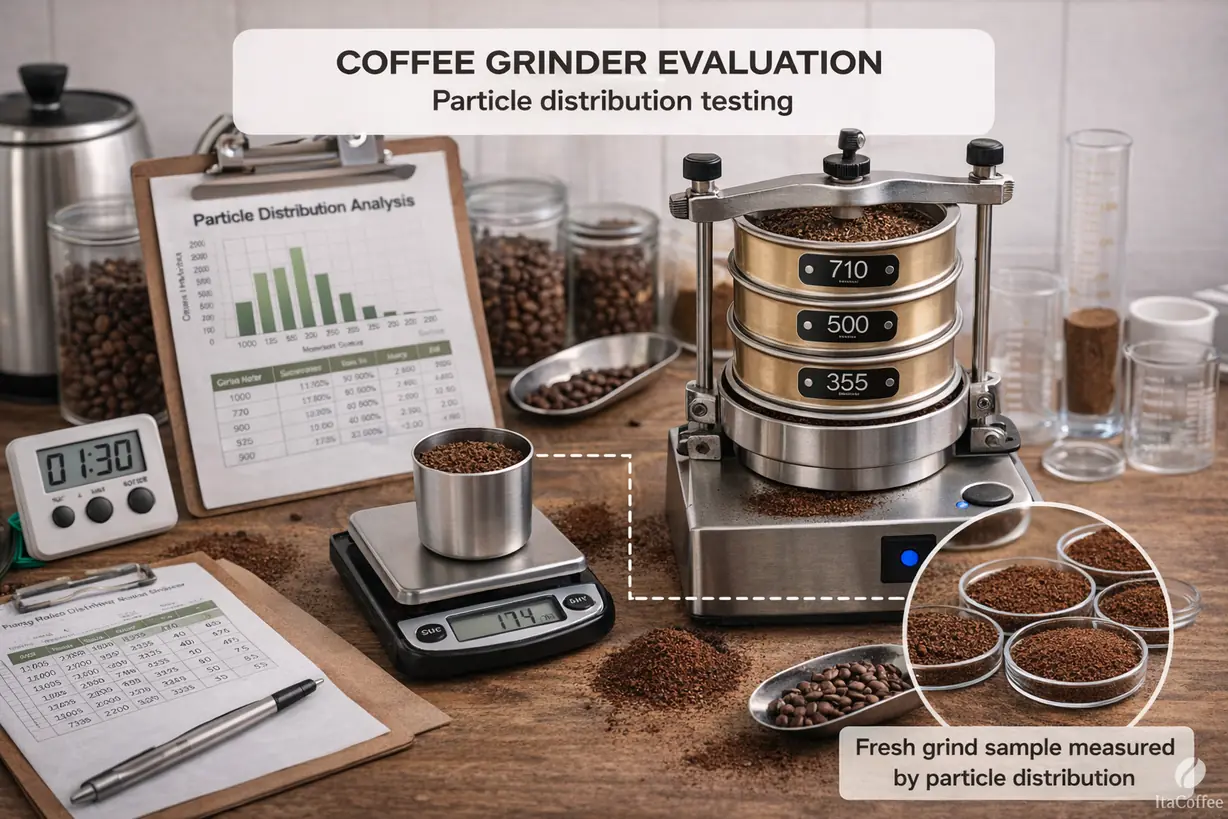
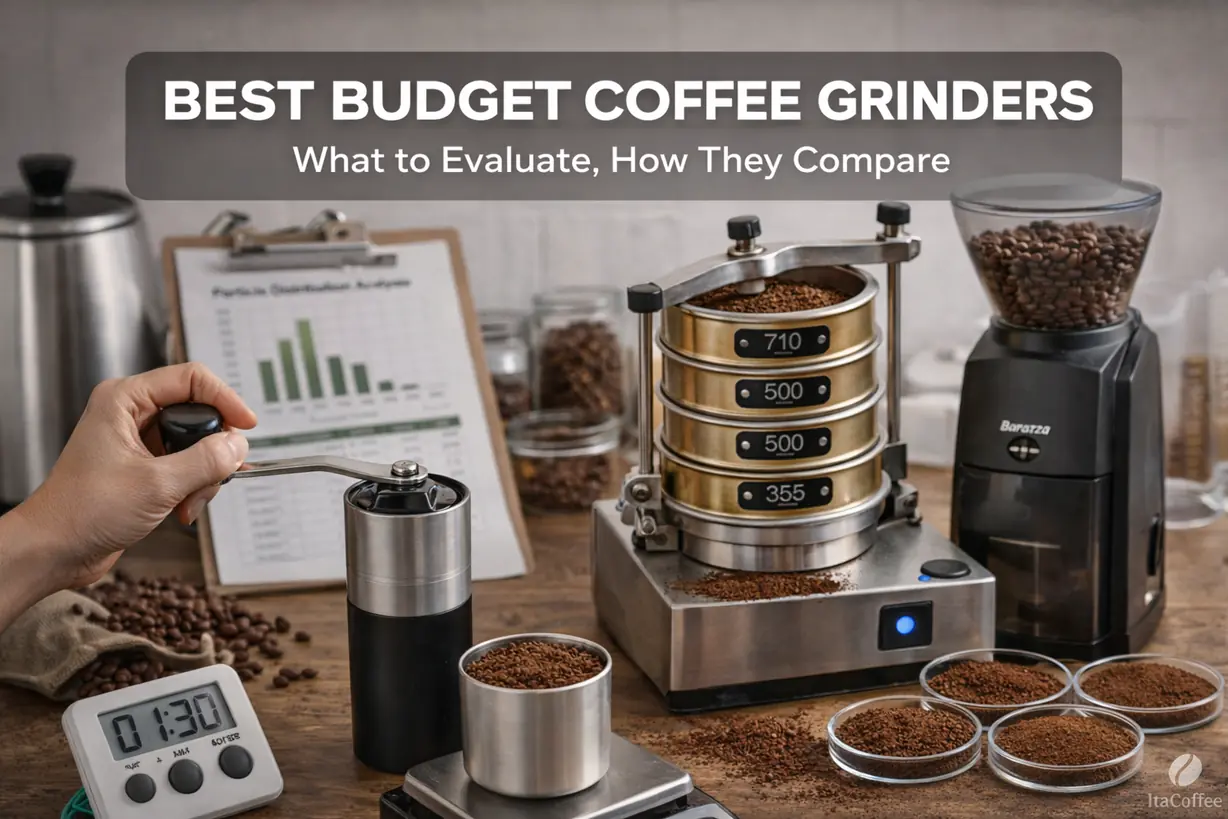
To evaluate best budget coffee grinders, focus on measurable variables:
- Particle size distribution (visual or sieve analysis)
- Alignment stability under load
- Adjustment precision
For methodology reference:
How We Test Coffee Grinders
Final Thoughts: Defining “Best” Under Budget Constraints
The best budget coffee grinders are not those with the lowest price, but those that maintain:
- Acceptable grind consistency
- Stable burr alignment
- Predictable extraction behavior
In coffee, flavor is governed by physics and chemistry—not marketing claims. Even within a limited budget, understanding these variables allows you to make rational decisions.
Explore More on ITA Coffee
At Itacoffee, the goal is not to optimize spending, but to optimize understanding. Adjust grind size, observe extraction changes, and refine your brewing process systematically.
This article was written and optimized with the assistance of AI, reviewed and edited by the itacoffee team.