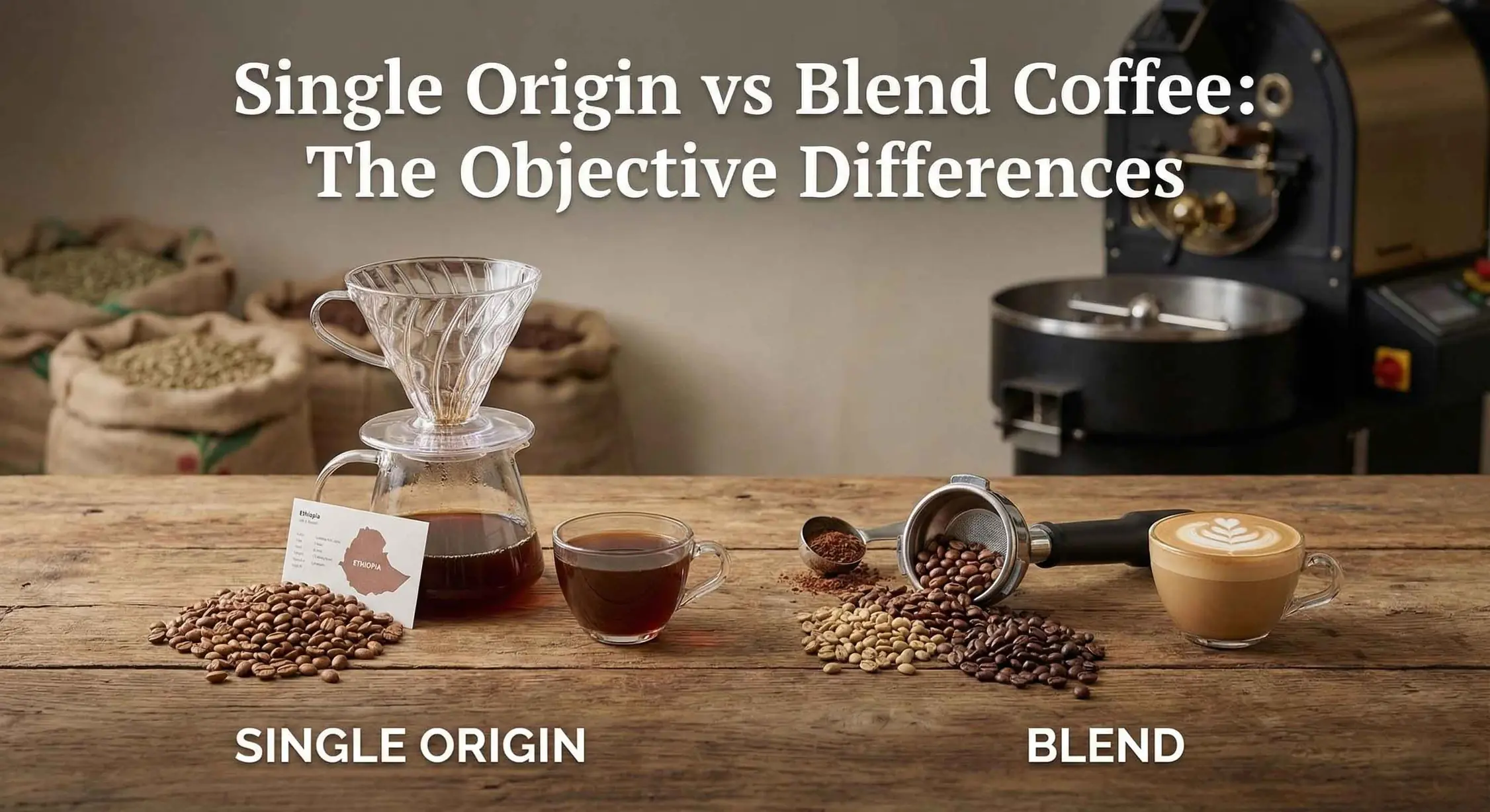
The choice between Single Origin and Blend coffee is frequently misunderstood as a hierarchy of quality. However, from an extraction and sensory perspective, neither is inherently superior. Instead, they represent two fundamentally different approaches to flavor architecture: one isolates the precise chemical variables of a specific environment, while the other engineers a balanced, repeatable structural profile.
Understanding the technical differences between single origins and blends is a core component of Coffee Knowledge. By identifying what each approach is designed to achieve, you can make informed decisions based on your brewing equipment and desired sensory outcome.
In This Guide
Single Origin: Highlighting Terroir and Acidic Clarity
A “Single Origin” coffee is sourced from one geographical location. This could be a single country, a specific region, a single farm (estate), or even a specific micro-lot within that farm.
1. The Concept of Terroir
Because single origin beans are grown under uniform conditions—identical altitude, soil composition, and climate—they express a very narrow and distinct set of organic compounds. This environmental fingerprint is known as terroir. If a soil is highly volcanic and the altitude slows the maturation of the cherry, the resulting seed will have a highly specific concentration of complex sugars and organic acids (such as citric or malic acid).
2. Roast Profile and Extraction Variables
To preserve these delicate, highly volatile aromatic compounds, roasters typically apply a lighter roast profile. You can learn more about how roasting dictates solubility in our guide on Dark Roast vs Light Roast: What Roasting Really Changes in Coffee Flavor.
- Sensory Output: High flavor clarity, distinct acidity, and pronounced floral or fruity notes.
- The Trade-off: Single origins are biologically inconsistent. Because they rely on one specific harvest, the flavor profile will change from season to season based on rainfall and temperature fluctuations.
- Extraction Challenge: Lighter-roasted single origins are less porous and inherently less soluble, requiring precise control over grind size and higher water temperatures to achieve adequate extraction.
Coffee Blends: Engineering Balance and Consistency
A blend is a deliberate combination of two or more single origin coffees. Roasters create blends to achieve a specific, repeatable flavor profile that a single origin cannot produce on its own.
1. Structural Balance
Blends are formulated like a chemical equation. A roaster might use a Brazilian bean as a “base” for heavy body and chocolate notes, add a Colombian bean for mid-palate sweetness, and incorporate an Ethiopian bean for high-end aromatic complexity. In some cases, specific species are mixed to achieve physical results, such as combining Arabica vs Robusta to drastically alter caffeine content and crema stability.
2. The Role of Consistency
Agricultural products change constantly. A roaster’s primary goal with a blend—especially a house espresso blend—is consistency. By adjusting the ratios of different components as fresh crops arrive throughout the year, roasters can maintain a highly stable, predictable sensory output that cafes rely on for their daily operations.
- Sensory Output: Rounded, balanced, and structurally heavy. Blends are designed to minimize sharp acidity and maximize sweetness and body.
- Milk Compatibility: The dense, chocolate and caramel-forward compounds typically engineered into blends allow the coffee to cut through the dilution and fat content of milk without losing its structural integrity.
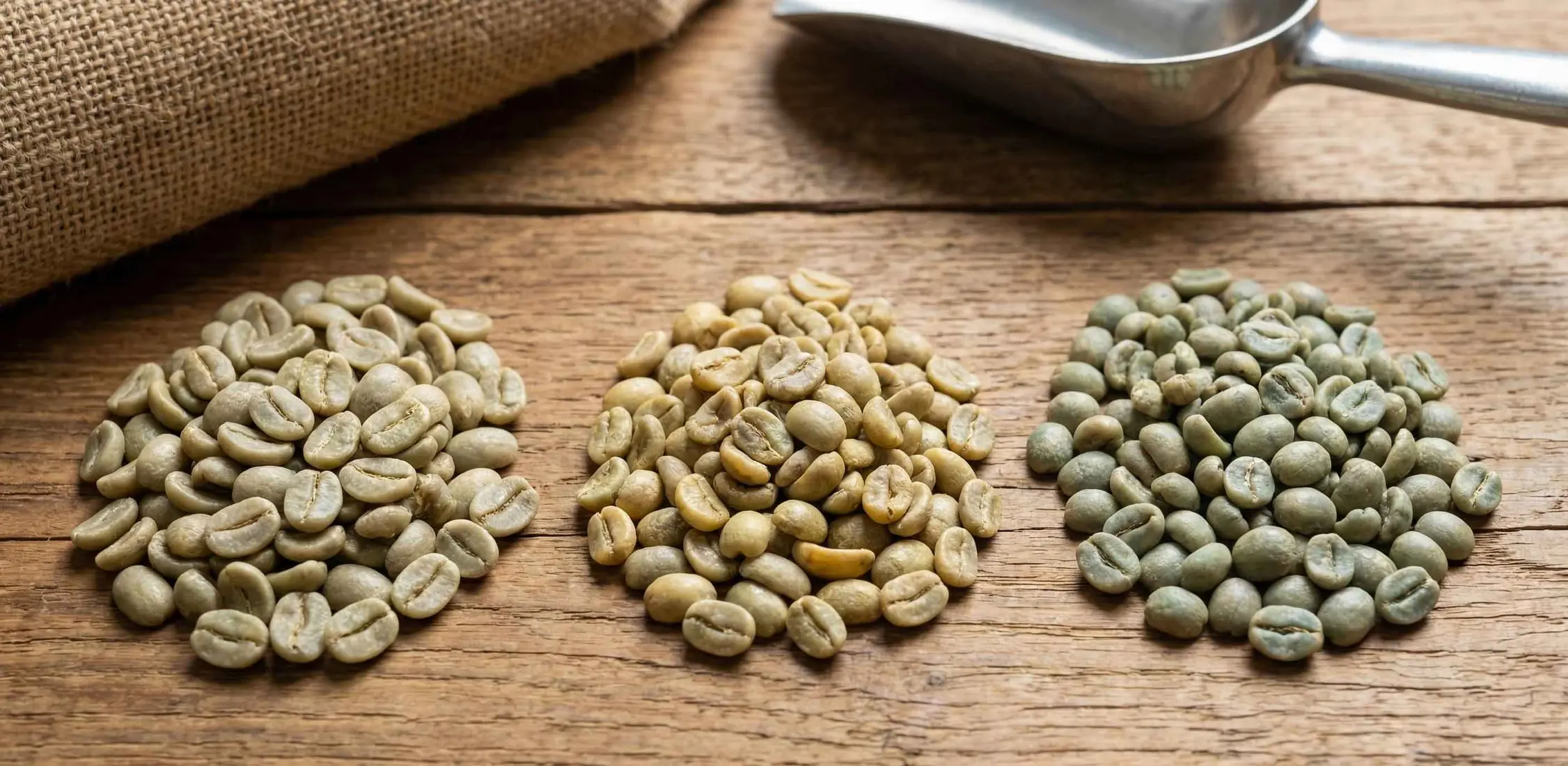
Flavor Profile Comparison
The choice between the two should be dictated by what you want to extract into the cup.
| Attribute | Single Origin | Coffee Blend |
|---|---|---|
| Primary Focus | Clarity, unique acidity, and regional terroir. | Balance, consistency, and structural body. |
| Consistency | Low. Changes with every harvest season. | High. Engineered to remain stable year-round. |
| Roast Level (Typical) | Light to Medium-Light (to preserve volatile aromatics). | Medium to Dark (to increase solubility and caramelization). |
| Ideal Application | Pour over, filter coffee, or straight espresso. | Milk-based espresso drinks (lattes, cappuccinos), batch brew. |
Matching Beans to Your Brewing Method
The fundamental physics of your chosen brewer will dictate how these beans behave. As detailed in our guide on How Brewing Methods Affect Coffee Flavor (From Beans to Cup), percolation methods like the V60 utilize gravity and paper filters. This removes lipid oils and highlights the high-clarity acids present in Single Origins.
Conversely, learning how to make espresso requires pushing water through a highly compacted puck at 9 bars of pressure. This aggressive environment rapidly extracts all available compounds. A highly acidic single origin can easily taste overwhelmingly sour as an espresso if not dialed in perfectly, whereas a carefully constructed blend will extract evenly, providing a syrupy, balanced foundation.
Conclusion
Single origins isolate the chemical reality of a specific farm, offering high clarity and distinct acidity. Blends manipulate multiple variables to engineer balance, consistency, and body.
To improve your home extraction, we recommend establishing a baseline. Brew a well-developed blend to understand standard extraction parameters (grind size, temperature, ratio) before introducing the complex, highly specific solubility challenges of a light-roasted single origin. By isolating these variables, you will gain strict control over the final sensory output in your cup.
Editorial note: This article was developed with AI-assisted drafting and human review to ensure clarity, accuracy, and a non-commercial educational tone.