At ITA Coffee, reviews are built on clarity, independence, and real-world use.
The Reviews section focuses on one principle: coffee gear should be evaluated based on how it affects extraction, control, and repeatability — not appearance, branding, or perceived “professionalism”.
This article examines the most common coffee gear buying mistakes and explains why they lead to poor results, even when using expensive equipment.
In This Guide
Why Coffee Gear Decisions Often Go Wrong
Most beginners approach coffee equipment as isolated tools rather than components of an extraction system.
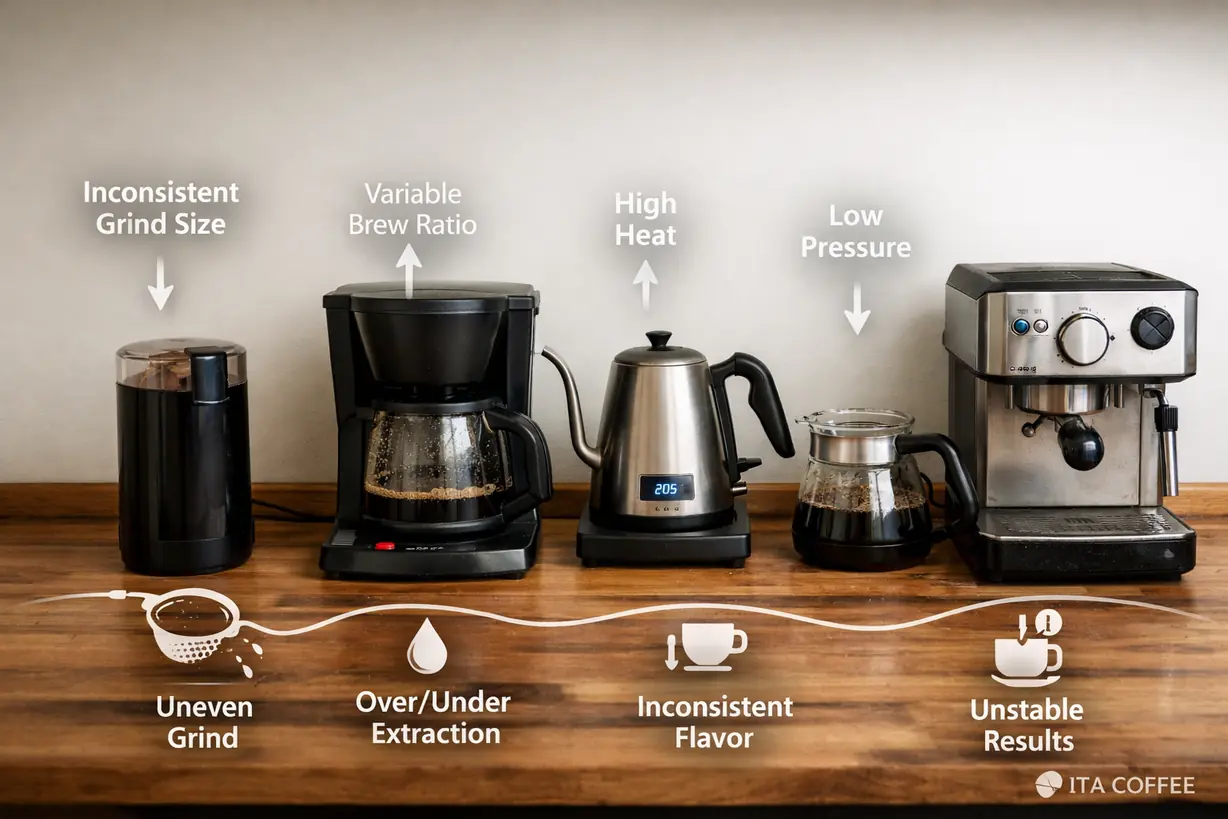
However, brewing is governed by interacting variables:
- Grind size (surface area)
- Water temperature (solubility)
- Brew ratio (concentration vs extraction)
- Flow dynamics (contact time and uniformity)
As explained in Coffee Extraction Explained, extraction is the process of dissolving soluble compounds from coffee grounds. Any gear choice that disrupts these variables leads to imbalance.
Mistake 1: Prioritizing Equipment Before Understanding Extraction
What Happens
Users purchase advanced gear (espresso machines, precision kettles, premium grinders) without understanding how extraction works.
Why This Fails
Without understanding extraction fundamentals, users cannot control outcomes. This leads to:
- Inconsistent flavor
- Difficulty diagnosing problems
- Random adjustments without clear reasoning
This is directly related to the concepts explained in Coffee Brewing Basics, where grind size, ratio, and time must be aligned.
Key Insight
Gear amplifies technique — it does not replace it.
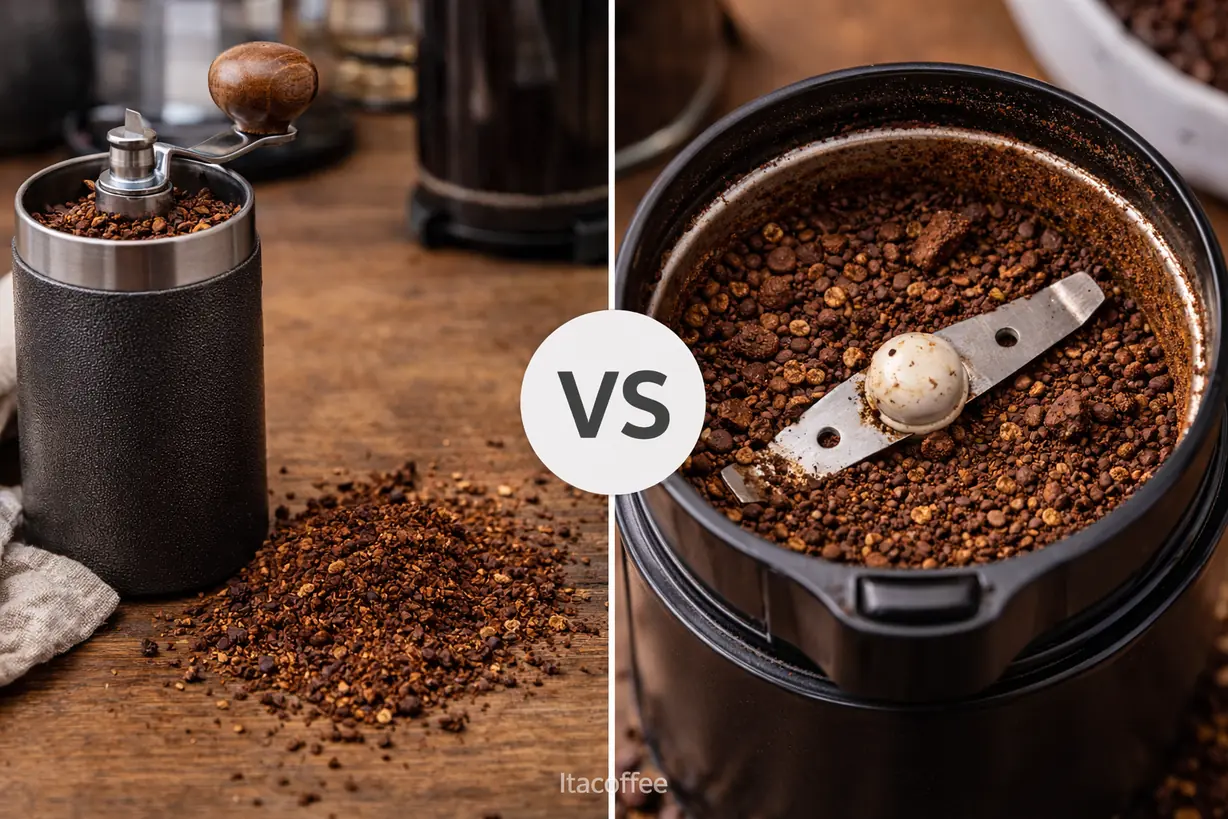
Mistake 2: Overvaluing Grinder Price Instead of Grind Consistency
What Is Grind Consistency?
Grind consistency refers to how uniform the particle sizes are after grinding.
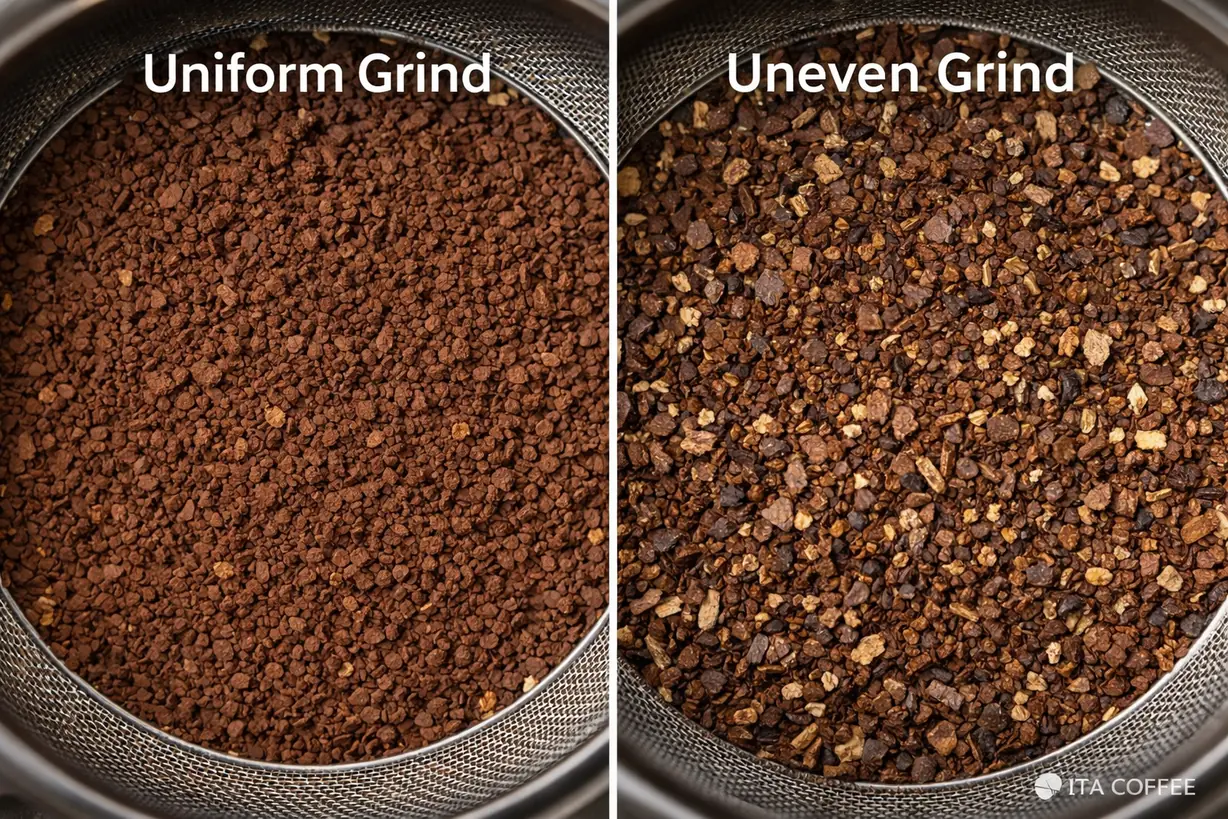
Uniform particles extract evenly. Uneven particles cause:
- Fine particles → over-extraction (bitterness)
- Large particles → under-extraction (sourness)
As detailed in Burr vs Blade Grinders, grind consistency matters more than grinder price alone.
Common Misconception
Expensive grinder = better coffee
Reality
Consistency, not cost, determines extraction quality.
Mistake 3: Ignoring Brewing Method Compatibility
Different Methods Require Different Conditions
Each brewing method has specific requirements:
- Espresso: fine grind, high pressure, short time
- Pour over: medium grind, controlled flow
- French press: coarse grind, full immersion
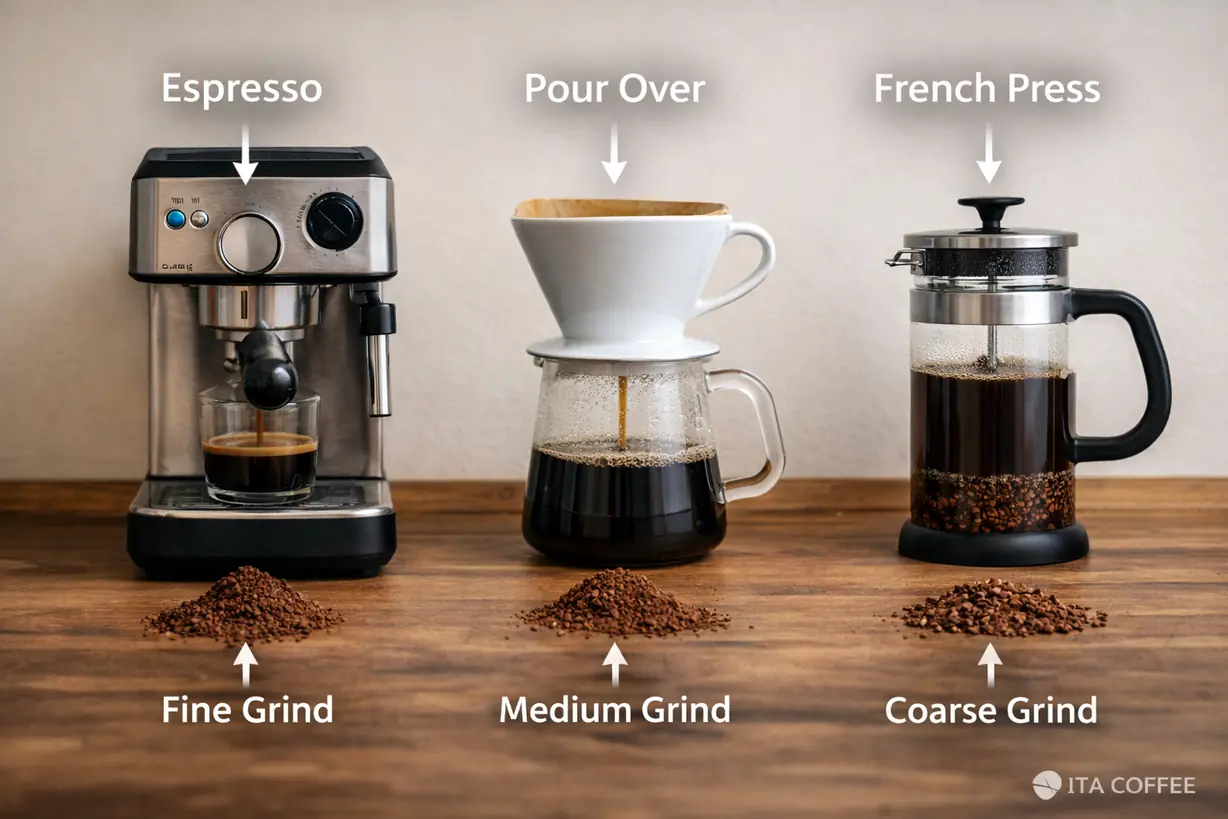
These differences are explained in How Brewing Methods Affect Coffee Flavor.
Why This Matters
Buying gear without matching your brewing method leads to:
- Incorrect grind range
- Unstable extraction
- Inconsistent results
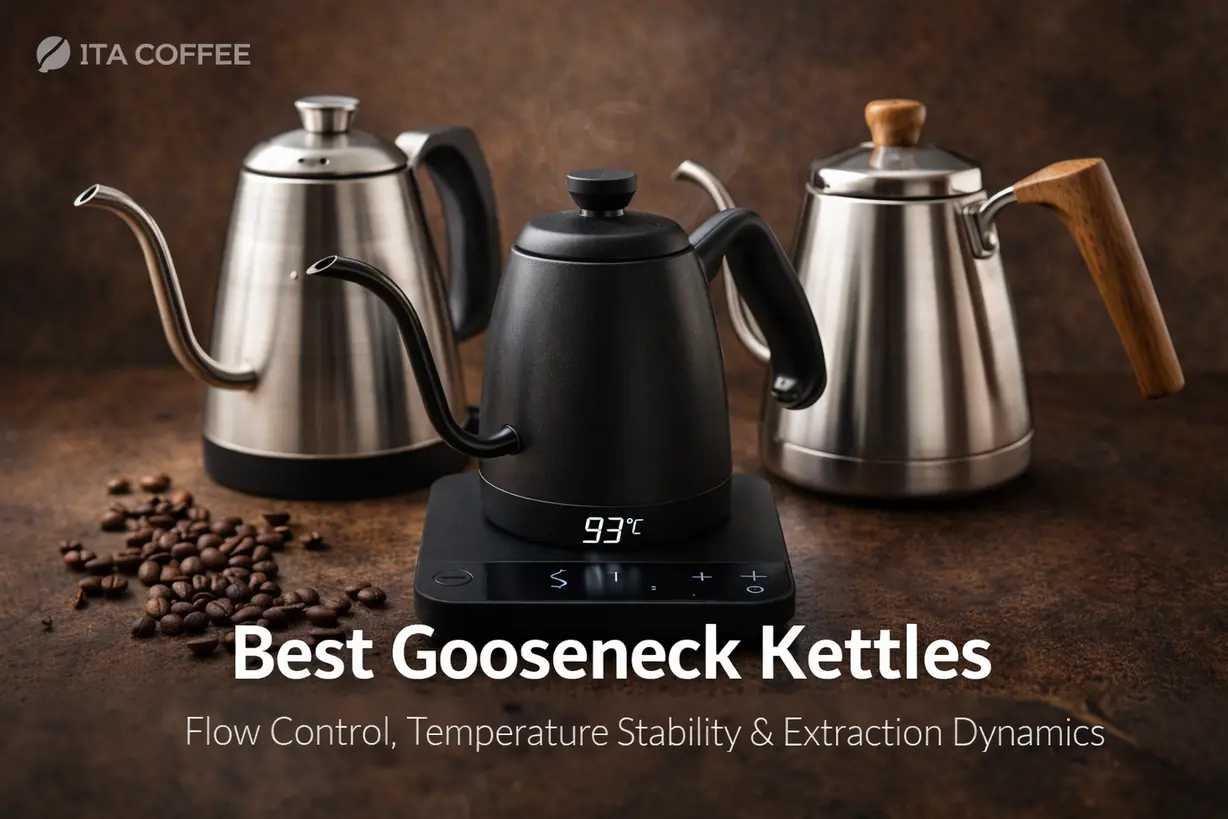
Mistake 4: Focusing on Temperature Precision Without Flow Control
Temperature vs Flow
Temperature affects extraction speed, but flow control affects extraction uniformity.
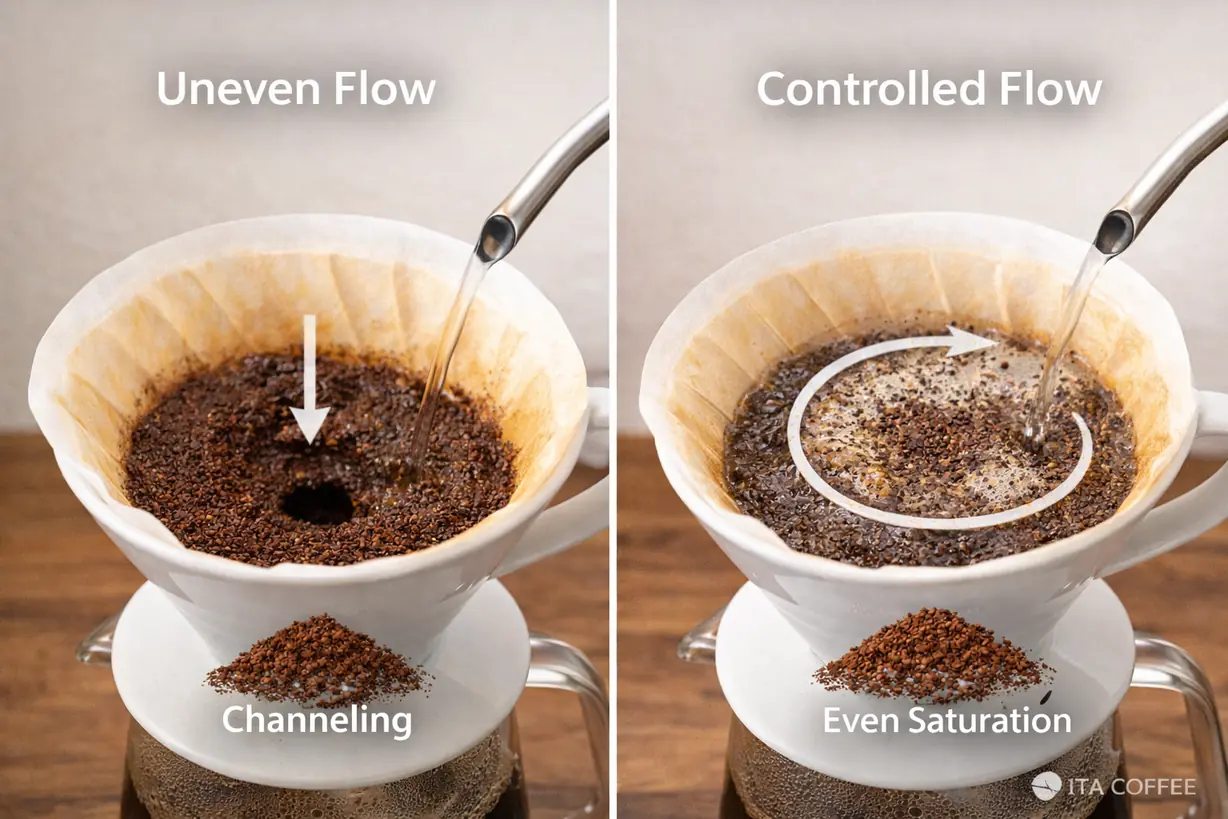
As explained in What Is Percolation Brewing?, water must flow evenly through the coffee bed.
Common Error
- Buying temperature-controlled kettles
- Ignoring pouring technique and flow rate
Result
Channeling — uneven pathways where water bypasses parts of the coffee bed.
See Coffee Channeling Explained for a detailed breakdown.
Mistake 5: Buying Too Many Tools Too Early
What Happens
Users accumulate multiple tools (scales, kettles, brewers, accessories) without mastering any of them.
Why This Reduces Quality
- Increases variables
- Reduces repeatability
- Makes troubleshooting difficult
This contradicts the principle in Minimal Coffee Gear Setup, where fewer variables improve control.
Key Principle
Consistency improves when variables are limited.
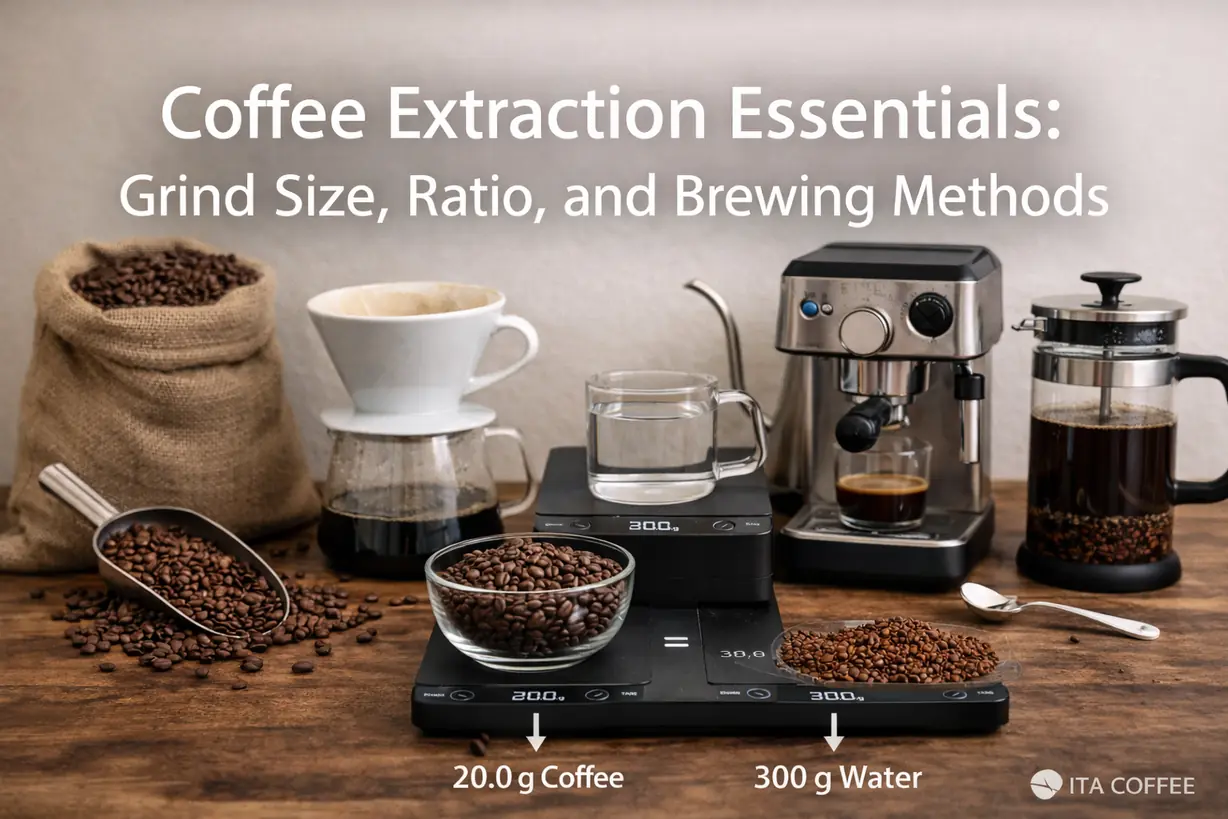
Mistake 6: Ignoring Brew Ratios and Measurement Tools
What Is Brew Ratio?
Brew ratio is the relationship between coffee dose and water volume.
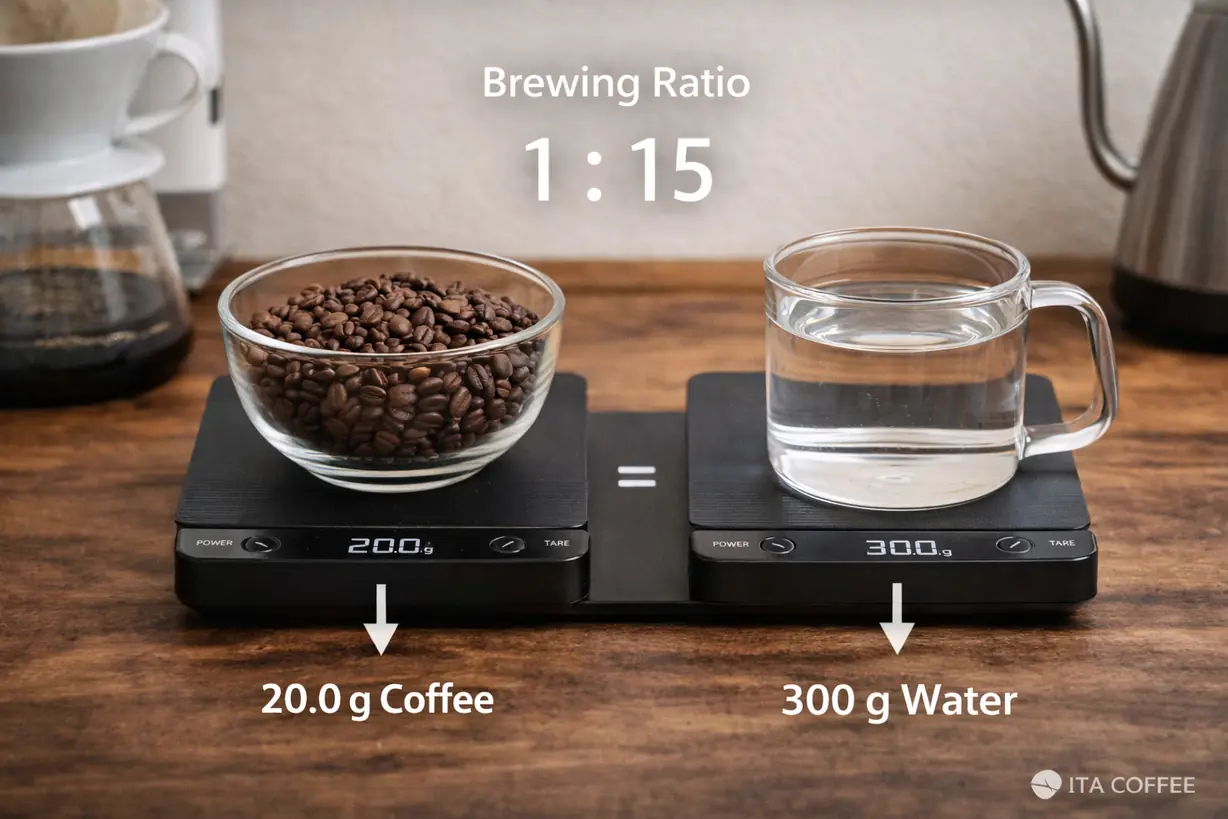
For example:
- 1:15 → balanced
- 1:12 → stronger
- 1:18 → lighter
As explained in Coffee Brew Ratios Explained, ratio directly affects strength and extraction.
Common Mistake
- Eyeballing measurements
- Not using a scale
This leads to inconsistent results, even with good equipment.
Mistake 7: Believing Expensive Gear Fixes Bad Coffee
The Core Misunderstanding
Users assume upgrading equipment will automatically improve flavor.
The Reality
As explained in Why Expensive Coffee Gear Doesn’t Fix Bad Coffee:
- Extraction errors remain unchanged
- Poor technique persists
- Flavor imbalance continues
Conclusion
Equipment improves potential — not execution.
How to Avoid These Coffee Gear Buying Mistakes
1. Start With Fundamentals
- Understand extraction
- Learn grind size and ratio relationships
2. Build a Simple, Compatible Setup
- Choose gear that matches your brewing method
- Avoid unnecessary tools early on
3. Prioritize Control Over Features
- Grind consistency > grinder price
- Flow control > temperature precision alone
4. Focus on Repeatability
- Use a scale
- Keep variables consistent
Conclusion: Coffee Gear Should Serve Extraction, Not Replace It
Coffee gear should be evaluated based on one question:
Does this tool improve control over extraction variables?
If not, it does not improve coffee quality — regardless of cost or branding.
At ITA Coffee, we encourage you to treat gear as part of a controlled system. Practice adjusting one variable at a time — grind size, ratio, or flow — and observe how extraction changes. For deeper understanding, continue with our Coffee Knowledge and Brewing Guides sections.
Internal Links Log
- “Coffee Extraction Explained” → https://www.itacoffee.com/coffee-extraction-explained/
- “Coffee Brewing Basics” → https://www.itacoffee.com/coffee-brewing-basics-grind-size-ratio-and-time/
- “Burr vs Blade Grinders” → https://www.itacoffee.com/burr-vs-blade-coffee-grinders-whats-the-real-difference-and-why-it-matters/
- “How Brewing Methods Affect Coffee Flavor” → https://www.itacoffee.com/how-brewing-methods-affect-coffee-flavor-from-beans-to-cup/
- “What Is Percolation Brewing?” → https://www.itacoffee.com/what-is-percolation-brewing-science/
- “Coffee Channeling Explained” → https://www.itacoffee.com/coffee-channeling-explained/
- “Minimal Coffee Gear Setup” → https://www.itacoffee.com/minimal-coffee-gear-setup/
- “Coffee Brew Ratios Explained” → https://www.itacoffee.com/coffee-brewing-ratios-explained/
- “Why Expensive Coffee Gear Doesn’t Fix Bad Coffee” → https://www.itacoffee.com/why-expensive-coffee-gear-doesnt-fix-bad-coffee/