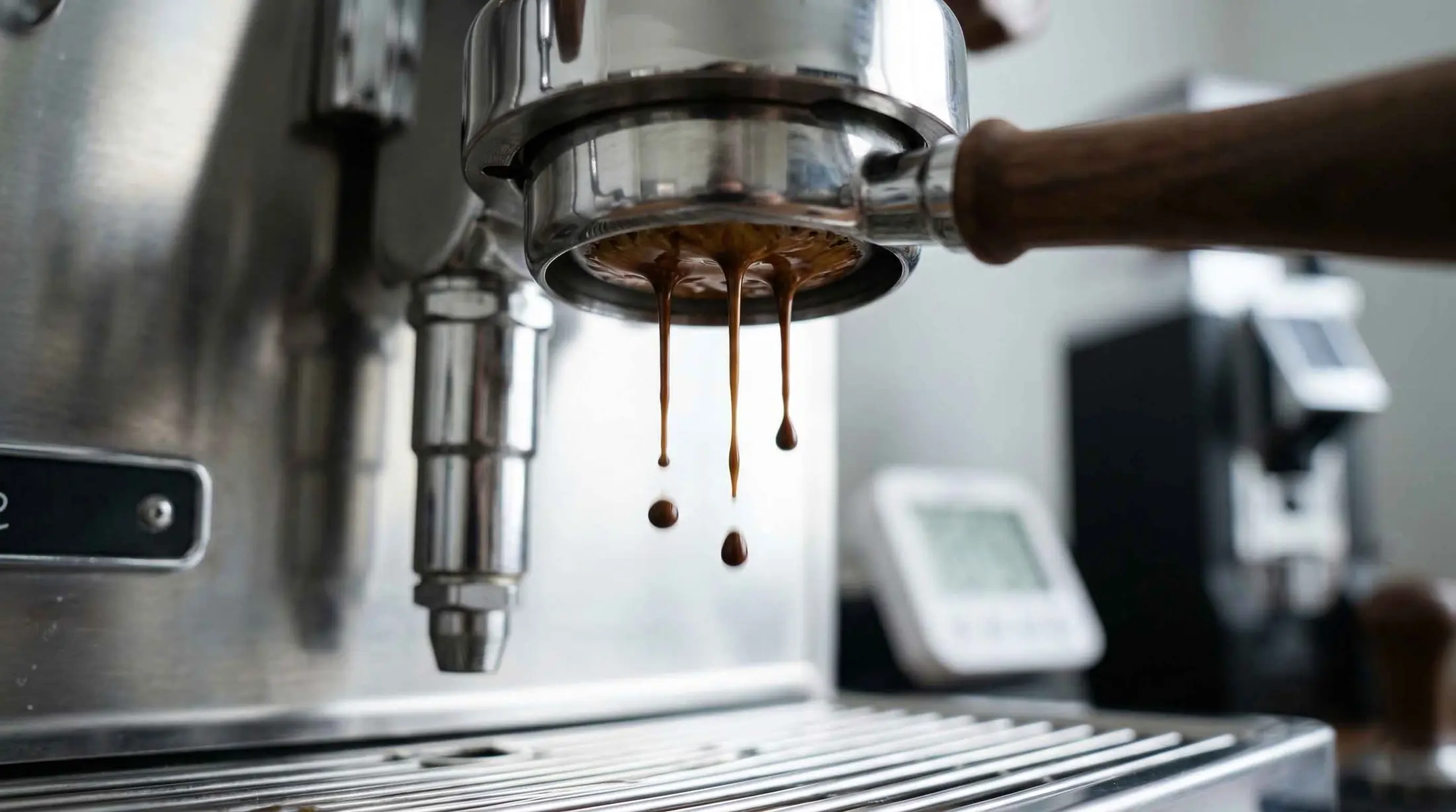
A slow espresso shot is not merely a timing inconvenience; it is a structural problem within the coffee puck. When an extraction takes 40, 50, or even 60 seconds to yield a standard output, the resulting cup is almost always unbalanced.
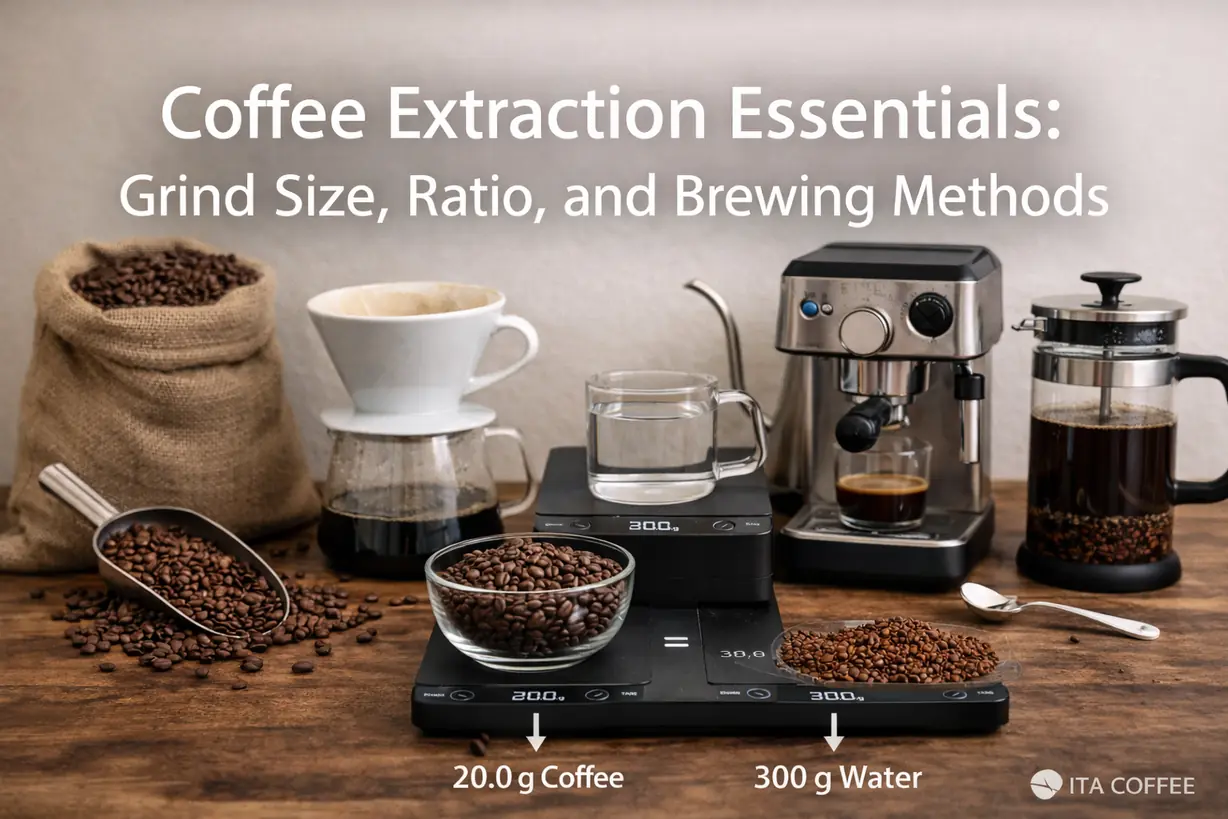
In espresso brewing, water under high pressure (typically 9 bars) is forced through a compacted bed of finely ground coffee. The speed at which this happens dictates what chemical compounds end up in your cup. As outlined in our foundation on how to make espresso, flow rate must be controlled through objective variables.
This guide explains why your shot is choking and the specific adjustments required to fix it.
In This Guide
The Physics of Puck Resistance
Water always seeks the path of least resistance. In an espresso portafilter, the coffee grounds provide the resistance necessary to build pressure.
When an espresso shot runs too slow, it means the resistance in the coffee puck is greater than optimal. The water struggles to pass through, extending the contact time between the hot water and the coffee grounds.
The result is over-extraction:
- The water dissolves too many compounds, moving past pleasant sugars and acids.
- Heavy, astringent, and harsh bitter compounds are pulled into the cup.
- The texture may appear thick, but the flavor will be hollow or burnt.
If you are unsure how contact time directly alters flavor chemistry, review our detailed breakdown on under vs over extraction.
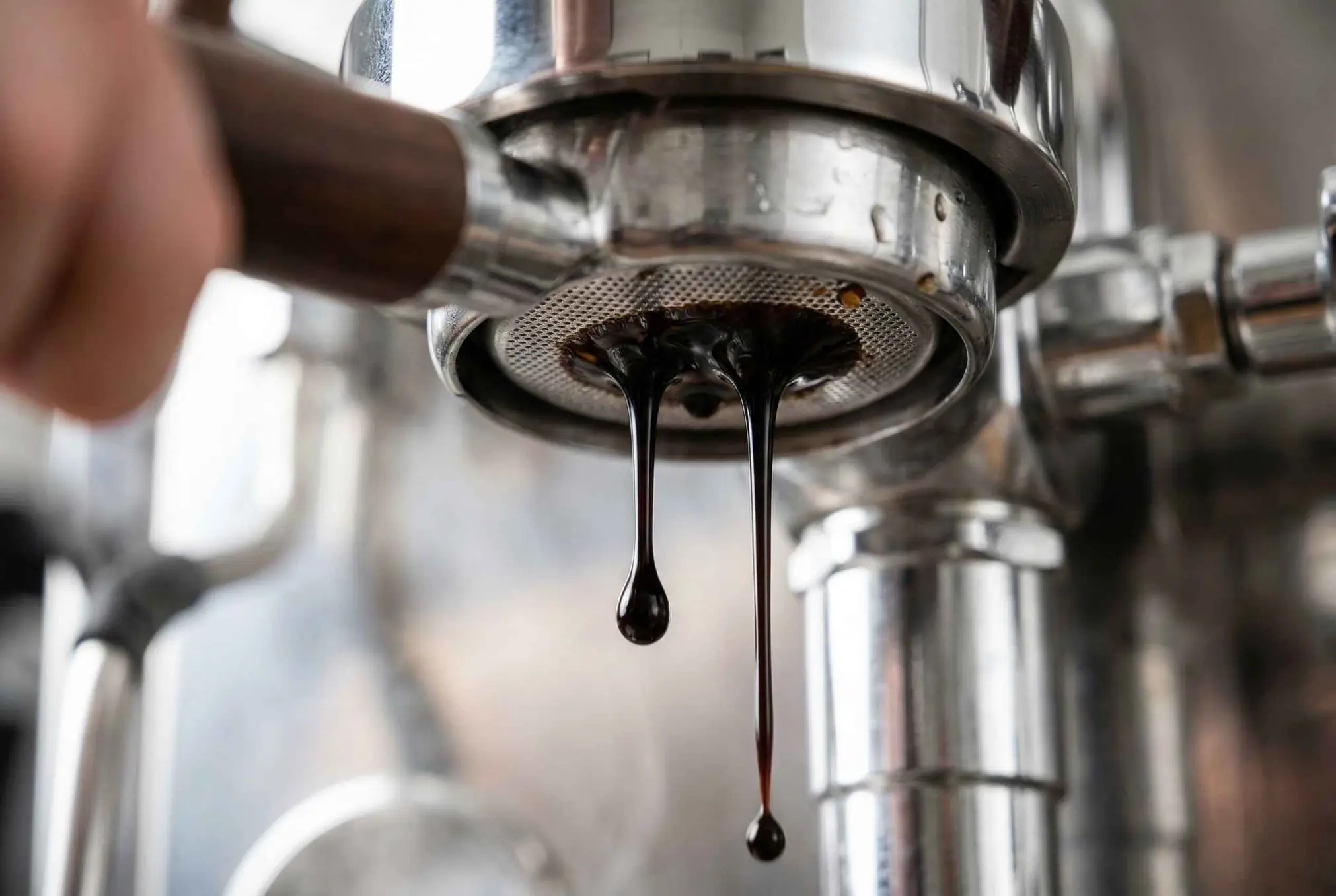
The 3 Primary Causes of a Slow Espresso Shot
Troubleshooting espresso requires changing one variable at a time. If you change your grind size and your dose simultaneously, you will not know which adjustment fixed the problem.
1. Grind Size Is Too Fine (The Most Common Cause)
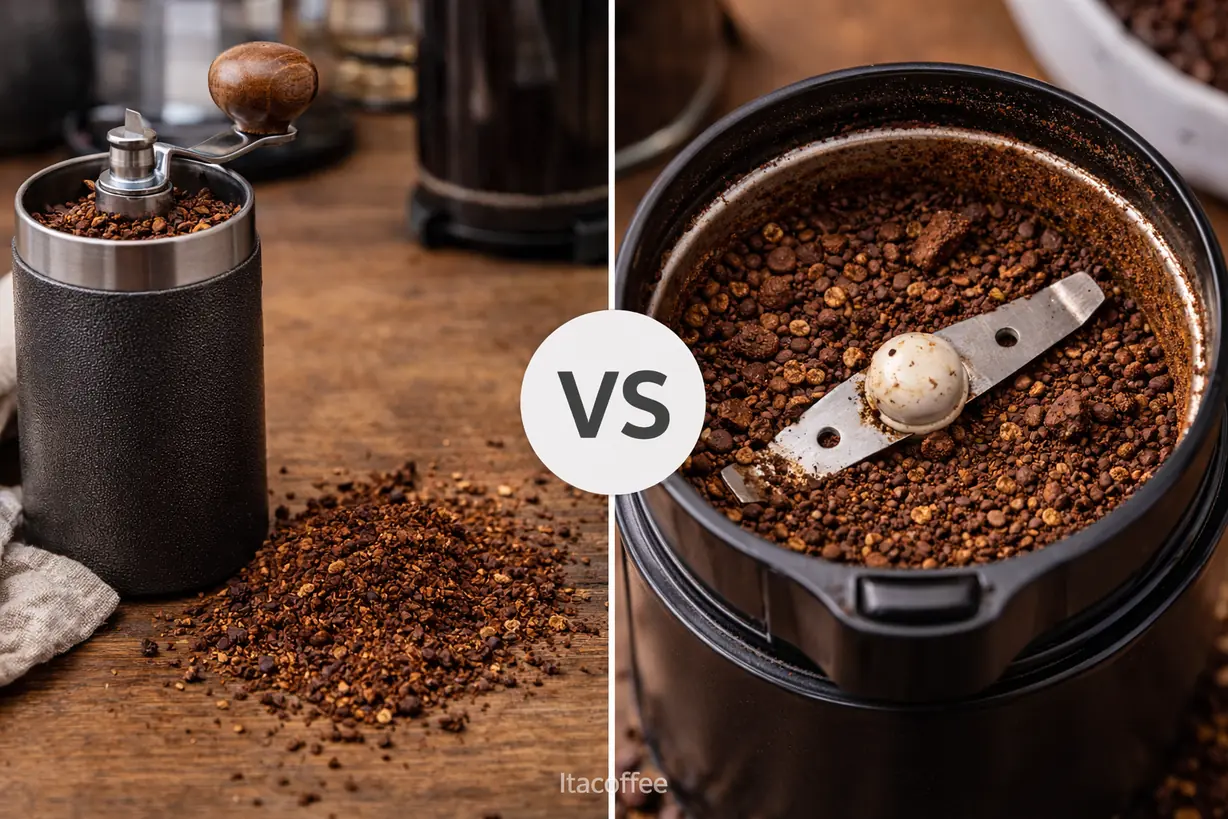
When coffee is ground too finely, the particles pack closely together, leaving virtually no interstitial space (gaps) for the water to travel through.
- The Physics: Finer grinds exponentially increase the total surface area of the coffee. High surface area combined with zero space creates a highly restrictive barrier.
- The Fix: Adjust your grinder to a slightly coarser setting. This increases the space between particles, allowing water to flow at a steady rate.
Understanding how particle size dictates flow is a mandatory skill. Read more on the physics of surface area in our coffee grind size extraction guide.
2. Dose Is Too High
The dose is the total weight of dry coffee in your basket. Every basket has a specific capacity (e.g., 18 grams).
- The Physics: If you put 20 grams of coffee into an 18-gram basket, the puck becomes too thick. A thicker puck means water has to travel through more material, increasing total resistance. Furthermore, when the coffee expands as it absorbs water, it may hit the shower screen, choking the machine entirely.
- The Fix: Weigh your input. If your dose is higher than the basket’s rating, reduce it by 0.5g to 1g. Use a scale to ensure precision (see do you really need a coffee scale?).
3. Tamp Pressure (A Persistent Myth)
Many beginners believe that a slow shot is caused by “tamping too hard.”
- The Physics: Coffee grounds can only be compressed to a certain point before they max out in density. Whether you apply 15 lbs or 30 lbs of pressure, a 9-bar pump (which applies over 130 lbs of pressure) will equalize it.
- The Fix: Tamp until you feel the coffee push back and stop compressing. Ensure it is level. Do not attempt to fix a slow flow rate by “tamping lighter.” Instead, fix the grind or the dose.
Step-by-Step Troubleshooting Method
When faced with a choked shot, follow this strict order of operations:
- Check your dose: Ensure your dry weight exactly matches your target (e.g., 18.0g). If the dose is consistent, move to step 2.
- Adjust the grind: Move the burrs slightly coarser. Purge a few grams of coffee from the grinder to clear out the old fine grounds.
- Pull another shot: Keep your yield (e.g., 36g) exactly the same.
- Evaluate time and taste: If the shot pulls in 25–30 seconds but tastes bitter, your extraction time is correct, but your yield or temperature may need adjusting.
Flow Rate Comparison Matrix
Understanding extremes helps dial in the center. Here is how a slow shot compares to its opposite problem.
| Symptom | Flow Characteristics | Flavor Profile | Primary Fix |
|---|---|---|---|
| Running Too Slow | Dripping, uneven, >35 seconds | Harsh, bitter, heavy, astringent | Grind coarser or decrease dose |
| Target Extraction | Steady stream, “mouse tail”, 25-30 seconds | Balanced sweetness and acidity | Maintain variables |
| Running Too Fast | Gushing, pale, <20 seconds | Sour, watery, salty, empty | Grind finer or increase dose |
Final Thoughts from itacoffee
Consistency in espresso brewing comes from treating the process as a data-driven exercise rather than guesswork. When a shot runs too slow, it is simply the physics of resistance telling you that the puck is too dense.
At itacoffee, we emphasize that expensive equipment cannot bypass the laws of physics. Learn to isolate your variables—lock in your dose, strictly control your yield, and use grind size as your primary tool to dictate flow rate. Once you master this geometry, repeatability follows naturally.
— itacoffee | Coffee Knowledge for the analytical brewer
Recommended Next Guides
- Master the relationship between input and output → Coffee Brew Ratios Explained
- Experiencing the opposite problem? → Espresso Shot Running Too Fast
- Understand foundational mechanics → Coffee Extraction Explained