In precise coffee brewing, a sharp, lip-puckering sourness is not random. It is a measurable signal of extraction imbalance. In most cases, it reflects under-extraction rather than a defect in the beans themselves.
Understanding why coffee tastes sour allows you to correct the mechanism instead of blaming the raw material. When water acts as a solvent, it dissolves compounds from coffee in a predictable sequence. If extraction stops prematurely, balance never forms.
Two physical principles govern sourness:
- Solubility sequence: Organic acids dissolve earlier than complex sugars and structural compounds.
- Extraction yield: If brewing stops too early, sweetness never reaches sufficient concentration to balance acidity.
Once you understand these principles, brewing becomes calibration rather than guesswork.
In This Guide
The Chronology of Extraction
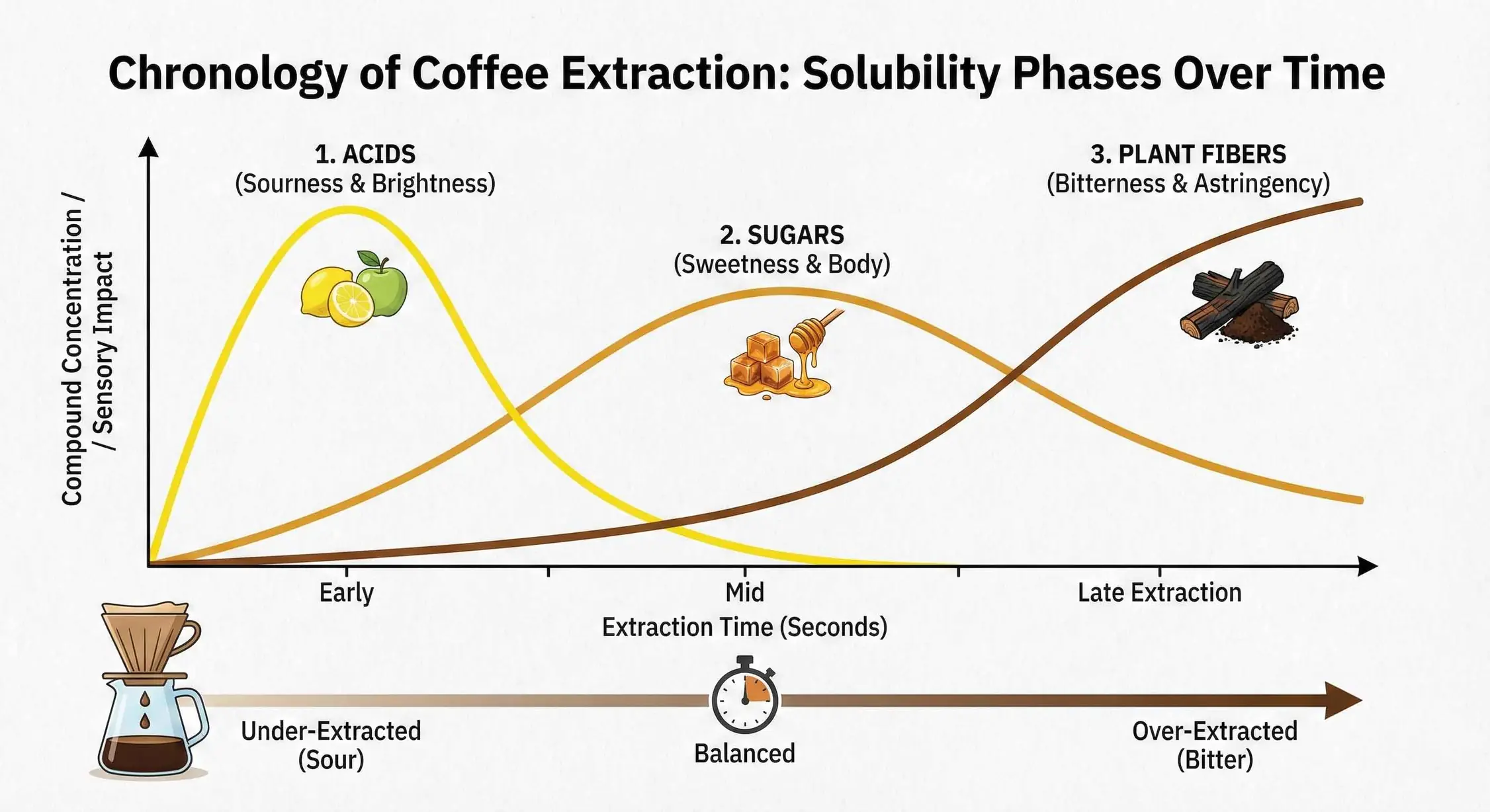
Coffee contains hundreds of soluble compounds. They do not dissolve randomly. They extract in a general progression influenced by molecular structure, surface area, temperature, and time.
- Phase 1: Acids and Aromatics. Highly soluble organic acids and volatile compounds dissolve rapidly. These produce brightness, fruit notes, and sharpness.
- Phase 2: Sugars and Maillard Compounds. Larger carbohydrate structures and sweetness-producing compounds extract next, adding body and balance.
- Phase 3: Structural Plant Compounds. Heavier compounds and phenolics extract later, contributing bitterness and astringency.
If your cup tastes overwhelmingly sour and thin, extraction likely stalled during Phase 1. Water dissolved acids but did not extract enough sugars to counterbalance them.
Acidity vs. Sourness: A Critical Distinction
Not all sharp sensations are defects. Acidity and sourness are related but not identical sensory experiences.
Acidity (Desirable Brightness): Clean, lively, and structured. Comparable to the crisp tartness of green apple or ripe citrus. Many high-altitude coffees naturally contain elevated levels of organic acids such as malic and citric acid.
Sourness (Under-Extraction): Harsh, thin, and unbalanced. Often accompanied by weak body and a short, hollow finish.
Roast level plays a role here. Lighter roasts preserve more intrinsic acids, while darker roasts reduce acidity through thermal degradation. For a deeper breakdown, see
Dark Roast vs Light Roast: What Roasting Really Changes in Coffee Flavor
.
Four Mechanical Adjustments That Fix Sour Coffee
The objective is simple: increase extraction yield in a controlled way. According to industry standards such as the
Specialty Coffee Association Brewing Control Chart
, balanced extraction typically falls between 18%–22%.
1. Grind Finer (Increase Surface Area)
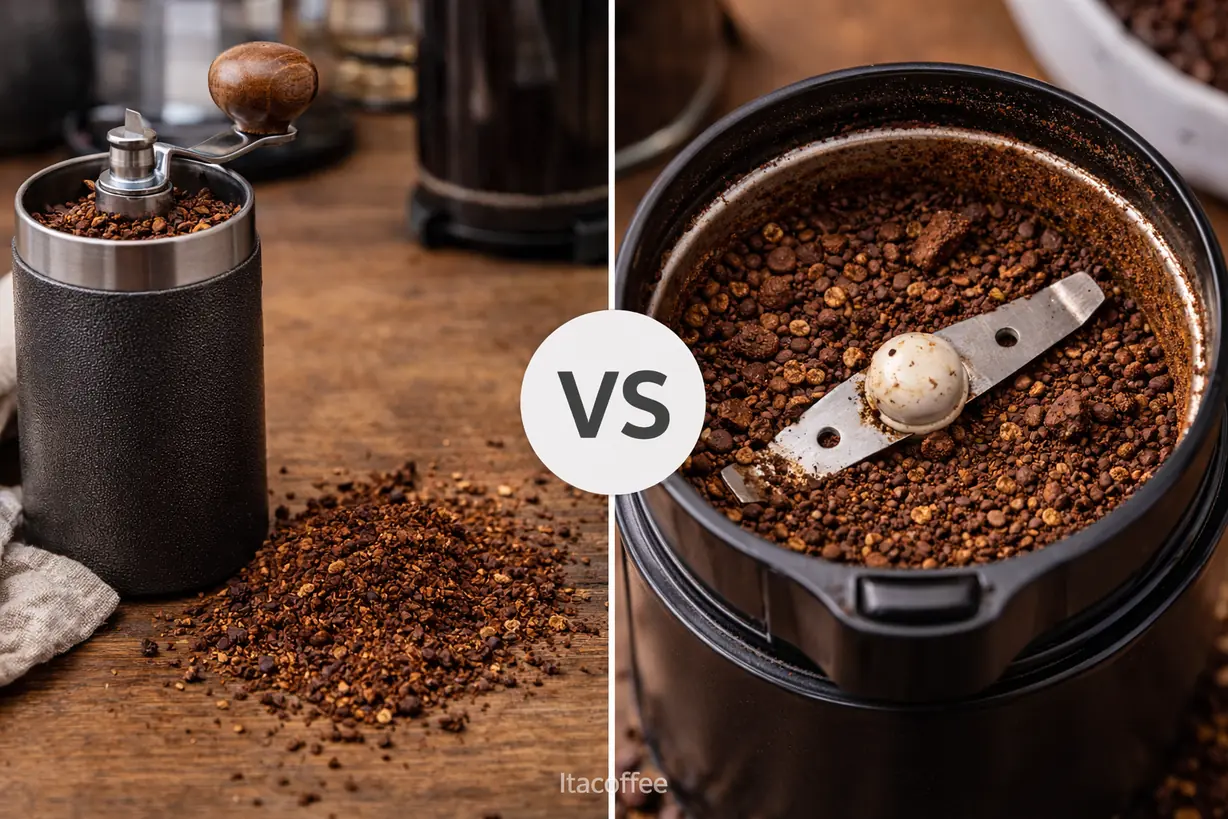
A coarse grind reduces available surface area and speeds water flow. Grinding finer increases particle exposure and slows percolation, allowing water to dissolve more sugars.
Further reading:
Coffee Grind Size Extraction Explained: The Physics of Surface Area
.
2. Raise Water Temperature (Increase Solvent Energy)
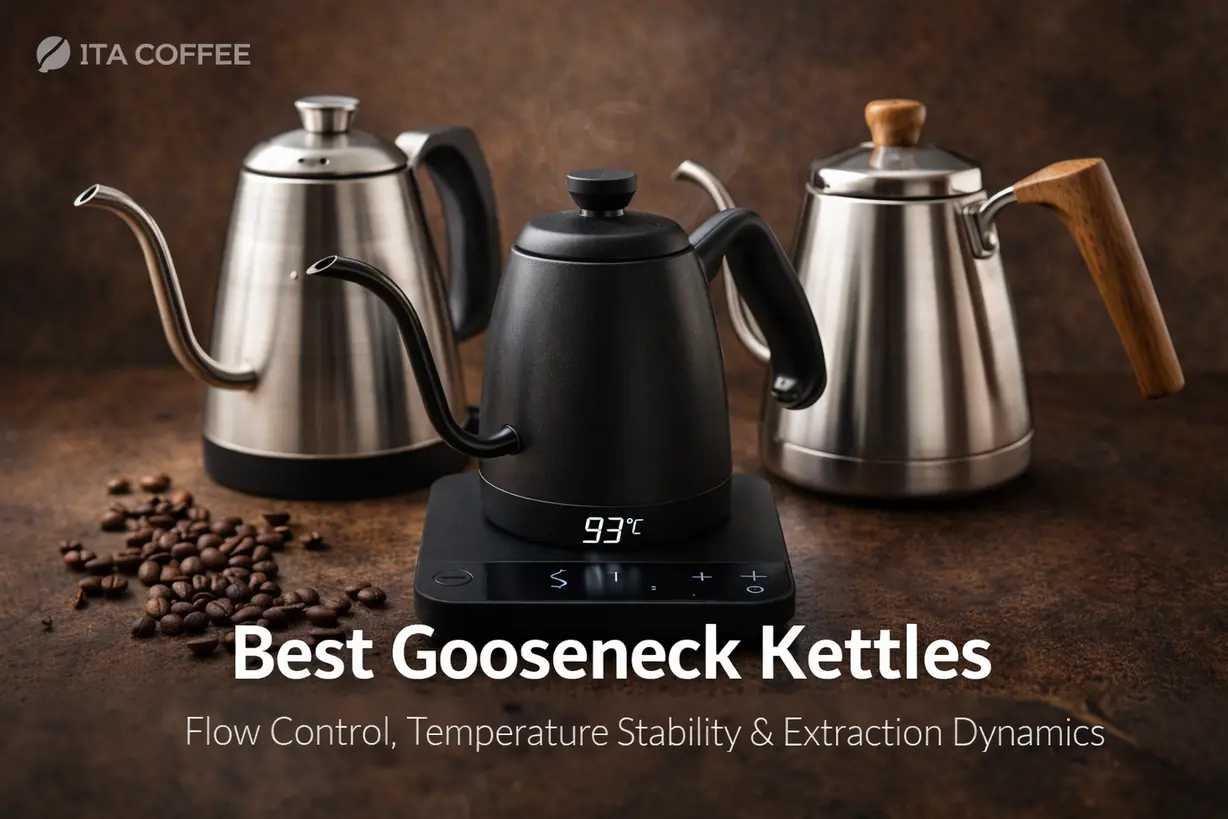
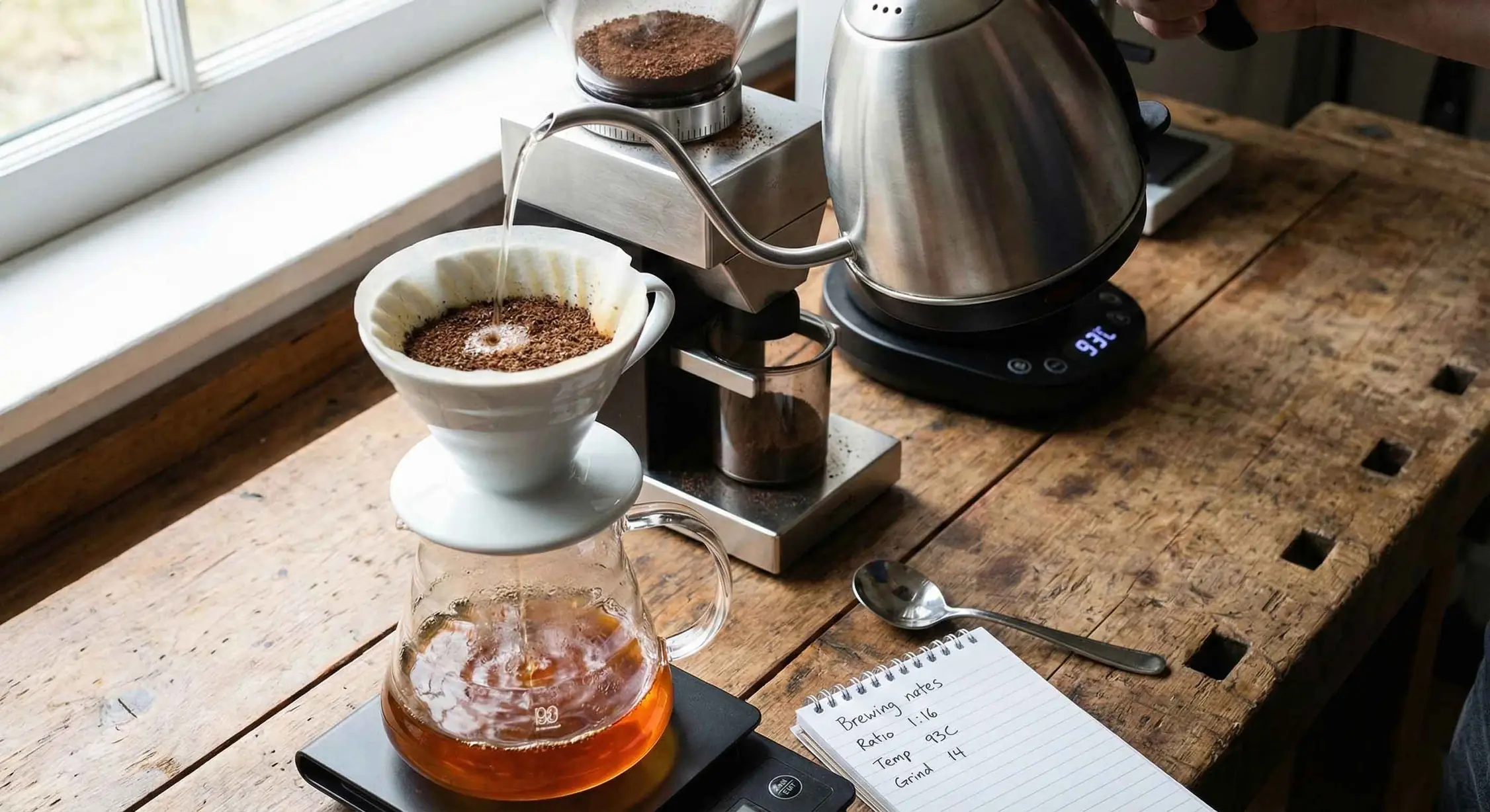
Temperature increases molecular movement. Water below 90°C (194°F) often lacks sufficient energy to dissolve heavier sweetness-producing compounds efficiently. A target range of 93°C–96°C (200°F–205°F) improves solubility for most light and medium roasts.
Further reading:
Water Temperature for Coffee: 3 Science-Backed Rules for Better Extraction
.
3. Extend Brew Time (Increase Contact Duration)
If drawdown is too fast, extraction remains incomplete. Slower pouring, controlled agitation, or slightly finer grind settings can extend contact time and push extraction deeper into the sweetness phase.
4. Adjust the Brew Ratio (Control Concentration and Yield)
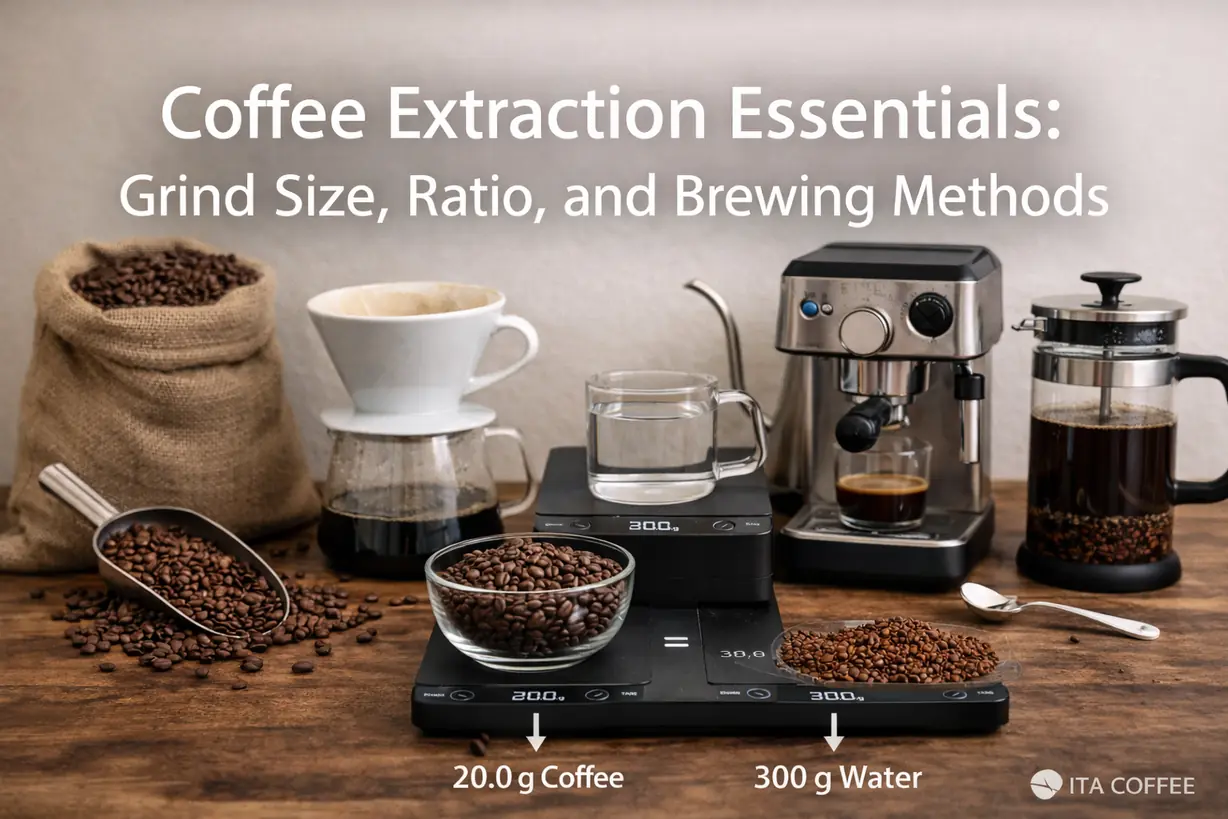
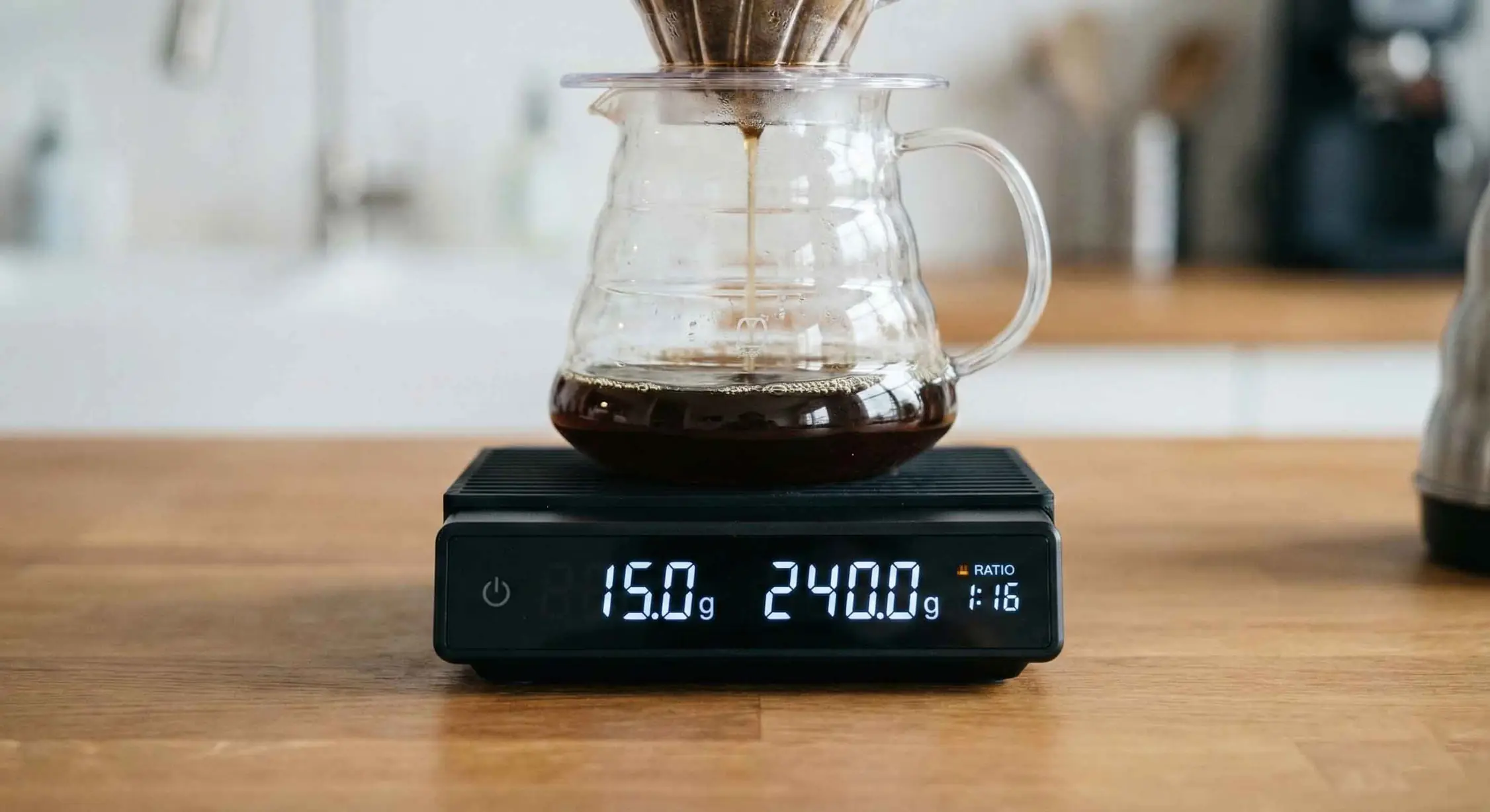
Very tight brew ratios (such as 1:12) can amplify sourness because acids remain highly concentrated. Widening to 1:16 or 1:17 increases solvent volume, often allowing more complete extraction while slightly diluting harsh acidity.
Further reading:
Coffee Brew Ratios Explained: A Technical Guide to Precision Extraction
.
Practical Diagnosis Table
Calibration rule: Change only one variable at a time.
| Taste Result | Likely Cause | Primary Adjustment |
|---|---|---|
| Sharp, thin body, fast drawdown | Under-extraction | Grind finer or increase temperature |
| Bitter, dry, heavy, slow drawdown | Over-extraction | Grind coarser or reduce temperature |
Frequently Asked Questions
Can coffee be both sour and bitter?
Yes. This often results from uneven extraction caused by channeling or poor grind uniformity. Fine particles over-extract while larger particles under-extract, creating simultaneous bitterness and sourness.
Do light roasts taste more sour?
Light roasts retain more organic acids and are physically denser. They require finer grinding and higher temperatures for proper extraction. Apparent “sourness” in light roasts is frequently under-extraction rather than inherent flavor.
Final Thought
Sour coffee is feedback. It signals that extraction ended too early or proceeded unevenly.
By adjusting surface area, temperature, time, and ratio deliberately, you transform a harsh cup into a balanced one. Brewing is not mystical. It is controlled dissolution governed by physics.
— ITA Coffee | Brewing Guides for Curious, Thoughtful Coffee Makers
Editorial note: This article was developed with AI-assisted drafting and human review to ensure clarity, accuracy, and an educational, non-commercial tone.