At ITA Coffee, reviews are built on clarity, independence, and real-world use.
The Reviews section focuses on one principle: coffee gear should be evaluated based on how it affects extraction, control, and repeatability — not aesthetics or perceived complexity.
This guide explains how to build a coffee setup that fits you, not based on trends, but on how different tools interact with extraction variables.
In This Guide
What Does “A Coffee Setup That Fits You” Actually Mean?
A “fit” setup is not defined by price or brand. It is defined by alignment between:
- Your brewing method
- Your desired flavor profile
- Your ability to control variables
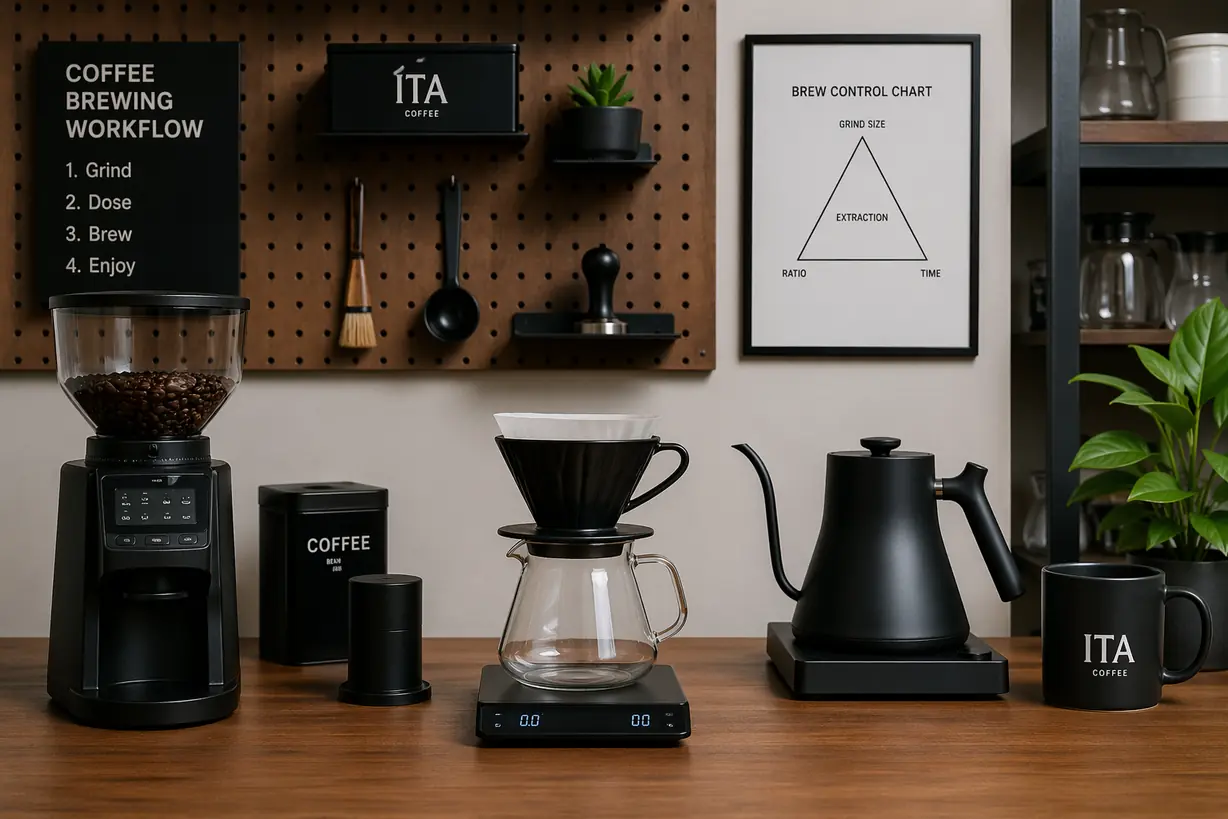
As explained in How Brewing Methods Affect Coffee Flavor, different brewing styles fundamentally change extraction behavior.
Key principle: A good setup reduces variability and increases repeatability.
Step 1: Define Your Brewing Method (The Structural Decision)
Your brewing method determines the entire structure of your setup.
Percolation vs Immersion
- Percolation (e.g., pour over): water flows through coffee → requires flow control
- Immersion (e.g., French press): coffee fully saturated → requires time control
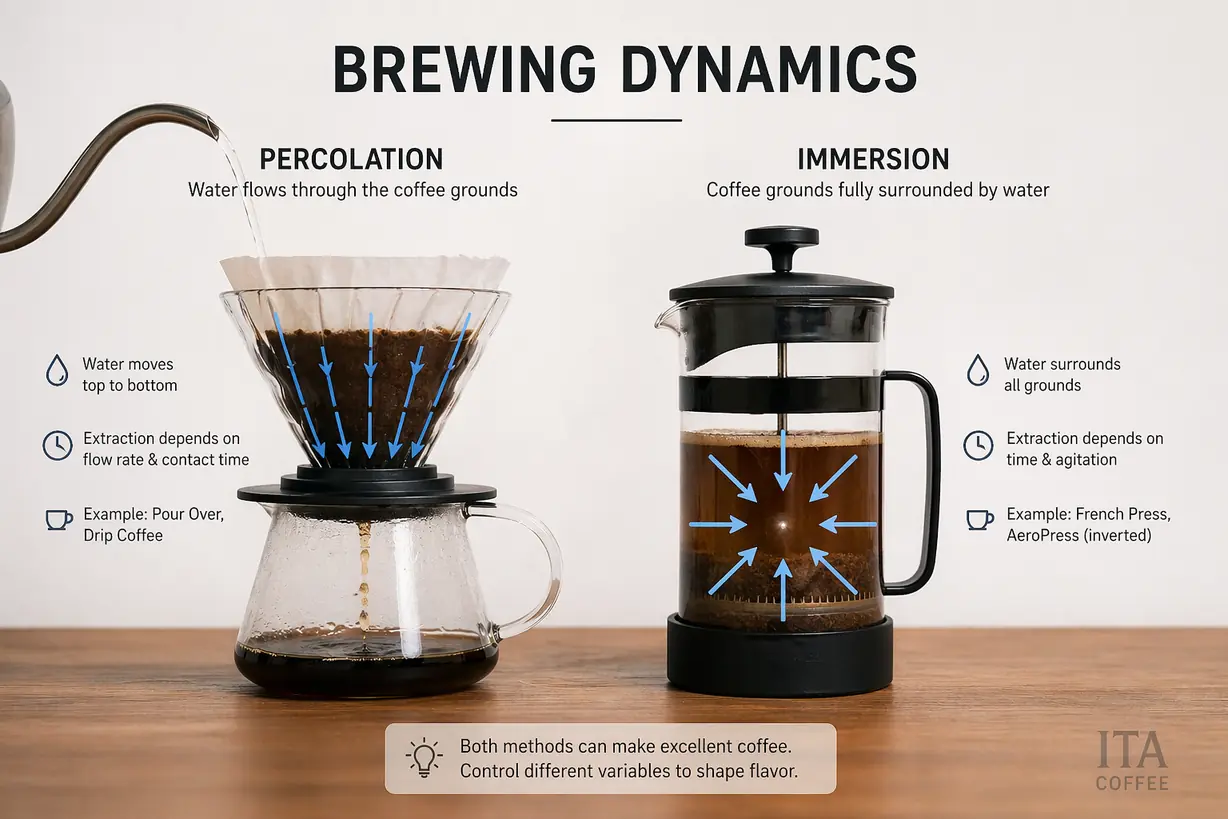
This distinction is explained in Immersion vs Percolation: Coffee Extraction Physics.
Why This Matters
Each method demands different tools:
- Pour over → kettle with flow control
- French press → grinder consistency more critical than pouring
- Espresso → pressure + grind precision dominate
Choosing gear before choosing method leads to structural mismatch.
Step 2: Understand Extraction Variables Before Buying Equipment
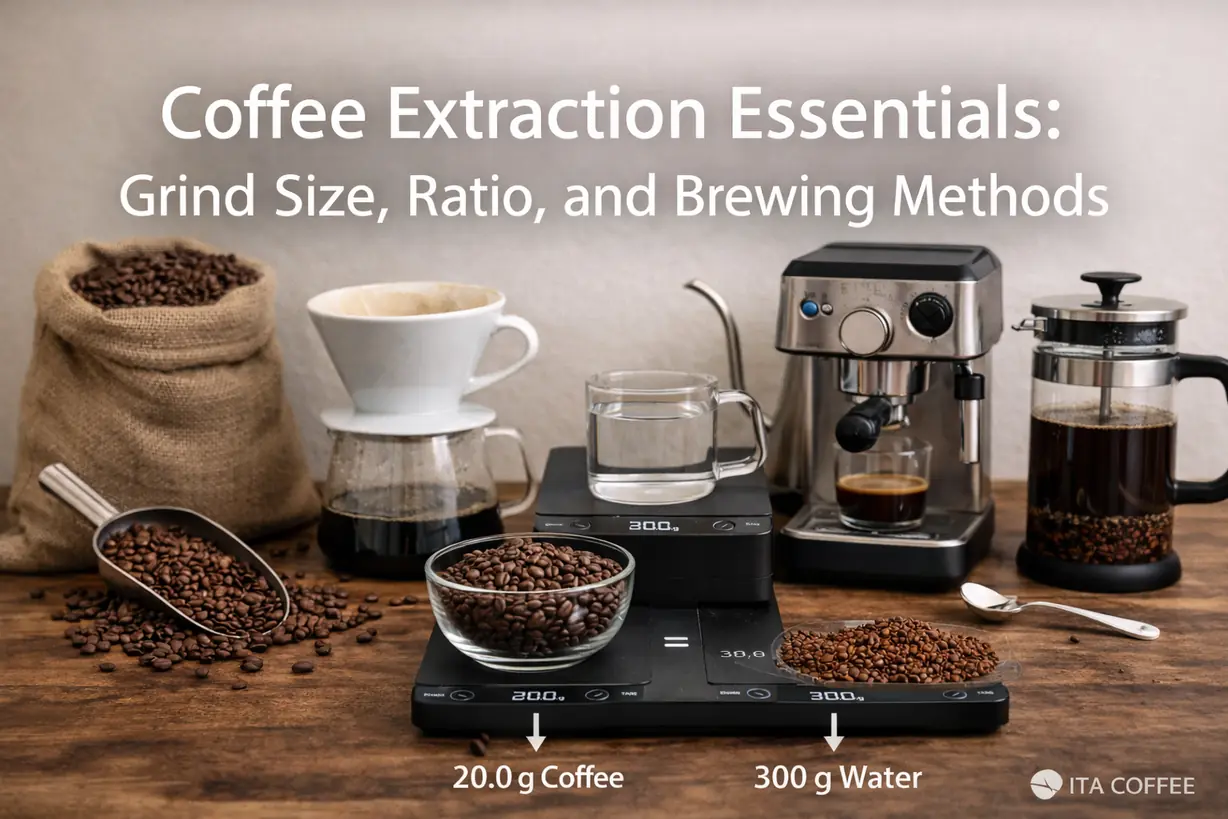
All coffee setups exist to control three core variables:
- Grind size (surface area)
- Brew ratio (concentration)
- Time (contact duration)
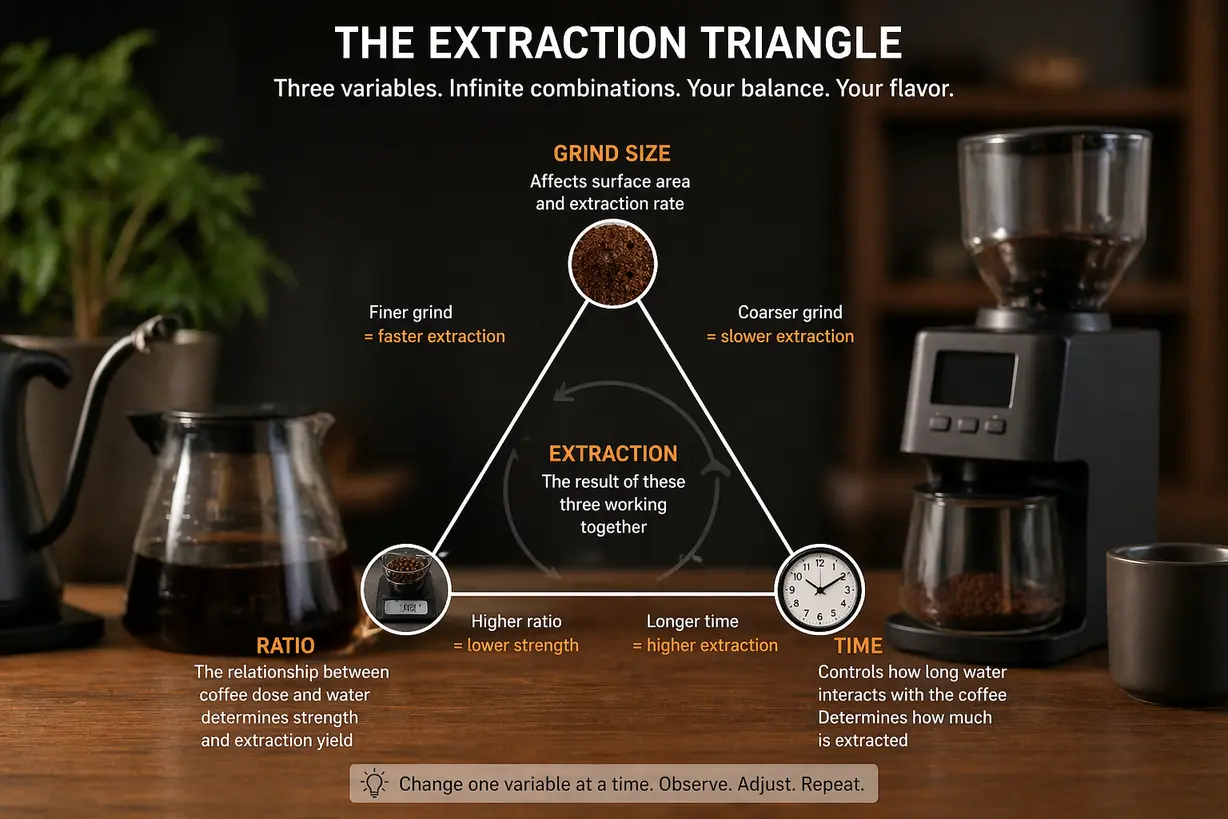
As detailed in Coffee Brewing Basics: Grind Size, Ratio, and Time, these variables interact continuously.
Definition: Extraction
Extraction is the process of dissolving soluble compounds from coffee grounds into water.
See Coffee Extraction Explained for a full breakdown.
Implication
Every piece of gear must improve control over one or more of these variables.
If it does not, it does not improve your coffee.
Step 3: Build Around Grind Consistency (The Foundation)
The grinder is the most structurally important component.
What Is Grind Consistency?
Grind consistency refers to how uniform particle sizes are after grinding.
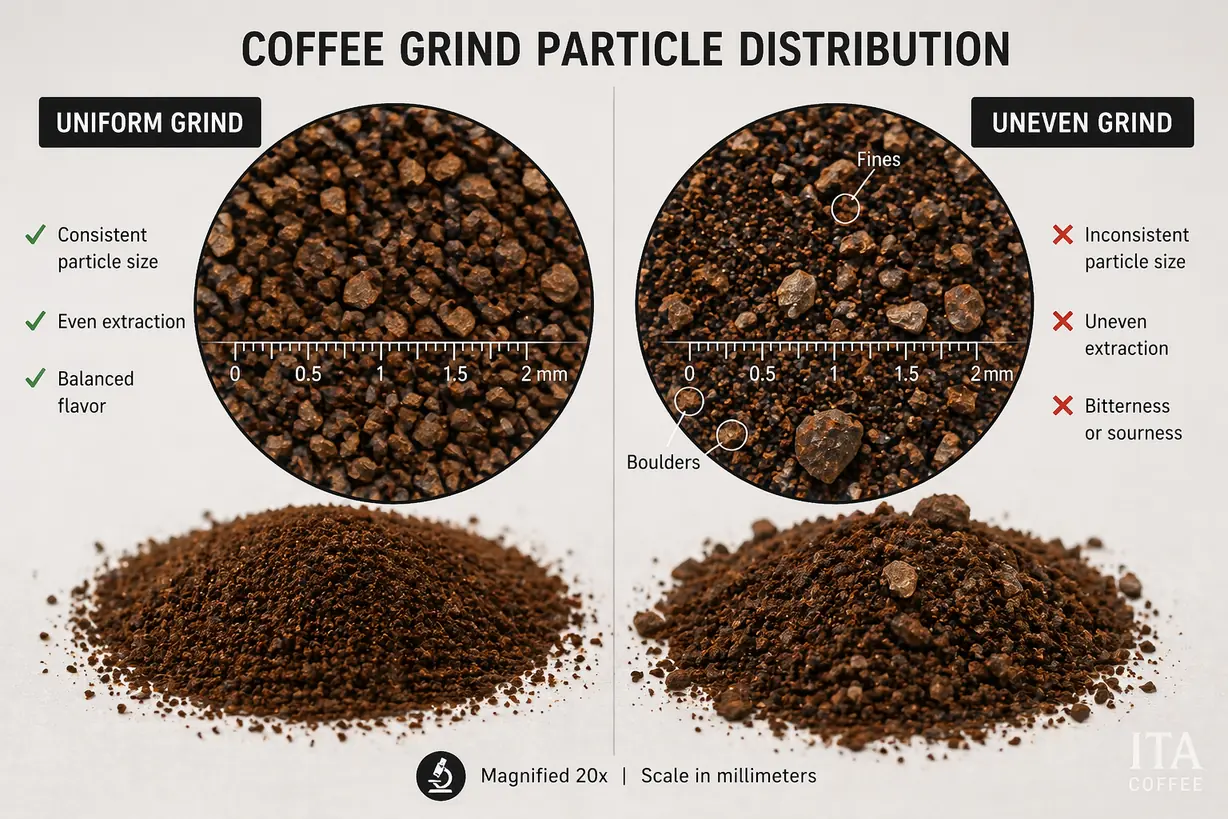
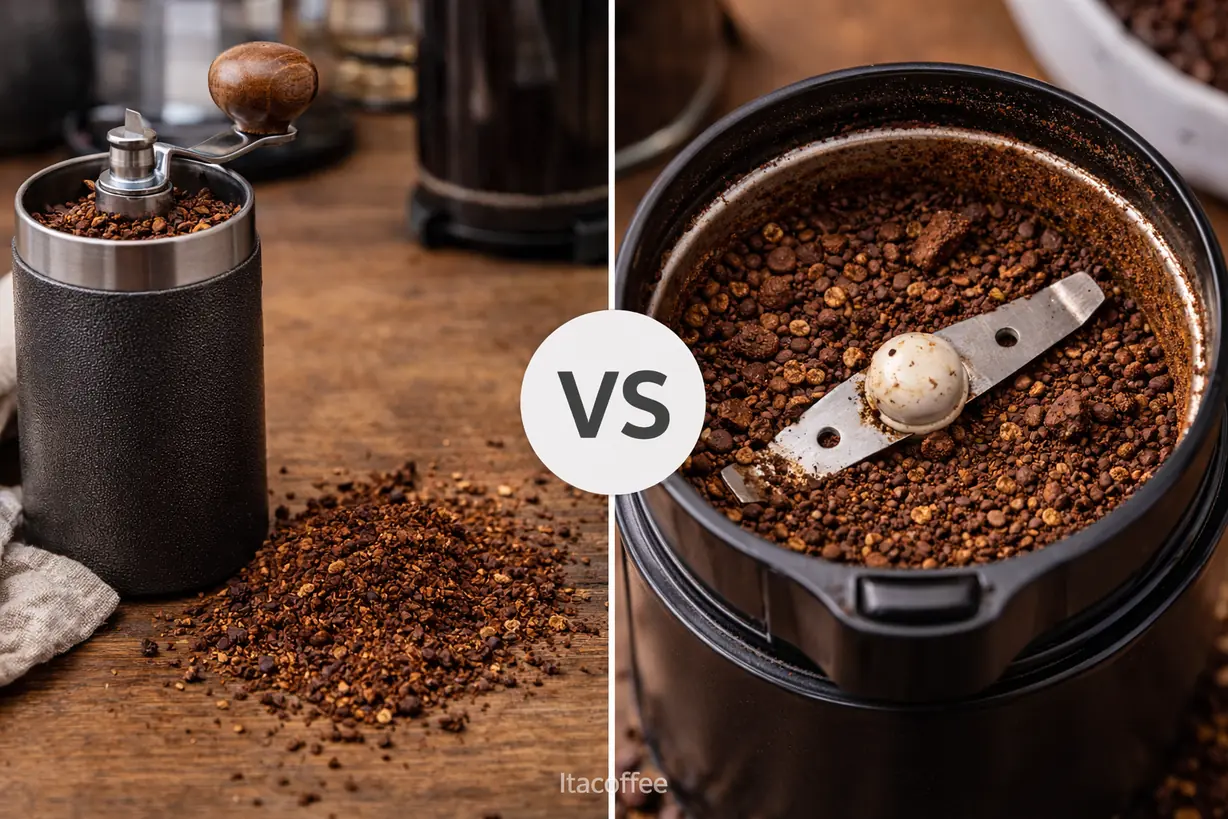
As explained in Burr vs Blade Grinders:
- Uniform particles → even extraction
- Mixed particles → simultaneous under + over extraction
Key Insight
Grind consistency determines extraction stability more than any other tool.
Practical Rule
- Match grinder to brewing range (coarse vs fine)
- Avoid grinders that produce excessive fines
Step 4: Match Tools to Control Requirements
Each tool should serve a specific control function.
1. Scale → Controls Ratio
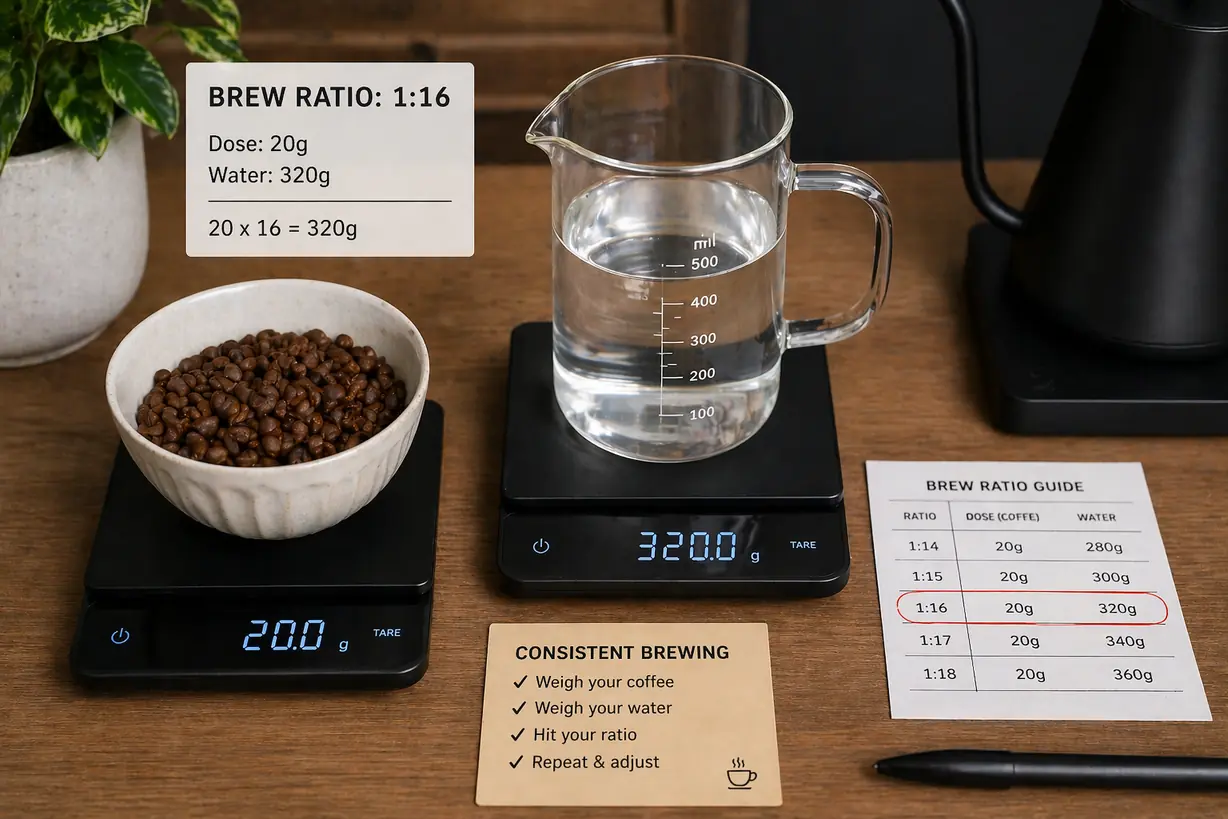
As explained in Coffee Brew Ratios Explained, ratio determines strength and extraction balance.
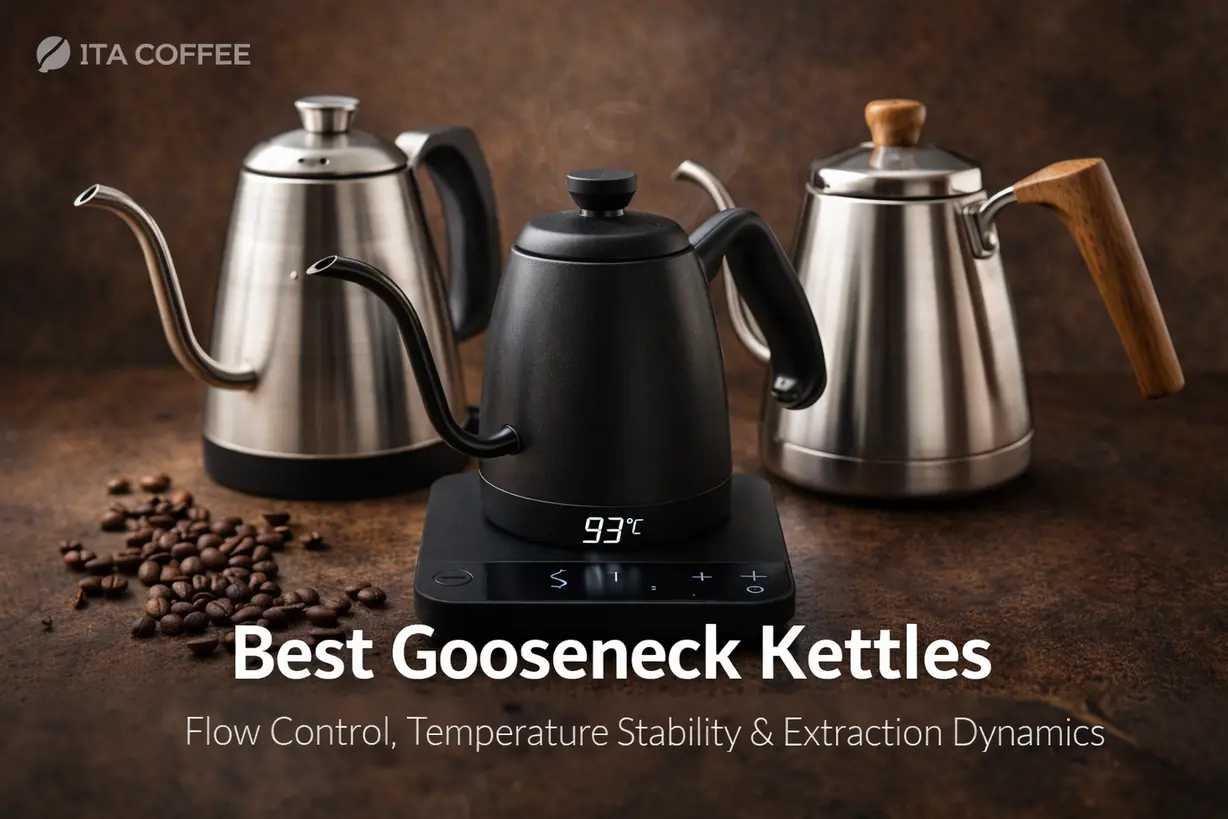
2. Kettle → Controls Flow
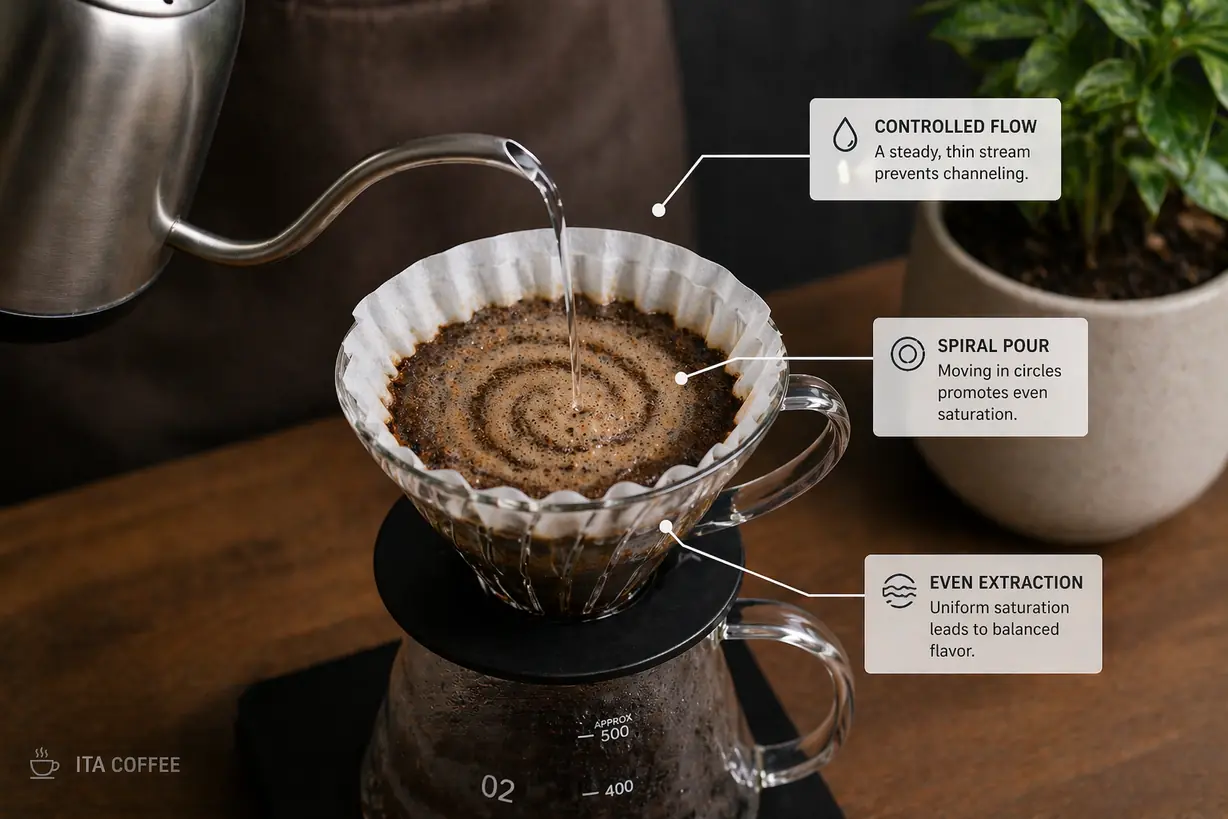
Flow affects extraction uniformity, as detailed in What Is Percolation Brewing?.
3. Timer → Controls Time
Time determines how much is extracted.
Key Principle
Each tool should map directly to one variable.
Avoid tools that duplicate functions without improving control.
Step 5: Design for Repeatability, Not Complexity
A common mistake is building a setup that is too complex to reproduce consistently.
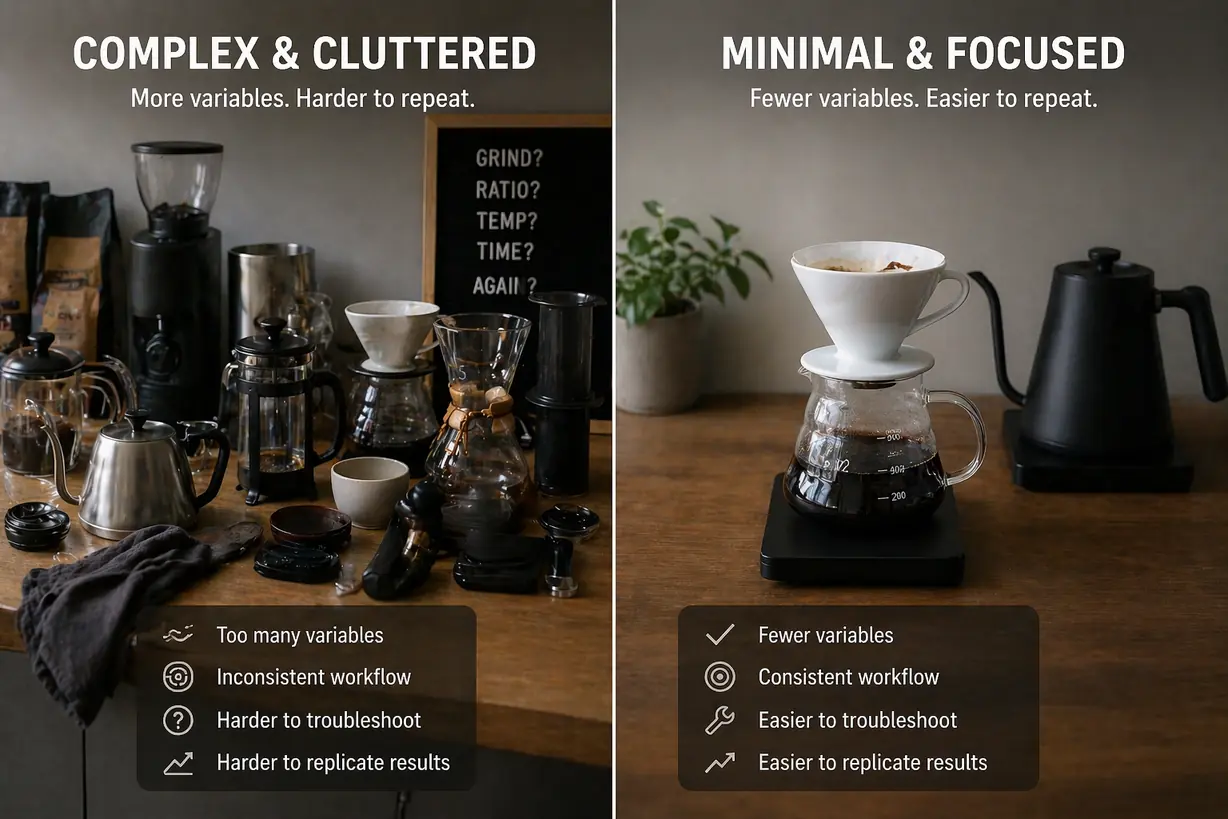
This aligns with Minimal Coffee Gear Setup.
Why Simplicity Wins
- Fewer variables → easier diagnosis
- Consistent workflow → repeatable results
- Clear cause-effect relationships
Definition: Repeatability
Repeatability is the ability to produce the same result under the same conditions.
Step 6: Align Setup With Your Workflow (Not Idealized Brewing)
A technically perfect setup is useless if it does not match your daily routine.
Consider:
- Time available per brew
- Tolerance for manual control
- Consistency vs flexibility preference
For example:
- Busy workflow → immersion methods (stable)
- Precision workflow → pour over (high control)
Key Insight
The best setup is the one you can execute consistently.
Step 7: Avoid the “Upgrade Trap”
Many users continuously upgrade gear instead of improving technique.
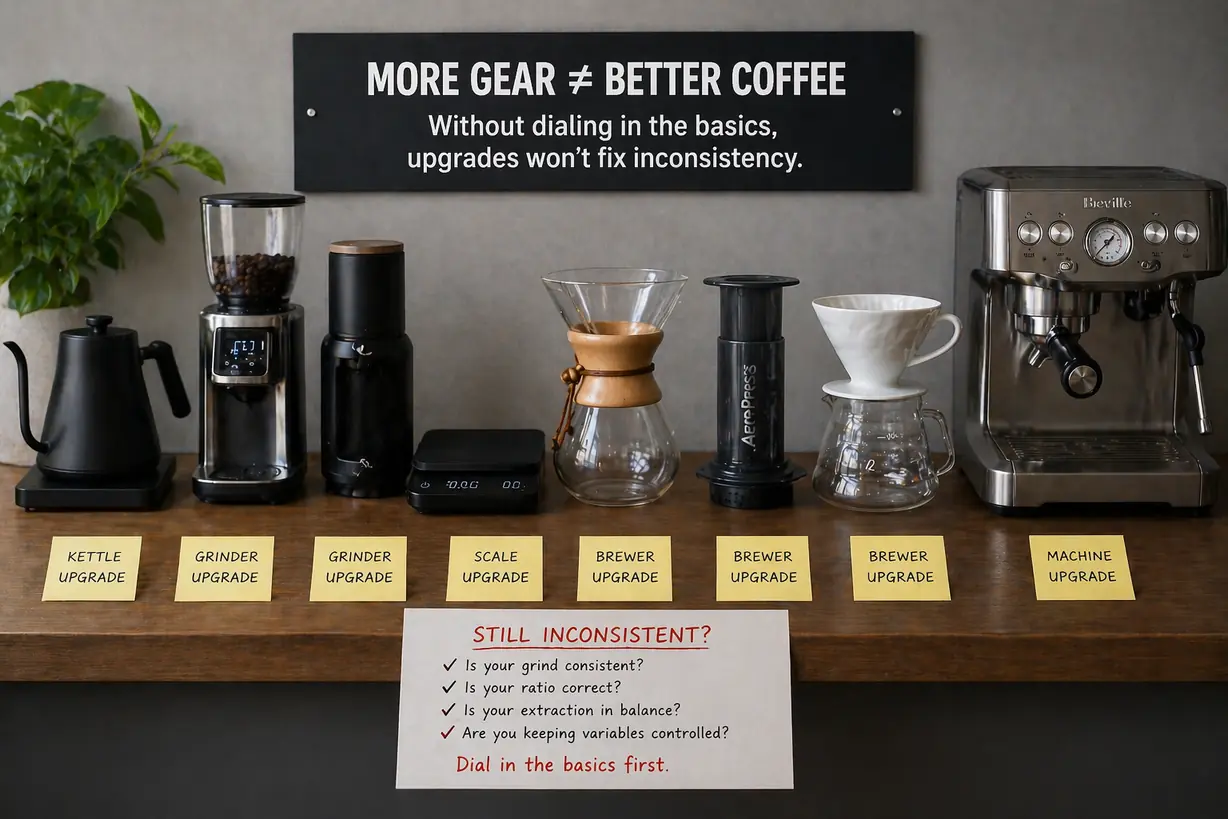
As explained in Why Expensive Coffee Gear Doesn’t Fix Bad Coffee:
- Extraction errors remain unchanged
- Technique limitations persist
Conclusion
Better gear increases potential — not performance.
How to Build a Coffee Setup That Fits You (Summary Framework)
1. Choose Brewing Method First
- Defines extraction structure
2. Learn Extraction Fundamentals
- Grind, ratio, time relationships
3. Invest in Grind Consistency
- Foundation of extraction quality
4. Add Tools That Improve Control
- Scale → ratio
- Kettle → flow
- Timer → time
5. Optimize for Repeatability
- Simplify workflow
6. Match Setup to Daily Reality
- Consistency over theoretical perfection
Conclusion: A Coffee Setup Is a System, Not a Collection of Tools
A well-designed coffee setup is not defined by how many tools you own, but by how effectively those tools control extraction.
The correct question is not “What should I buy?” but “What variable does this improve?”
At ITA Coffee, we encourage you to treat your setup as a controlled system. Adjust one variable at a time — grind size, ratio, or flow — and observe the result. For deeper understanding, continue with our Coffee Knowledge and Brewing Guides sections.
Internal Links Log
- “How Brewing Methods Affect Coffee Flavor” → https://www.itacoffee.com/how-brewing-methods-affect-coffee-flavor-from-beans-to-cup/
- “Immersion vs Percolation: Coffee Extraction Physics” → https://www.itacoffee.com/immersion-vs-percolation-flavor-physics/
- “Coffee Brewing Basics: Grind Size, Ratio, and Time” → https://www.itacoffee.com/coffee-brewing-basics-grind-size-ratio-and-time/
- “Coffee Extraction Explained” → https://www.itacoffee.com/coffee-extraction-explained/
- “Burr vs Blade Grinders” → https://www.itacoffee.com/burr-vs-blade-coffee-grinders-whats-the-real-difference-and-why-it-matters/
- “Coffee Brew Ratios Explained” → https://www.itacoffee.com/coffee-brewing-ratios-explained/
- “What Is Percolation Brewing?” → https://www.itacoffee.com/what-is-percolation-brewing-science/
- “Minimal Coffee Gear Setup” → https://www.itacoffee.com/minimal-coffee-gear-setup/
- “Why Expensive Coffee Gear Doesn’t Fix Bad Coffee” → https://www.itacoffee.com/why-expensive-coffee-gear-doesnt-fix-bad-coffee/