Grinding coffee looks simple: beans go in, grounds come out.
But how those beans are broken apart changes almost everything about flavor, extraction, and repeatability. If you’re new to how grind size, ratio, and time interact, see coffee brewing basics first.
If you’ve ever wondered why one cup tastes balanced while another feels sharp, hollow, or muddy—even with the same beans—the grinder is often the quiet culprit.
This guide explains the real difference between burr grinders and blade grinders, not from a marketing angle, but from how they physically treat coffee beans.
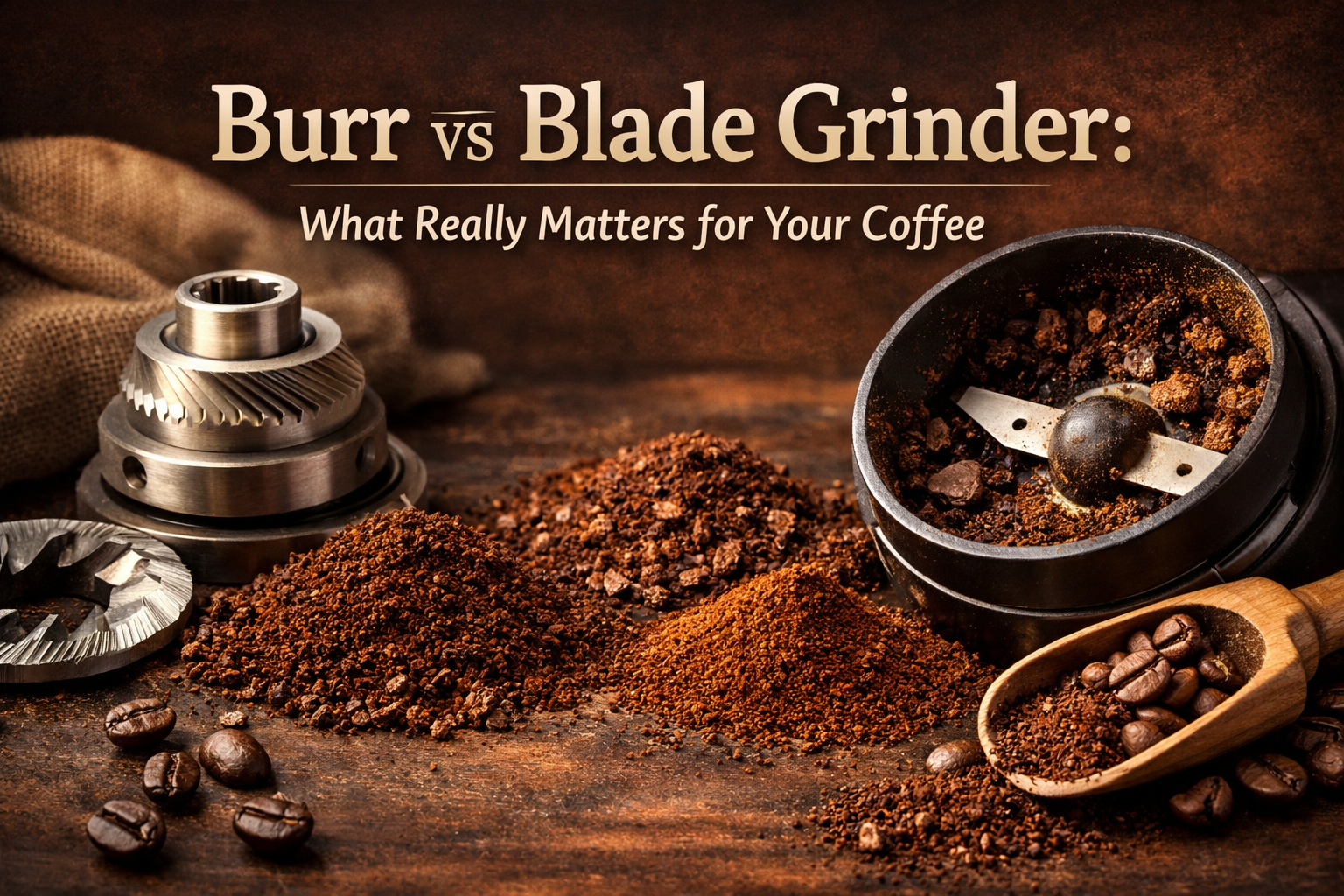
Core Principle: Burr grinders control particle size through distance, while blade grinders rely on unpredictable impact.
| Feature | Blade Grinders | Burr Grinders |
|---|---|---|
| Mechanism | Fast-spinning blades (Chopping) | Two abrasive surfaces (Crushing) |
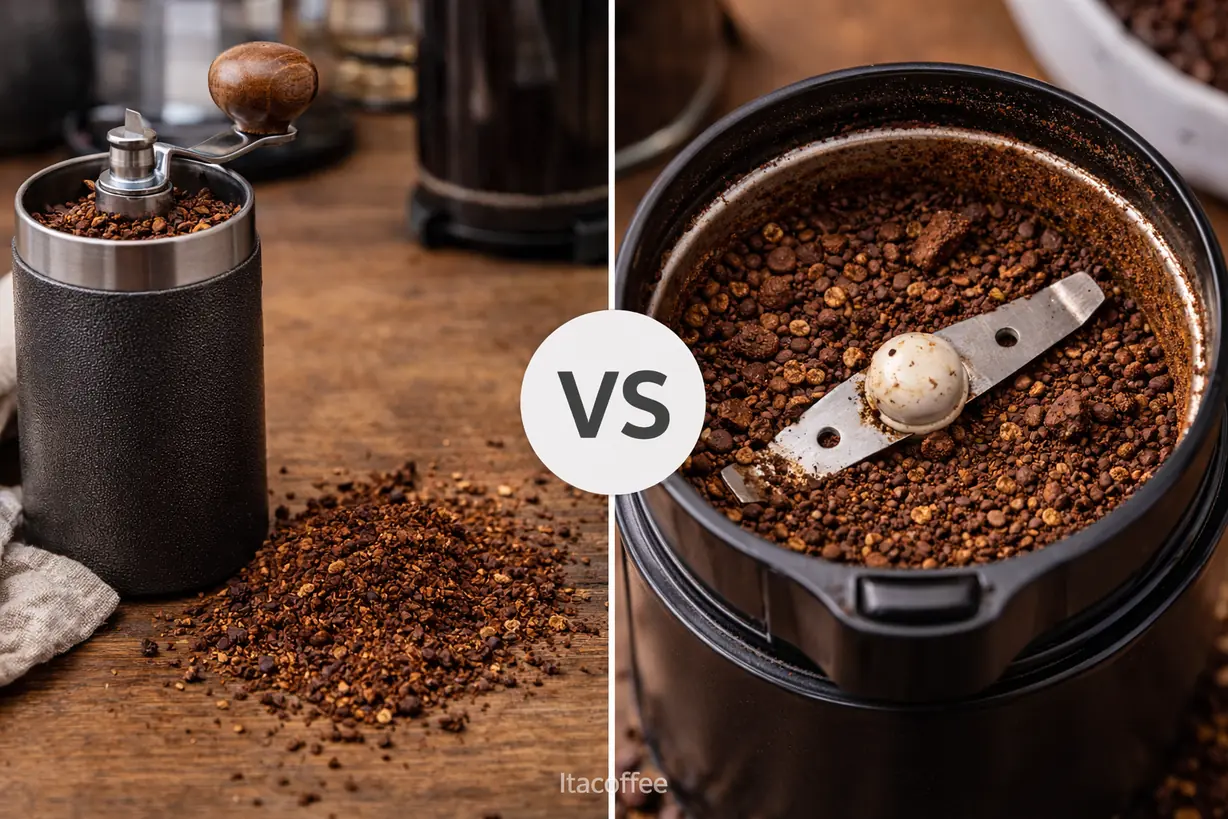
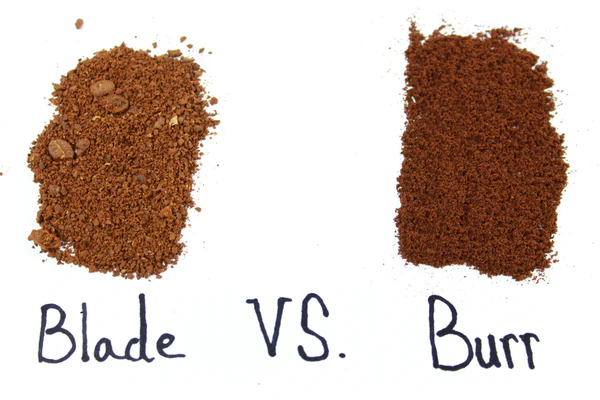
| Consistency | Mixed (Fines + Boulders) | Uniform particle size |
| Control | Time-based (Inaccurate) | Distance-based (Precise) |
In This Guide
How a Blade Grinder Actually Works
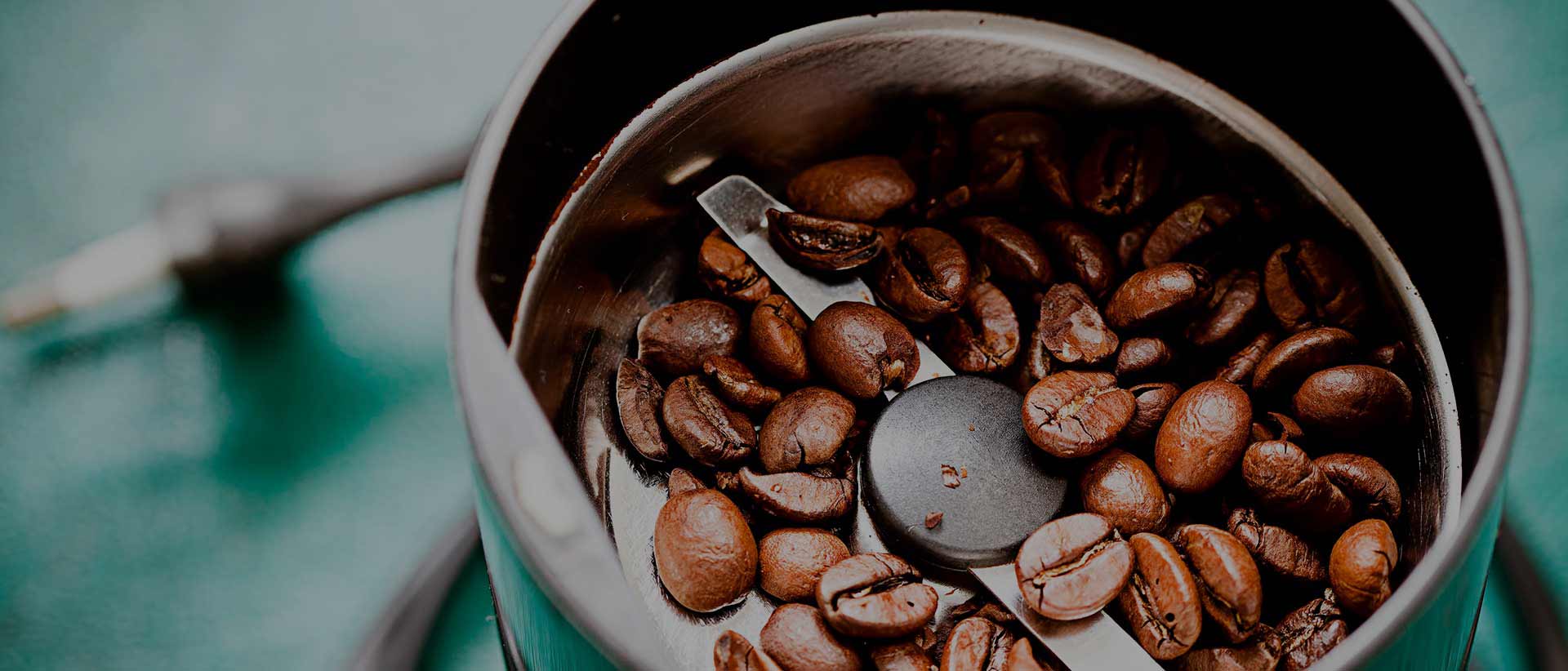
A blade grinder uses a fast-spinning metal blade—similar to a small blender. Instead of grinding, it chops.
- Beans bounce around unpredictably
- Some pieces get hit many times (creating dust/fines)
- Others barely get touched (leaving large boulders)
The grinder has no inherent understanding of “medium” or “coarse.” Time is the only control—and time is a blunt instrument.
The Impact on Extraction
Extraction depends on surface area. When particle size varies wildly, extraction happens unevenly:
- Fines extract too fast → excess bitterness
- Boulders extract too slowly → thin sourness
You’re tasting conflicting extractions in the same cup. For a deeper breakdown of this chemical imbalance, see why coffee tastes bitter or sour.
How a Burr Grinder Works (The Physics of Crushing)
A burr grinder uses two abrasive surfaces (burrs). One stays still while the other rotates. Beans are crushed between them, not chopped in open space.
The distance between the burrs determines the maximum particle size. This mechanical constraint creates:
- Predictable particle size distribution
- Minimal unwanted fines
- High repeatability across different sessions
Instead of chaos, you get controlled fracture. If you are comparing mechanical implementations, see manual vs electric coffee grinders for practical differences.
Burr Geometry: Conical vs. Flat
- Conical burrs: Forgiving, heat-efficient, common in home setups.
- Flat burrs: Extreme uniformity, preferred in high-end commercial environments.
The key point isn’t the geometry—it’s the mathematical control over size.
Grind Consistency and Extraction: The Variable Control
Coffee extraction is a timing problem. Hot water pulls flavor compounds out in stages: Acids first, sugars next, then bitter compounds. If all particles are similar in size, they extract in sync. If not, the process becomes a tug-of-war.
This is why burr grinders are essential for clarity: It’s not about “better gear,” but about removing randomness from the system. For a technical explanation of these stages, see coffee extraction explained.
Practical Application: Which Grinder Suits Your Method?
Different brewing methods demand different precision levels:
- Espresso: Requires micro-adjustments and extreme consistency.
- Pour-over: Demands a narrow particle distribution to manage flow rate.
- French press: Needs coarse particles without the “muddy” fines that clog filters.
Blade grinders struggle with all three because they cannot aim for a target size. If your method relies on flow rate, consistency is no longer optional.
Is a Burr Grinder Always “Better”?
Technically, yes. Practically, context dictates the choice. A blade grinder is inexpensive and works in a pinch, but it limits your ability to improve. A burr grinder makes brewing a predictable science.
However, better gear alone doesn’t compensate for poor technique. See our grounded perspective on why expensive coffee gear doesn’t fix bad coffee. If you are seeking a reliable entry-point for consistency, you can view our Baratza Encore review.
Summary: Logic Over Marketing
This article is meant to clarify a single idea: grinding is a control point, not just a mechanical step. Burr and blade grinders differ because one allows intention while the other relies on chance.
Once particle size becomes predictable, extraction becomes understandable. Turn your brewing from trial-and-error into a repeatable process.
— Coffee Knowledge Series, curated by itacoffee
Editorial note: This article was developed with AI-assisted drafting and human review to ensure technical accuracy and a non-commercial educational tone.