At first glance, pour-over drippers look like simple tools. A funnel, a hole, some paper, and gravity does the rest.
But one quiet detail changes almost everything about how coffee extracts:
the shape of the dripper.
In the discussion of flat-bottom vs conical drippers, the difference is not cosmetic. Shape determines how water moves, how long it stays in contact with coffee, and how evenly extraction unfolds. Once this becomes clear, brewing stops feeling mysterious—and starts feeling predictable.
In This Guide
What a Dripper Really Does
A dripper is not just a holder for coffee grounds. It is a flow regulator.
Every pour-over brewer manages three physical variables at the same time:
- How water spreads across the coffee bed
- How long water stays in contact with the grounds
- How evenly extraction happens from top to bottom
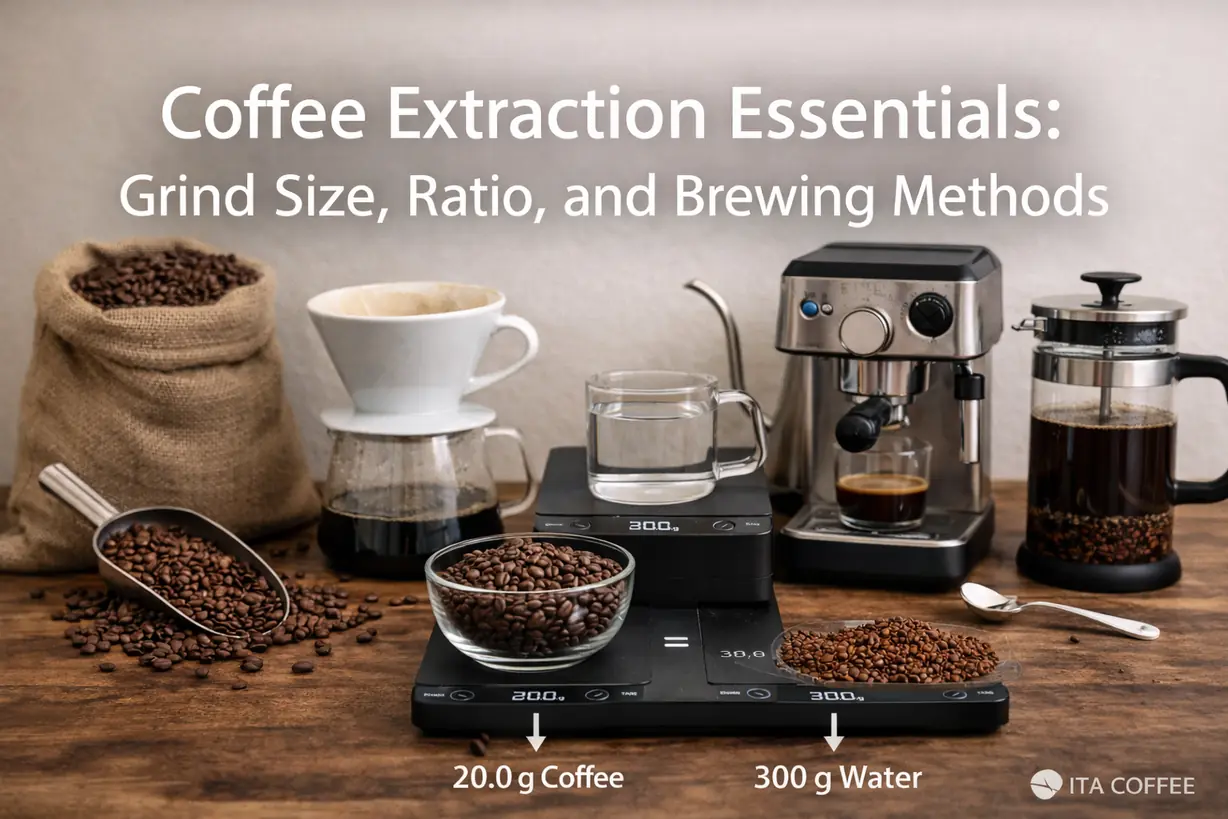
These variables are also the foundation of coffee extraction itself, as explained in Coffee Extraction Explained: How Timing Shapes Flavor.
Shape is one structural reason different brewing designs taste different, a pattern explored more broadly in How Brewing Methods Affect Coffee Flavor (From Beans to Cup).
Dripper shape quietly controls all three, often more than the recipe itself.
This discussion sits within the broader landscape of Brewing Guides: Step-by-Step Methods for Better Coffee at Home,
where each method controls flow and extraction in a slightly different way.
Flat-Bottom Drippers
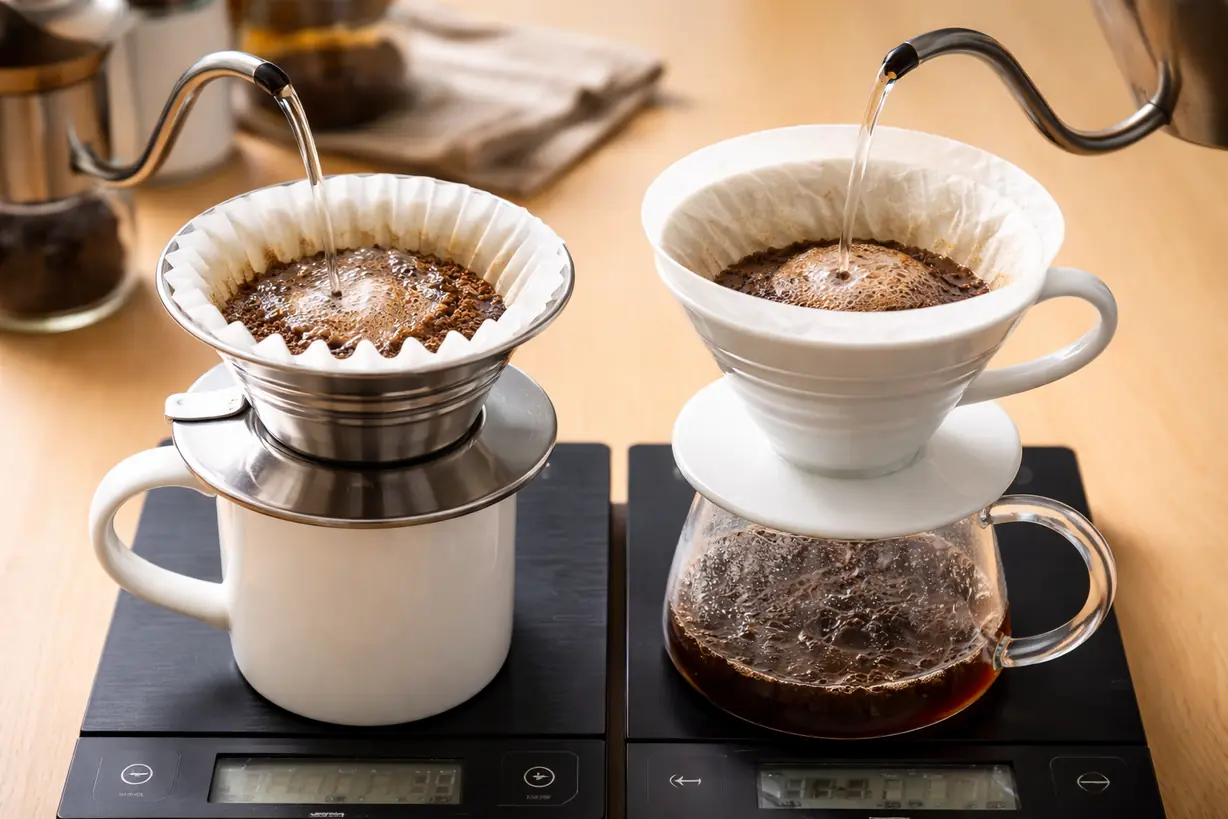
Flat-bottom drippers have a wide base and usually multiple small exit holes. The coffee bed settles into a shallow, even layer.
This geometry encourages water to spread laterally before draining. Instead of racing straight down, water pauses, pools slightly, and exits more slowly. This even flow also helps manage gas release during the early stages of brewing, which is why blooming behaves differently depending on brewer design, as discussed in What Is Coffee Blooming? Why Fresh Coffee Bubbles and Why It Matters.
What this means in practice:
- More even extraction across the coffee bed
- Less sensitivity to pouring errors
- A narrower flavor range between under- and over-extracted cups
Flat-bottom brewers tend to produce cups that feel round, balanced, and consistent from brew to brew. When grind size or pouring technique is slightly off, the structure of the dripper absorbs some of the error—similar to how extraction strength can stabilize even when dose changes, as explored in Is More Coffee Always Stronger?.
Conical Drippers
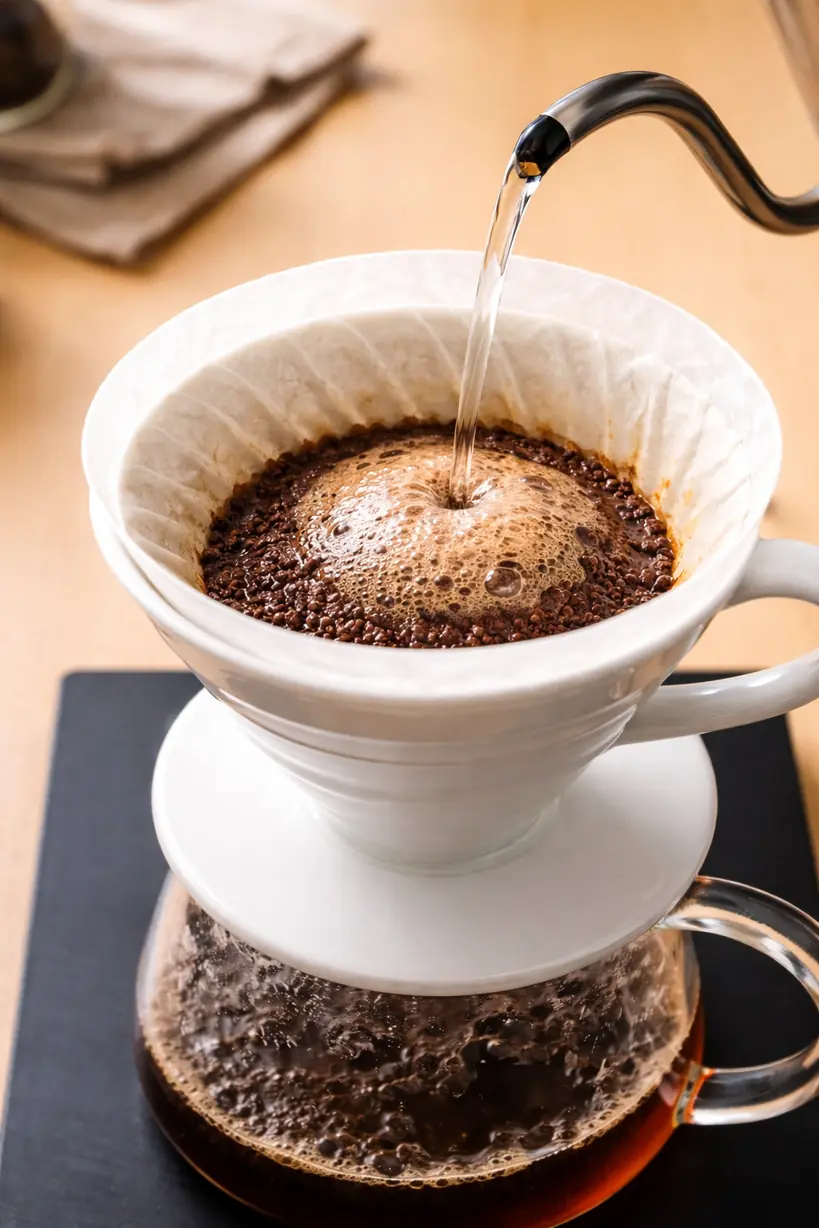
Conical drippers narrow toward a single exit point. The coffee bed forms a deep cone, and water is naturally pulled toward the center.
This design creates faster vertical flow and stronger channeling tendencies. Small changes in grind size, pouring speed, or agitation have larger effects. These sensitivities explain why conical brewers often reveal sourness or bitterness more clearly when extraction is uneven, a pattern examined in Why Your Coffee Tastes Bitter or Sour — And What Extraction Has to Do With It.
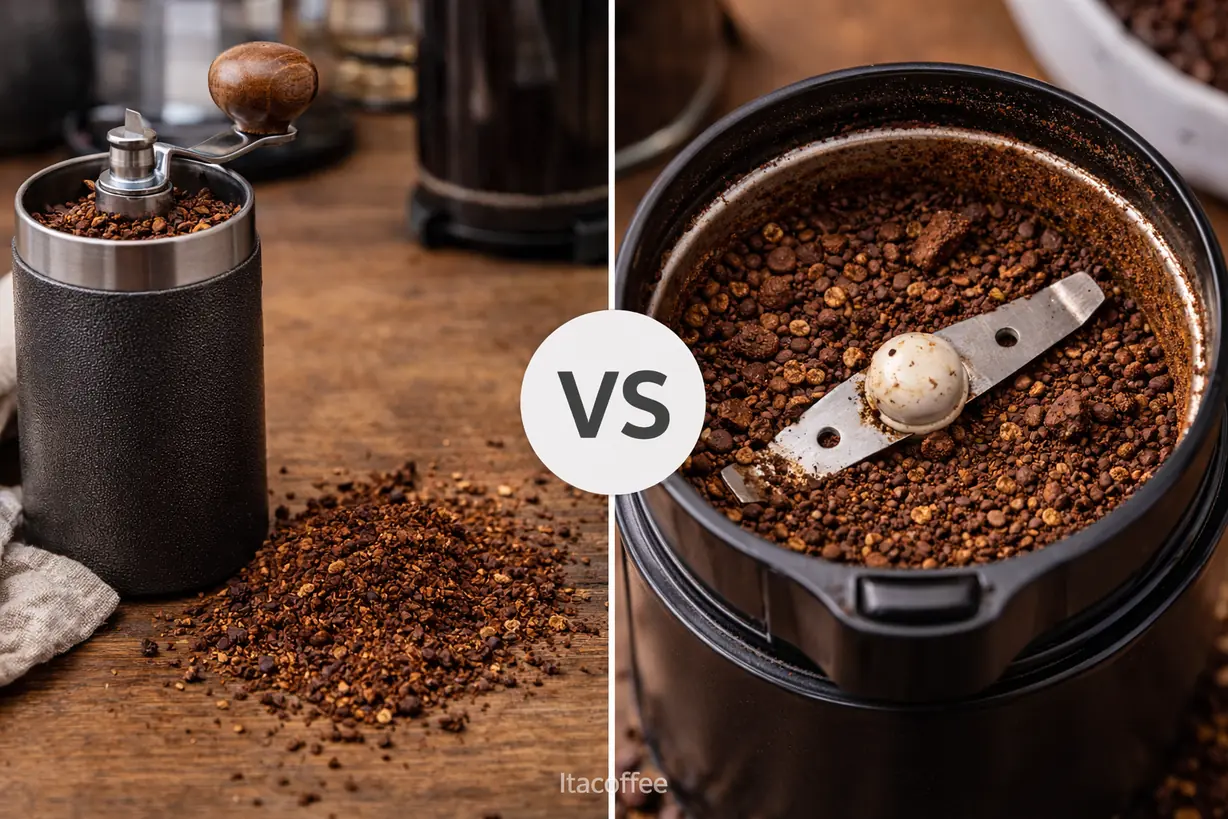
Because conical drippers magnify uneven flow, grind consistency becomes more critical—one reason burr grinders outperform blade grinders in pour-over brewing, as explained in Burr vs Blade Coffee Grinders: What’s the Real Difference and Why It Matters.
Classic conical brewers such as the V60 emphasize this vertical flow behavior, which is demonstrated step by step in Pour Over (V60) Brewing Guide — A Clear, Practical Method.
What this means in practice:
- Higher potential clarity and brightness
- Greater sensitivity to technique
- Wider flavor swings between brews
Grinder choice itself shapes extraction consistency, which is why equipment decisions are not neutral, as discussed in Manual vs Electric Coffee Grinder: How to Choose Based on How You Brew.
Extraction Physics: Shape vs Flow
The difference between flat-bottom and conical brewers is not subjective. It is mechanical.
Flat-bottom drippers slow water horizontally before exit, increasing contact time in a relatively even way.
Conical drippers accelerate water vertically toward a single point, increasing extraction gradients from top to bottom.
Neither approach is better. Each emphasizes a different section of the extraction curve.
Which One Should You Use?
The honest answer is not about skill level. It is about tolerance for variability.
If you want repeatable, dependable cups with minimal adjustment, flat-bottom drippers reduce variables.
If you enjoy dialing in recipes, adjusting pours, and chasing nuance, conical drippers offer more expressive range.
These choices sit alongside other core brewing decisions—grind size, ratio, and time—which are outlined in Coffee Brewing Basics: Grind Size, Ratio, and Time.
They are also part of the broader question of choosing appropriate tools, explored in Coffee Tools: Choosing the Right Gear for Your Brewing Style.
A Practical Perspective
Many brewers eventually own both styles—not because one replaces the other, but because they serve different situations.
Flat-bottom brewers shine on busy mornings.
Conical brewers shine when time and attention are available.
Understanding why they behave differently is far more valuable than memorizing recipes. Much of this foundation is explored in the broader Coffee Knowledge series.
Summary
This article is meant to clarify a single idea: dripper shape is not a stylistic choice, but a structural control point.
In flat-bottom vs conical drippers, the difference is not about preference, but about flow behavior. One spreads water and reduces variability; the other concentrates flow and amplifies precision.
Once flow becomes predictable, extraction becomes easier to understand.
In coffee, inconsistency is rarely accidental. When flavor changes, it is usually because a variable changed—often the way water moved through the coffee bed.
Understanding how dripper geometry shapes flow turns pour-over brewing from guesswork into a repeatable, intentional process.
— Coffee Knowledge Series, curated by itacoffee
Editorial note: This article was developed with AI-assisted drafting and human review
to ensure clarity, accuracy, and a non-commercial educational tone.