Coffee is not just a daily habit—it is a craft defined by physical and chemical variables: bean density, roast level, water temperature, and particle size distribution. Understanding these variables is the difference between guessing your way through a recipe and consistently brewing an excellent cup.
The Coffee Knowledge section on ITA Coffee is designed to help you understand coffee from the ground up. Whether you are a beginner looking for baseline principles or a seasoned home brewer refining your technique, this category focuses on clear, objective explanations of the fundamentals that influence coffee extraction and flavor.
In This Guide
What You Will Learn in This Section
We break down coffee theory into structured, approachable modules. By understanding the “why” behind the process, you can better control the “how.”
1. The Raw Materials: Beans, Roasting, and Freshness
Every brewing decision starts with the coffee bean itself. We explain how raw materials behave under different conditions:
- Roast Levels and Flavor Chemistry: Understand how heat breaks down cellular structures and develops flavor compounds. Read Dark Roast vs Light Roast: What Roasting Really Changes in Coffee Flavor.
- The Chemistry of Staling: Learn why oxidation degrades flavor and why timing your grind matters in Why Freshly Ground Coffee Matters: The Chemistry of Staling and Extraction.
2. The Physics of Grinding and Equipment
Your grinder dictates your particle size distribution, which directly controls extraction speed. We evaluate equipment based on burr geometry and mechanical performance:
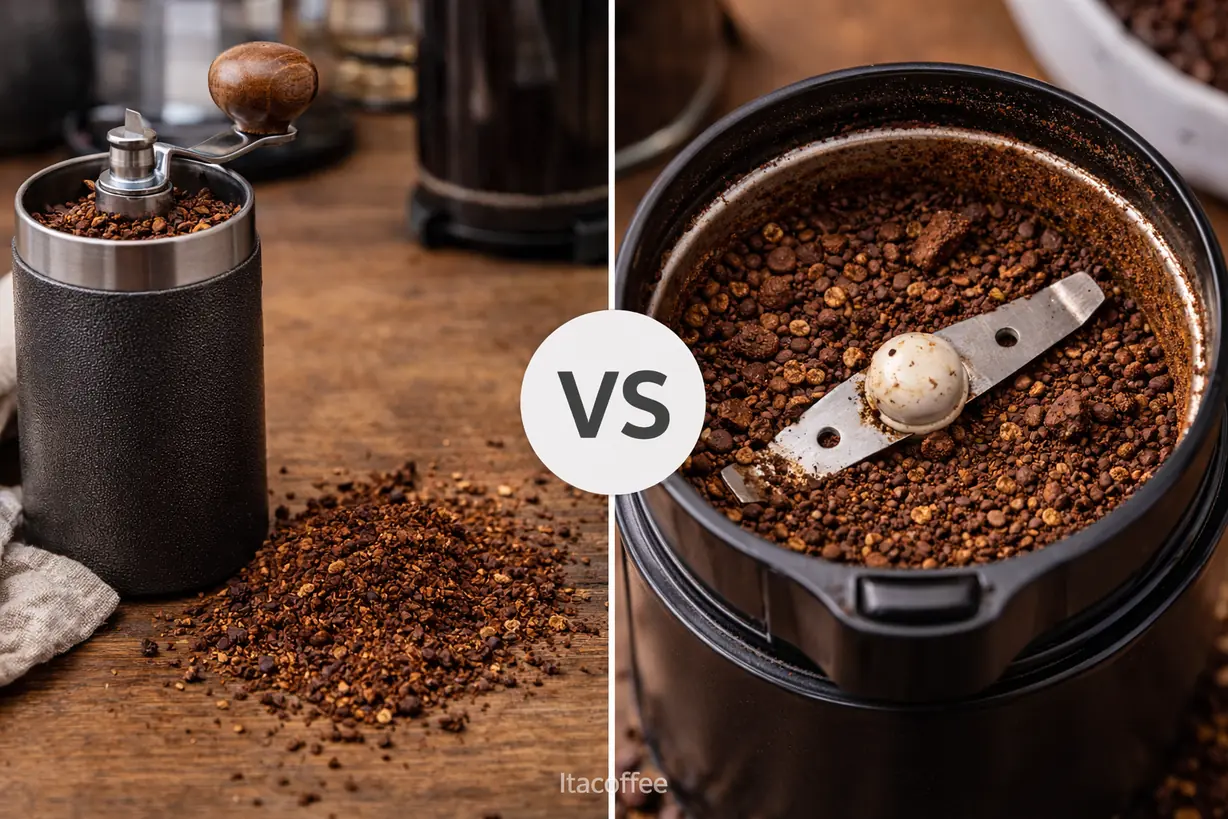
- Grinder Mechanics: Learn why uniformity is critical to avoiding bitterness in Burr vs Blade Coffee Grinders: What’s the Real Difference.
- Choosing the Right Tool: Compare driving mechanisms in Manual vs Electric Coffee Grinder: How to Choose Based on How You Brew.
3. Brewing Science and Extraction Physics
Brewing is the act of using water as a solvent to extract soluble compounds from roasted coffee. This section demystifies the variables you can control:
- The Core Variables: Master the relationship between surface area, water, and contact time. Start with Coffee Brewing Basics: Grind Size, Ratio, and Time.
- Extraction Physics: Dive deeper into the mechanics of surface area in Coffee Grind Size Extraction Explained, and understand the thermal rules in Water Temperature for Coffee: 3 Science-Backed Rules.
- Brewing Methods & Dripper Geometry: Understand how different setups alter fluid dynamics. Explore Immersion vs Percolation: Coffee Extraction Physics and see how equipment shape alters flow rate in Flat-Bottom vs Conical Drippers.
4. Sensory Analysis and Troubleshooting
When a cup tastes unbalanced, it is usually a math or physics error. Learn to diagnose and fix your brew using objective sensory feedback:
- Diagnosing Extraction: If your coffee tastes sharp or harsh, read Under vs Over Extraction Explained: The Science of Coffee Flavor and our specific guide on Why Your Coffee Tastes Bitter or Sour.
- Strength vs. Extraction: Understand why adding more coffee does not automatically yield a better cup in Is More Coffee Always Stronger?
- Terminology Explained: We strip away the jargon. Learn why fresh coffee releases CO2 in What Is Coffee Blooming?, and decode sensory terms in What Does Body Mean in Coffee? Understanding Texture and Mouthfeel.
How to Navigate This Site
The knowledge here is cumulative. If you are new to specialty coffee, we recommend starting with the physics of grind size and the basics of extraction.
Once you understand the underlying theory, you can confidently apply it in our Brewing Guides, where we provide step-by-step, repeatable methodologies for specific brewers.
If you are looking to upgrade your setup based on these principles, visit Coffee Tools: Choosing the Right Gear for Your Brewing Style or read our methodology on How We Review Coffee Gear to see how we evaluate equipment objectively.
Browse the latest Coffee Knowledge articles below and build a structured understanding of your daily brew.



Leave a Reply