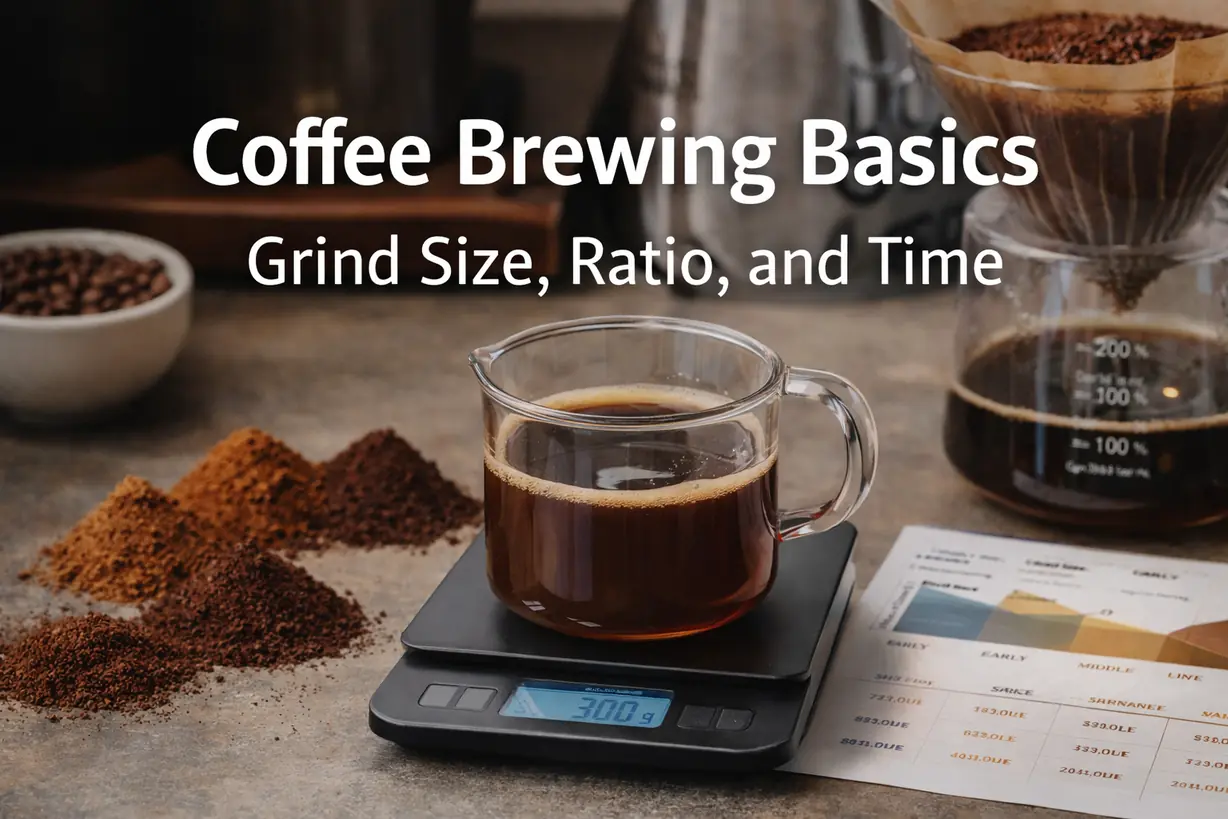
The grind size time ratio relationship is the structural foundation of coffee extraction.
Every cup of coffee is governed by three interacting brewing variables: grind size, brew time, and brew ratio. When these variables are balanced, extraction becomes predictable. When they are misaligned, coffee quickly turns sour, bitter, or weak.
If you are new to how these variables interact, start with coffee brewing basics first.
This article explains the grind size time ratio relationship from a practical brewing perspective—how these variables influence extraction physics and why adjusting one variable often requires adjusting the others.
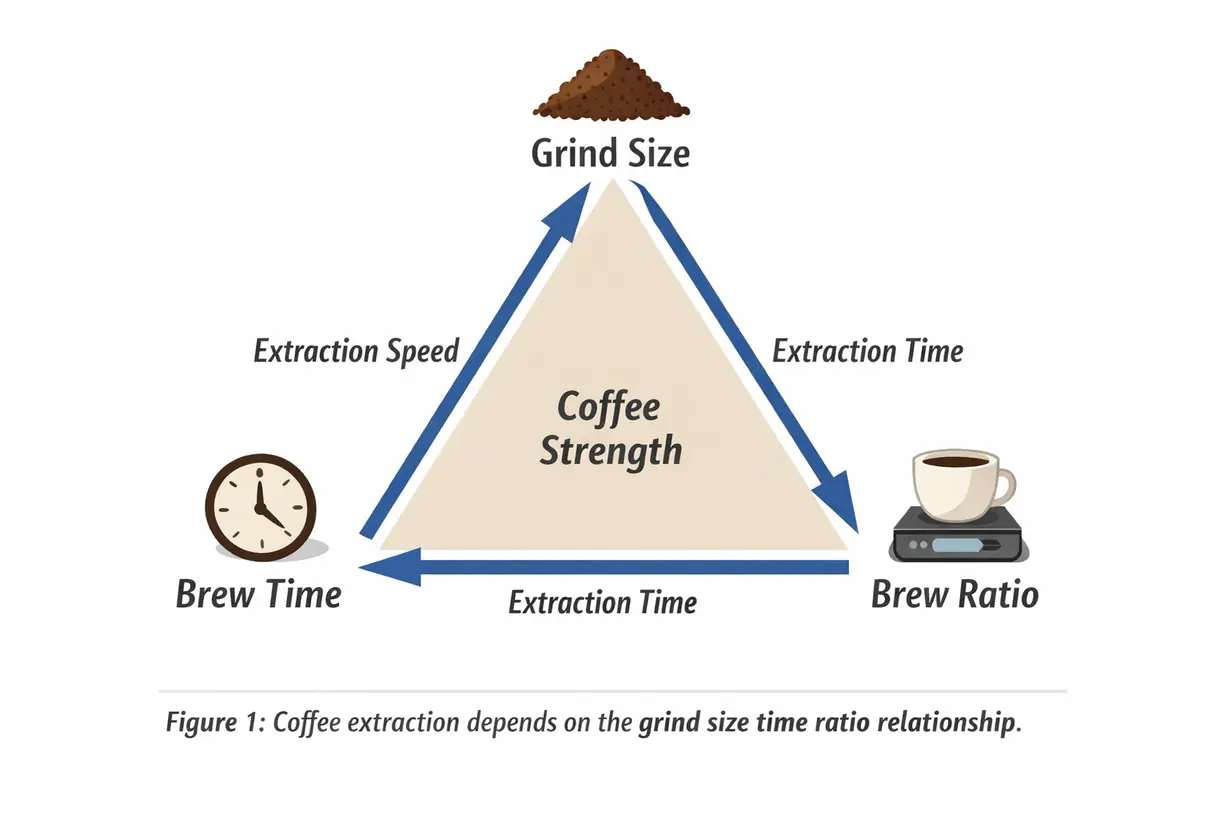
Core Principle: Grind size controls extraction speed, brew time controls extraction completeness, and brew ratio controls beverage strength.
| Variable | What It Controls | Effect on Coffee |
|---|---|---|
| Grind Size | Particle surface area | Extraction speed |
| Brew Time | Contact time between water and coffee | Extraction completeness |
| Brew Ratio | Coffee-to-water proportion | Strength and concentration |
In This Guide
Understanding the Grind Size Time Ratio Relationship
The grind size time ratio relationship explains why brewing variables cannot be adjusted independently. Each variable changes how quickly coffee dissolves and how concentrated the resulting beverage becomes.
Grind size affects how fast compounds dissolve, brew time determines how long extraction continues, and brew ratio defines how concentrated the final beverage becomes.
Once the grind size time ratio relationship becomes clear, brewing stops being guesswork and becomes a controlled system.
Grind Size: Controlling Extraction Speed
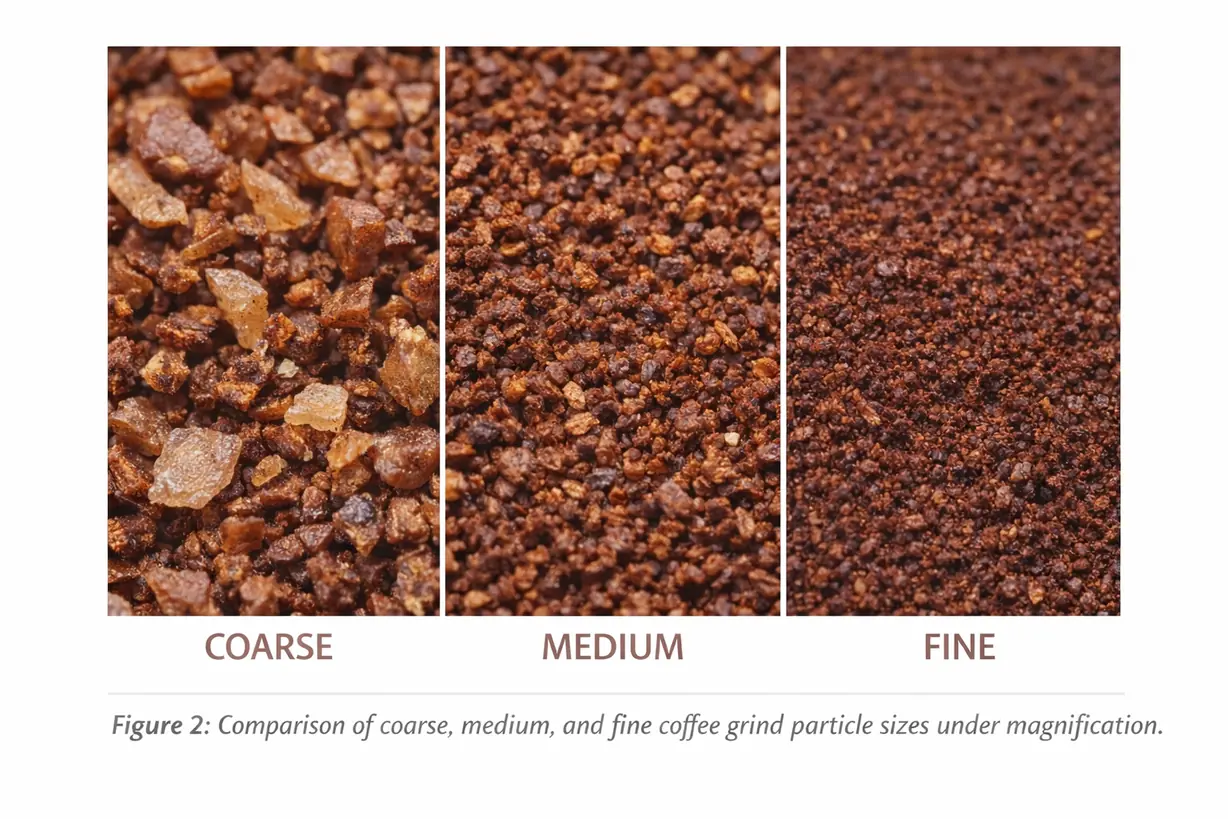
Grind size determines how much surface area is exposed to water. Smaller particles expose more surface area, allowing water to dissolve soluble compounds more quickly.
- Fine grind → faster extraction
- Coarse grind → slower extraction
This principle explains why espresso requires extremely fine grounds while immersion brewing methods use coarse particles.
A deeper breakdown of this mechanism can be found in coffee grind size extraction explained.
Brew Time: The Duration of Extraction
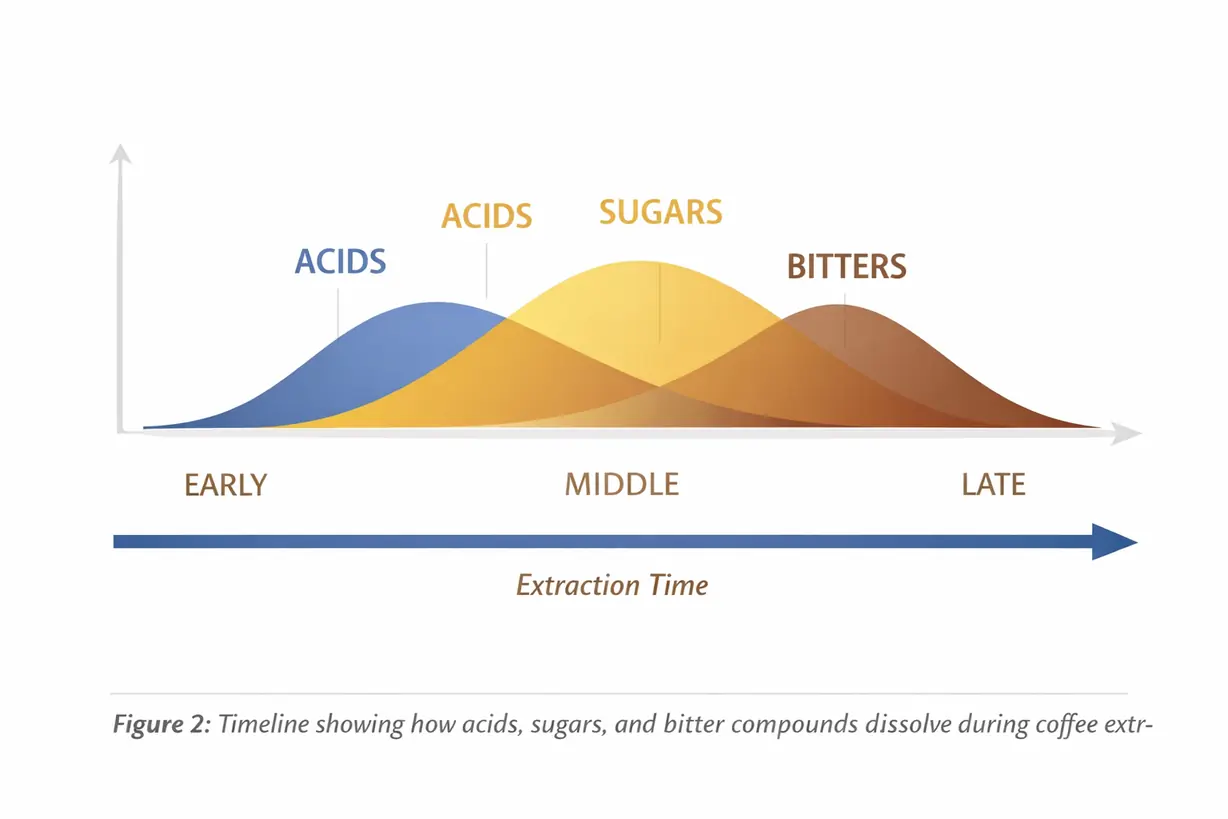
Extraction occurs progressively. Different groups of compounds dissolve at different speeds.
- Early extraction → bright acids
- Middle extraction → sugars and aromatic compounds
- Late extraction → heavier bitter molecules
If brew time is too short, coffee tastes sour because extraction stops early. If brew time is too long, bitter compounds dominate.
The stages of extraction are explained in greater detail in coffee extraction explained.
Brew Ratio: Controlling Beverage Strength
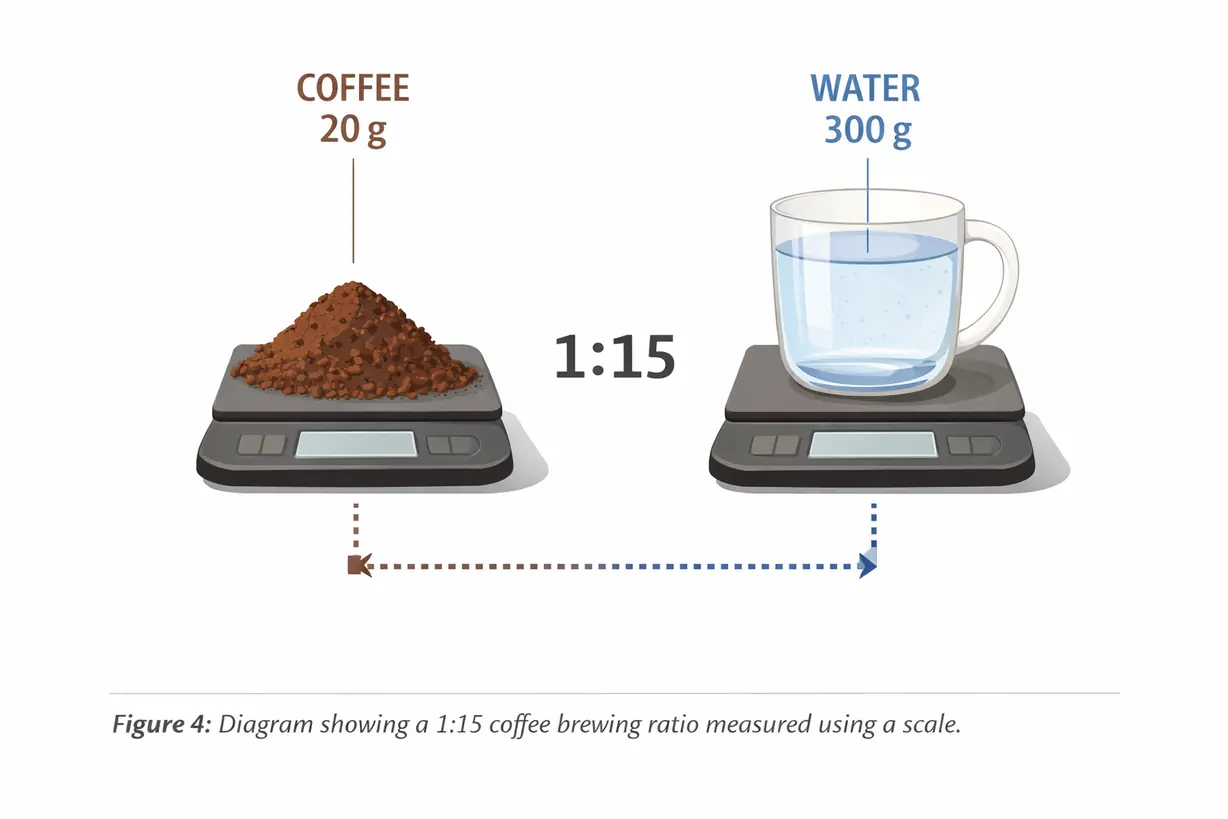
The brew ratio describes the proportion between coffee grounds and water.
For example:
- 1:16 → one gram of coffee to sixteen grams of water
This ratio controls the strength of the beverage rather than the completeness of extraction.
For a detailed explanation of brewing ratios, see coffee brewing ratios explained.
Why These Variables Must Be Balanced
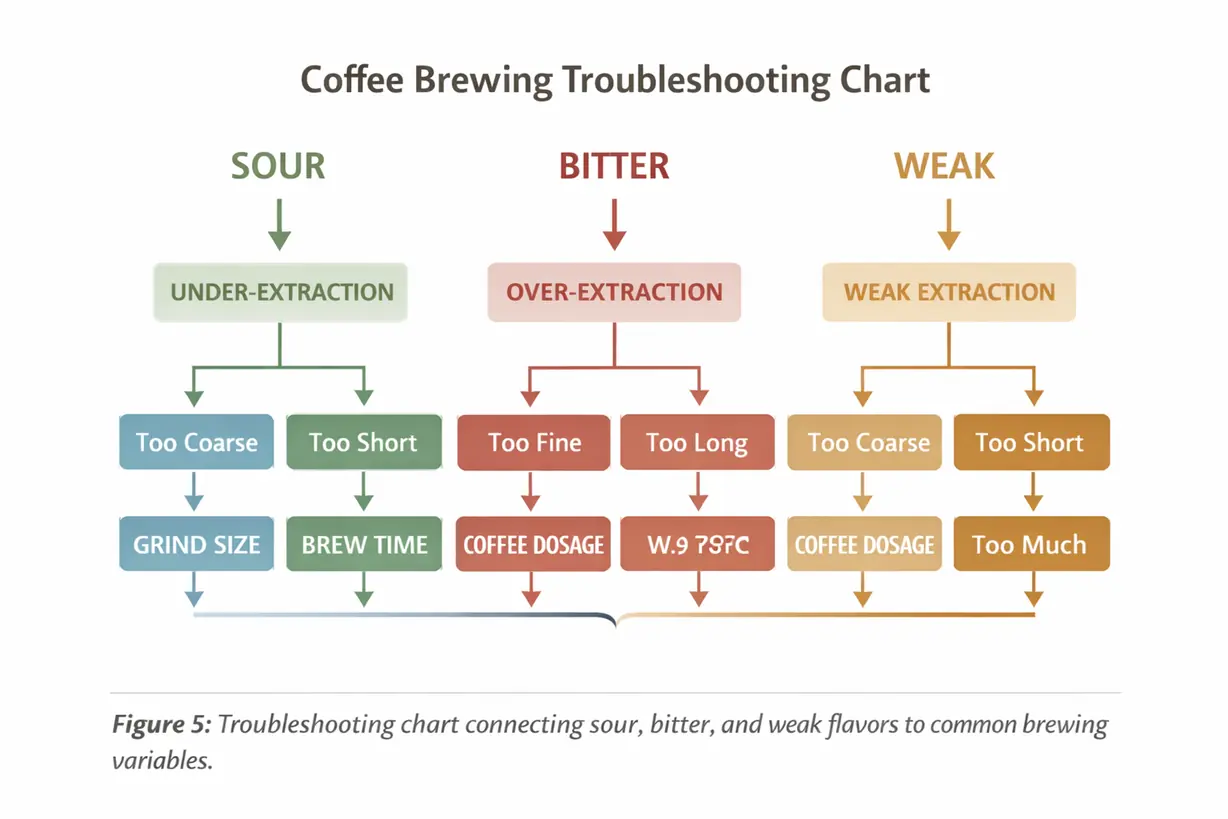
The grind size time ratio relationship becomes most obvious when brewing problems occur.
If grind size becomes finer, extraction accelerates. Brew time usually must decrease to prevent bitterness. If grind becomes coarser, brew time often needs to increase.
Ignoring this relationship frequently leads to extraction problems described in why coffee tastes bitter or sour.
How Brewing Methods Change the Variable Balance
Different brewing methods operate within different ranges of grind size, time, and ratio.
- Espresso → very fine grind, short brew time
- Pour-over → medium grind, moderate brew time
- French press → coarse grind, longer brew time
Typical Grind Size, Time, and Ratio by Brewing Method
| Brewing Method | Typical Grind Size | Typical Brew Time | Typical Brew Ratio |
|---|---|---|---|
| Espresso | Fine | 25–30 seconds | 1:2 |
| Pour Over (V60) | Medium | 2–3 minutes | 1:15 – 1:17 |
| French Press | Coarse | 4 minutes | 1:15 |
| AeroPress | Medium-fine | 1–2 minutes | 1:3 – 1:5 (concentrate) |
The structural differences between these methods are explained in how brewing methods affect coffee flavor.
The extraction framework used here is also consistent with the brewing control chart published by the Specialty Coffee Association.
Summary
The grind size time ratio relationship defines how coffee extraction behaves.
- Grind size determines extraction speed
- Brew time determines extraction completeness
- Brew ratio determines beverage strength
Understanding this relationship allows brewers to adjust recipes systematically instead of relying on trial and error.
For more structured guides on extraction and brewing variables, explore the Coffee Knowledge section of ITA Coffee.
— Coffee Knowledge Series, curated by itacoffee
Editorial note: This article was developed with AI-assisted drafting and human review to ensure technical accuracy and a non-commercial educational tone.