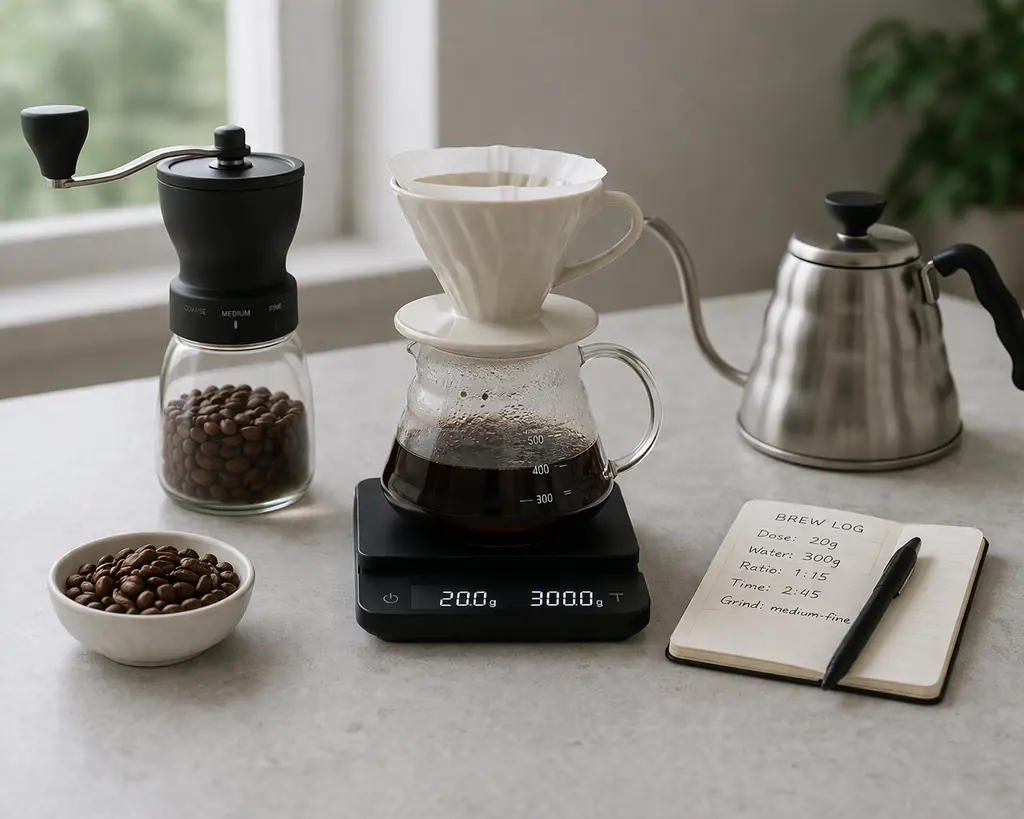
Entry-level coffee gear setup is not about buying more equipment—it is about building a controlled extraction system with minimal but sufficient variables.
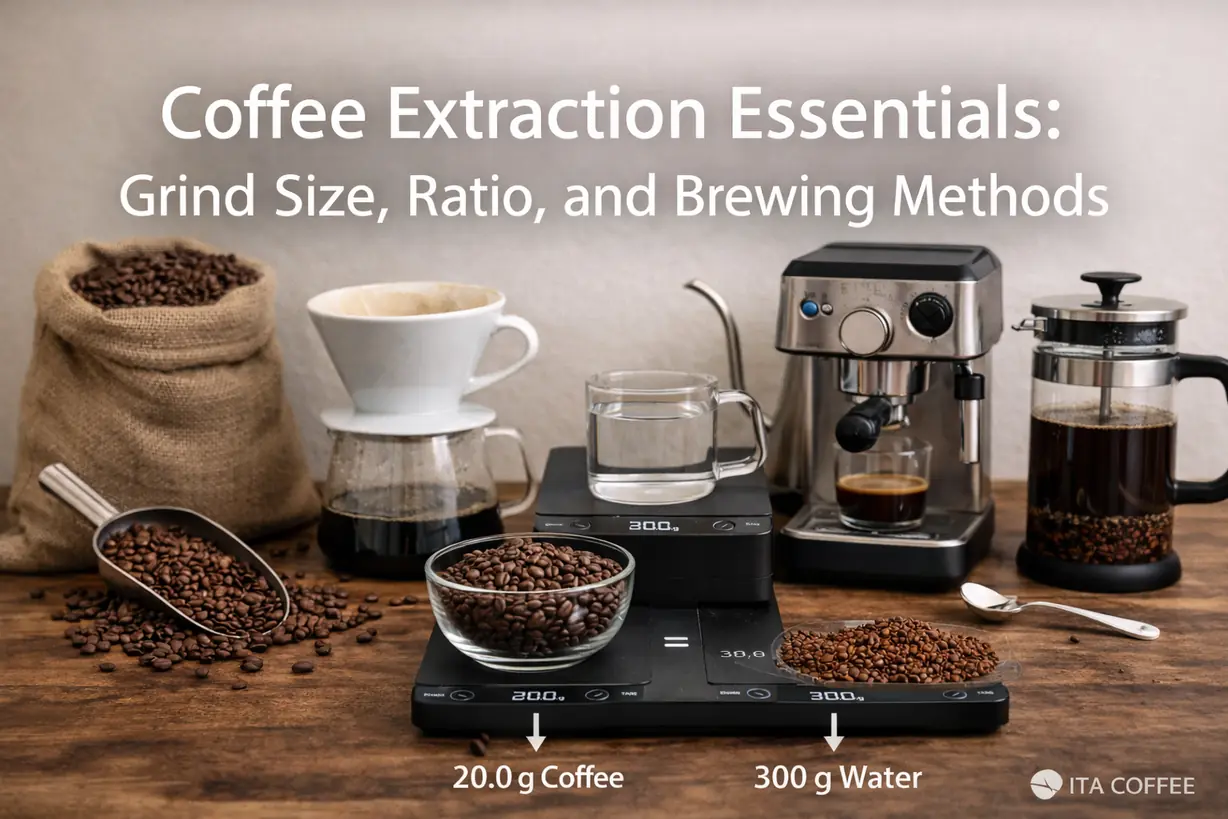
At its core, coffee brewing is governed by three interacting parameters:
- Grind size (controls surface area and resistance)
- Water contact time (controls extraction yield)
- Brew ratio (controls strength vs extraction balance)
If your gear cannot control these variables consistently, improving beans or technique will have limited effect.
In This Guide
What Is an Entry-Level Coffee Gear Setup?
An entry-level setup is defined by functional completeness, not cost. It must allow you to:
- Grind coffee consistently
- Control water flow and contact time
- Measure inputs and outputs
This aligns with the fundamental brewing framework:
Coffee Brewing Basics: Grind Size, Ratio, and Time
Without these controls, brewing becomes guesswork rather than a repeatable process.
Core Principle: Build Around Extraction Control
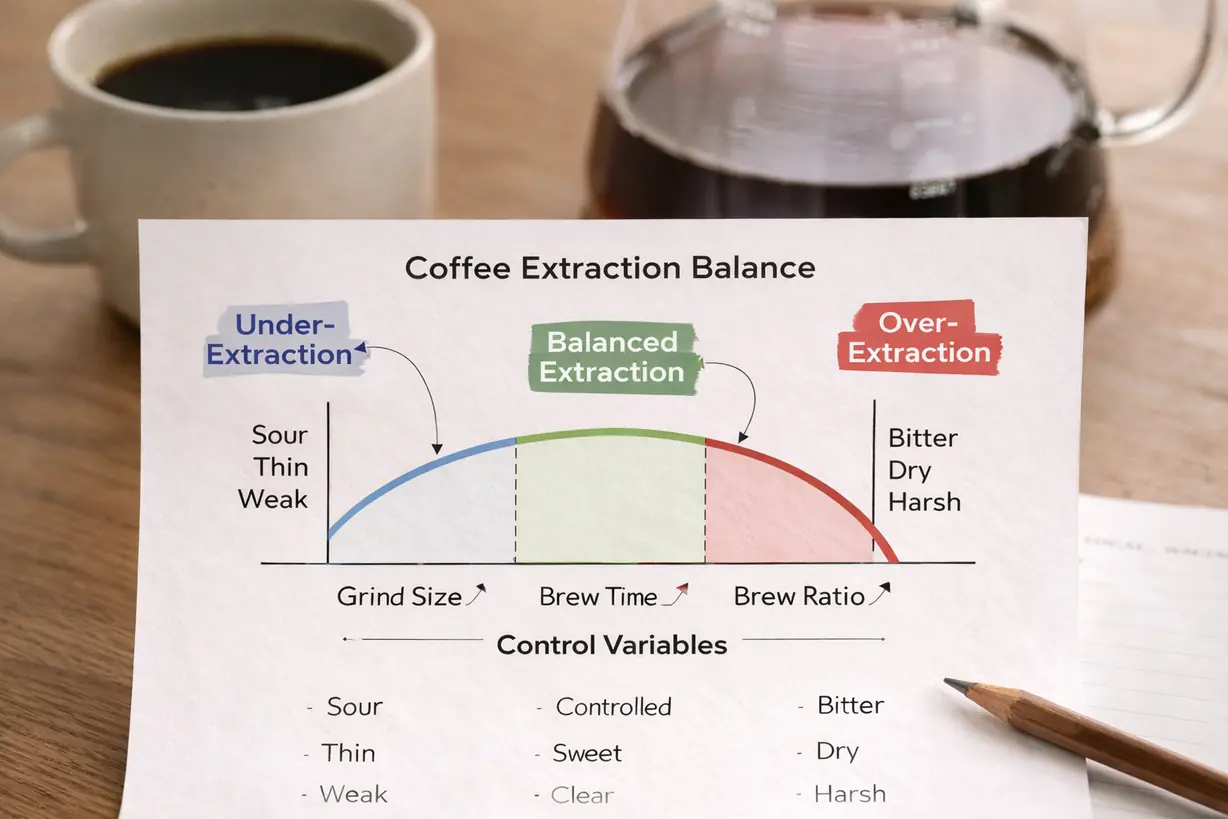
Coffee extraction refers to the process of dissolving soluble compounds from ground coffee into water.
Two key failure modes:
- Under-extraction → sour, sharp, thin
- Over-extraction → bitter, dry, harsh
Scientific explanation:
Under vs Over Extraction Explained
Your gear setup determines how precisely you can stay within the optimal extraction range.
Essential Component 1: Grinder (The Primary Control Variable)
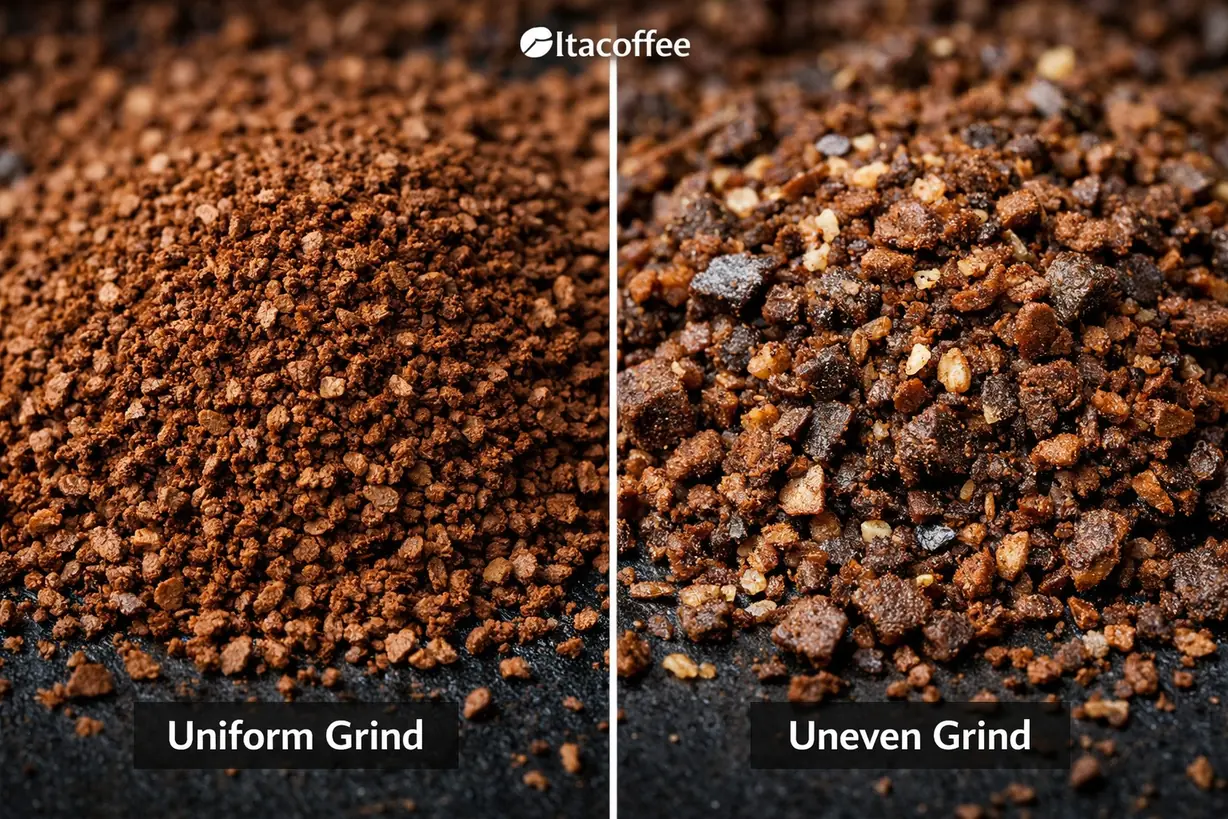
The grinder is the most critical component because it defines particle size distribution.
Why Grind Size Matters
- Smaller particles → faster extraction (more surface area)
- Larger particles → slower extraction
Technical breakdown:
Coffee Grind Size Extraction Explained
Entry-Level Requirement
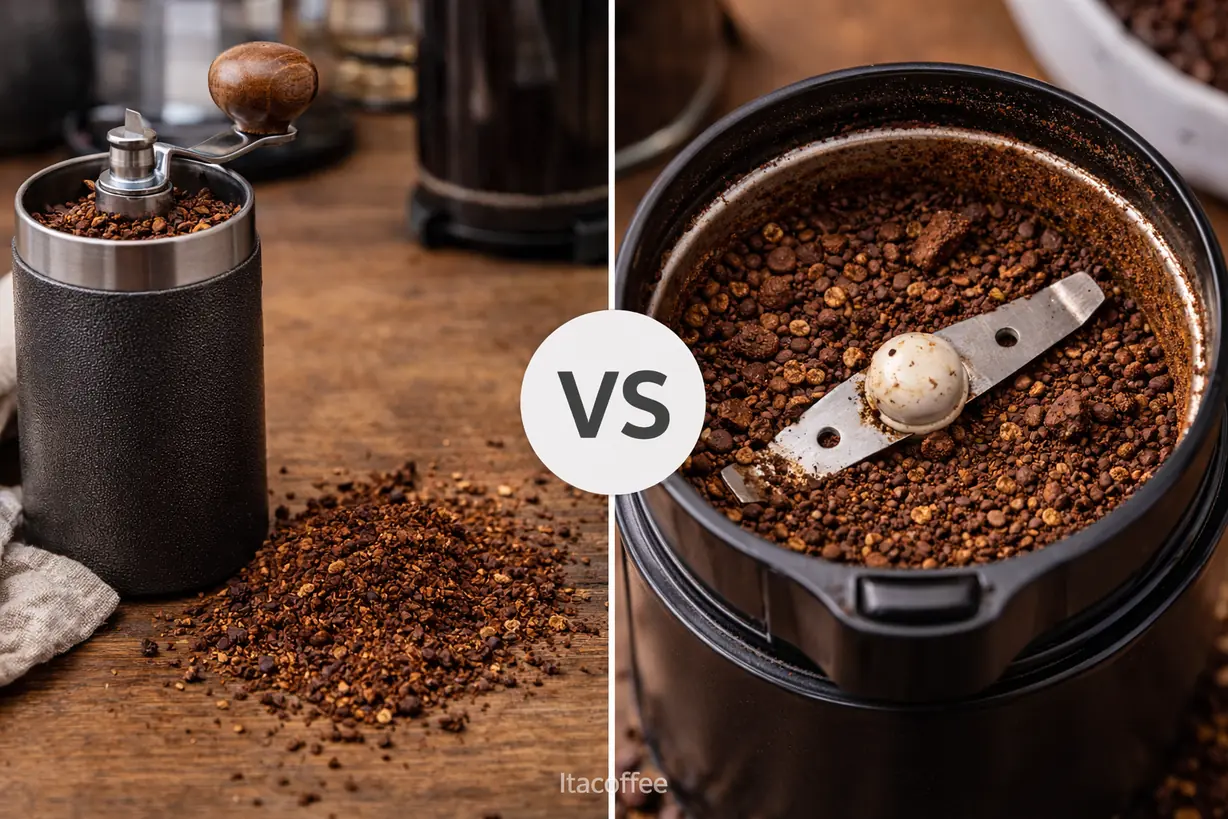
- Burr grinder (not blade)
- Adjustable grind settings
- Consistent particle distribution
Comparison:
Burr vs Blade Grinders: A Technical Comparison
Without a consistent grinder, all downstream variables become unstable.
Essential Component 2: Brewing Device (Flow & Contact Control)
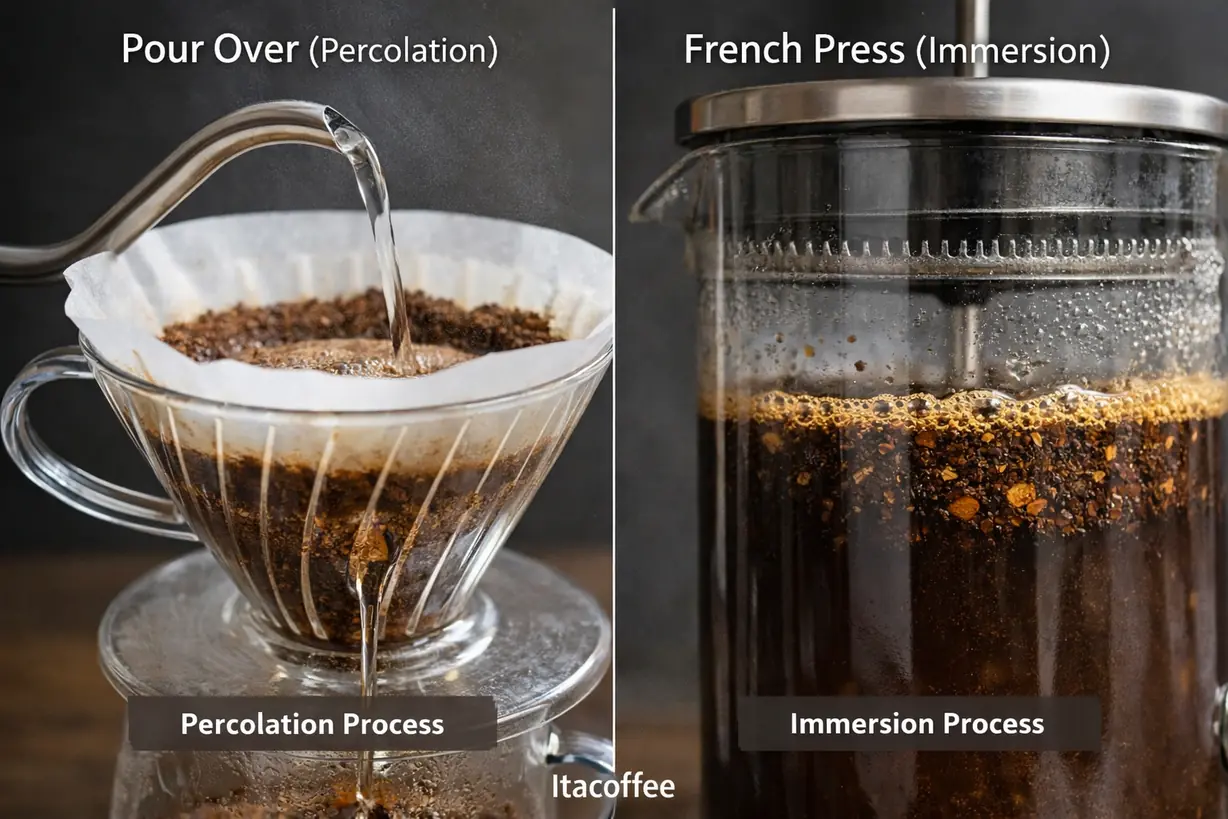
The brewing device determines how water interacts with coffee:
- Immersion → full saturation (e.g., French press)
- Percolation → water passes through grounds (e.g., pour over)
Scientific distinction:
Immersion vs Percolation: Coffee Extraction Physics
Entry-Level Options
- Pour over (V60) → high control, requires technique
- French press → low complexity, more forgiving
- AeroPress → hybrid control and flexibility
Practical starting point:
The choice is not about “better”—it is about how much control vs simplicity you want.
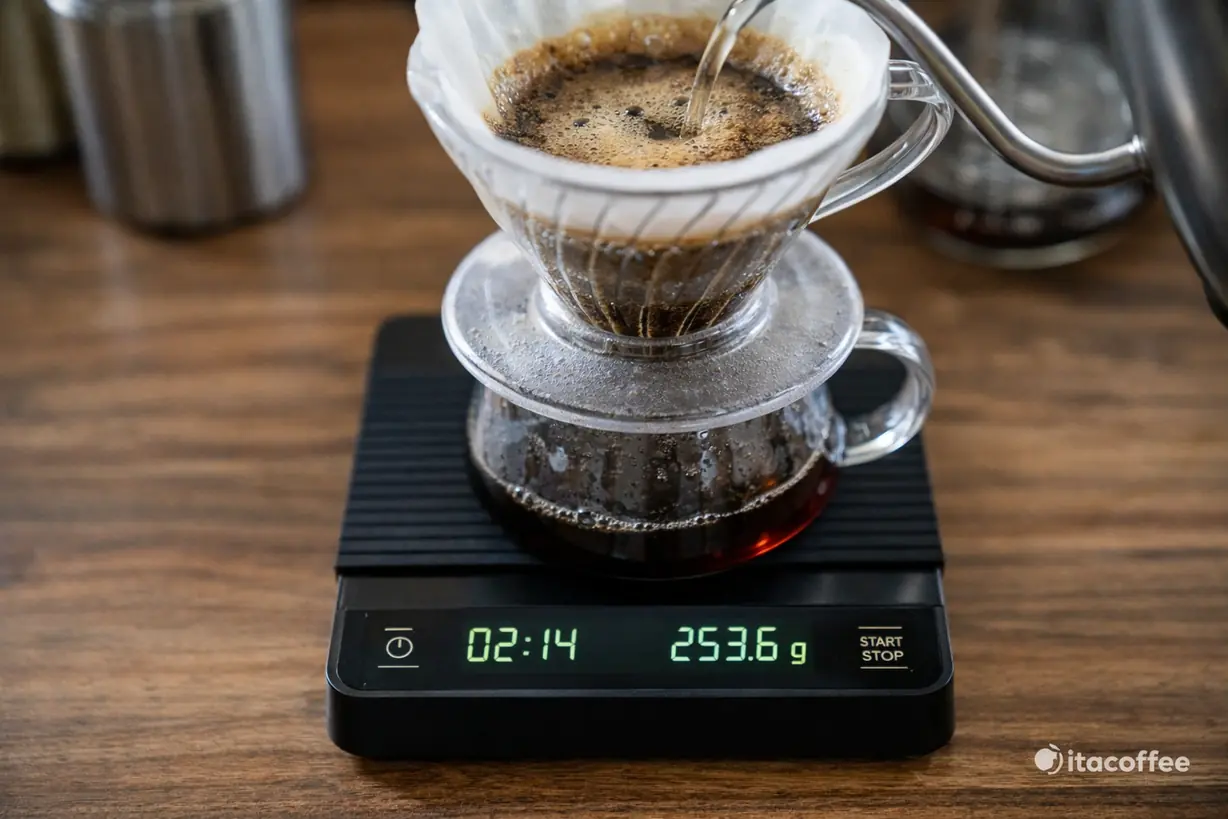
Essential Component 3: Scale (Measurement and Repeatability)
Without measurement, brewing cannot be repeated.
What a Scale Controls
- Coffee dose (grams)
- Water input
- Brew ratio consistency
Technical explanation:
Do You Really Need a Coffee Scale?
Example:
- 1:15 ratio → stronger body
- 1:18 ratio → lighter clarity
Without a scale, these differences cannot be controlled precisely.
Optional but High-Impact Tools
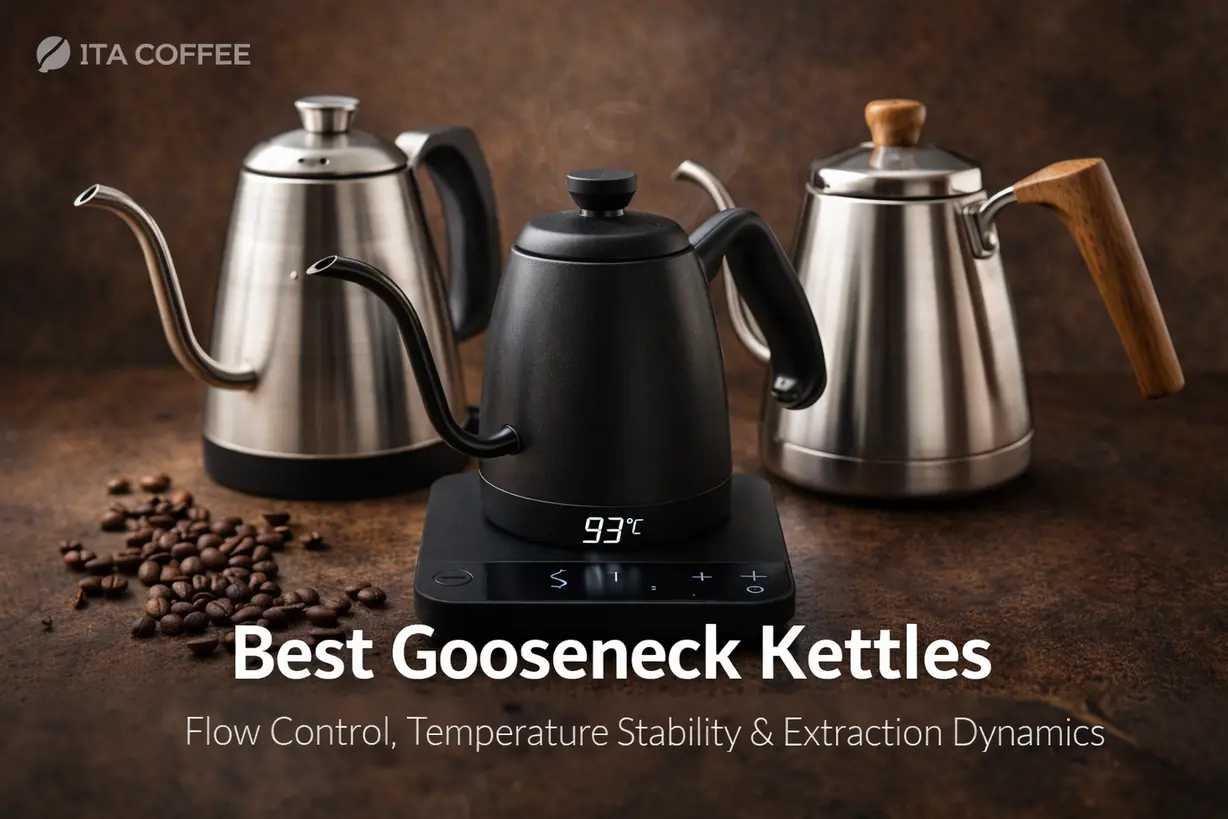
Kettle (Flow Control)
- Controls pour rate and agitation
- Affects extraction uniformity
Reference:
What Makes a Good Pour Over Kettle
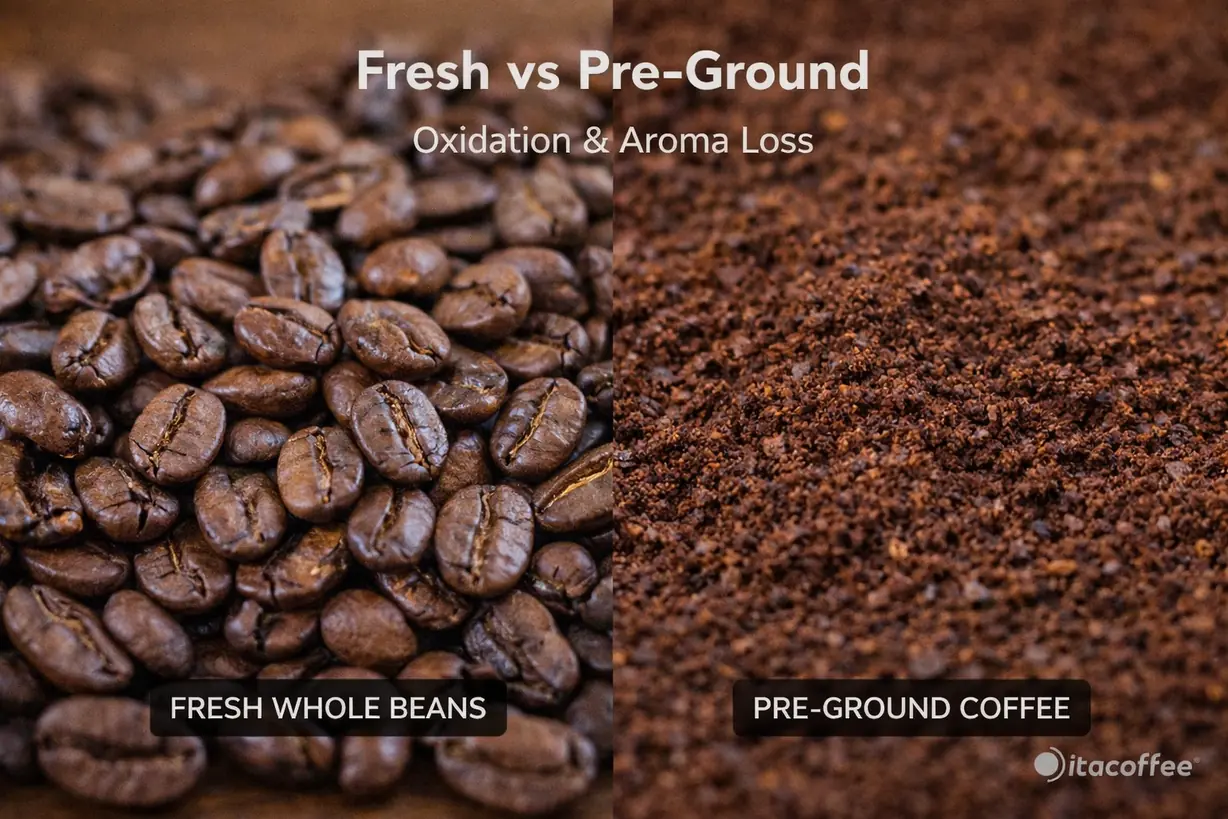
Fresh Coffee Beans
- Fresh grinding preserves volatile aromatics
- Staling reduces extraction quality
Scientific explanation:
Why Freshly Ground Coffee Matters
What You Do NOT Need at the Entry Level
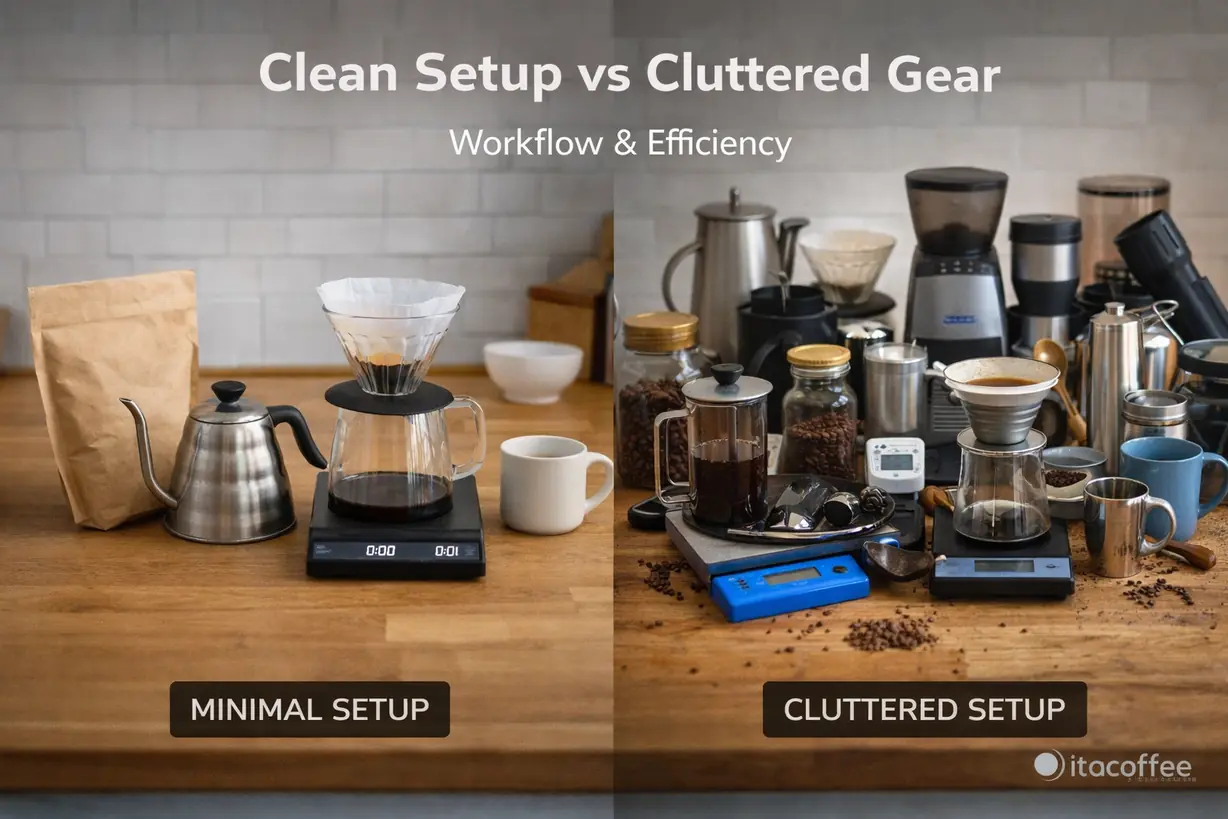
A common mistake is overbuilding the setup before understanding extraction.
Not required initially:
- Espresso machine (high complexity, narrow tolerance)
- Advanced distribution tools
- Multiple brewers for the same method
Key principle:
Why Expensive Coffee Gear Doesn’t Fix Bad Coffee
Quality comes from control and consistency, not equipment quantity.
Recommended Entry-Level Workflow (Step-by-Step)
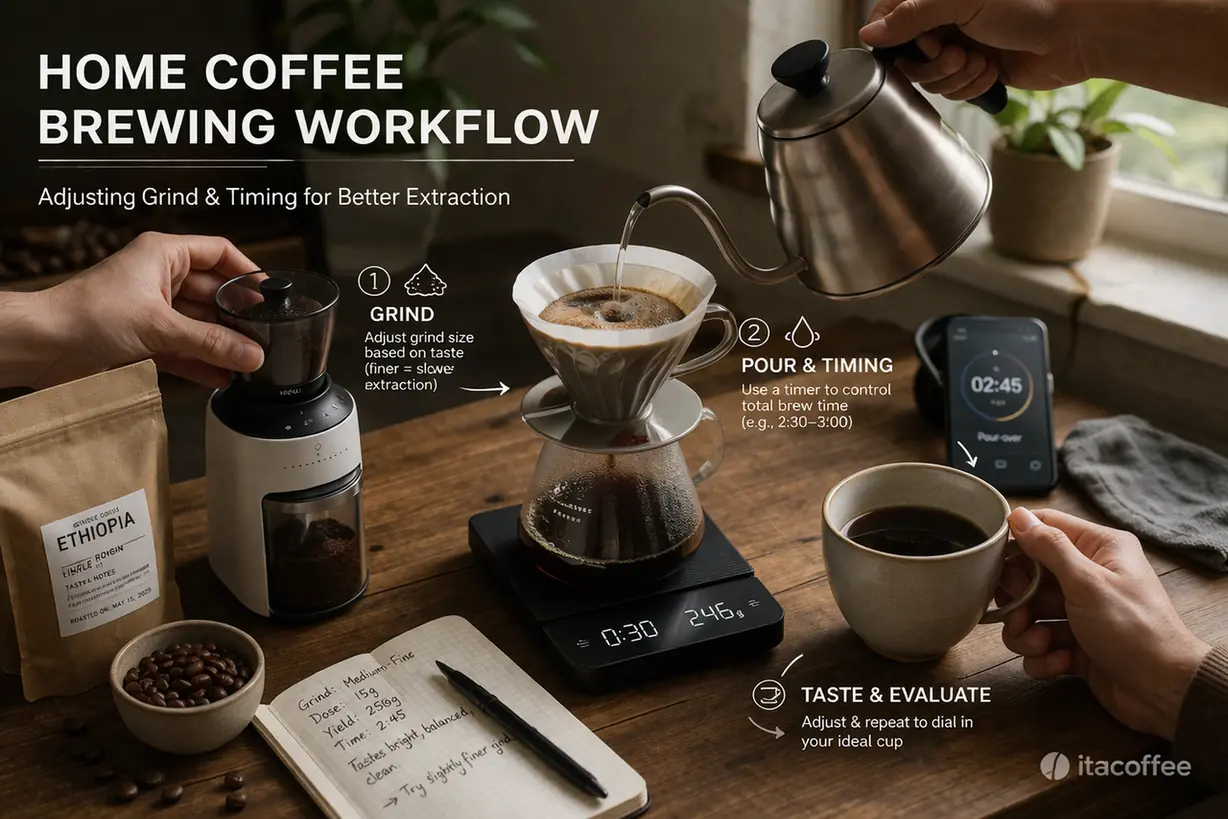
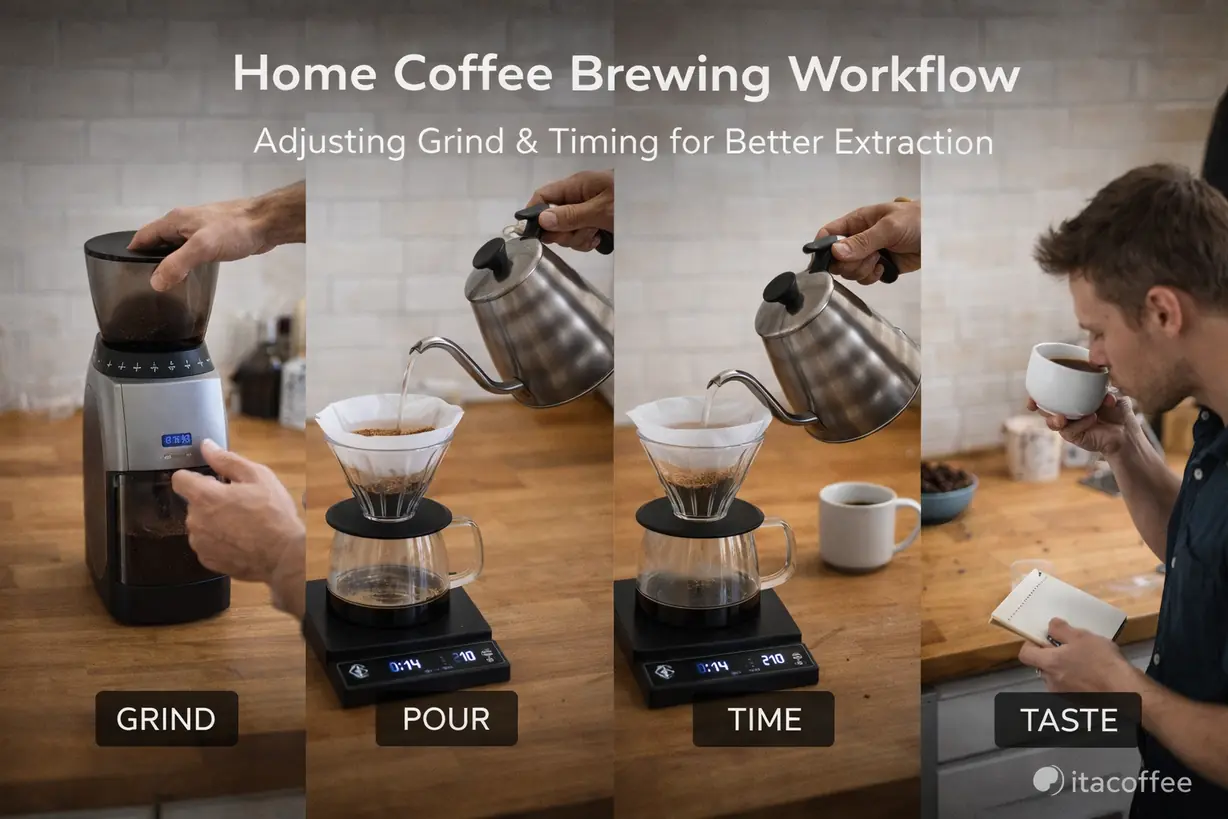
Step 1: Dose and Grind
- Weigh coffee (e.g., 20g)
- Adjust grind size based on method
Step 2: Control Water
- Use stable temperature (≈90–96°C)
- Control pour rate
Temperature reference:
Step 3: Observe Extraction
- Track brew time
- Taste and adjust variables
Extraction framework:
Conclusion: Entry-Level Setup Is About Control, Not Simplicity
Entry-level coffee gear setup is a system designed to stabilize variables, not eliminate them.
- You are not simplifying coffee
- You are making variables measurable
- You are building repeatability
The goal is not better gear—it is predictable extraction.
Itacoffee Practice Recommendation
Start with a minimal system and focus on variable isolation:
- Change only grind size → observe taste shift
- Change only ratio → observe strength change
- Keep all other variables constant
Then expand your setup only when your current system becomes the limiting factor.
Continue learning here:
Coffee Tools: Choosing the Right Gear for Your Brewing Style
Practice deliberately: control one variable at a time, measure outcomes, and build a system you can repeat.