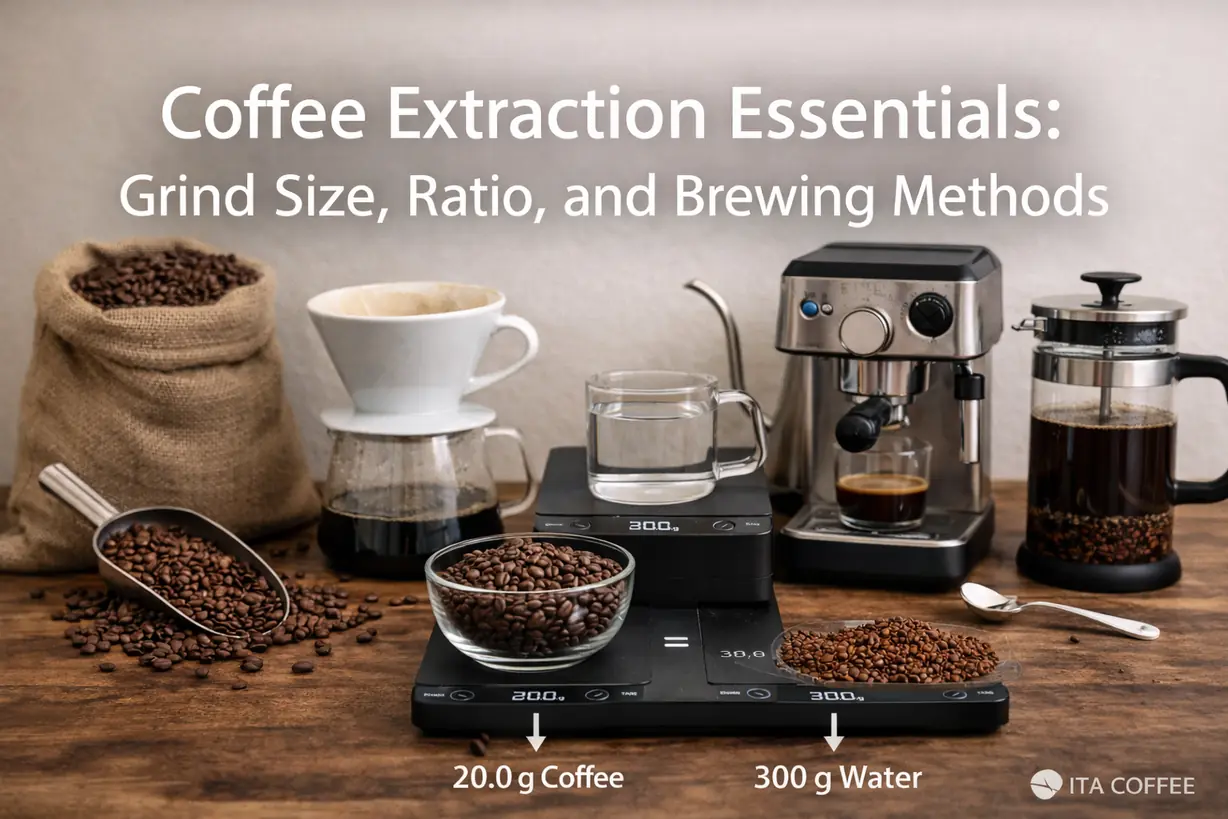
Coffee extraction sounds technical, but the idea is simple:
water dissolves things from coffee grounds—and the order matters. In other words, extraction is not about recipes—it’s about timing and control.
Every brew method, from espresso to French press, follows the same physical process.
What changes is how fast, how much, and how evenly
extraction happens.
To understand how different brewing methods influence extraction behavior overall, see
How Brewing Methods Affect Coffee Flavor (From Beans to Cup), which explains how method design shapes flavor outcomes.
This guide explains coffee extraction in plain terms, so you can understand flavor at its source—not guess after the fact.
In This Guide
What Is Coffee Extraction?
Coffee extraction is the process of hot water dissolving soluble compounds
from roasted coffee grounds.
These compounds include:
- Acids (brightness, freshness)
- Sugars (sweetness, body)
- Bitters (dryness, harshness)
They do not extract at the same time.
Roast level also influences how easily these compounds dissolve. Lighter and darker roasts extract differently because roasting changes bean structure and solubility.
For a structural breakdown, see Dark Roast vs Light Roast: What Roasting Really Changes in Coffee Flavor.
Think of extraction as a timeline, not a switch.
The Extraction Timeline (Why Order Matters)
As water passes through coffee, flavors appear in a predictable sequence.
Once a compound is fully extracted, water moves on to the next—there is no rewind.
Early extraction
- Bright acids
- Sharp, sour notes
Early extraction is also when fresh coffee releases trapped carbon dioxide.
This visible bubbling is called blooming.
What Is Coffee Blooming? explains why this stage affects evenness and flavor clarity.
Middle extraction
- Sugars
- Balance, sweetness, clarity
Late extraction
- Bitters
- Dry, woody, hollow flavors
Good coffee lives in the middle.
Bad coffee usually means you stopped too early—or went too far.
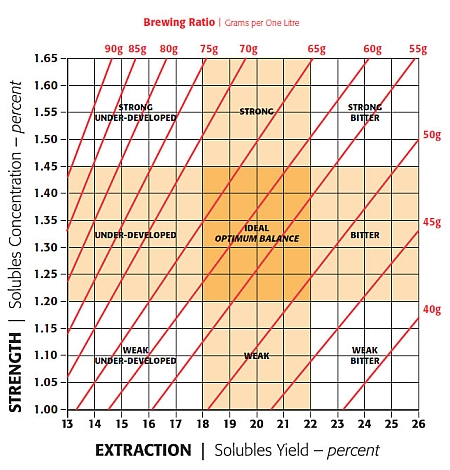
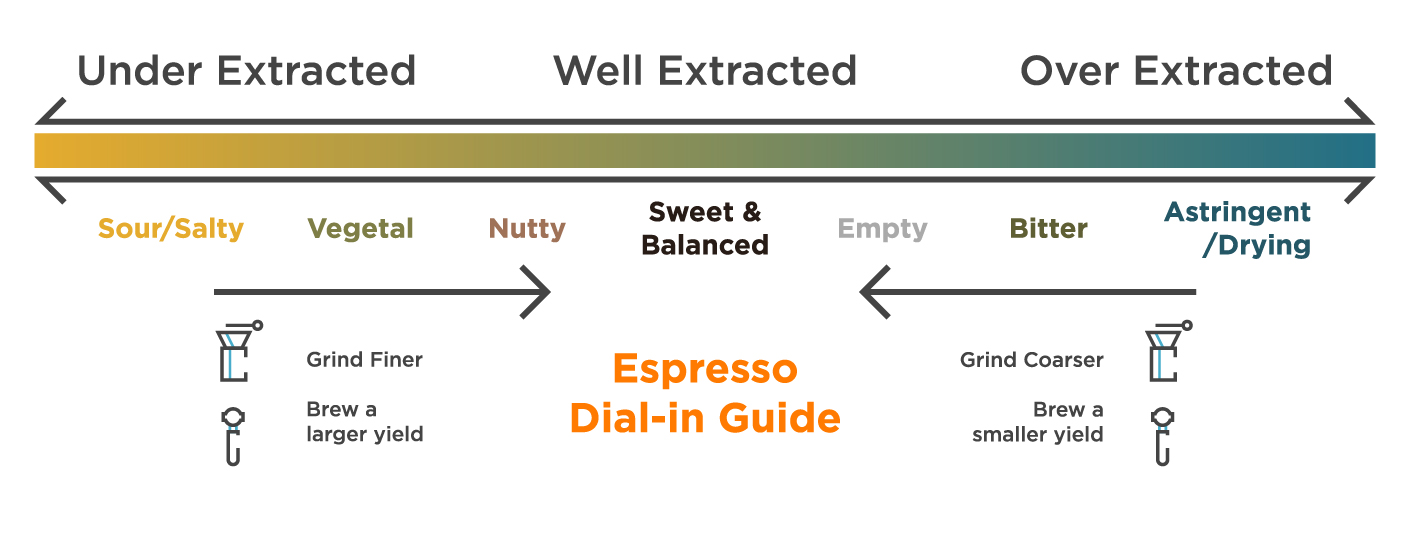
Under-Extraction vs Over-Extraction
Extraction problems are not mysterious. They are mechanical.
If your coffee tastes bitter or sour, it’s usually not a mystery,
but an extraction issue that can be identified and corrected.
Learn how bitterness and sourness relate to extraction.
Under-extracted coffee tastes:
- Sour
- Thin
- Sharp
- Empty
Cause: water didn’t dissolve enough material.
Over-extracted coffee tastes:
- Bitter
- Dry
- Astringent
- Flat
Cause: water dissolved too much, especially bitter compounds.
The goal is not “maximum extraction.”
The goal is balanced extraction.
The Four Variables That Control Extraction
All brewing methods manipulate the same four variables.
These variables determine extraction speed, depth, and balance.
If you want a clearer breakdown of grind size, ratio, and time working together, see
Coffee Brewing Basics: Grind Size, Ratio, and Time.
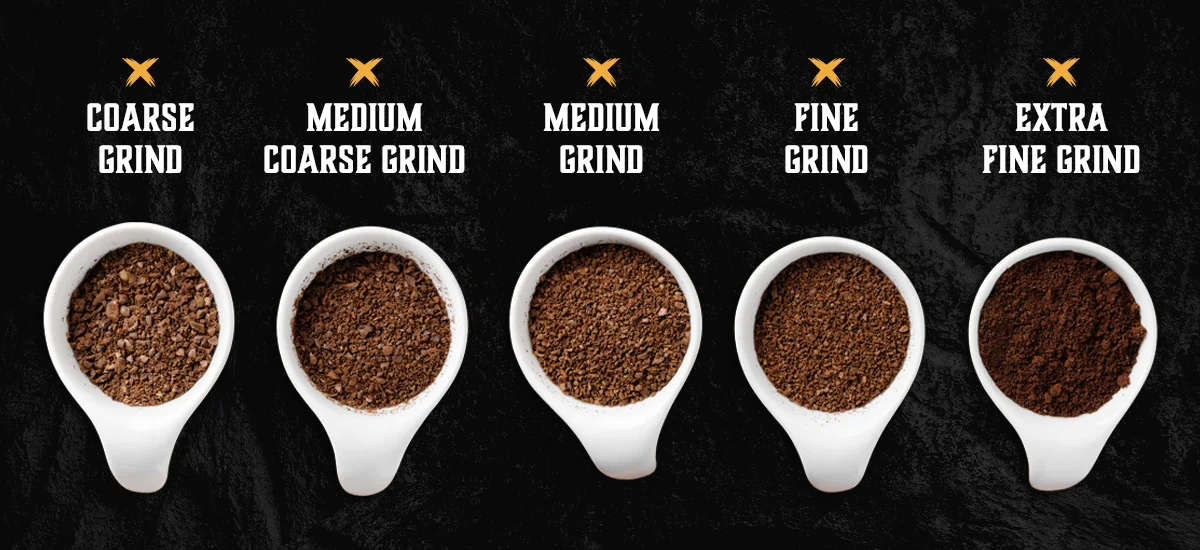
1. Grind Size
Finer grinds expose more surface area → faster extraction.
Coarser grinds slow extraction.
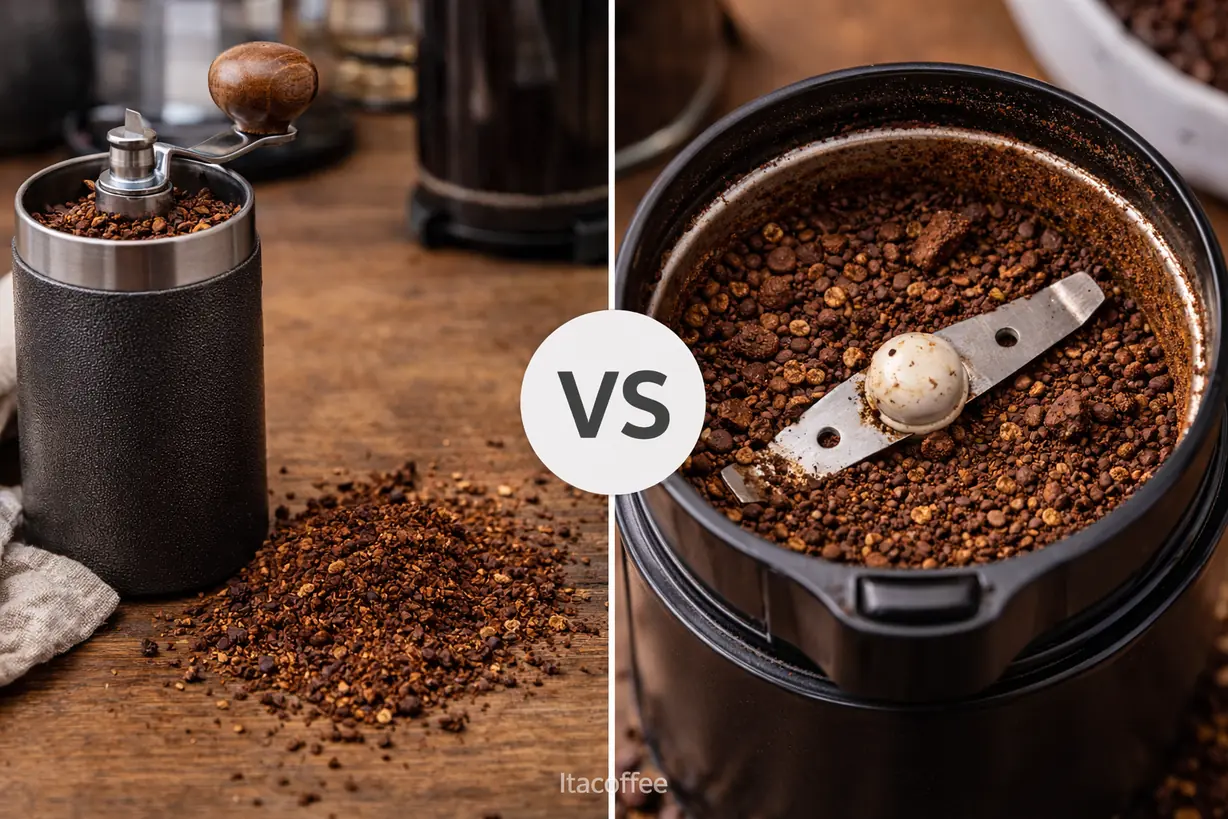
Grind consistency also affects how evenly extraction happens.
See Burr vs Blade Coffee Grinders and Manual vs Electric Coffee Grinder for deeper explanation.
2. Brew Ratio
More water extracts more material.
Less water extracts less.
Ratio controls how far along the extraction timeline you go.
3. Brew Time
Time determines how long water interacts with coffee.
Too short = sour.
Too long = bitter.
Cold brew demonstrates how extended time changes flavor balance dramatically.
Cold Brew at Home shows how long extraction creates smooth, low-acid profiles.
4. Water Temperature
Hotter water extracts faster.
Cooler water extracts slower.
Temperature changes speed, not flavor direction.
Together, these variables explain nearly every extraction problem you’ll encounter.
Why Different Brew Methods Taste Different
The method doesn’t change chemistry—it changes control.
This is why espresso, pour over, and immersion brewing behave so differently—even with the same beans.
- Espresso compresses extraction into seconds using pressure.
See how espresso extraction works in practice. - Pour over stretches extraction using flow and gravity.
Learn how pour over controls extraction through flow rate. - Dripper geometry also influences flow behavior.
Flat-Bottom vs Conical Drippers explains how shape affects extraction patterns. - French press immerses coffee completely and waits.
Explore immersion brewing with a French press.
Extraction Is About Control, Not Recipes
Recipes are training wheels.
Once you understand extraction, better coffee usually comes from small adjustments,
not new equipment.
How to Brew Better Coffee at Home (Without Buying New Gear) shows how understanding variables matters more than buying upgrades.
If you’re tempted to solve problems by upgrading gear,
Why Expensive Coffee Gear Doesn’t Fix Bad Coffee explains why extraction knowledge matters more than price tags.
- Diagnose bad coffee by taste
- Adjust grind instead of blaming beans
- Fix sour or bitter cups logically
A Simple Mental Model
If your coffee tastes wrong, ask only one question:
Did I extract too little, or too much?
Then adjust one variable—not everything at once.
This is how professionals dial in coffee.
It’s also how beginners stop guessing.
Final Thought from ITA Coffee
This guide is meant to be a foundation, not a recipe.
At ITA Coffee, we believe great coffee comes from understanding cause and effect.
When coffee tastes wrong, it’s not failing — it’s talking.
Bitterness and sourness are feedback, not mistakes.
Learn to read the signals, and every brew becomes a lesson instead of a disappointment.
— itacoffee | Brewing Guides for curious, thoughtful coffee makers
Editorial note: This article was developed with AI-assisted drafting and human review
to ensure clarity, accuracy, and a non-commercial educational tone.