Coffee brewing often looks mysterious, even when the explanation is very physical and very ordinary.
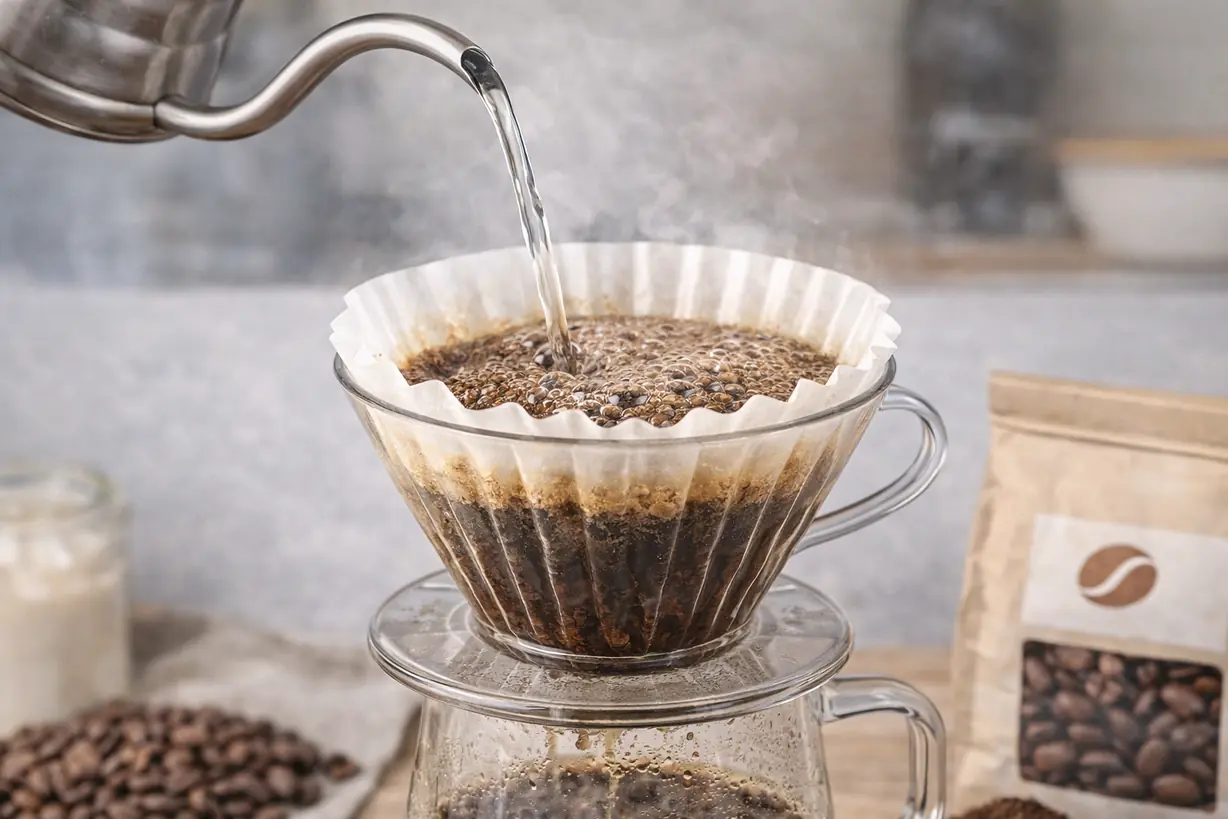
One of the most misunderstood moments in coffee brewing happens right at the beginning of brewing—when hot water touches fresh coffee grounds and they suddenly swell, bubble, and rise. Some people call it foam. Others think something has gone wrong.
This brief moment is called coffee blooming, and it plays a quiet but important role in how your coffee tastes.
In This Guide
What Does “Blooming” Mean in Coffee?
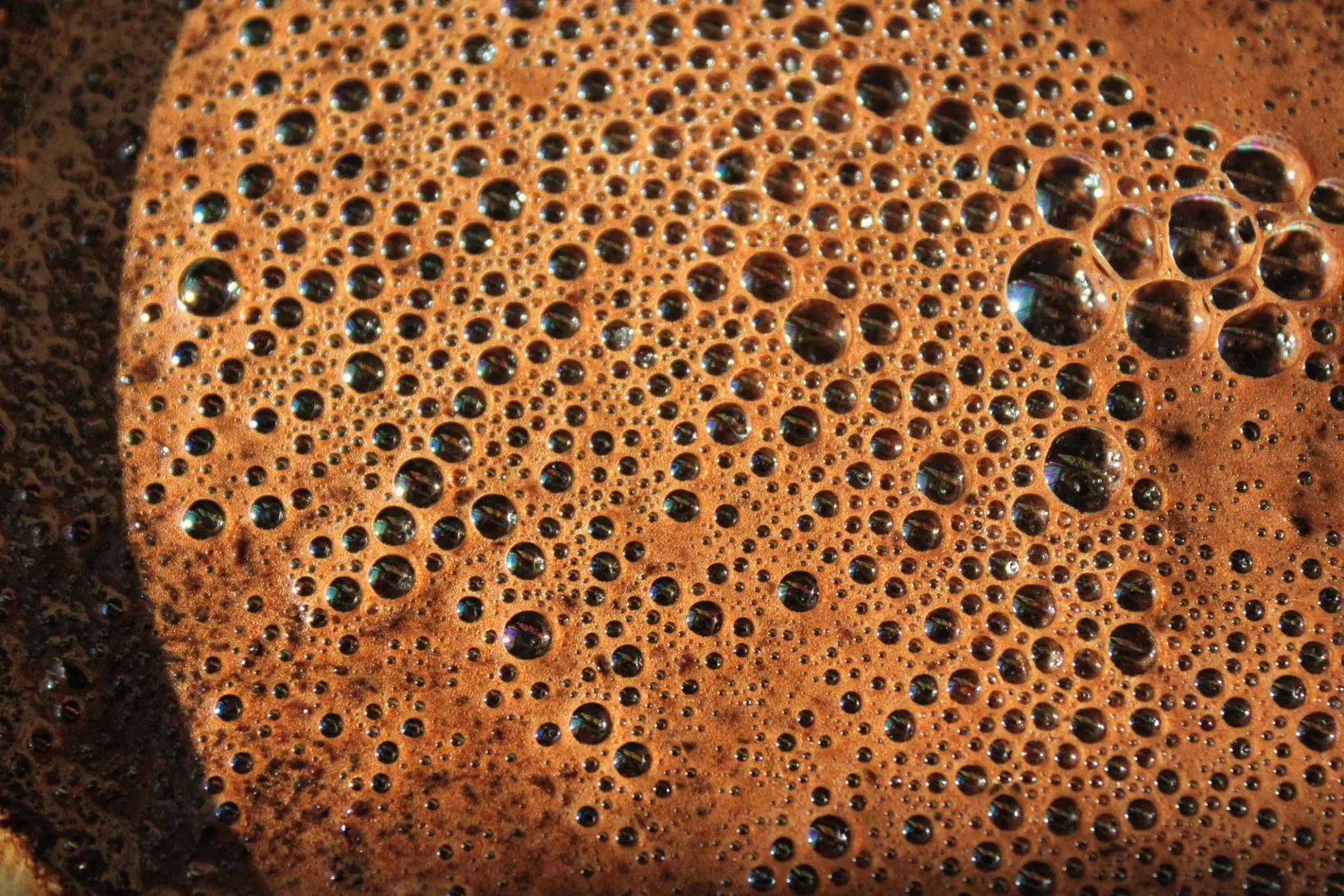
Coffee blooming refers to the rapid release of carbon dioxide gas when hot water first contacts freshly ground coffee.
If the coffee is fresh, the grounds expand and bubble as gas escapes. This bubbling is not crema and not flavor itself—it is simply carbon dioxide leaving the coffee.
Blooming usually lasts about 30 to 40 seconds and is most visible in manual brewing methods like pour over and French press.
Why Fresh Coffee Contains Carbon Dioxide
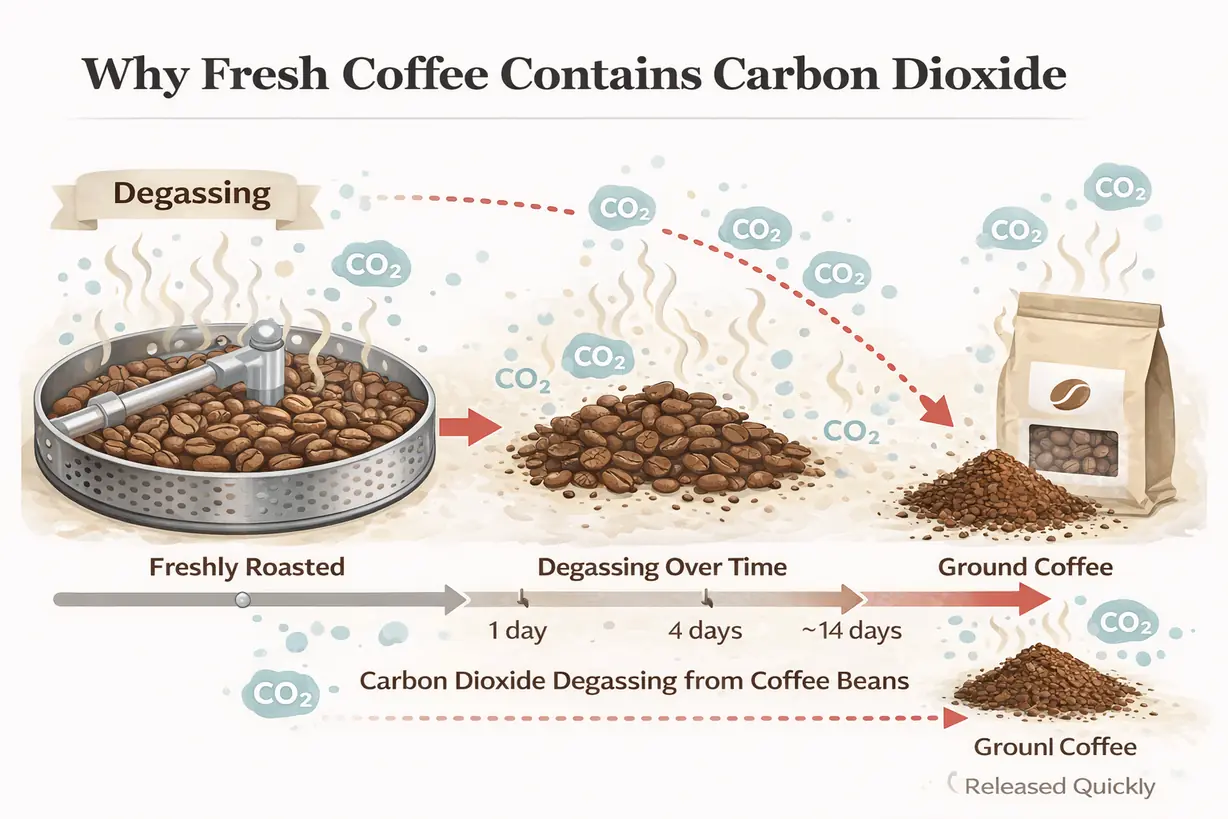
After roasting, coffee beans slowly release carbon dioxide. This process is known as degassing.
In the first few days after roasting, degassing is most intense. The largest amount of gas escapes shortly after roasting, then gradually declines over roughly two weeks.
When coffee is ground, degassing speeds up dramatically because grinding increases surface area.
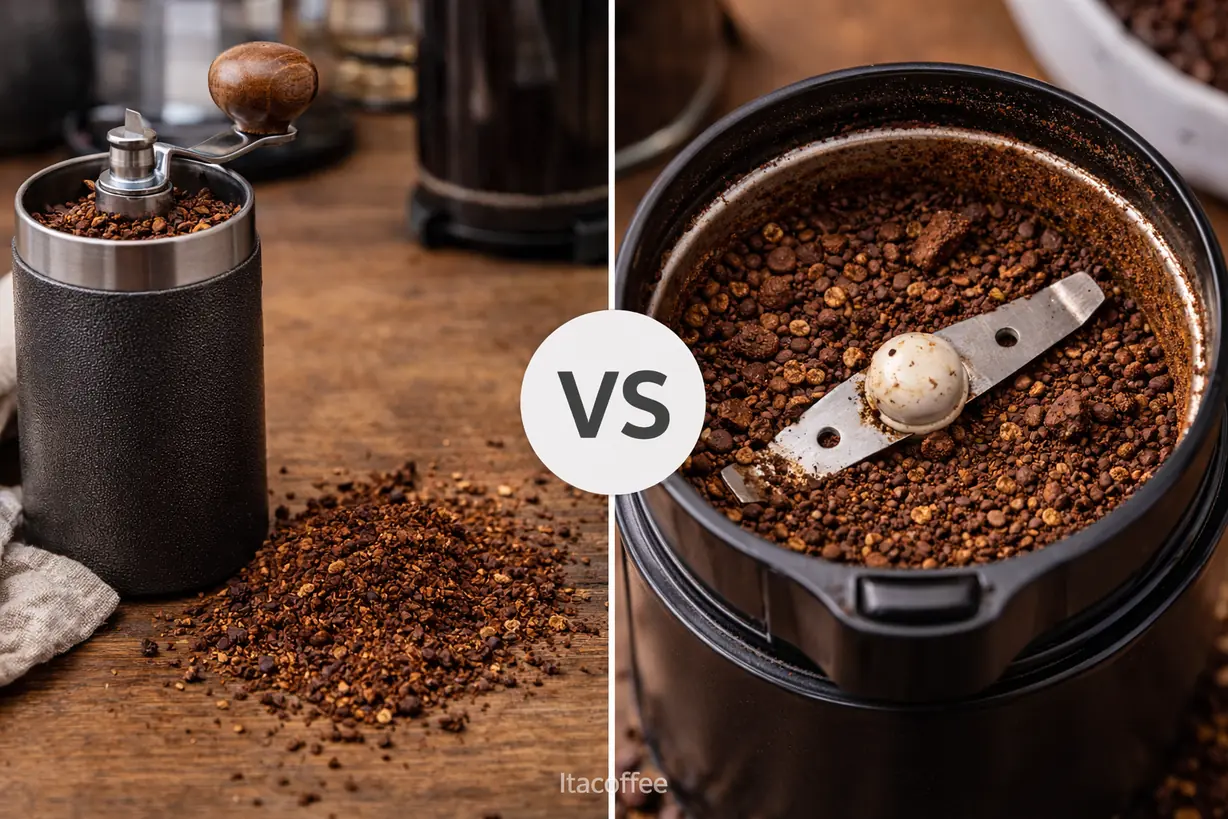
This is one reason fresh coffee should be ground just before brewing. Grind consistency also affects how evenly gas escapes and how evenly water extracts flavor — a principle explored further in Burr vs Blade Coffee Grinders and Manual vs Electric Coffee Grinder.
Blooming is closely tied to how extraction works. For a deeper explanation of this relationship, see Coffee Extraction Explained.
Why Blooming Improves Coffee Flavor
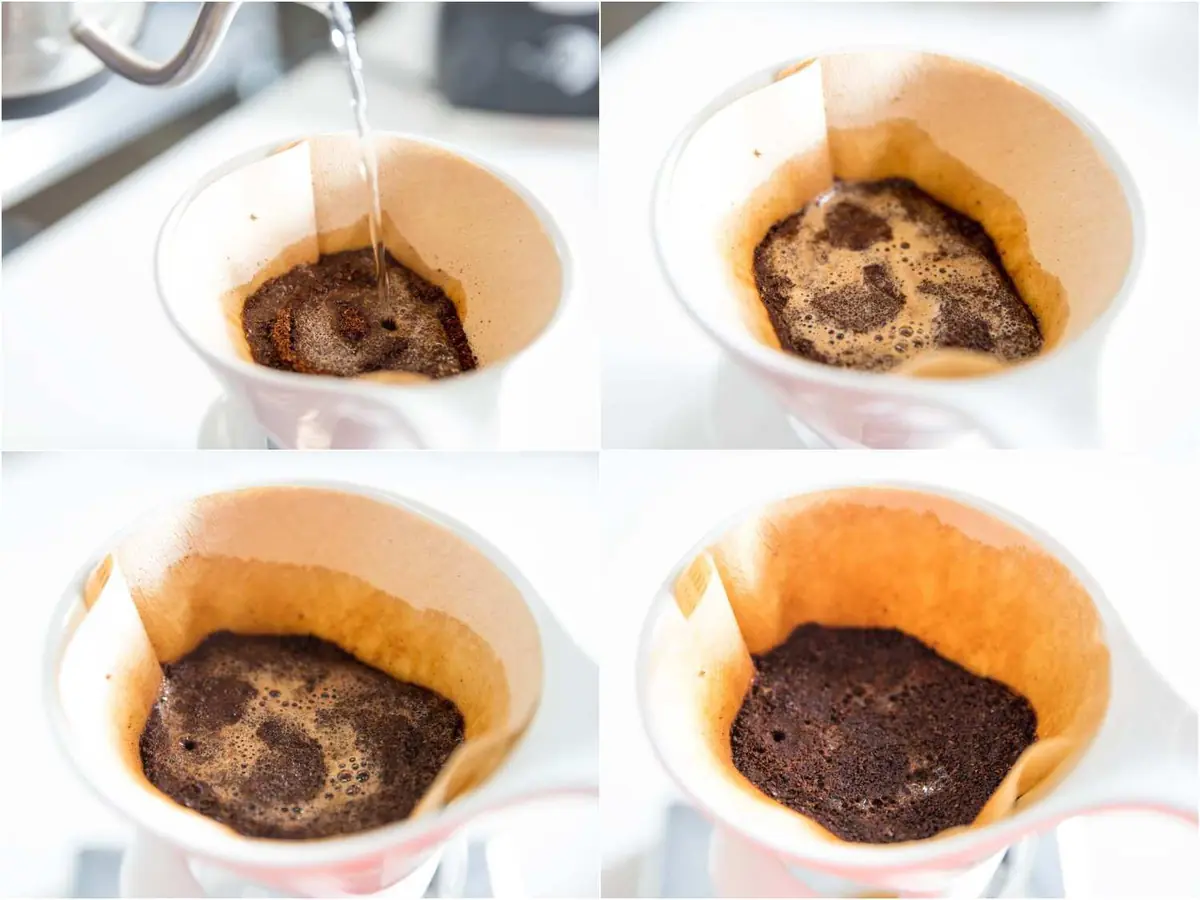
Letting coffee bloom improves flavor in two practical ways.
First, carbon dioxide has a sharp, sour taste. If gas remains trapped during brewing, some of that sourness can make its way into the cup. But not all sourness comes from gas alone — extraction imbalance plays a larger role, which is explained in Why Your Coffee Tastes Bitter or Sour.
Second, carbon dioxide repels water. As long as gas is escaping, water cannot evenly contact coffee particles, which interferes with extraction.
Allowing gas to escape first helps water extract aromatics and soluble compounds more evenly. Different brewing methods respond to this step in different ways, which is explored further in How Brewing Methods Affect Coffee Flavor.
How to Bloom Coffee Correctly
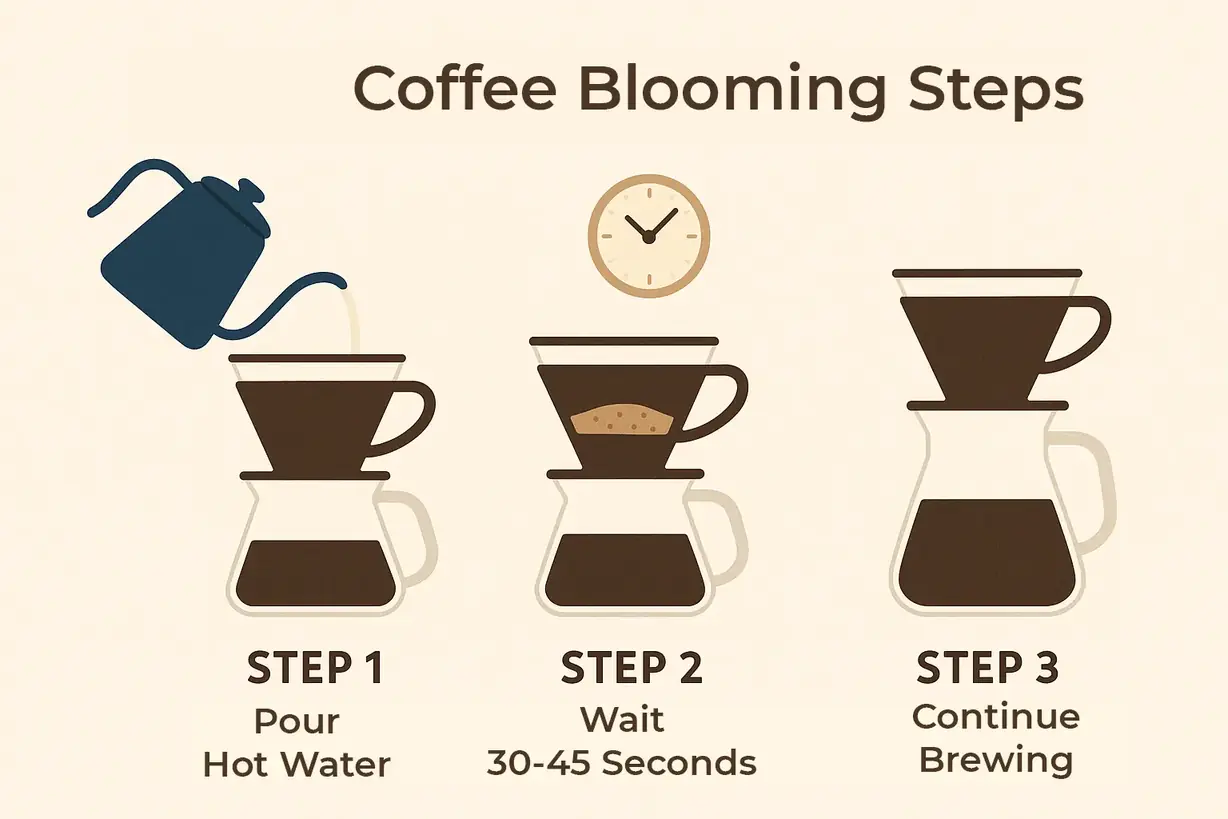
Blooming is simple and requires no additional equipment.
Pour just enough hot water to fully wet the coffee grounds. If you prefer precision, use roughly twice the weight of the coffee in water — part of the larger ratio principles discussed in Coffee Brewing Basics: Grind Size, Ratio, and Time. Otherwise, pour until all grounds are saturated.
Wait for 30 to 40 seconds while the coffee bubbles and expands. Once the bubbling slows, continue brewing as usual.
A basic burr grinder is usually enough — you don’t need expensive equipment to bloom properly, as discussed in Why Expensive Coffee Gear Doesn’t Fix Bad Coffee.
No special tools. No advanced techniques. Just a short pause.
When Blooming Matters Most—and When It Doesn’t

Blooming matters most when coffee is freshly roasted and freshly ground.
Roast level also influences how much gas is trapped in the bean structure. Lighter roasts tend to retain more carbon dioxide than darker roasts, which is explained in Dark Roast vs Light Roast.
When coffee is old or pre-ground long in advance, much of the carbon dioxide has already escaped. In those cases, blooming may not change the cup very much.
This difference is explained in more detail in Pre-Ground vs Fresh Ground Coffee.
Blooming is not a rule. It is simply a response to freshness.
Final Thought from ITA Coffee
Coffee blooming is not a ritual or a trend. It is a brief pause that allows coffee to release something it no longer needs.
By letting carbon dioxide escape before full extraction begins, water can do its job more evenly. The result is a cleaner, more balanced cup—without adding complexity to your routine.
Better coffee does not come from chasing techniques in isolation. It comes from understanding how grind size, ratio, roast level, and extraction work together — principles outlined in Coffee Knowledge: Learn the Foundations Behind Every Great Cup.
At itacoffee, we believe better coffee comes from understanding why small steps exist, not blindly following them. Blooming isn’t about technique for its own sake—it’s about removing friction between water and coffee.
When coffee tastes wrong, it’s not failing—it’s talking. Bitterness and sourness are feedback, not mistakes.
Learn to read the signals, and every brew becomes a lesson instead of a disappointment.
— itacoffee | Brewing Guides for curious, thoughtful coffee makers
Editorial note: This article was developed with AI-assisted drafting and human review
to ensure clarity, accuracy, and a non-commercial educational tone.