
The flat white is often confused with a latte or cappuccino. When done right, it’s neither.
Its identity comes from espresso strength and very fine microfoam—smooth, glossy, and flat on top.
If you’re unsure what “strength” really means in coffee terms, our guide on coffee strength vs extraction clarifies why more coffee doesn’t always mean a stronger-tasting drink.
This guide explains the principles behind a good flat white so you can make one consistently, even at home.
In This Guide
What Is a Flat White?
A flat white is an espresso-based milk drink defined by:
- Strong espresso presence
- Steamed milk with minimal foam
- A flat, glossy surface (no thick foam cap)
Typical structure:
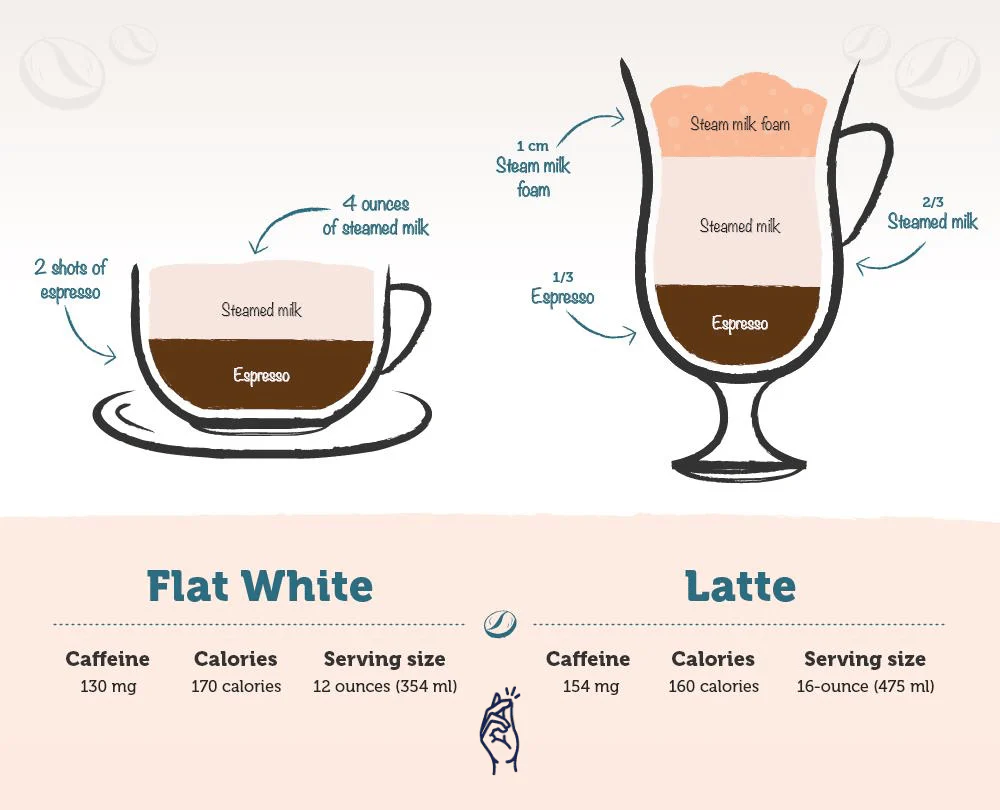
- Double espresso
- 120–150 ml steamed milk
- Very thin microfoam layer
Compared to a latte, a flat white has less milk and more coffee intensity.
Equipment Basics (What Actually Matters)
You don’t need special equipment—just tools that allow control.
Essential Tools
- Espresso-capable machine
- Coffee grinder
- Milk pitcher (small to medium size)
- Scale (recommended)
Grinder quality matters more than people expect.
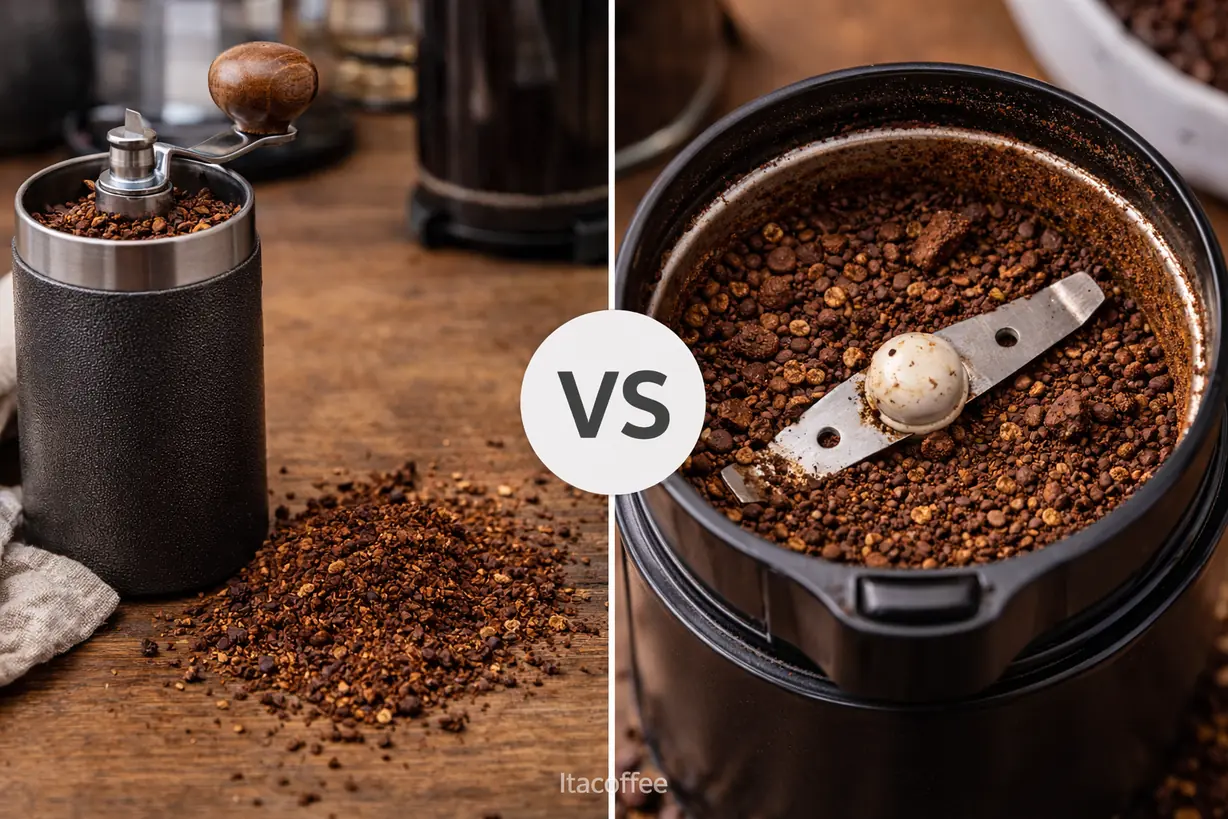
If you’re choosing between manual and electric models, this comparison explains the trade-offs clearly: Manual vs Electric Coffee Grinder.
And if you’re wondering why burr grinders are strongly recommended for espresso, see: Burr vs Blade Coffee Grinders.
👉 Principle: Flat white rewards precision. Small errors are noticeable.

Core Parameters (Where Flat White Is Defined)
Espresso
- Dose: 18–20 g
- Yield: 36–40 g
- Time: 25–30 seconds
Most flat whites use a double shot to keep coffee dominant.
If these numbers feel mechanical, they are—but they shape flavor directly.
For a deeper explanation of why timing and yield matter, see Coffee Extraction Explained
.
Milk
- Milk type: Whole milk preferred
- Temperature: 60–63°C (140–145°F)
- Texture: Very fine microfoam, almost paint-like
If you can feel bubbles, the milk is already too foamy.
Heating milk too far dulls sweetness and flattens flavor contrast.
Understanding how roasting shapes flavor helps explain this effect—explored in Dark Roast vs Light Roast.
Step-by-Step: How to Make a Flat White
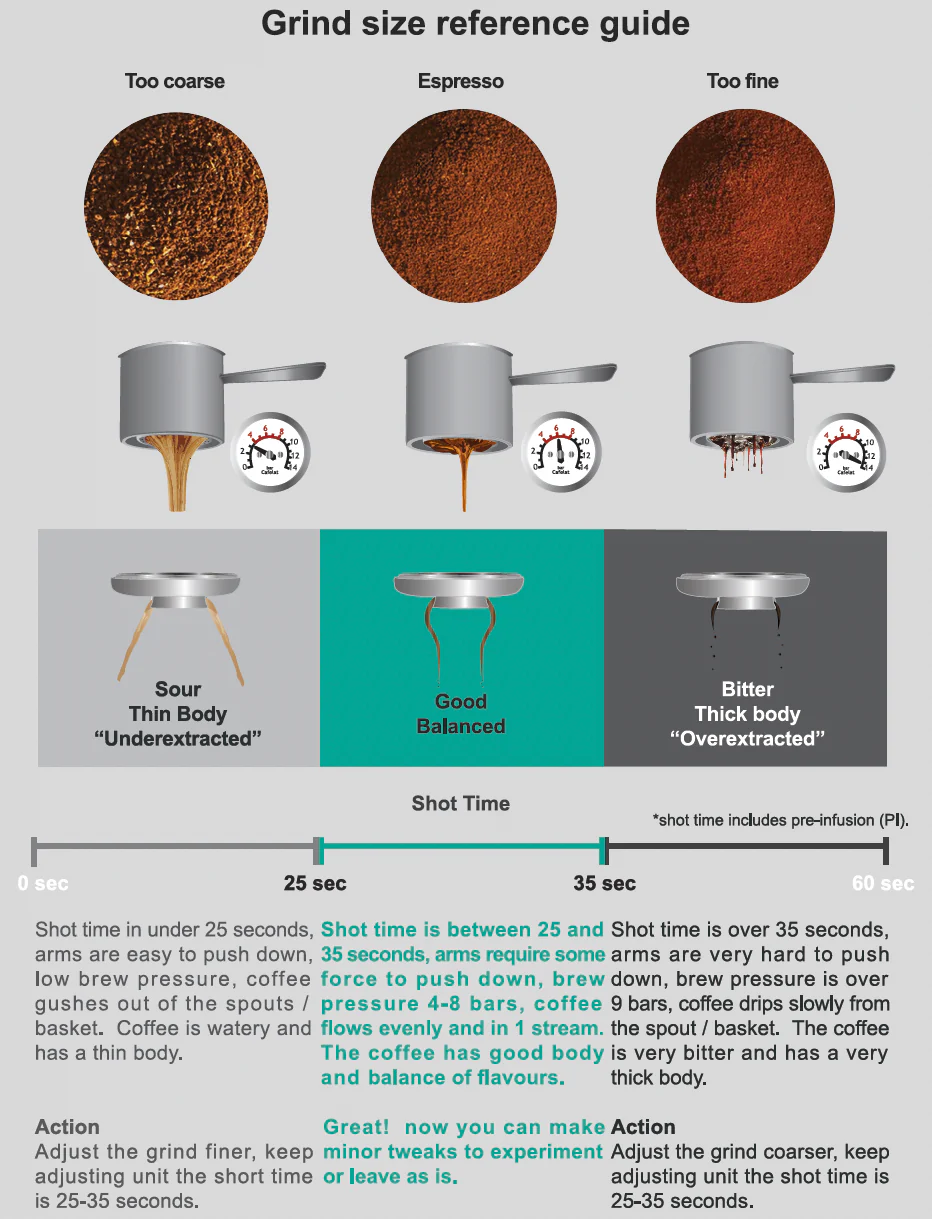
Step 1: Brew the Espresso
- Grind fine
- Dose 18–20 g
- Extract 36–40 g in 25–30 seconds
- Brew into a preheated cup (150–180 ml)
Taste matters here—the milk won’t hide flaws.
If your flat white tastes bitter, sour, or dull, the problem almost always starts with espresso extraction.
Our guide on why coffee tastes bitter or sour shows how flavor is a signal—especially in low-milk drinks where mistakes are exposed.
Step 2: Steam the Milk (Minimal Air)
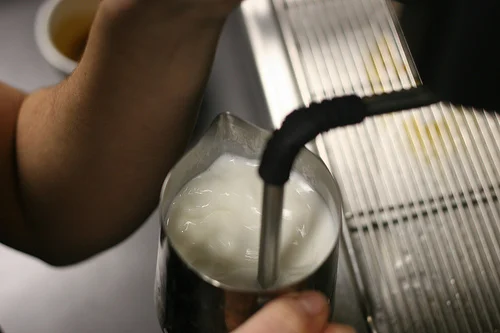
- Start with cold milk
- Add very little air (shorter than latte)
- Focus on creating glossy, uniform texture
- Stop heating at 60–63°C
Your milk should look like wet paint, not foam.
Step 3: Combine and Finish
- Pour milk smoothly into espresso
- Keep the surface flat and even
- Latte art is optional—but should sit inside the surface, not on foam
The drink should look calm, not layered.

Common Flat White Mistakes (And Fixes)
| Problem | Likely Cause | Fix |
|---|---|---|
| Too milky | Excess milk volume | Reduce milk |
| Too foamy | Too much air | Shorten air phase |
| Weak coffee | Single shot | Use double espresso |
| Dull flavor | Milk too hot | Lower final temperature |
If your drink consistently tastes unbalanced, it may not be the milk at all.
Sometimes the root cause is brew ratio. See: Coffee Brewing Basics: Grind Size, Ratio, and Time.
Flat White vs Similar Drinks
If you want a broader perspective on how brewing method changes flavor structure—not just milk texture—see: How Brewing Methods Affect Coffee Flavor.
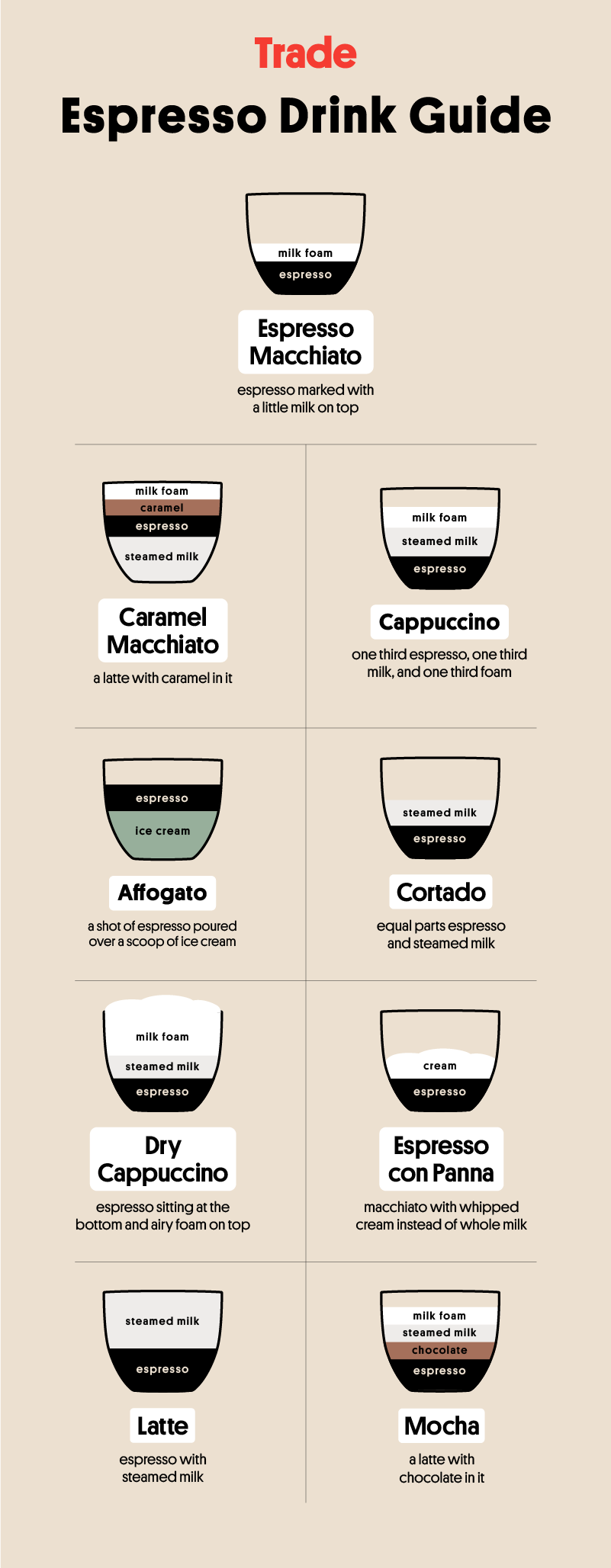
| Drink | Foam Level | Coffee Presence |
|---|---|---|
| Latte | Thin foam | Mild |
| Cappuccino | Thick foam | Balanced |
| Flat White | Minimal foam | Strong |

Want Better Consistency?
- Stable espresso extraction
- Careful milk steaming
- Repeatable ratios
More expensive equipment won’t fix unstable fundamentals.
If you’re tempted to upgrade before mastering technique, read: Why Expensive Coffee Gear Doesn’t Fix Bad Coffee.
If you’re comparing espresso machines, grinders, or milk pitchers, our Coffee Toolss & Reviews
section explains how different types of tools influence flat white results—without pushing brands.
Final Thoughts from itacoffee
A flat white is about restraint.
Less foam. Less milk. More clarity.
At itacoffee, we believe learning coffee fundamentals gives you control—not confusion.
Master texture and ratio once, and every flat white becomes easier to repeat.
— itacoffee | Brewing Guides for thoughtful coffee makers
This article was written and optimized with the assistance of AI, then reviewed and refined to maintain a clear, educational, non-commercial tone.
Recommended Next Guides
- Prefer more milk sweetness? → Latte Guide
- Enjoy stronger espresso focus? → Macchiato Guide




Leave a Reply