how to brew pour over coffee using a V60 dripper. This step-by-step V60 brewing guide explains grind size, ratios, pouring technique, and common mistakes—clear, practical, and beginner-friendly.
Pour over coffee looks simple: hot water, ground coffee, paper filter.
In practice, small changes in grind size, pouring, and timing can dramatically change the cup.
These variables are the foundation of extraction—explained clearly in Coffee Extraction Explained: How Timing Shapes Flavor.
This guide explains how V60 actually works, so you’re not just following steps—you’re understanding cause and effect.
In This Guide
What Is V60 Pour Over?
The V60 is a cone-shaped pour over dripper designed to give you maximum control over extraction.
Its defining features:
- 60° cone angle
- Large single hole
- Spiral ribs inside the dripper
These allow water flow to be controlled primarily by grind size and pouring, not the brewer itself.
If you’re curious how brewer design changes extraction across methods, see How Brewing Methods Affect Coffee Flavor (From Beans to Cup).
👉 Principle: V60 doesn’t correct mistakes—it reveals them.
If you’re still dialing in the basics, our guide on How to Brew Better Coffee at Home (Without Buying New Gear) explains the fundamentals that apply to all methods.
What You Need (Function Over Brand)
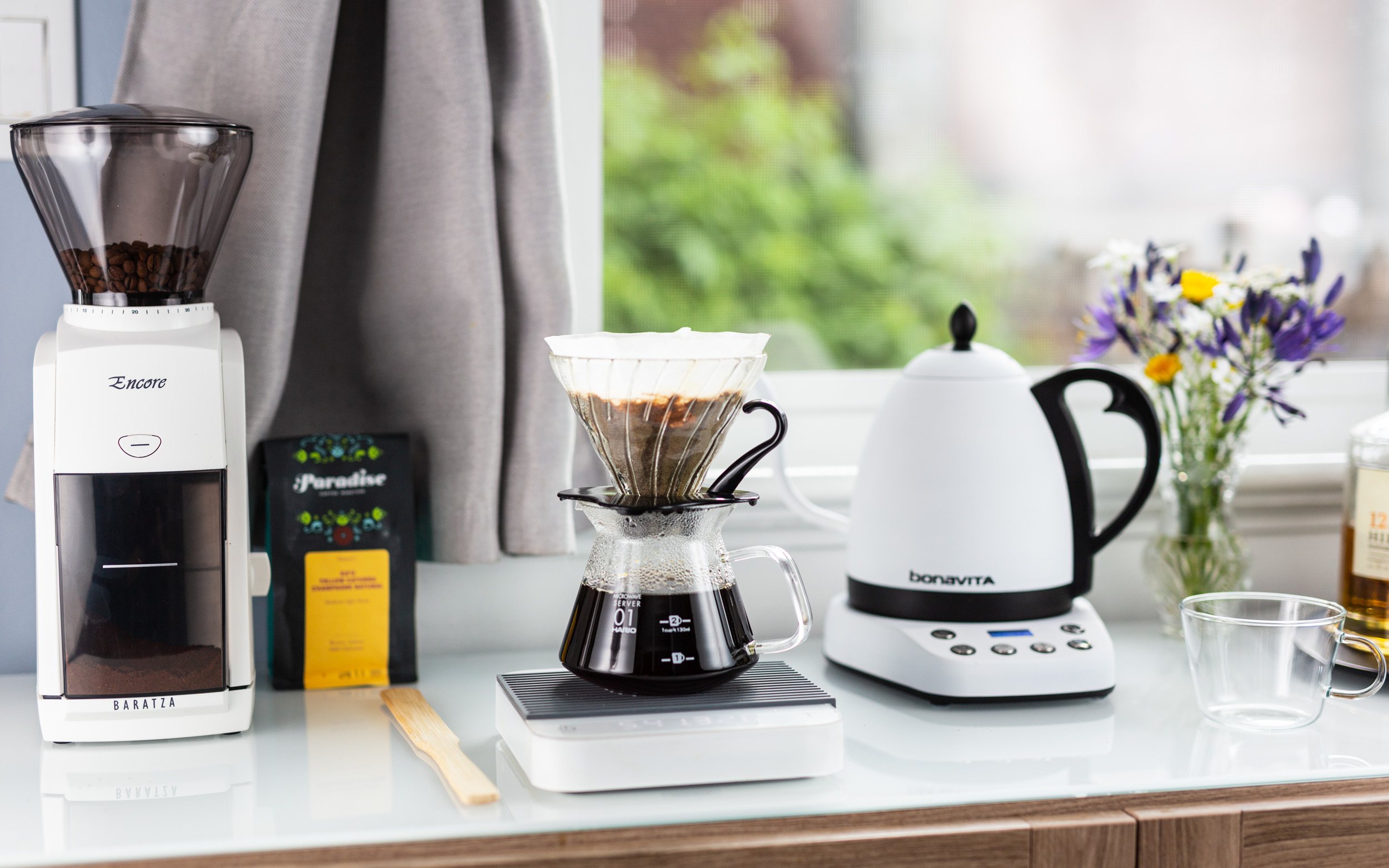
You don’t need expensive tools, but you do need control and consistency.
Better equipment doesn’t automatically fix bad technique—explained in Why Expensive Coffee Gear Doesn’t Fix Bad Coffee.
Essential Tools
- V60 dripper
- Paper filter
- Fresh coffee beans
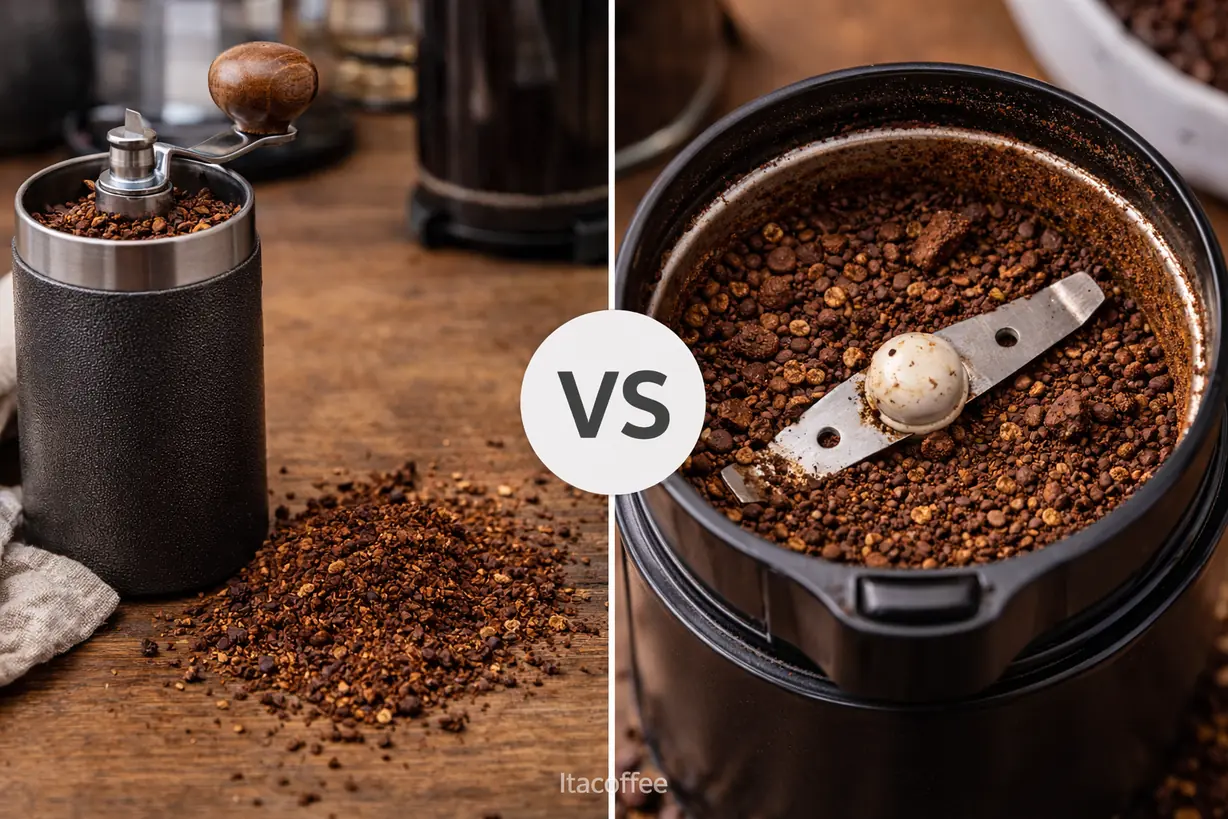
(see Pre-Ground vs Fresh Ground Coffee for why freshness changes extraction) - Grinder (burr preferred — learn why in Burr vs Blade Coffee Grinders, and compare options in Manual vs Electric Coffee Grinder)
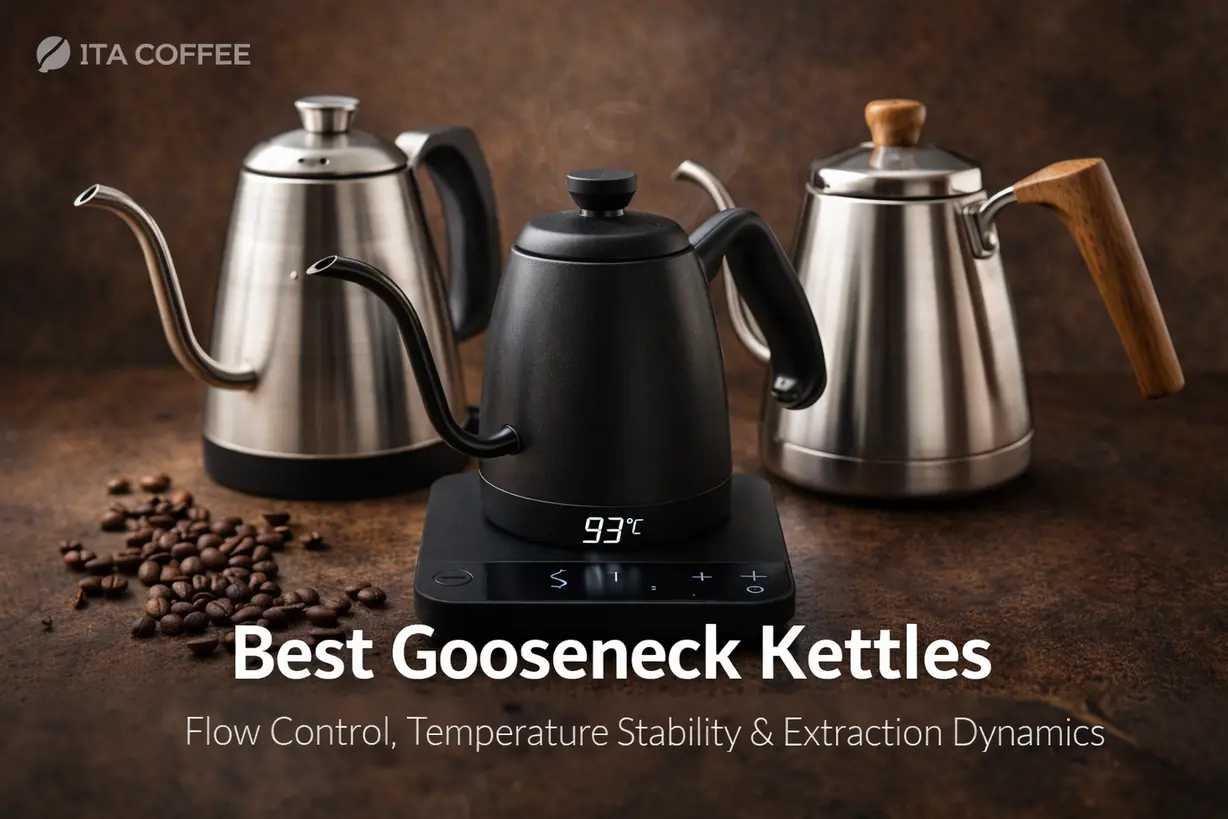
- Gooseneck kettle
- Scale & timer
👉 Principle: Grind consistency matters more than the dripper material.
Core Brewing Parameters (Your Reference Point)
Every pour over method is built on the same three variables: grind size, coffee-to-water ratio, and brewing time.
V60 simply gives you more direct control over them.
For a method-agnostic explanation, see Coffee Brewing Basics: Grind Size, Ratio, and Time.
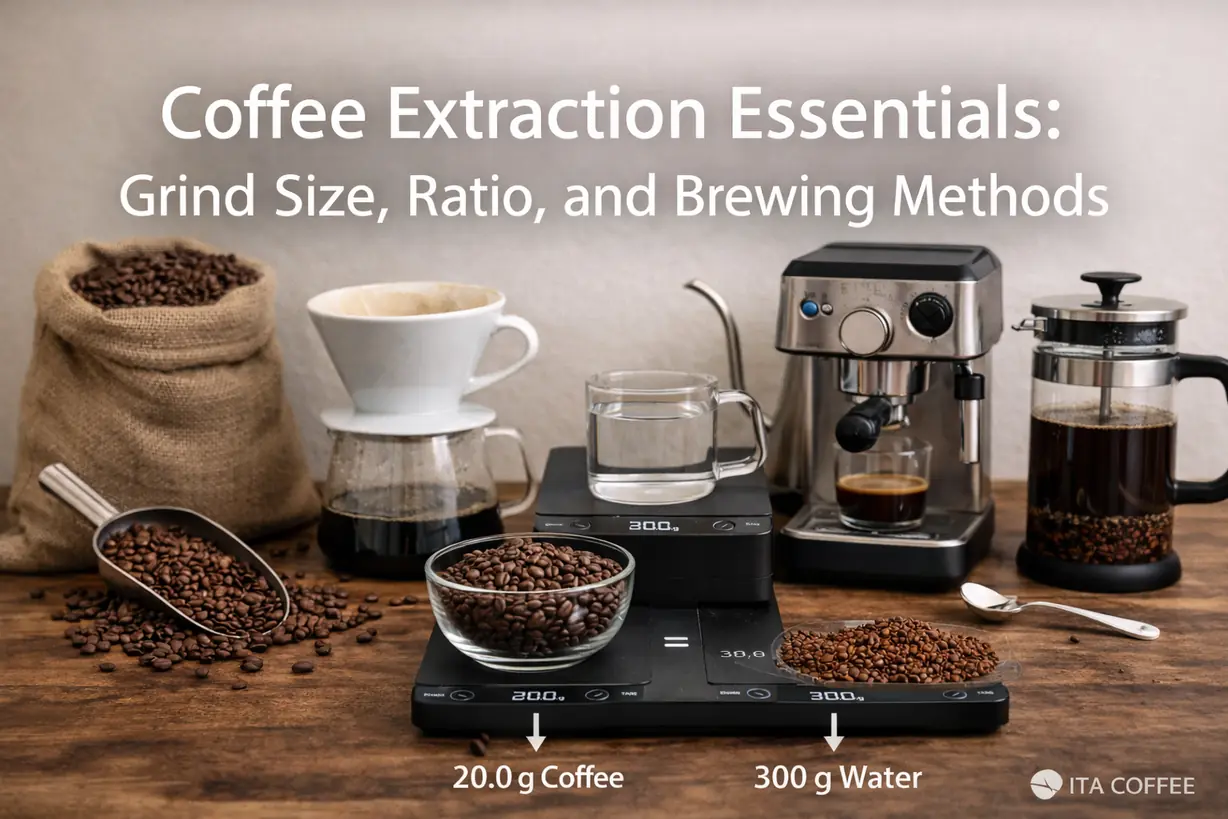
Coffee-to-Water Ratio
A reliable starting ratio:
- 1:15 to 1:17
Example:
- 20 g coffee
- 300–340 ml water
Stronger cup → use less water
Lighter cup → use more water
If you’ve wondered whether adding more coffee automatically makes it stronger, see Is More Coffee Always Stronger? A Brewing Guide to Strength vs Extraction.
Grind Size
- Medium-fine, similar to table salt
Too fine → slow drawdown, bitterness
Too coarse → fast drawdown, sourness
Water Temperature
- 92–96°C (198–205°F)
Lighter roasts benefit from higher temperatures.
See how roast level changes extraction behavior in Dark Roast vs Light Roast: What Roasting Really Changes in Coffee Flavor.
Step-by-Step: V60 Brewing Method
Step 1: Rinse and Preheat
- Place filter in the dripper
- Rinse thoroughly with hot water
- Discard rinse water
This removes paper taste and stabilizes temperature.
Step 2: Add Coffee
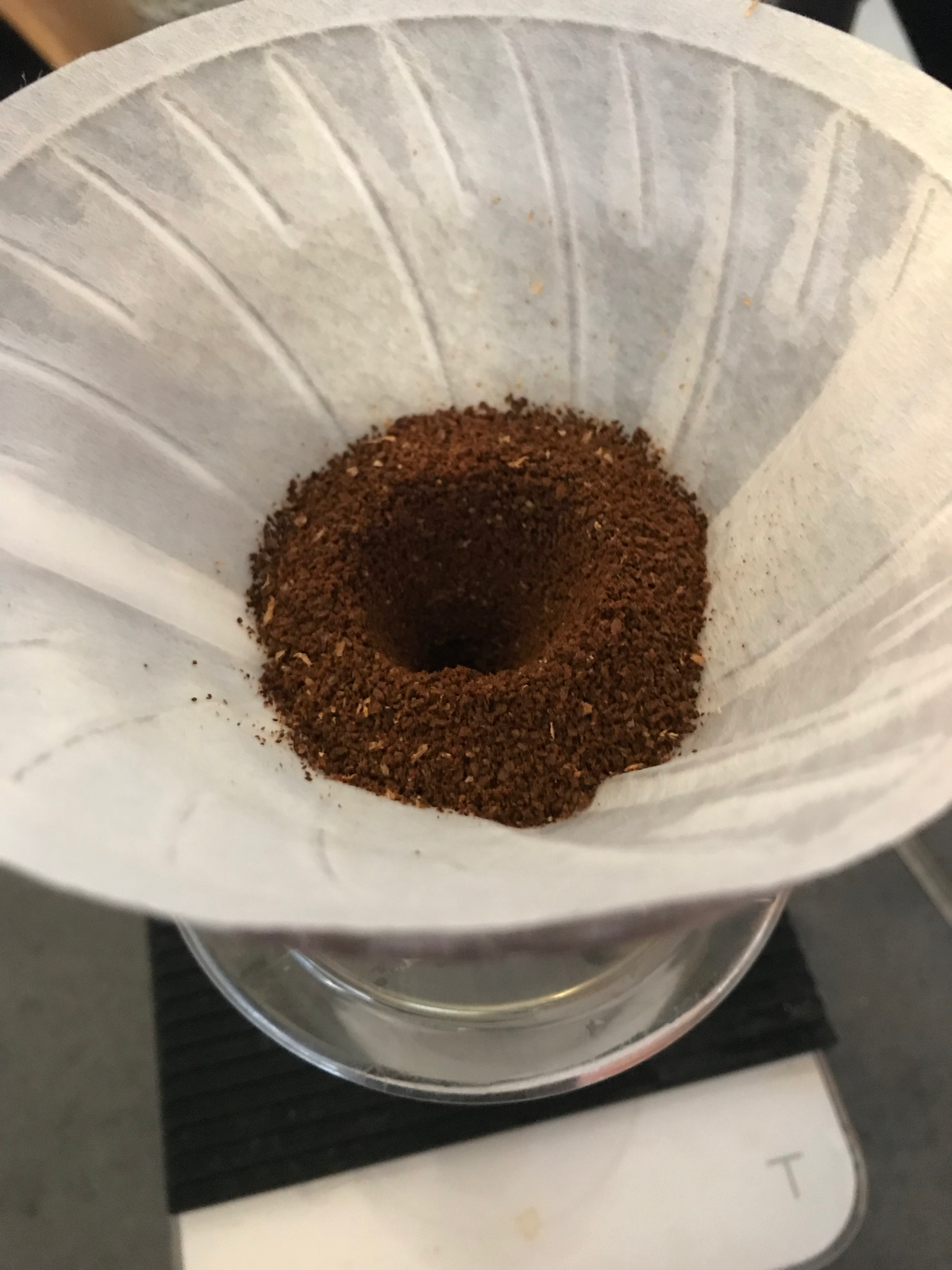
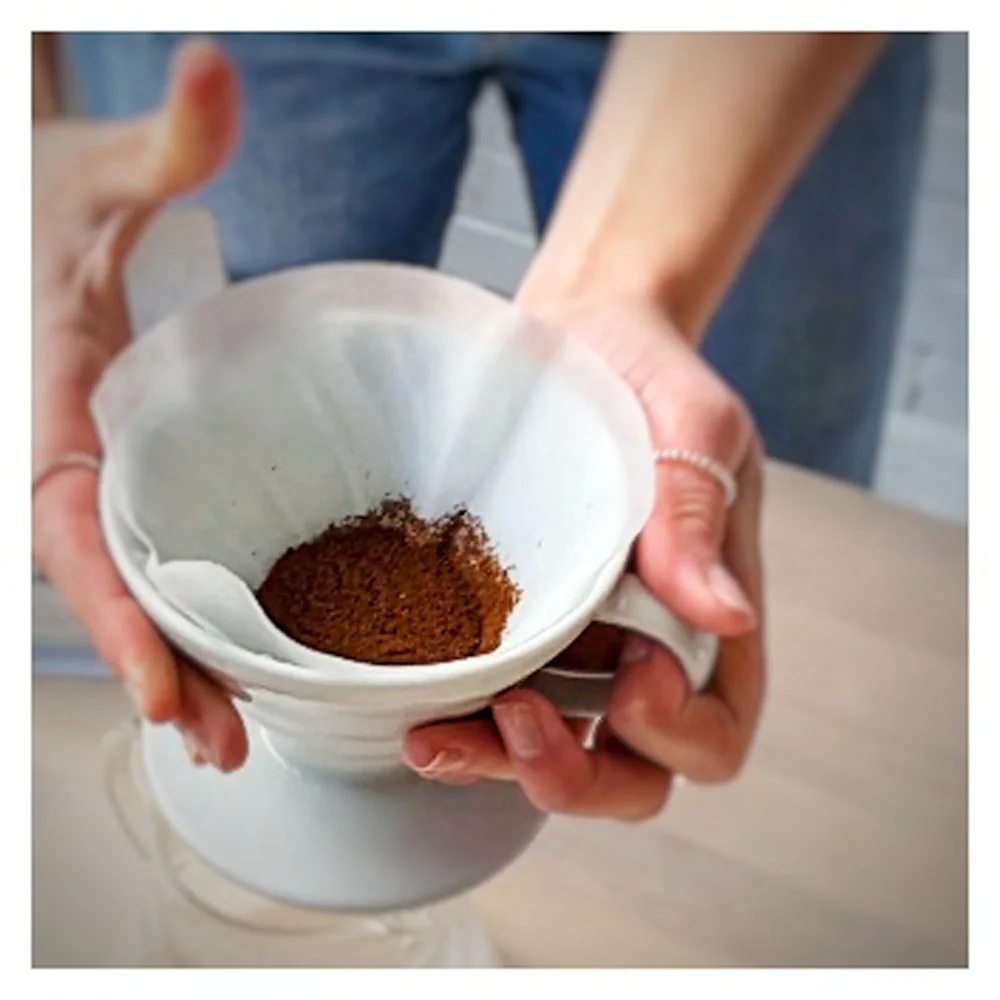
- Add 20 g freshly ground coffee
- Gently shake to level the bed
A flat bed promotes even extraction.
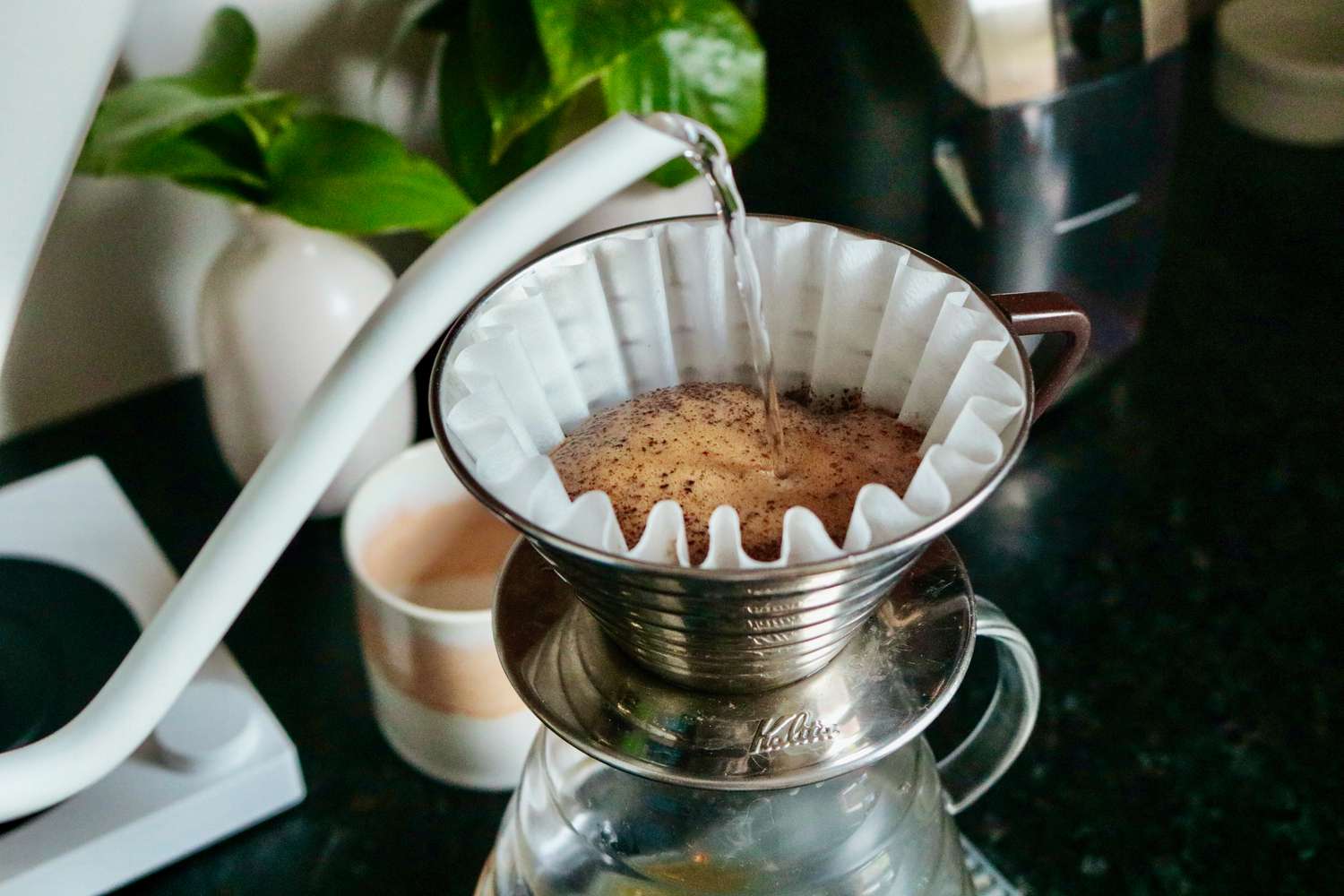
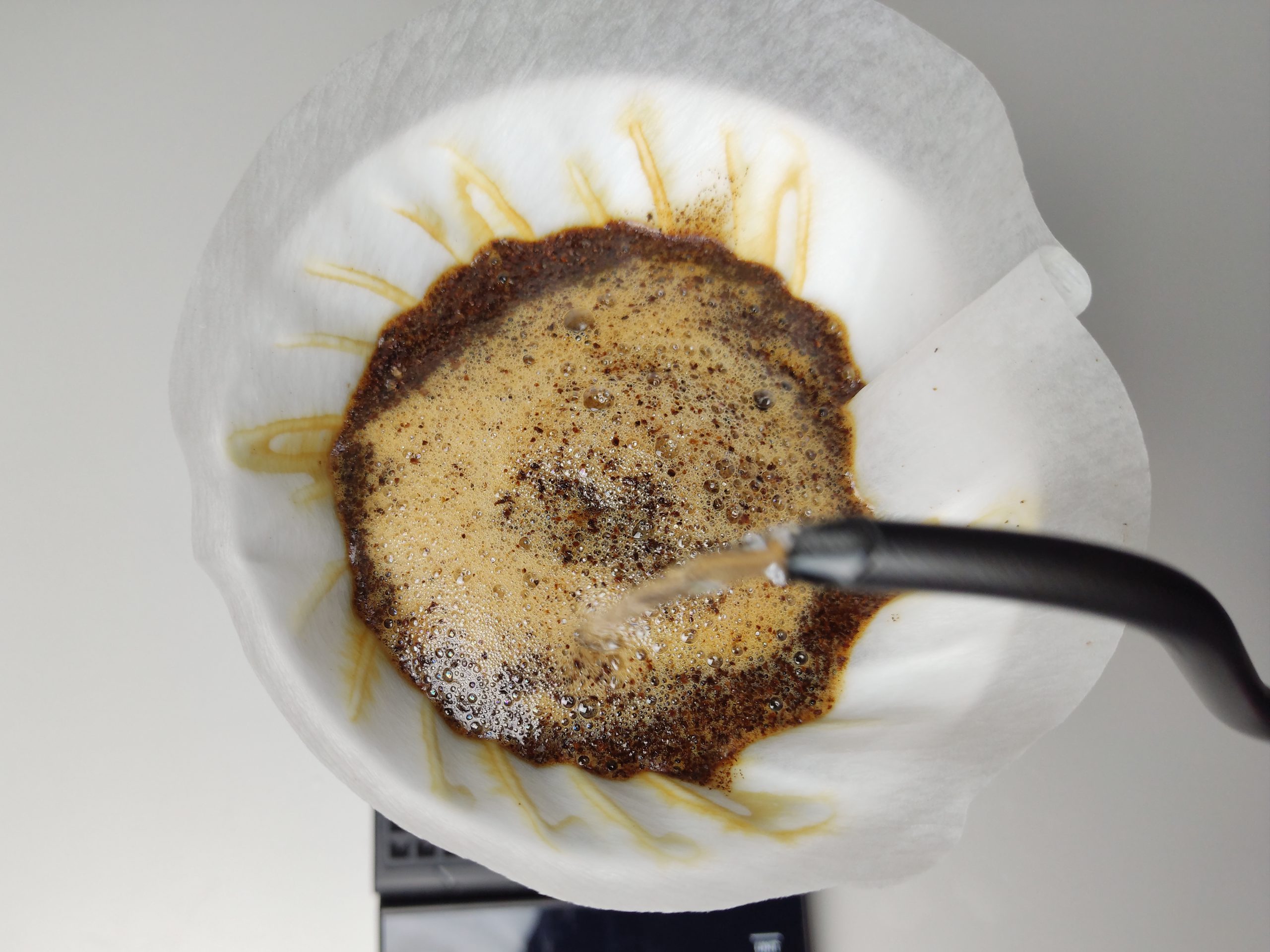
Step 3: Bloom (Critical for Flavor)
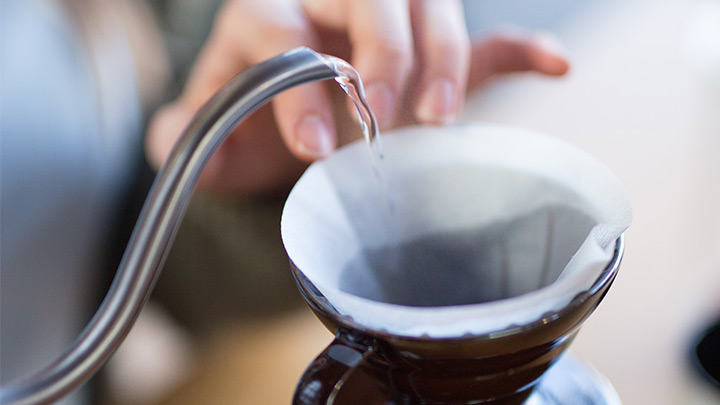
Blooming releases trapped CO₂ and prepares the coffee for extraction.
If you’re unsure why fresh coffee bubbles during brewing, read What Is Coffee Blooming? Why Fresh Coffee Bubbles and Why It Matters.
- Start timer
- Pour 40–50 ml of water
- Ensure all grounds are wet
- Wait 30–45 seconds
Step 4: Main Pour
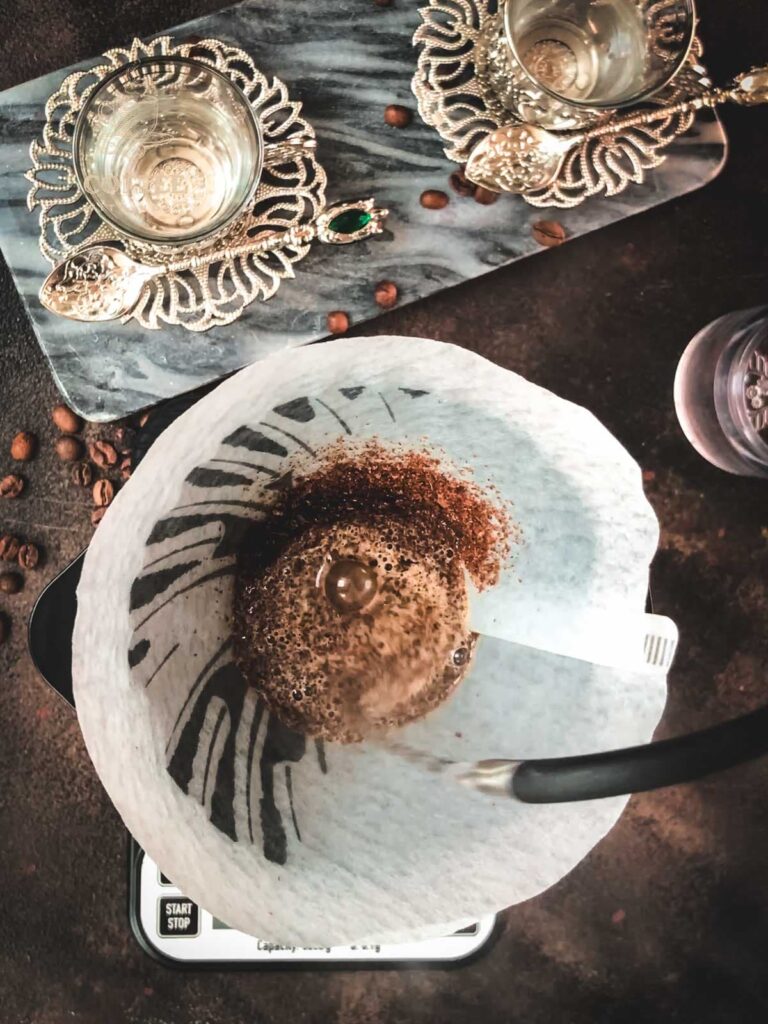
- Pour slowly in small circles
- Keep water level consistent
- Avoid pouring directly on the filter
- Reach total water weight by 2:00–2:30
Control matters more than speed.
Step 5: Drawdown and Finish
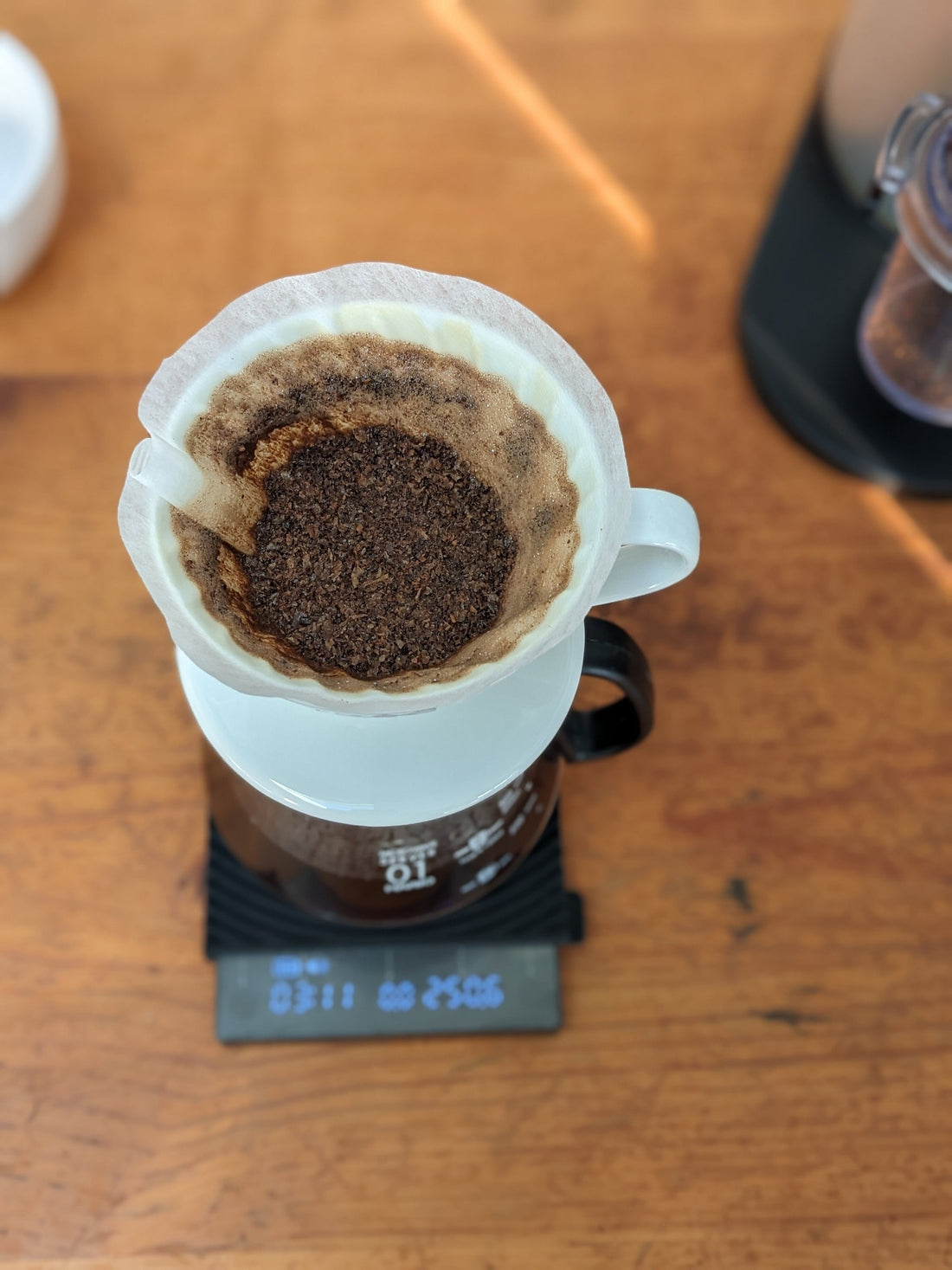
- Total brew time: 2:30–3:30
- Coffee bed should look flat and even
Remove the dripper and serve.
Common V60 Problems (And How to Fix Them)
If your V60 coffee tastes sour, bitter, hollow, or dry, the issue is almost always extraction rather than the dripper itself.
Before adjusting grind size or pouring technique, it helps to understand Why Your Coffee Tastes Bitter or Sour — And What Extraction Has to Do With It.
For deeper theory, revisit Coffee Extraction Explained.
| Taste Issue | Likely Cause | Adjustment |
|---|---|---|
| Sour | Grind too coarse | Grind finer |
| Bitter | Grind too fine | Grind coarser |
| Hollow | Weak ratio | Increase coffee |
| Dry | Over-extraction | Shorten brew time |
Change one variable at a time.
V60 vs Other Pour Over Methods
If you’re comparing cone vs flat-bottom drippers, see Flat-Bottom vs Conical Drippers: How Shape Changes Coffee Flavor.
| Brewer | Flow Control | Flavor Style |
|---|---|---|
| V60 | High (user-driven) | Clear, expressive |
| Kalita Wave | Moderate | Balanced, forgiving |
| Chemex | Slower | Clean, light-bodied |
V60 rewards attention—but gives clarity in return.
If you enjoy black coffee but want something closer to espresso intensity, an Americano offers a useful comparison.
Want More Consistent Pour Over?
Consistency comes from:
- Stable grind size
- Repeatable pouring
- Accurate ratios
Explore all step-by-step methods in our Brewing Guides section, or deepen your foundation in Coffee Knowledge.
If you’re comparing grinders, kettles, or filters, see Coffee Tools: Choosing the Right Gear for Your Brewing Style and our Reviews section.
Milk-based drinks like a latte build on espresso differently, focusing on texture rather than flow control.
Final Thoughts from itacoffee
V60 pour over is not about perfection.
It’s about control and awareness.
At itacoffee, we believe great coffee starts with understanding—not equipment upgrades.
Learn the flow once, and every pour becomes more intentional.
— itacoffee | Brewing Guides for thoughtful coffee makers
This article was written and optimized with the assistance of AI, then reviewed and refined to maintain a clear, educational, non-commercial tone.