Making cold brew coffee at home is simpler than most people expect—once you understand ratios, grind size, and steeping time.
Cold brew is often described as “smooth” or “low-acid,” but many home versions turn out muddy, flat, or oddly bitter.
That usually comes from ratio confusion and over-steeping, not the beans.
If you’re unfamiliar with how ratio, grind size, and extraction work together, our guide on brewing better coffee at home without buying new gear explains these fundamentals in more detail.
This guide explains cold brew as a slow extraction process, so you understand why it works—and how to adjust it confidently at home.
In This Guide
What Is Cold Brew?
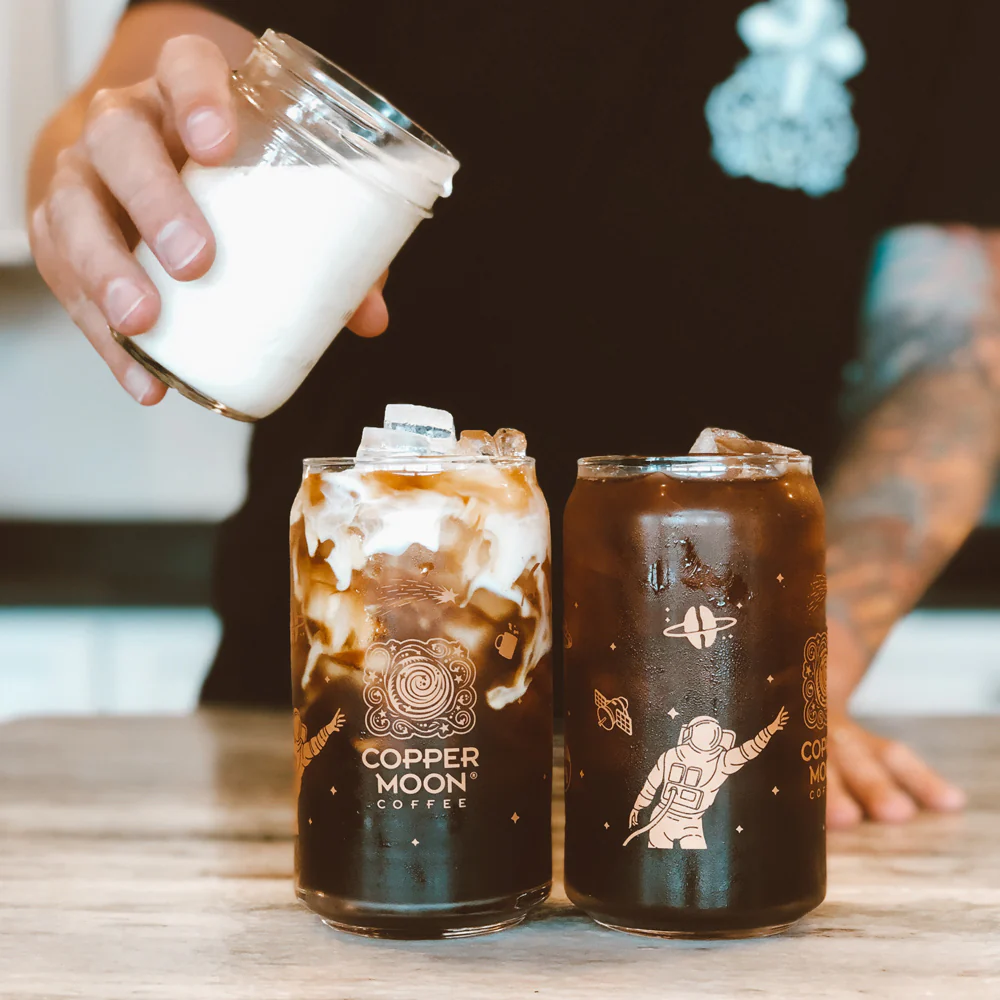
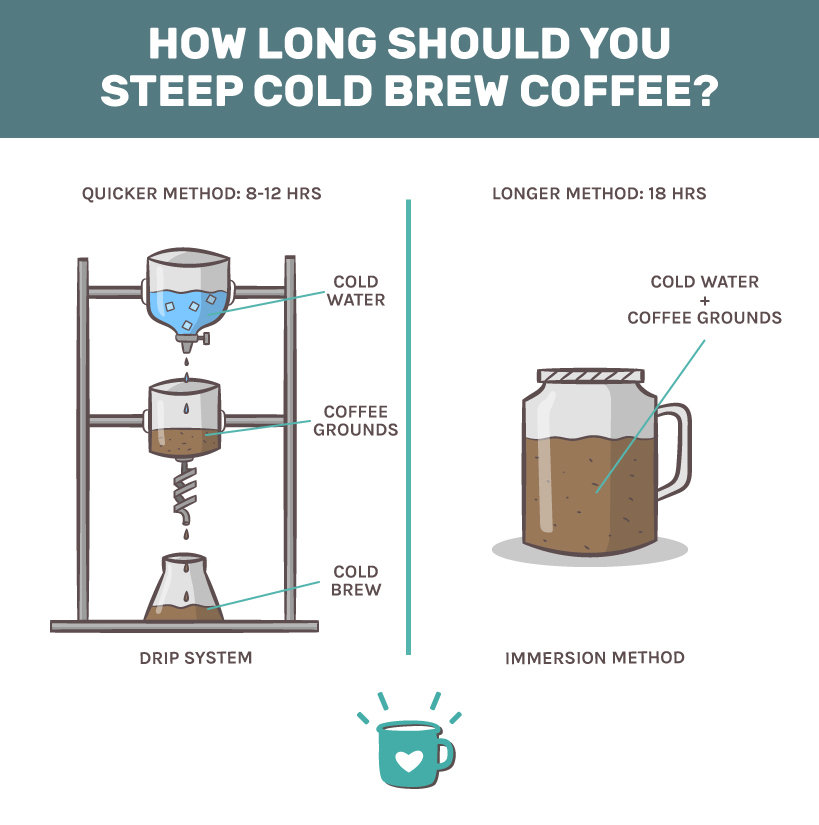
Cold brew is coffee extracted with cold or room-temperature water over many hours.
Key characteristics:
- Long contact time (12–24 hours)
- Low agitation
- Reduced perceived acidity
- Heavier body than most hot brews
👉 Principle: Cold brew trades speed and brightness for smoothness and body.
What You Need (Function Over Tools)
You don’t need special equipment.
Essential Items
- Coffee beans (fresh, medium to dark roast works well — see Dark Roast vs Light Roast: What Roasting Really Changes in Coffee Flavor)
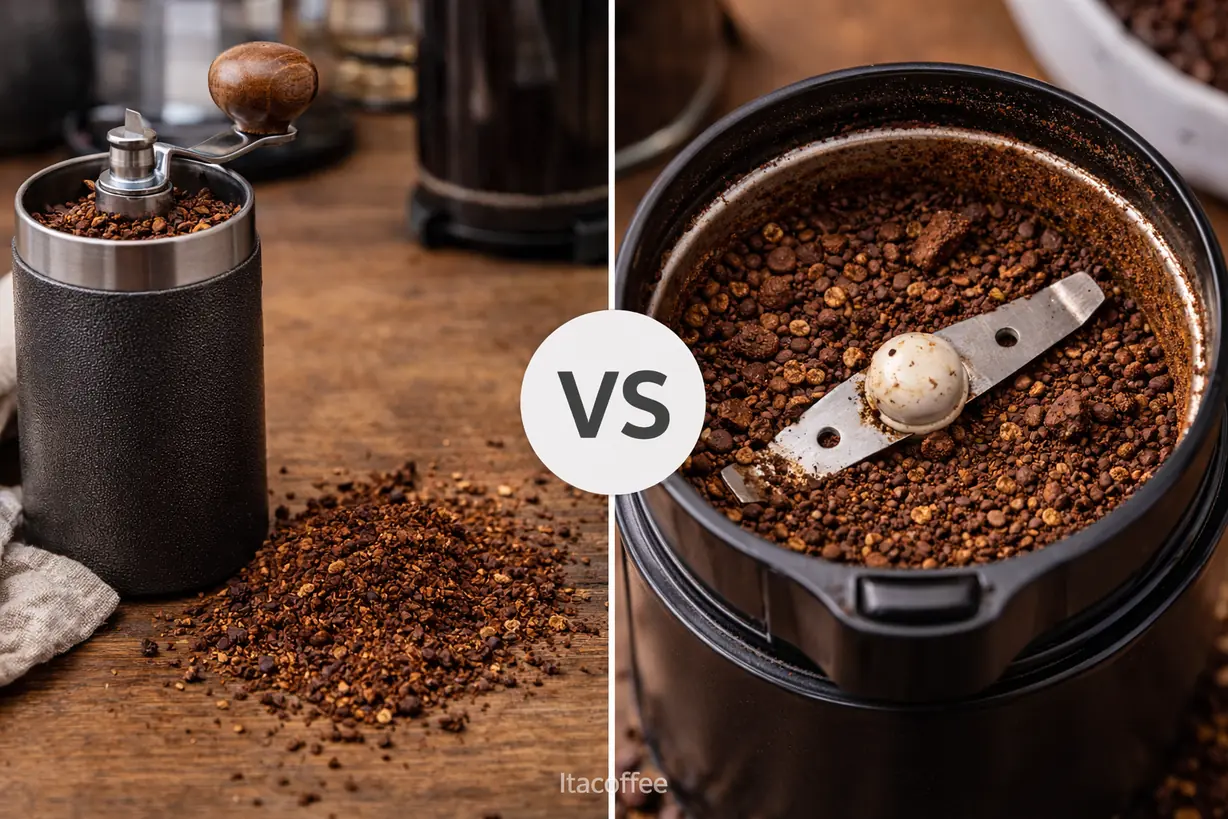
- Grinder (coarse grind — for particle consistency, see Burr vs Blade Coffee Grinders and Manual vs Electric Coffee Grinder)
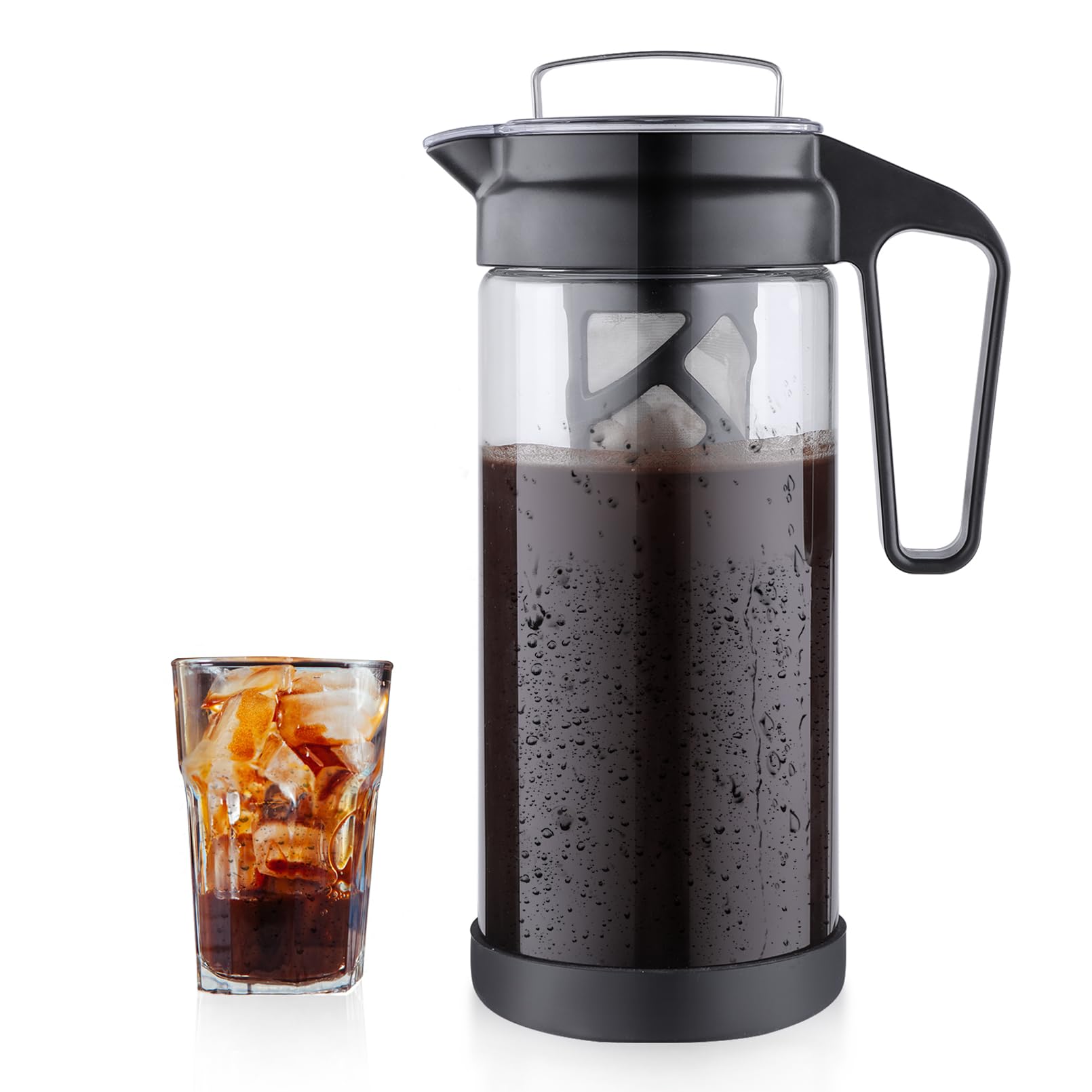
- Container (jar, pitcher, or French press)
- Filter (paper filter, cloth, or fine mesh)
- Scale (recommended)
If you’re using supermarket coffee, this comparison of Pre-Ground vs Fresh Ground Coffee explains what actually changes in the cup.
👉 Principle: Grind size and ratio matter more than the container.
Core Parameters (Your Reliable Starting Point)
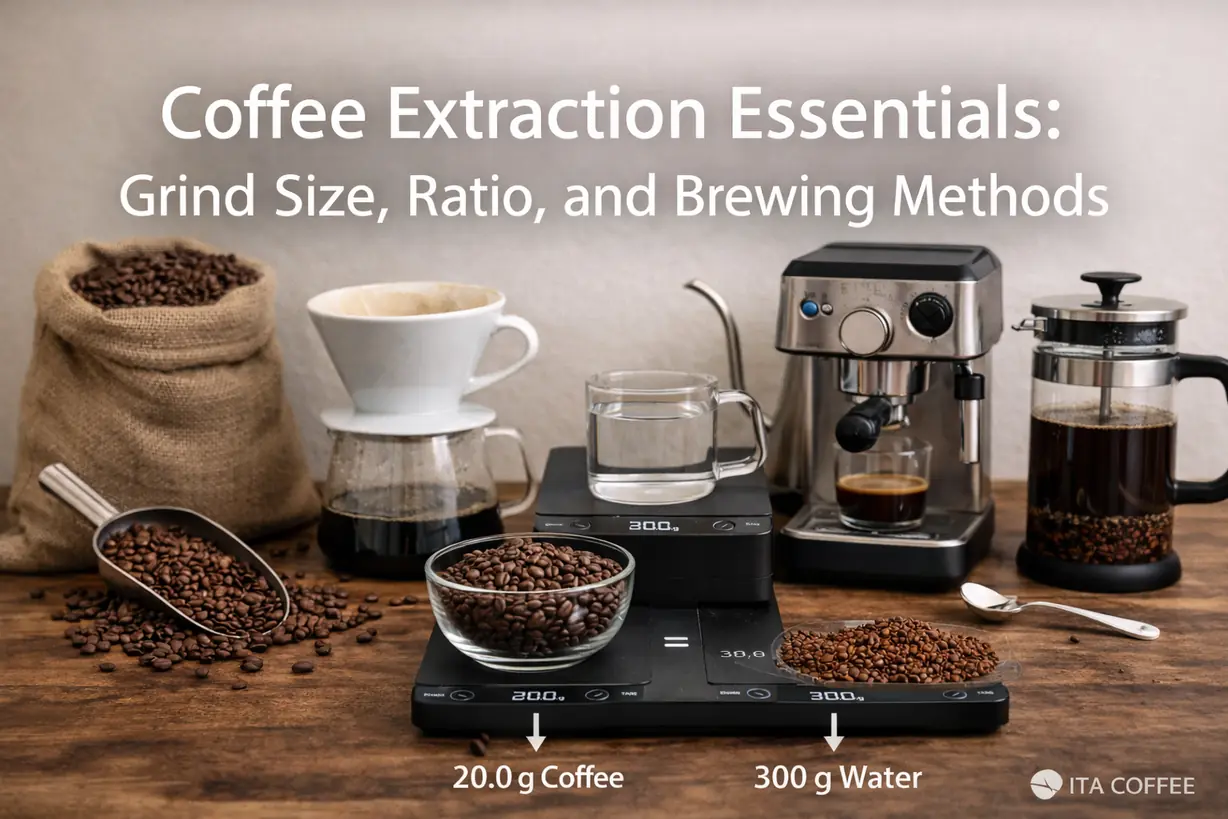
Cold brew relies on the same core variables as all other brewing methods: coffee-to-water ratio, grind size, and extraction time. What makes it different is the extremely long contact time, which magnifies mistakes rather than hiding them.
For a clear, method-independent explanation of how these fundamentals interact, see Coffee Brewing Basics: Grind Size, Ratio, and Time.
Because cold brew extracts slowly, understanding Coffee Extraction Explained: How Timing Shapes Flavor helps clarify why bitterness often comes from over-steeping rather than roast level alone.
If you’re tempted to fix weak cold brew by simply adding more coffee,Is More Coffee Always Stronger? explains why strength and extraction are not the same thing.
For a broader explanation of why cold brew tastes fundamentally different from hot brews, see How Brewing Methods Affect Coffee Flavor (From Beans to Cup).
Coffee-to-Water Ratio
Cold Brew Concentrate
- 1:4 to 1:5
- Strong; dilute before drinking
Ready-to-Drink Cold Brew
- 1:8 to 1:10
- Drink directly over ice
Example (ready-to-drink):
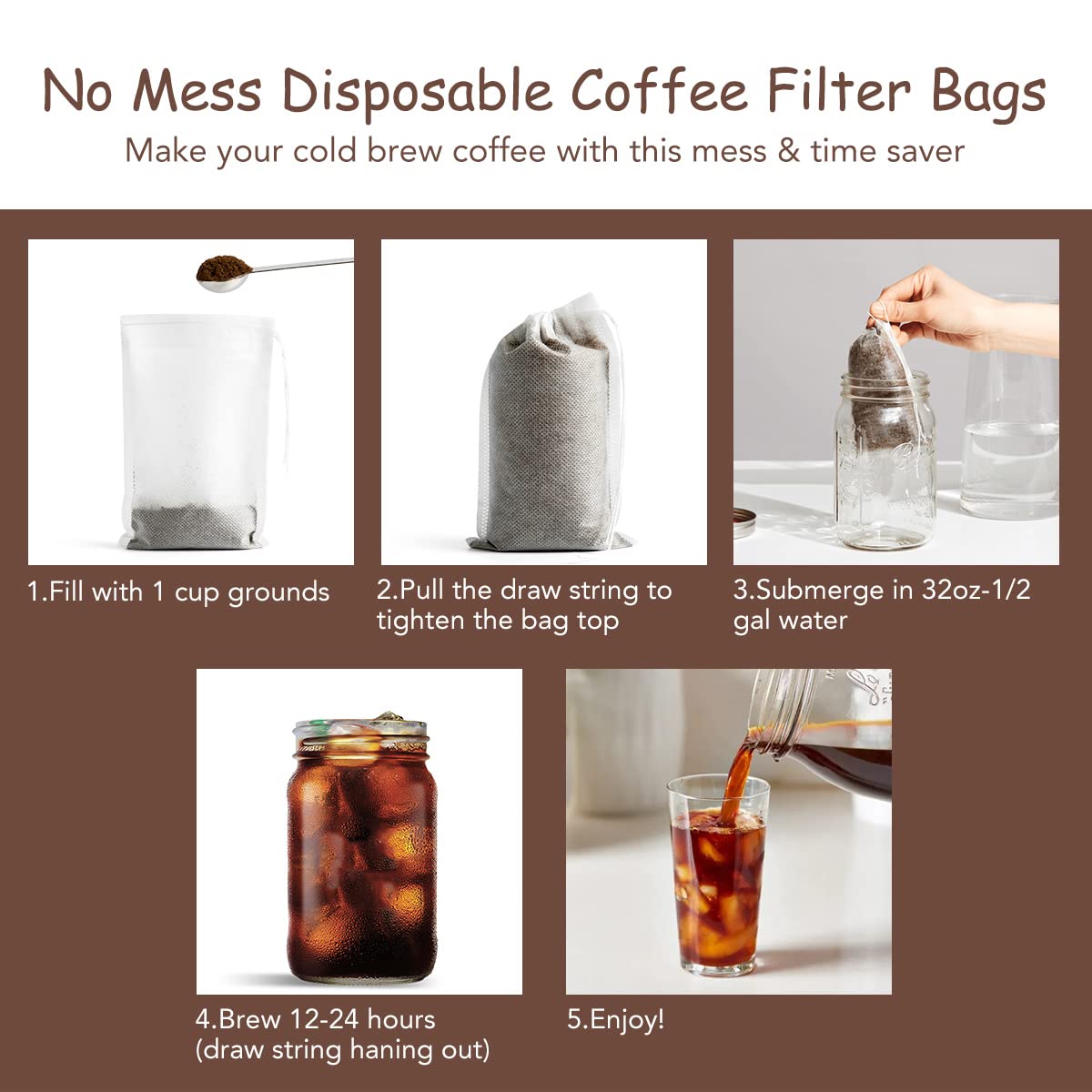
- 100 g coffee
- 900–1,000 ml water
Grind Size
- Coarse, similar to French press
Too fine → muddy texture, bitterness
Too coarse → weak extraction
Water Temperature
- Cold or room temperature
- Consistency matters more than exact temperature
Step-by-Step: How to Make Cold Brew at Home
Step 1: Grind and Measure
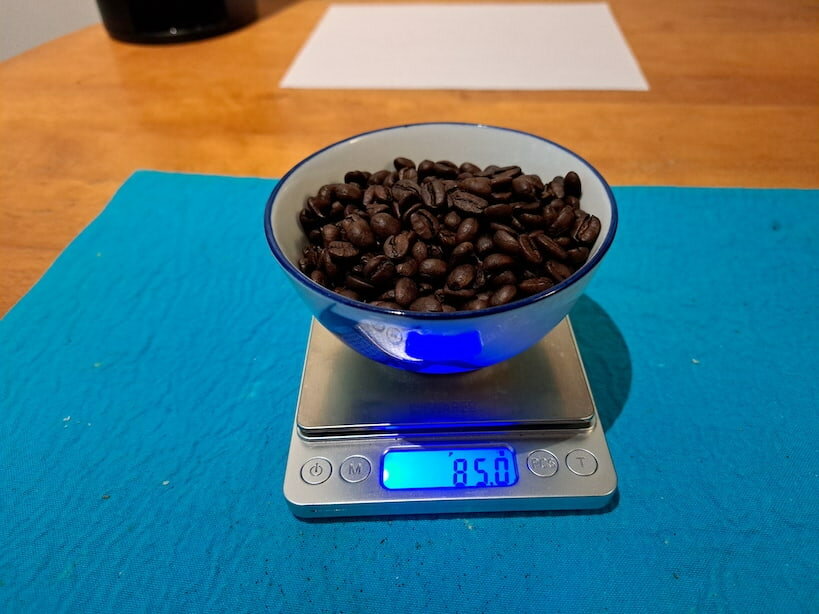
- Grind coffee coarse
- Measure your coffee and water based on ratio
- Add coffee to your container
Accuracy here saves you from over-steeping later.
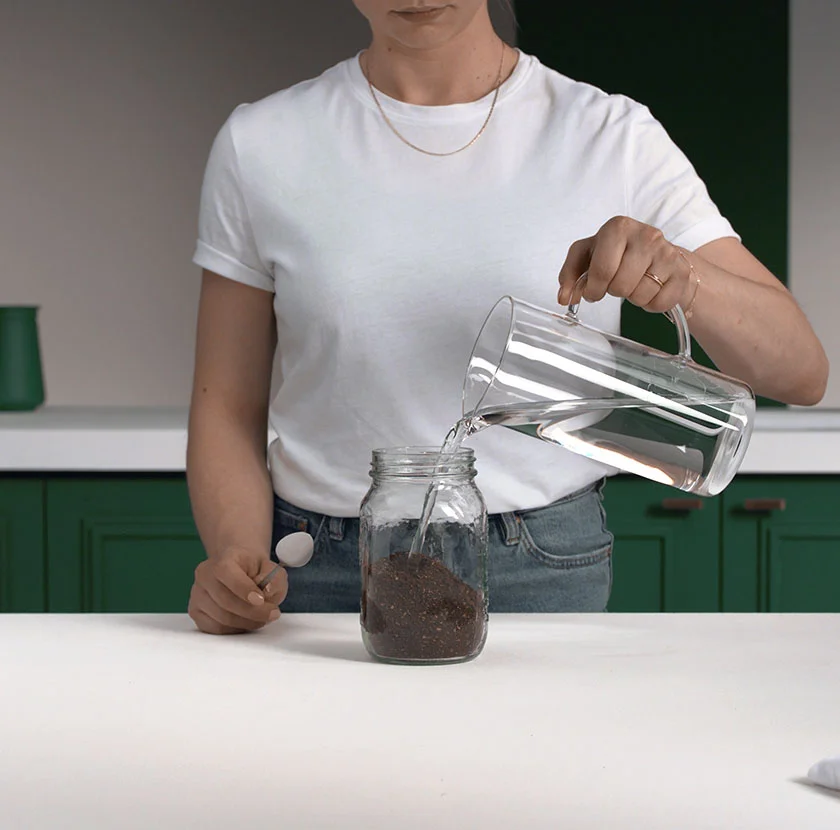
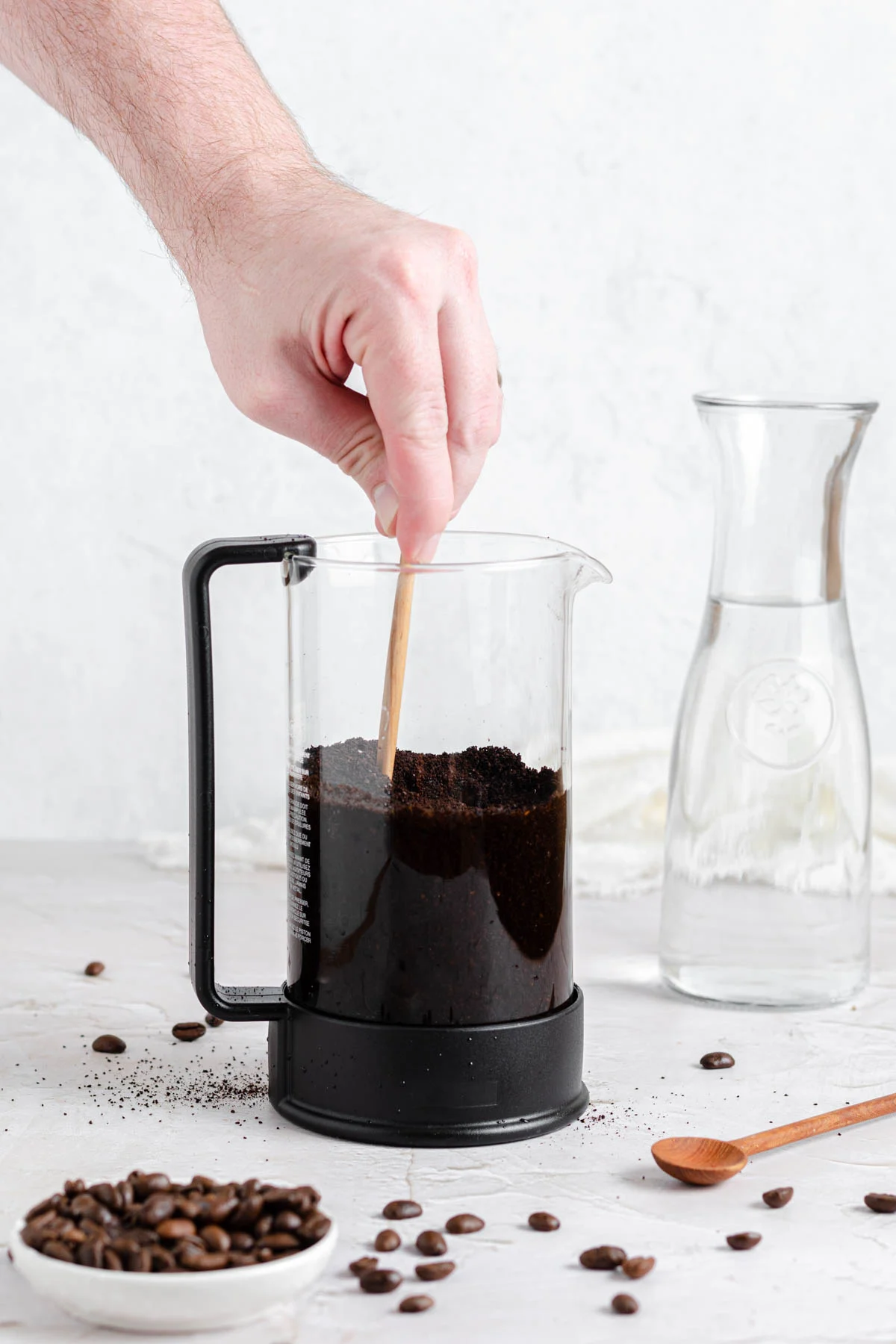
Step 2: Add Water and Stir
- Add water evenly
- Stir gently to wet all grounds
- Cover the container
This is a full immersion brew—no pouring technique required.
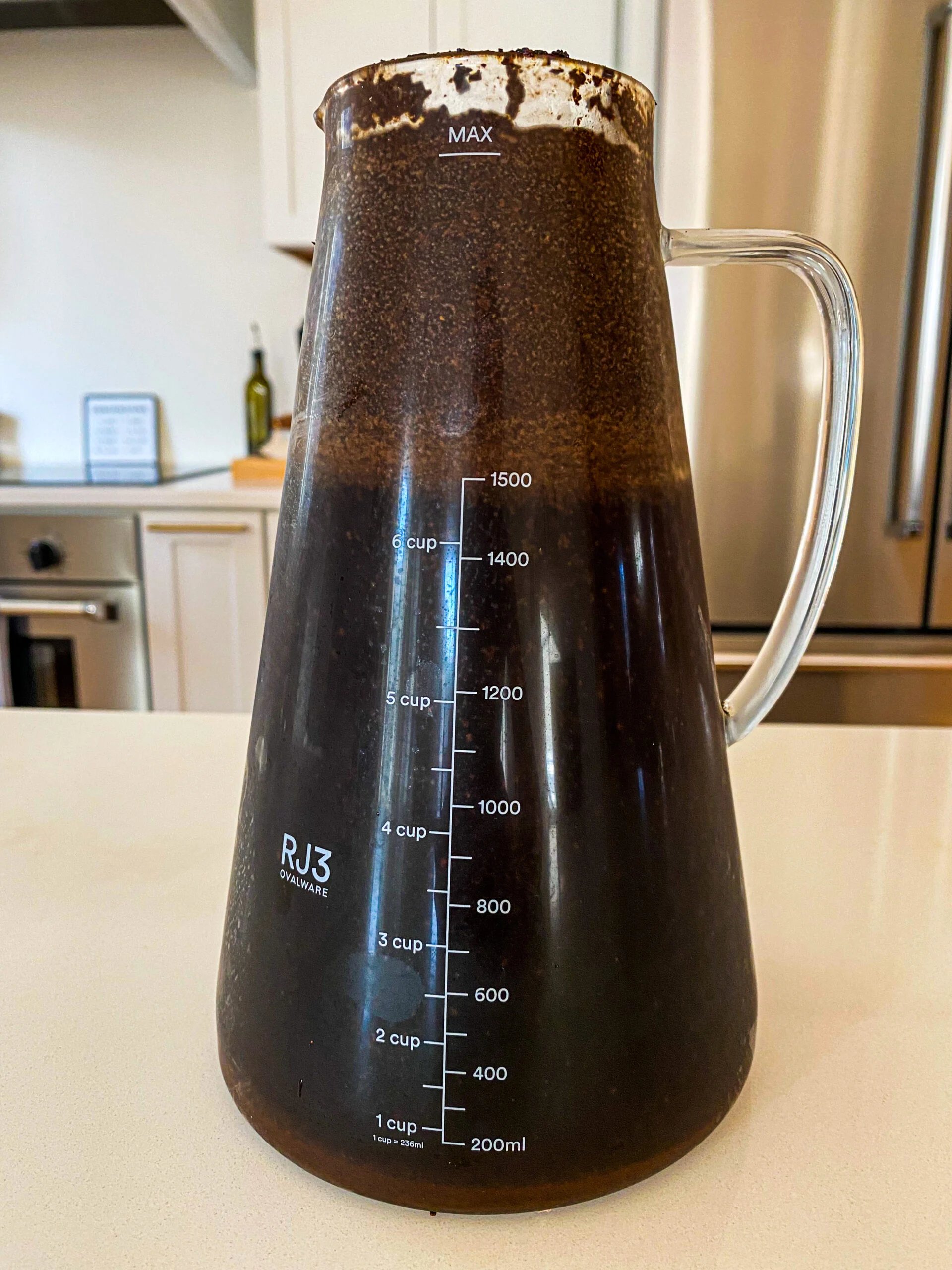
Step 3: Steep Slowly
- Room temperature: 12–16 hours
- Refrigerator: 16–24 hours
👉 Longer is not always better. Most bitterness comes from over-steeping.
Cold brew is a full immersion method, meaning coffee grounds stay in contact with water for the entire brew time—similar in structure to French press brewing, but using cold water and much longer extraction.
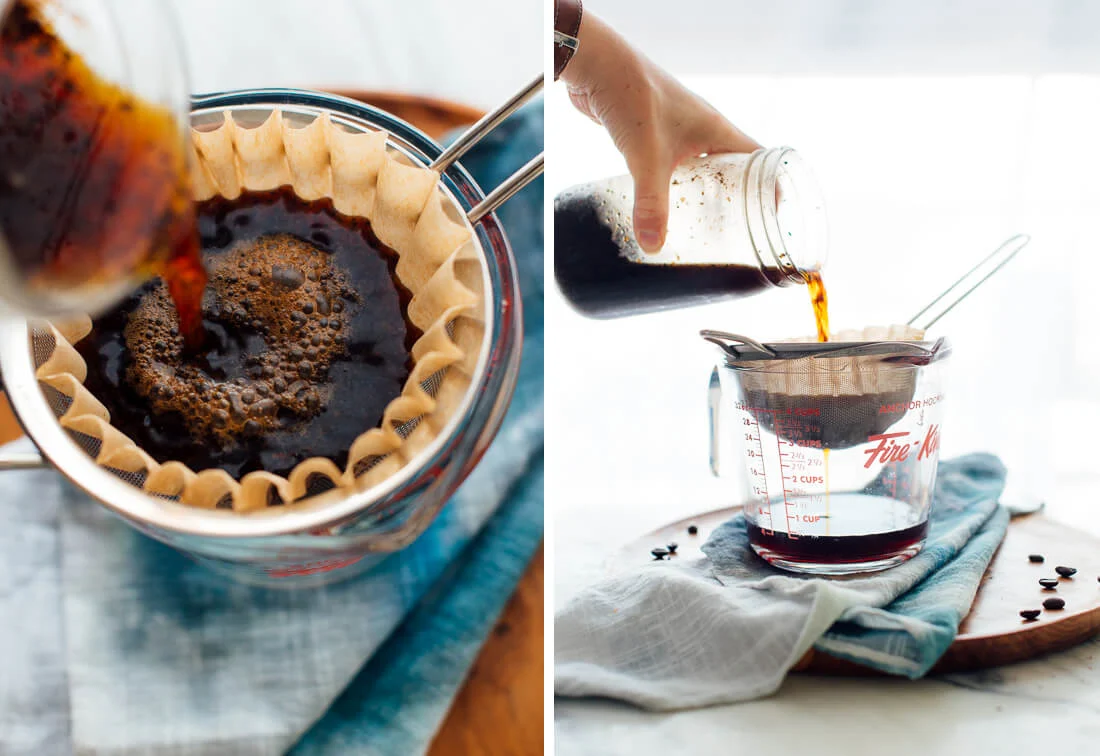
Step 4: Filter and Finish
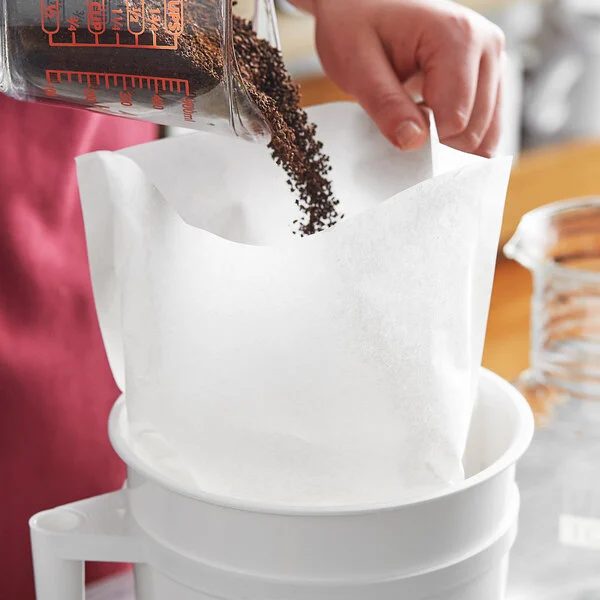
- Filter through paper or cloth
- Remove all fine sediment
- Store in the fridge (up to 5 days)
Clarity improves flavor more than most people expect.
Common Cold Brew Problems (And Fixes)
When cold brew turns bitter, flat, or muddy, the problem is usually extraction rather than the beans themselves. Before adjusting ratios or steep time, it helps to understand why coffee tastes bitter or sour and what those flavors are actually telling you during brewing.
| Issue | Likely Cause | Fix |
|---|---|---|
| Bitter | Too long steep | Shorten time |
| Flat | Weak ratio | Increase coffee |
| Muddy | Grind too fine | Grind coarser |
| Thin | Over-diluted | Reduce water |
Change one variable at a time.
Cold Brew vs Other Brewing Methods
| Method | Extraction | Flavor Style |
|---|---|---|
| V60 Pour Over | Hot, fast | Bright, clear |
| French Press | Hot, immersion | Heavy, textured |
| Cold Brew | Cold, slow | Smooth, mellow |
Cold brew isn’t “better”—it’s just different.
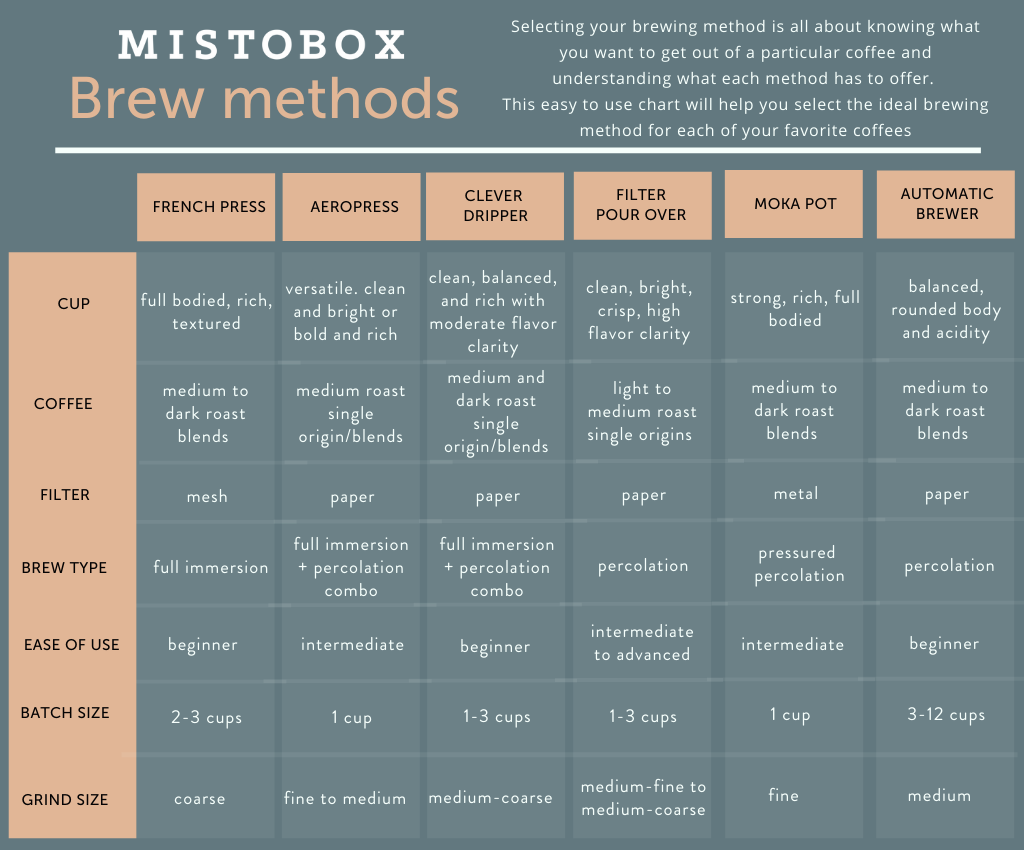
If you prefer a brighter, more aromatic cup,V60 pour over brewing offers a clear contrast to cold brew.
For pressure-driven brewing, explore Moka Pot Brewing Guide,How to Make Espresso, or the AeroPress Brewing Guide.
Want More Consistent Cold Brew?
Consistency comes from:
- Stable ratios
- Proper grind size
- Controlled steep time
If you’re exploring different manual brewing styles, our Brewing Guides section compares methods by process and flavor.
For deeper theory behind extraction and balance, explore Coffee Knowledge.
Final Thoughts from itacoffee
Cold brew works because it’s slow and forgiving, not because it’s trendy.
Once you understand time, ratio, and filtration, it becomes one of the most reliable ways to make coffee at home.
At itacoffee, we focus on brewing fundamentals that hold up—no matter the method, season, or setup.
This article was written and optimized with the assistance of AI, then reviewed and refined to maintain a clear, educational, non-commercial tone.